
Pothos (Epipremnum aureum) is one of the most forgiving houseplants, known for its trailing vines, heart-shaped leaves, and ability to thrive in low light. But beyond its resilience, one of the most rewarding aspects of owning a pothos is how easily it can be propagated—especially in water. For beginners looking to expand their indoor jungle or share plants with friends, water propagation offers a simple, transparent, and satisfying method. With nothing more than a few clean cuts and a glass of water, you can grow entirely new plants from a single vine.
This guide walks you through every stage of water propagation, from selecting the right cutting to transplanting rooted cuttings into soil. Whether you're starting your first houseplant journey or adding to an existing collection, this process is accessible, educational, and deeply rewarding.
Why Propagate Pothos in Water?
Water propagation is ideal for beginners because it allows you to observe root development in real time. Unlike soil, where roots remain hidden, water lets you monitor growth, adjust conditions, and ensure success before committing to potting. Pothos responds exceptionally well to this method due to its natural tendency to produce aerial roots along the stem—structures that readily adapt to submerged environments.
Additionally, water propagation reduces the risk of early rot or fungal issues common in poorly drained soils. It also eliminates guesswork about when to water, since hydration is constant and visible.
“Water propagation gives beginners immediate feedback on plant health and progress. You see the roots form—it’s like watching life unfold.” — Dr. Lena Torres, Urban Horticulturist & Plant Educator
Essential Tools and Materials
Before making any cuts, gather the following supplies. Having everything ready ensures a clean, efficient process that minimizes stress on both you and the parent plant.
- Healthy pothos plant: Choose a mature, disease-free specimen with vibrant green leaves.
- Sharp scissors or pruning shears: Clean blades prevent damage and reduce infection risk.
- Clear glass or jar: Transparent containers allow you to monitor root growth and water clarity.
- Room-temperature water: Cold tap water can shock the cutting; let it sit for 1–2 hours before use.
- Optional: Liquid fertilizer (diluted): Use only after roots develop, and sparingly.
Step-by-Step Guide to Taking and Preparing Cuttings
The success of water propagation hinges on proper cutting technique. Follow these steps carefully to maximize your chances of healthy root development.
- Identify a suitable stem: Look for a vine with multiple leaves and visible nodes—small brown bumps along the stem where roots will emerge. Avoid stems with yellowing leaves or signs of pests.
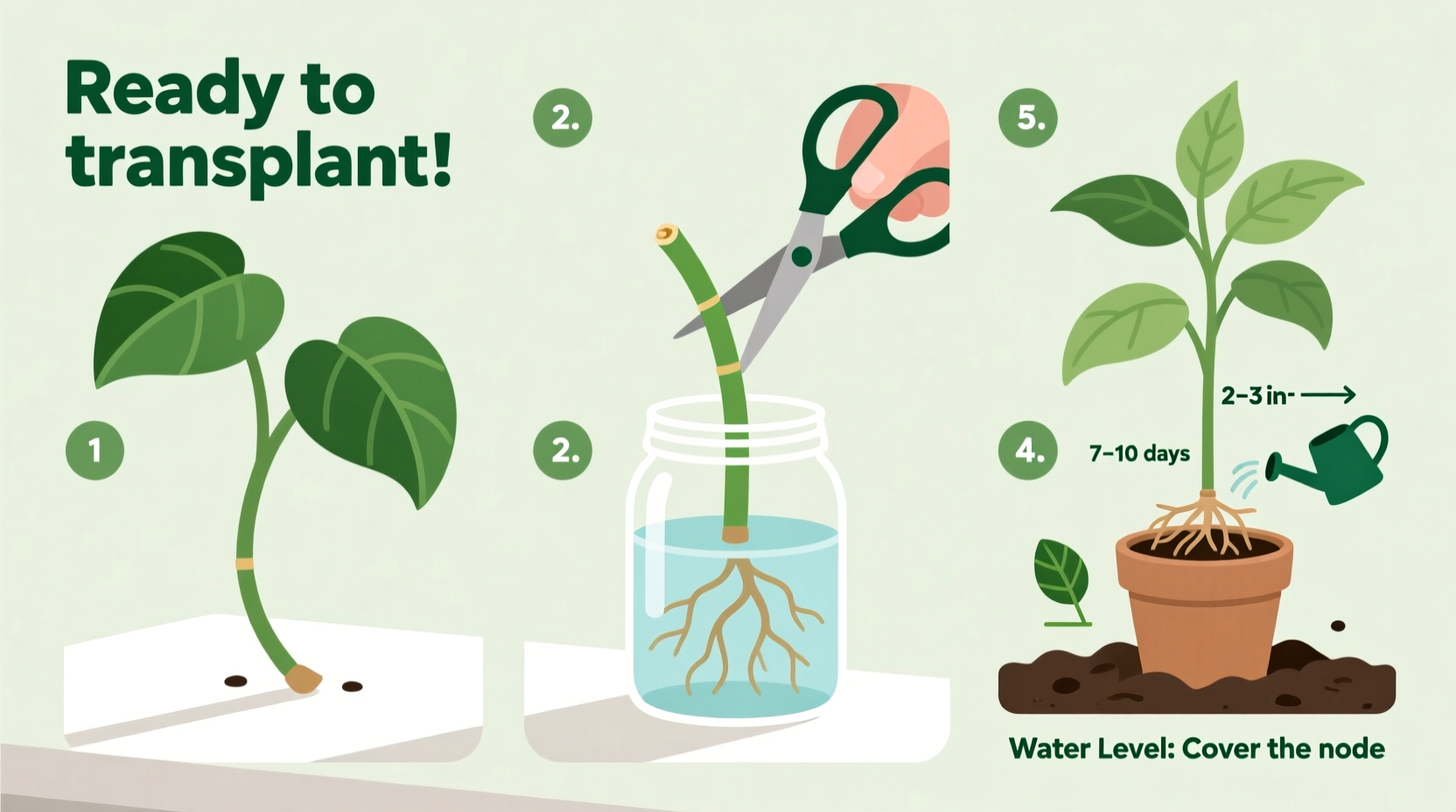
- Make the cut just below a node: Using sharp scissors, cut ¼ inch (about 0.5 cm) below a node. This area contains meristematic tissue responsible for root initiation.
- Include at least one leaf and one node: Each cutting should have at least one full leaf and one node submerged in water. Leaves above water will photosynthesize and fuel growth.
- Remove lower leaves: Strip off any leaves that would sit below the waterline. Submerged foliage decomposes quickly, promoting bacterial growth and cloudiness.
- Place in water immediately: Transfer the cutting to your container filled with room-temperature water, ensuring the node is fully submerged while leaves remain dry.
Repeat the process to create multiple cuttings from different sections of the same plant. A single healthy pothos can yield six or more viable cuttings without harm.
Setting Up the Ideal Environment
Once your cuttings are in water, placement becomes critical. While pothos tolerates low light, optimal conditions accelerate rooting and prevent stagnation.
| Factor | Recommended Condition | Avoid |
|---|---|---|
| Light | Bright, indirect sunlight (e.g., near east-facing window) | Direct midday sun or dark corners |
| Temperature | 65–75°F (18–24°C) | Cold drafts or heating vents |
| Water Maintenance | Change weekly or when cloudy | Letting water become murky or stagnant |
| Container Type | Clear glass or plastic | Opaque or metal containers |
Position your container where it receives consistent ambient light but not direct sun, which can overheat the water and damage developing tissues. Rotate the jar occasionally to promote even growth if light comes from one direction.
Monitoring Growth and Maintaining Cuttings
Root development typically begins within 7–10 days, though cooler temperatures may extend this timeline. Here's what to expect during the first month:
- Days 1–7: No visible changes. The cutting adjusts to its new environment.
- Days 7–14: Small white or pinkish root nubs appear at nodes.
- Days 14–21: Roots lengthen to ½–1 inch (1–2.5 cm).
- Days 21–30: Multiple roots develop, and some cuttings may produce new leaves.
Weekly maintenance is essential. Replace the water every 7 days to prevent algae buildup and oxygen depletion. Rinse the container and gently swish the cutting to remove any biofilm. Inspect each stem for signs of rot—soft, mushy stems or foul odor indicate failure; discard affected cuttings promptly.
Do not add fertilizer during initial rooting. Once roots reach 1–2 inches in length, you may introduce a quarter-strength liquid houseplant fertilizer once every two weeks to encourage stronger development.
Mini Case Study: Sarah’s First Propagation Success
Sarah, a first-time plant owner in Seattle, inherited a large golden pothos from her grandmother. After months of care, she noticed the vine growing leggy and sparse at the base. Remembering advice from a gardening blog, she decided to try water propagation.
She took four cuttings, each with two nodes and healthy leaves, placing them in recycled mason jars near her kitchen window. She changed the water every Saturday morning—a routine she tied to her coffee ritual. Within three weeks, all four cuttings had developed robust root systems. Two months later, she transplanted three into pots for her apartment and gifted one to a coworker with a note: “Grown with love from Grandma’s plant.”
Sarah’s experience highlights how consistency and attention to detail—even in small doses—can lead to successful propagation.
When and How to Transplant Rooted Cuttings
While pothos can survive indefinitely in water, transferring to soil encourages fuller, more vigorous growth. The best time to transplant is when roots are 1–2 inches long and multiple secondary roots have formed.
Follow this checklist for a smooth transition:
- Choose a small pot (4–6 inches) with drainage holes.
- Fill with well-draining potting mix (standard indoor blend works fine).
- Dig a hole deep enough to cover all roots and the node.
- Gently place the cutting, avoiding root breakage.
- Backfill with soil and press lightly to secure.
- Water thoroughly until excess drains out.
- Keep in bright, indirect light for 7–10 days to acclimate.
Expect slight drooping during the first few days after transplant—this is normal as the plant adapts from absorbing nutrients via water to relying on soil. Maintain consistent moisture (not soggy) and avoid fertilizing for at least two weeks post-transplant.
Frequently Asked Questions
Can I propagate pothos in tap water?
Yes, most tap water is suitable. However, if your water is heavily chlorinated or fluoridated, let it sit out overnight before use. Alternatively, use filtered or rainwater for sensitive varieties like 'Marble Queen' or 'Neon.'
How long does it take for pothos cuttings to root in water?
Visible roots usually appear within 7–14 days under optimal conditions. Full root systems suitable for transplanting typically develop in 3–6 weeks, depending on temperature, light, and plant health.
Why is my pothos cutting turning yellow or rotting?
Yellowing or soft stems often result from submerged leaves, infrequent water changes, or bacterial growth. Always remove leaves below the waterline and change water weekly. If rot occurs, trim the damaged portion and re-cut above a healthy node.
Common Mistakes to Avoid
Even straightforward processes can go wrong if key details are overlooked. Watch out for these common pitfalls:
- Using dull tools: Crushed stems impede nutrient flow and delay healing.
- Overcrowding cuttings: Place only one cutting per jar to prevent competition and poor circulation.
- Placing in dim light: Low light slows or halts root formation.
- Waiting too long to change water: Stagnant water breeds bacteria and depletes oxygen.
- Transplanting too early: Roots shorter than 1 inch lack the structure to support soil growth.
By staying attentive and maintaining hygiene, you’ll dramatically increase your success rate.
Conclusion: Start Growing Today
Propagating pothos in water is more than just a beginner-friendly gardening trick—it’s a gateway to deeper engagement with plant life. From the precision of the first cut to the joy of seeing tiny roots emerge, the process teaches patience, observation, and care. And the reward? New plants to beautify your space, gift to loved ones, or trade with fellow enthusiasts.
You don’t need a greenhouse or years of experience. All you need is a healthy pothos, a clean pair of scissors, and a bit of curiosity. Take your first cutting today. In less than a month, you could be nurturing living proof of nature’s regenerative power—one root at a time.




 浙公网安备
33010002000092号
浙公网安备
33010002000092号 浙B2-20120091-4
Comments
No comments yet. Why don't you start the discussion?