
Pothos (Epipremnum aureum) is one of the most forgiving houseplants available, making it ideal for beginners. Its trailing vines and heart-shaped leaves bring life to shelves, desks, and hanging baskets. But what makes pothos even more appealing is its ability to propagate easily—especially in water. With just a few snips and a glass of water, you can grow new plants from an existing vine. This method is not only low-cost but also allows you to watch roots develop in real time. Whether you're expanding your indoor jungle or sharing greenery with friends, water propagation is a rewarding process that anyone can master.
Why Propagate Pothos in Water?
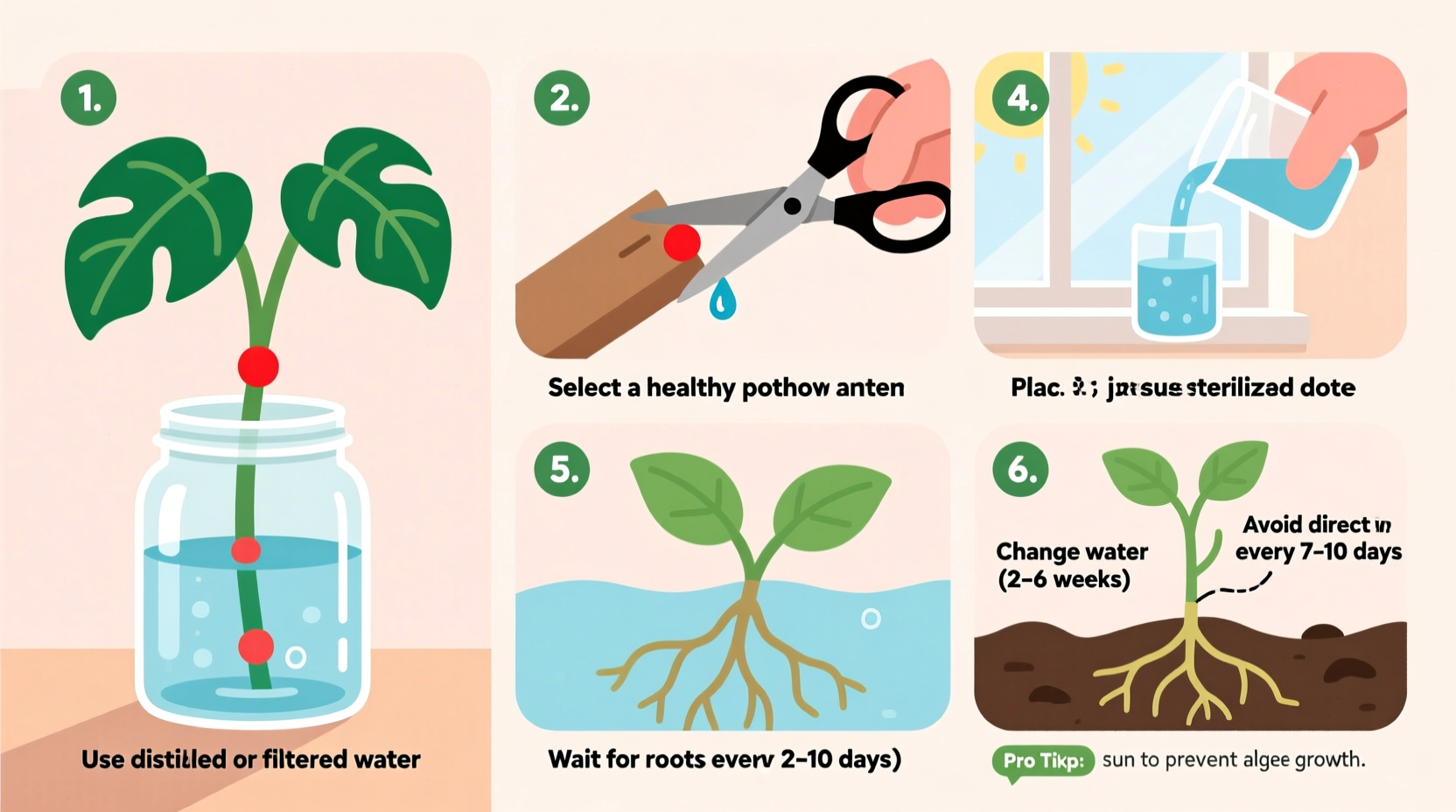
Water propagation is one of the most accessible ways to multiply your pothos collection. Unlike soil propagation, where root development happens out of sight, water lets you monitor progress daily. You’ll see tiny white roots emerge within days and grow stronger over weeks. This transparency helps prevent common mistakes like overwatering or rot. Additionally, water-grown cuttings tend to adapt well when later transferred to soil, thanks to their established root systems.
Pothos thrives in a variety of conditions, but it particularly responds well to propagation during spring and early summer when growth hormones are most active. Even if your plant has been sitting in low light for months, a single healthy vine can produce multiple new plants.
What You’ll Need: A Simple Checklist
Before starting, gather these basic supplies. Most items are likely already in your home.
- Clean scissors or pruning shears
- A mature pothos plant with healthy vines
- A clear glass or jar (transparent so you can see roots)
- Filtered or distilled water (or tap water left out overnight)
- Optional: liquid fertilizer (for later stages)
- Optional: rooting hormone (not required for pothos, but can speed up growth)
Using clean tools is essential. Wipe blades with rubbing alcohol before cutting to prevent spreading pathogens. A clear container allows you to track root formation and detect issues like slime or discoloration early.
Step-by-Step Guide to Propagating Pothos in Water
Follow this detailed sequence to ensure success, even if you've never propagated a plant before.
- Select a Healthy Vine: Look for a stem with at least four leaves and visible nodes—small brown bumps along the stem where roots will emerge. Avoid yellowing or damaged leaves.
- Make the Cut: Using sterilized scissors, cut just below a node at a 45-degree angle. This increases surface area for water absorption and encourages faster root growth. Aim for a cutting 4–6 inches long.
- Remove Lower Leaves: Strip off the bottom one or two leaves so they won’t sit in the water. Submerged leaves can rot and promote bacterial growth. Leave at least two leaves at the top for photosynthesis.
- Place in Water: Fill your container with enough water to submerge the node(s), but keep all remaining leaves above the waterline. Position the jar in bright, indirect light—near a north- or east-facing window is ideal.
- Wait and Monitor: Change the water every 5–7 days to keep it oxygenated and free of algae. Within 7–10 days, small white roots should begin to appear. Some varieties may take up to two weeks.
- Allow Roots to Grow: Let the roots reach 1–2 inches in length before considering transplanting to soil or continuing growth in water. During this phase, you can add a drop of liquid houseplant fertilizer every few weeks to support development.
Roots typically grow quickly—sometimes adding half an inch per week. Once established, the cutting becomes self-sustaining and begins producing new leaves.
Common Mistakes and How to Avoid Them
Even simple processes can go wrong without proper attention. Below is a table summarizing frequent errors and how to correct them.
| Do’s | Don’ts |
|---|---|
| Submerge nodes—but not leaves—in water | Leave leaves soaking in water (leads to rot) |
| Change water weekly to prevent stagnation | Let water become cloudy or green (sign of algae) |
| Use indirect sunlight to encourage growth | Place in direct sun (can overheat water and scorch leaves) |
| Trim off any mushy or discolored parts immediately | Ignore soft stems or black spots (indicates decay) |
| Be patient—rooting takes 1–3 weeks | Assume failure too soon and discard viable cuttings |
One of the most common reasons for failed propagation is leaving too many leaves underwater. Remember: only the node should be submerged. If you notice a foul smell or slimy texture on the stem, remove the cutting immediately, trim away affected areas, rinse under clean water, and place it in fresh water.
Real Example: Sarah’s First Propagation Success
Sarah, a first-time plant owner in Portland, was nervous about killing her golden pothos. After reading online guides, she decided to try propagating a cutting in water rather than risking her main plant. She selected a long vine that had started to look leggy and used kitchen scissors to make a clean cut below a node. Following instructions, she removed the lower leaves and placed the stem in a recycled mason jar filled with filtered water.
She positioned the jar on a shelf near her kitchen window, avoiding direct sun. Every Sunday, she replaced the water and checked for changes. On day nine, she spotted tiny white specks emerging from the node. By week three, the roots were over an inch long, and a new leaf began unfurling. Encouraged, Sarah took two more cuttings from the same plant. All three rooted successfully, and within two months, she gifted one to her neighbor and potted another in soil.
“I didn’t think I had a green thumb,” Sarah said. “But watching those roots grow made me feel like I was really part of the process.”
Expert Insight: What Botanists Recommend
Dr. Lena Torres, a horticulturist specializing in indoor plants, emphasizes the importance of node placement in successful propagation.
“The node is the engine of regeneration in pothos. Without a node submerged in water, no roots will form. It’s not about the leaf or the tip—it’s the node that holds the meristematic tissue capable of becoming roots and shoots.” — Dr. Lena Torres, Urban Plant Biologist
She also advises against using tap water immediately after filling the container. “Chlorine and fluoride in municipal water can inhibit root development. Letting water sit out overnight allows chemicals to evaporate, creating a safer environment for delicate new growth.”
Can You Keep Pothos in Water Indefinitely?
Yes—you can grow pothos in water permanently. While many people transfer rooted cuttings to soil, maintaining them in water is entirely viable with proper care. However, long-term water cultivation requires additional steps to ensure nutrient availability.
In soil, plants access a wide range of nutrients released slowly through organic matter. In water, those nutrients must be added manually. To sustain healthy growth:
- Change the water weekly.
- Add a diluted liquid fertilizer (¼ strength) every 4–6 weeks.
- Wash the roots gently during water changes to prevent biofilm buildup.
- Ensure the container is large enough to support root expansion.
Some growers report slower growth in water compared to soil, but the trade-off is less mess and easier maintenance. Plus, the visual appeal of roots swirling in a clear vase adds aesthetic value to your space.
Frequently Asked Questions
How long does it take for pothos cuttings to root in water?
Most pothos cuttings develop visible roots within 7–14 days. Factors like temperature, light, and node health influence speed. Warmer environments (68–75°F) promote faster growth.
Can I propagate a pothos leaf without a stem or node?
No. A leaf alone cannot produce roots or a new plant. The node—the small bump on the stem—is essential because it contains the cells needed for root and shoot formation. Always include a node in your cutting.
My cutting isn’t rooting. What should I do?
First, verify that a node is submerged. Then check water quality—cloudy or smelly water needs changing. Ensure the plant receives bright, indirect light. If the stem feels soft or turns black, it may be rotting; try a new cutting from a healthier part of the vine.
Final Tips for Long-Term Success
Propagation is just the beginning. Once your cutting has developed a strong root system, consider your next steps. You might choose to keep it in water, transplant it into potting mix, or share it with a friend. Each path offers satisfaction.
To maximize survival after transplanting to soil:
- Start with a well-draining potting mix.
- Keep the soil consistently moist (not soggy) for the first few weeks.
- Maintain humidity by misting leaves or placing the pot on a pebble tray.
- Avoid direct sunlight until the plant shows signs of new growth.
And remember: one healthy pothos can generate dozens of new plants over time. Regular pruning not only keeps your original plant bushy but also provides continuous material for propagation.
Conclusion: Start Growing Today
Propagating pothos in water is a simple, rewarding introduction to plant care. It requires minimal tools, almost no prior experience, and delivers visible results in days. Beyond multiplying your greenery, the process fosters a deeper connection with your plants—watching life emerge from a small snip of vine is nothing short of magical.




 浙公网安备
33010002000092号
浙公网安备
33010002000092号 浙B2-20120091-4
Comments
No comments yet. Why don't you start the discussion?