
Walking your dog should be a relaxing experience for both you and your pet. Yet, many owners struggle with pulling, discomfort, or inconsistent control—often due to improper leash use. The Leeds dog leash, known for its durable construction and ergonomic design, offers a solution when used correctly. Unlike standard leashes, the Leeds model integrates thoughtful features like padded handles, reflective stitching, and adjustable lengths to support better communication between dog and handler. However, its full benefits are only realized when it’s properly fitted and used with consistent technique. This guide walks through every essential step—from sizing and adjustment to real-world handling strategies—so you can transform daily walks into moments of connection and calm.
Understanding the Leeds Dog Leash Design
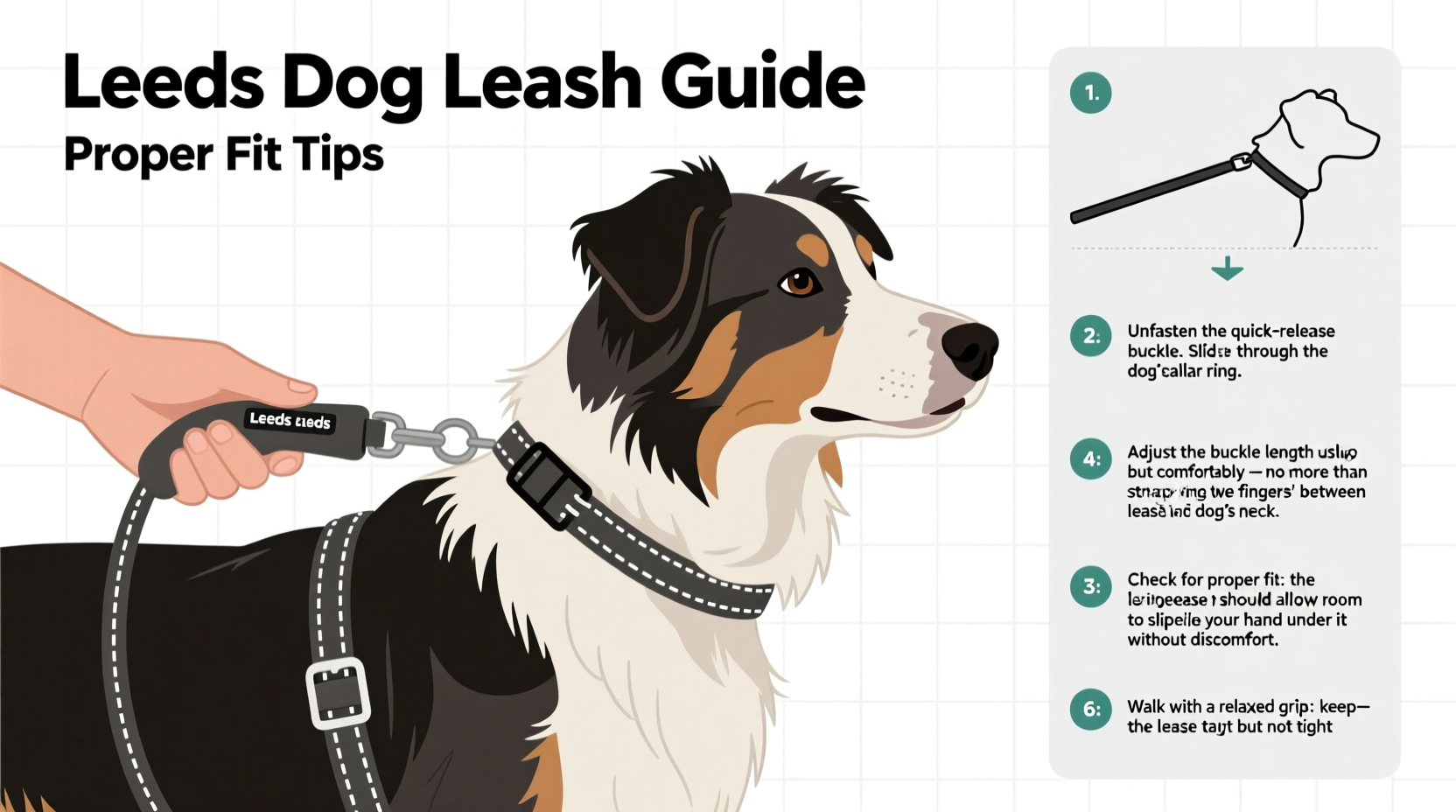
The Leeds dog leash is engineered with both functionality and comfort in mind. Most models feature a heavy-duty nylon webbing core, reinforced stitching, and a neoprene-padded handle that reduces hand strain during extended walks. Many versions also include a traffic handle near the clip, allowing for quick control in busy environments. The leash typically comes in multiple lengths—4 feet for training and urban settings, and 6 feet for casual neighborhood strolls—with some offering dual-length adjustability.
What sets the Leeds leash apart is its balance of strength and softness. While built to manage strong or energetic dogs, the padding and smooth hardware prevent chafing and tangles. It's commonly used by trainers and pet owners alike who prioritize both safety and comfort. But even the best-designed leash won’t perform well if not properly matched to your dog’s size and behavior.
Step-by-Step Guide to Fitting the Leeds Leash Correctly
- Select the right leash length. For training or crowded areas, use the 4-foot version. For relaxed walks in open spaces, choose 6 feet. Adjustable models allow switching between both.
- Attach the leash securely. Clip it to a well-fitted collar or, preferably, a front-clip harness to reduce pulling. Ensure the snap hook closes with an audible click.
- Adjust the handle loop (if applicable). Some Leeds leashes have a wrist-loop option. Adjust it so it fits snugly but doesn’t restrict circulation.
- Test tension and movement. Let your dog move naturally while holding the leash at mid-length. There should be enough slack for exploration but immediate responsiveness when needed.
- Position your hands correctly. Hold the padded section firmly but without gripping too tightly. Keep elbows slightly bent to absorb sudden movements.
Proper fit isn’t just about the leash—it starts with your dog’s gear. If your dog pulls frequently, a harness distributes pressure more evenly than a collar, reducing neck strain. Pairing the Leeds leash with appropriate equipment ensures long-term joint and tracheal health.
Best Practices for Using the Leeds Leash During Walks
Once fitted, how you use the leash determines the quality of the walk. The goal is to maintain loose-leash walking—where your dog stays within a defined zone beside you without constant tension.
- Keep the leash in a folded loop in your dominant hand, allowing quick release if needed.
- Use verbal cues like “Let’s go” or “This way” instead of yanking the leash to redirect attention.
- In high-distraction areas, shorten the leash gradually to regain focus without creating conflict.
- Pause when your dog pulls. Wait until they return to your side before continuing.
- Use treats or praise to reinforce staying close, especially during early training phases.
Consistency is key. Dogs learn through repetition, so using the same commands and responses builds predictability and trust. Over time, your dog will associate the feel of the Leeds leash with structured, rewarding walks rather than chaotic dragging.
“Leash manners aren’t about dominance—they’re about communication. A well-designed leash like the Leeds model gives you the tools to guide gently and effectively.” — Dr. Laura Simmons, Certified Canine Behavior Consultant
Do’s and Don’ts When Using the Leeds Dog Leash
| Do’s | Don’ts |
|---|---|
| Use the traffic handle near the clip when crossing streets or in crowded areas | Wrap the leash around your hand—this can cause injury if your dog lunges |
| Regularly clean the leash with mild soap and water to preserve padding and stitching | Leave the leash attached to a collar when unsupervised—risk of entanglement |
| Store the leash coiled or hung up to prevent kinks in the webbing | Use the leash for tying your dog outside stores or to fixed objects |
| Replace the leash if fraying, weakened stitching, or clasp issues appear | Allow children to handle strong or untrained dogs with the leash unsupervised |
Real-World Example: Transforming a Pulling Problem
Consider Max, a two-year-old Australian Shepherd adopted by a first-time owner in Leeds, UK. Initially, walks were exhausting—Max would lunge at squirrels, bark at cyclists, and drag his owner down sidewalks. After switching to a front-clip harness and pairing it with a 4-foot Leeds leash, the owner began practicing loose-leash techniques. By shortening the leash near distractions, using the traffic handle at intersections, and rewarding calm behavior with treats, Max learned to walk attentively within three weeks. The padded handle made long sessions comfortable, and the reflective stitching improved visibility during winter evening walks. What started as a frustrating routine became a shared ritual of exercise and bonding.
Frequently Asked Questions
Can I use the Leeds leash with any type of collar?
You can attach it to most collars, but for dogs that pull, a no-pull harness is strongly recommended. Using a standard collar with a pulling dog can lead to tracheal damage over time. The Leeds leash works exceptionally well with harnesses due to its balanced tension and responsive clip.
How do I clean and maintain my Leeds dog leash?
Hand wash the leash with lukewarm water and mild detergent. Avoid bleach or harsh chemicals. Rinse thoroughly and air dry away from direct sunlight to prevent UV degradation. Inspect stitching monthly, especially if used frequently in wet or muddy conditions.
Is the Leeds leash suitable for large or strong dogs?
Yes. The Leeds leash is constructed with high-tensile webbing rated for medium to large breeds, including strong pullers like Huskies, Labradors, and German Shepherds. Its reinforced snap hook and double-stitched joints ensure durability under pressure.
Final Checklist Before Every Walk
- ✅ Confirm the leash clasp is fully engaged on the collar or harness
- ✅ Check for signs of wear: frayed edges, loose stitching, or rust on the metal
- ✅ Adjust leash length based on environment (shorter for traffic, longer for parks)
- ✅ Carry waste bags and water, especially on longer routes
- ✅ Use the traffic handle when crossing roads or managing sudden distractions
Conclusion
Using the Leeds dog leash properly goes beyond simply clipping it on. It involves understanding your dog’s needs, applying consistent technique, and respecting the tool’s design to foster safer, more enjoyable walks. Whether you're managing a spirited puppy or retraining an older dog, the combination of thoughtful gear and mindful handling makes all the difference. With the steps outlined here—from correct fitting to real-time responsiveness—you’re equipped to build better habits one walk at a time.




 浙公网安备
33010002000092号
浙公网安备
33010002000092号 浙B2-20120091-4
Comments
No comments yet. Why don't you start the discussion?