
In-Home Supportive Services (IHSS) is a vital program in California that helps elderly individuals, people with disabilities, and those with chronic health conditions live safely at home. Funded by Medicaid and administered through county social services, IHSS provides essential non-medical assistance such as bathing, meal preparation, housekeeping, and accompaniment to medical appointments. However, many eligible individuals miss out due to confusion about eligibility, the application process, or underutilization of available benefits. This guide walks you through every stage—from determining eligibility to receiving services—and offers practical strategies to ensure you receive the full support you're entitled to.
Determine Your Eligibility
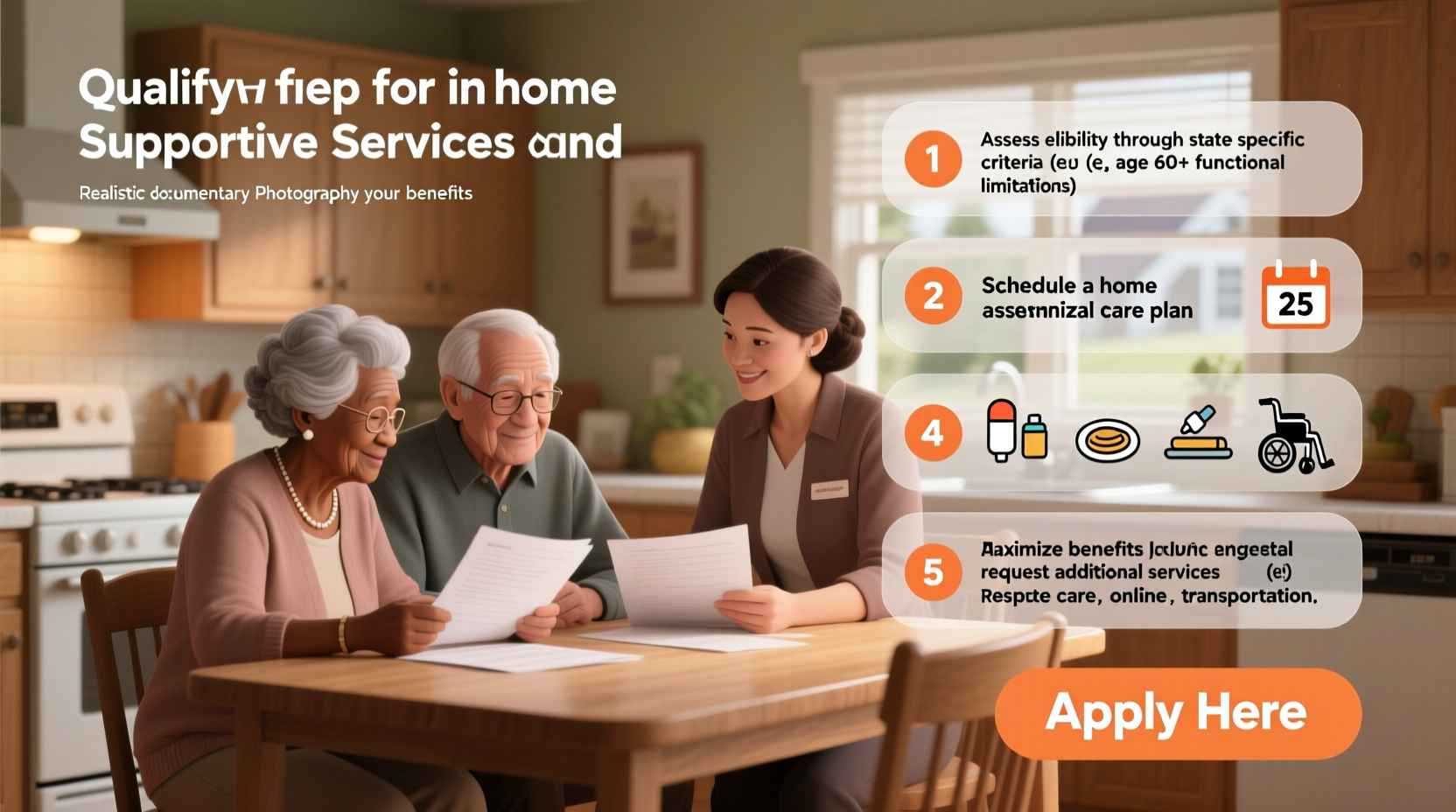
Before applying, confirm whether you meet the basic criteria set by the state. IHSS eligibility hinges on three main factors: residency, income/assets, and functional need.
- Residency: You must reside in California and be either a U.S. citizen, permanent resident, or lawfully admitted non-citizen.
- Age or Disability: Applicants must be aged 65 or older, blind, or have a disability that limits their ability to perform daily living activities independently.
- Functional Need: You must require help with basic tasks like grooming, cooking, cleaning, mobility, or supervision due to cognitive impairments.
- Financial Eligibility: While Medi-Cal recipients automatically qualify financially, others may still be eligible based on income and asset limits. As of 2024, an individual’s monthly income can be up to $3,978, and countable assets must not exceed $2,000 (or $3,000 for couples).
Complete the Application Process
Applying for IHSS involves several clear steps. Missing documentation or unclear descriptions of needs can delay approval, so thoroughness is key.
- Contact your local county IHSS office. You can find your office via the California Department of Social Services website. Request an application packet or schedule an intake appointment.
- Submit Form SOC 442 – Application for IHSS. This form collects personal, financial, and household information.
- Attend the face-to-face Functional Assessment Interview (FAI). A social worker will visit your home to evaluate your ability to perform daily activities. Be honest and specific—describe exactly what tasks you cannot do alone or only with great difficulty.
- Provide proof of income and resources. Submit pay stubs, bank statements, pension letters, or other financial documents. If you’re on Supplemental Security Income (SSI), this step may be streamlined.
- Wait for determination. The county has 30 days (or 14 days in urgent cases) to make a decision and mail you a Notice of Action (NOA) detailing approved hours and services.
“Many applicants underestimate their needs during the FAI. Be detailed—mention even small difficulties like trouble standing long enough to cook or fear of falling when showering.” — Maria Gonzalez, IHSS Case Advocate, Los Angeles County
Maximize Your Approved Service Hours
The number of hours approved depends on your assessed needs. But there are legal ways to ensure you receive the maximum appropriate support.
| Task | Standard Time Allotment | How to Maximize |
|---|---|---|
| Bathing | 30–45 minutes | Include time for setup, transfer, drying, and dressing if needed. |
| Meal Preparation | 30 minutes per meal | Account for planning, shopping (if done by provider), cooking, and cleanup. |
| Housecleaning | 1–2 hours weekly | Break into recurring tasks: dusting, vacuuming, laundry, bathroom sanitizing. |
| Accompaniment | Travel time + appointment duration | Include waiting time, parking, and walking assistance. |
During your FAI, describe each activity comprehensively. For example, instead of saying “I need help eating,” explain: “I require assistance cutting food, bringing meals from kitchen, and supervision to prevent choking due to Parkinson’s tremors.” Specificity leads to higher hour allocations.
Choose and Manage Your Care Provider
One of IHSS’s greatest advantages is the ability to hire someone you trust—often a family member (excluding spouses or legal parents of minor children). You become the employer, responsible for scheduling, supervision, and timekeeping.
Provider Options:
- Family members (except spouse)
- Friends or neighbors
- Certified home care aides
- Agency workers (in some counties)
Key Responsibilities:
- Ensure your provider completes fingerprinting and background checks.
- Maintain accurate time records using approved timesheets.
- Report any changes in care needs promptly.
- Attend annual reviews to reassess service levels.
You can also opt for the Employer Agent Program (EAP), which handles payroll, tax filings, and new hire reporting on your behalf—free of charge.
Real-Life Example: How James Increased His IHSS Hours
James, a 72-year-old stroke survivor in Sacramento, was initially approved for only 15 hours of IHSS per month. He struggled with dressing, needed help preparing all meals, and couldn’t safely clean his home. After consulting an advocacy group, he requested a fair hearing, presenting logs showing he needed over two hours daily just for personal care and meal prep. The appeals officer reviewed the evidence and increased his allocation to 120 hours per month—making a dramatic difference in his independence and quality of life.
This case illustrates the importance of appealing low determinations and documenting real-world needs.
Frequently Asked Questions
Can I appeal if I’m denied or receive fewer hours than expected?
Yes. You have 90 days from the date on your Notice of Action to request a fair hearing. Most counties offer free legal aid through aging or disability rights organizations to help prepare your case.
Do I have to pay back IHSS if my financial situation improves?
No. IHSS is not a loan. Once approved, you do not repay the state for services received, regardless of future income changes (unless fraud is involved).
Can I use IHSS hours for respite care or emergencies?
IHSS is designed for ongoing, routine care. It cannot be saved or “banked” for vacation or emergency use. However, if your needs increase due to illness, you can request a reassessment.
Action Plan Checklist
- Confirm eligibility based on age, disability, and income.
- Gather financial documents (tax returns, bank statements, benefit letters).
- Complete SOC 442 and submit to your county IHSS office.
- Prepare for the Functional Assessment Interview with a care log.
- Attend the FAI and clearly describe all limitations.
- Review your Notice of Action for accuracy.
- If dissatisfied, file a written request for a fair hearing within 90 days.
- Select and onboard your provider; complete required training and paperwork.
- Use the Employer Agent Program if managing payroll feels overwhelming.
- Schedule annual reviews and report any change in condition immediately.
Final Steps to Secure and Sustain Your Benefits
Qualifying for IHSS is not a one-time event—it’s the beginning of an ongoing relationship with your county’s social services system. Stay proactive. Attend all scheduled reviews, update your care plan when health changes occur, and maintain organized records of services rendered. Remember, the goal of IHSS is to preserve dignity, safety, and independence at home. By understanding your rights, advocating clearly, and using the system effectively, you can maximize both the quantity and quality of support you receive.




 浙公网安备
33010002000092号
浙公网安备
33010002000092号 浙B2-20120091-4
Comments
No comments yet. Why don't you start the discussion?