
Losing your vehicle title can be stressful, especially if you're planning to sell the car, trade it in, or refinance a loan. The good news is that replacing a lost or missing title is a straightforward process in most U.S. states. While procedures vary slightly depending on your location, the general steps are consistent and manageable with the right preparation. This guide walks you through every stage—from verifying eligibility to receiving your replacement title—so you can regain control of your vehicle’s legal documentation quickly and confidently.
Understanding the Importance of a Vehicle Title
A vehicle title is a legal document proving ownership. It includes key details such as the vehicle identification number (VIN), make and model, owner’s name, and lienholder information (if applicable). Without a title, you cannot legally transfer ownership, register the vehicle in some states, or obtain certain types of insurance coverage.
Titles can be lost due to misplacement, damage, or theft. In some cases, lenders hold the title until a loan is paid off, which may lead owners to mistakenly believe the title is missing. Before initiating a replacement request, confirm whether the title is truly lost or simply held by a financial institution.
“Never delay replacing a lost title. The longer you wait, the higher the risk of fraud or complications during resale.” — Robert Mendez, DMV Compliance Officer, California Department of Motor Vehicles
Step-by-Step Process to Recover a Lost or Missing Vehicle Title
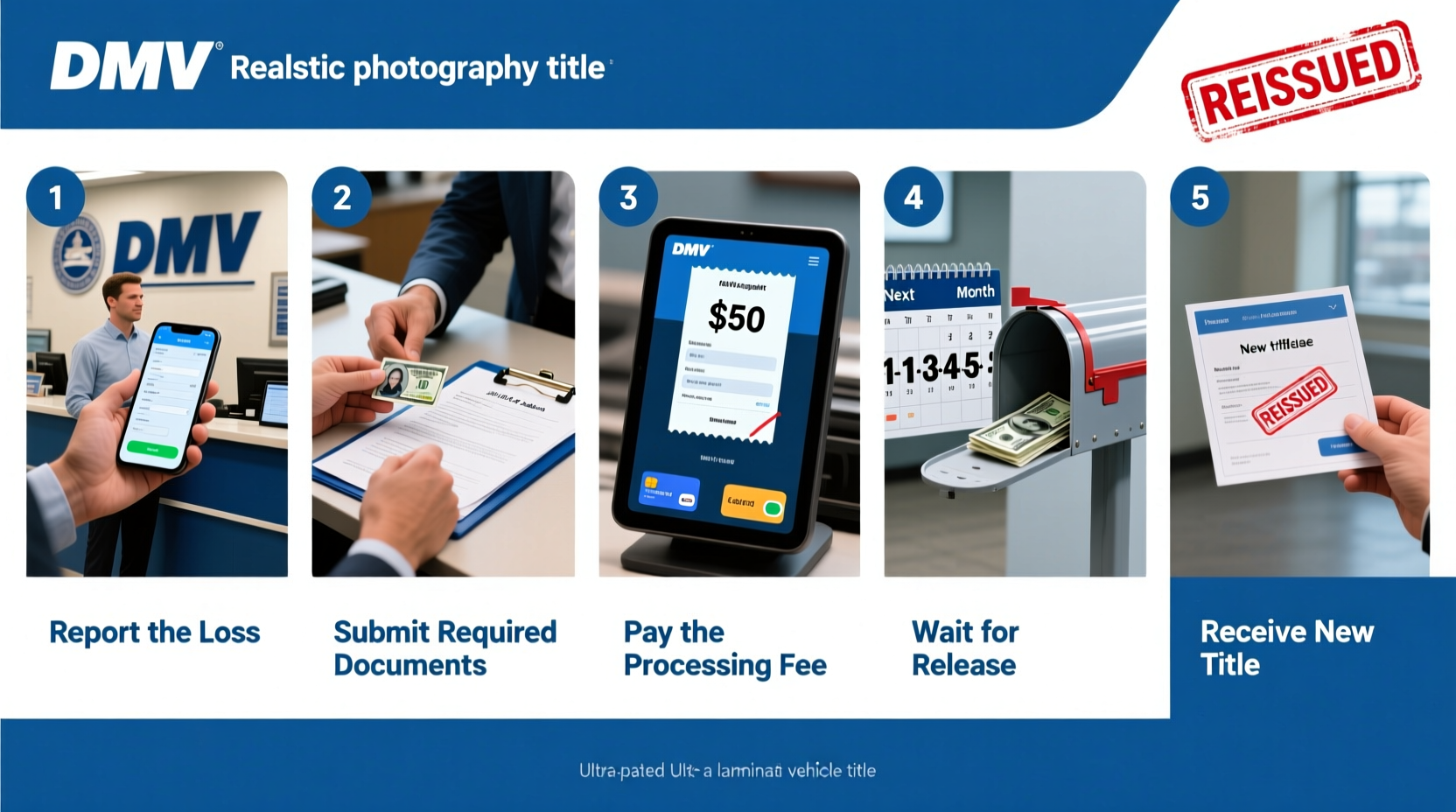
Recovering a lost or missing vehicle title typically follows a five-stage process. Following these steps carefully will minimize delays and prevent application rejection.
- Confirm Eligibility: You must be the registered owner listed on the current title record. If there’s a lien on the vehicle, the lender may need to be involved or notified.
- Gather Required Documents: Prepare proof of identity, vehicle information (VIN, license plate number), and any additional forms required by your state.
- Complete the Replacement Title Application: Most states use Form MV-3 or a similarly named document. This can often be completed online, by mail, or in person.
- Pay the Required Fee: Fees range from $20 to $50 depending on the state. Expedited service may cost extra.
- Receive Your Replacement Title: Processing times vary—typically 2 to 6 weeks. Some states offer same-day issuance at select offices.
Documents You’ll Need to Replace a Lost Title
The exact documents required depend on your state, but the following are commonly needed:
- Government-issued photo ID (driver’s license, state ID, or passport)
- Vehicle Identification Number (VIN)
- License plate number
- Odometer reading (for vehicles under 10 years old)
- Proof of insurance (in some states)
- Power of attorney (if applying on behalf of someone else)
- Lien release documentation (if applicable)
If your vehicle has a lienholder, many states require their consent or signature before issuing a new title. Contact your lender early in the process to avoid last-minute surprises.
State-by-State Variations: What to Expect
While the core process is similar nationwide, individual states have unique rules. The table below summarizes key differences among five major states.
| State | Form Name | Fee | Processing Time | Online Option? |
|---|---|---|---|---|
| California | REG 227 | $23 | 2–4 weeks | Yes |
| Texas | VMT-14 | $33 | 3–6 weeks | Yes |
| New York | MY-48 | $20 | 2–3 weeks | No (mail or in-person only) |
| Florida | HSMV 82101 | $77.25 | 7–10 business days | Yes |
| Illinois | VSD 190 | $95 | Up to 15 days | Limited counties only |
Note: Florida and Illinois charge higher fees due to enhanced anti-fraud measures. Texas allows electronic titles (e-titles), which can speed up future transactions.
Real-Life Example: Replacing a Title After a Move
Sarah Thompson moved from Ohio to Arizona and discovered her vehicle title was missing after unpacking. She assumed her lender had it, but they confirmed the loan was paid off six months earlier and the title should have been mailed to her.
Sarah visited the Arizona MVD website, downloaded form 96-0301, and submitted it by mail with a copy of her driver’s license and a $20 fee. She also requested a duplicate registration while she was at it. Within 11 days, she received her new title via first-class mail. Because she acted promptly, she avoided issues when later selling the car to a private buyer.
Her experience highlights the importance of acting quickly and using official state resources rather than third-party services that charge inflated fees.
Do’s and Don’ts When Replacing a Vehicle Title
To ensure a smooth replacement process, follow this essential checklist of best practices.
| Do’s | Don’ts |
|---|---|
| Verify your vehicle’s status online before applying | Assume the title is lost without checking with your lender |
| Make a copy of all submitted documents | Submit original IDs unless explicitly required |
| Use expedited service if selling soon | Wait until the last minute to replace the title |
| Review the new title for accuracy upon receipt | Ignore mismatched names or VIN errors |
Frequently Asked Questions
Can I sell my car without a physical title?
In most states, you cannot legally transfer ownership without a title. However, some allow you to apply for a duplicate title and assign it directly to the buyer during the sale. Check with your local DMV for specific rules.
What if someone else lost my title?
If a co-owner, family member, or previous owner misplaced the title, you can still apply for a replacement as long as you’re listed on the registration. Some states require all owners to sign the application.
Is a lost title more vulnerable to fraud?
Yes. A lost title increases the risk of title fraud, where someone obtains a duplicate and sells your vehicle illegally. Filing for a replacement immediately helps close that window of vulnerability.
Checklist: How to Recover a Lost Vehicle Title
Follow this concise action plan to recover your vehicle title efficiently:
- ✅ Confirm the title isn’t held by a lienholder
- ✅ Locate your VIN and registration documents
- ✅ Download the correct replacement form from your state’s DMV website
- ✅ Fill out the application completely and accurately
- ✅ Attach required identification and payment
- ✅ Submit via preferred method (online, mail, or in person)
- ✅ Keep a copy of everything you submit
- ✅ Track processing time and follow up if delayed
- ✅ Review the new title for errors upon arrival
Final Steps and Long-Term Prevention
Once you receive your replacement title, store it securely. Avoid keeping it in the glove compartment—this is a common theft target. Instead, keep it with other important documents like your will, property deeds, or insurance policies.
Some states now offer electronic titles (e-titles), which are stored securely in the DMV system and reduce the risk of loss. If your state supports e-titling, consider opting in when possible.
Conclusion
Losing a vehicle title doesn’t have to derail your plans. With accurate information and timely action, you can secure a replacement in just a few weeks. Whether you're preparing to sell, move, or simply want peace of mind, taking control of your vehicle’s documentation is a critical part of responsible ownership.




 浙公网安备
33010002000092号
浙公网安备
33010002000092号 浙B2-20120091-4
Comments
No comments yet. Why don't you start the discussion?