
Beginning October 1, 2025, a standard driver’s license will no longer be sufficient for domestic air travel or entry into federal facilities such as military bases and nuclear power plants. The REAL ID Act, passed by Congress in 2005, mandates stricter identification standards, and compliance is now essential. If your current license isn’t marked with a star or doesn’t meet federal requirements, it’s time to renew your REAL ID. This comprehensive guide walks you through every stage of the renewal process, from document preparation to picking up your new card—ensuring you avoid common pitfalls and unnecessary trips to the DMV.
Understanding REAL ID: Why It Matters
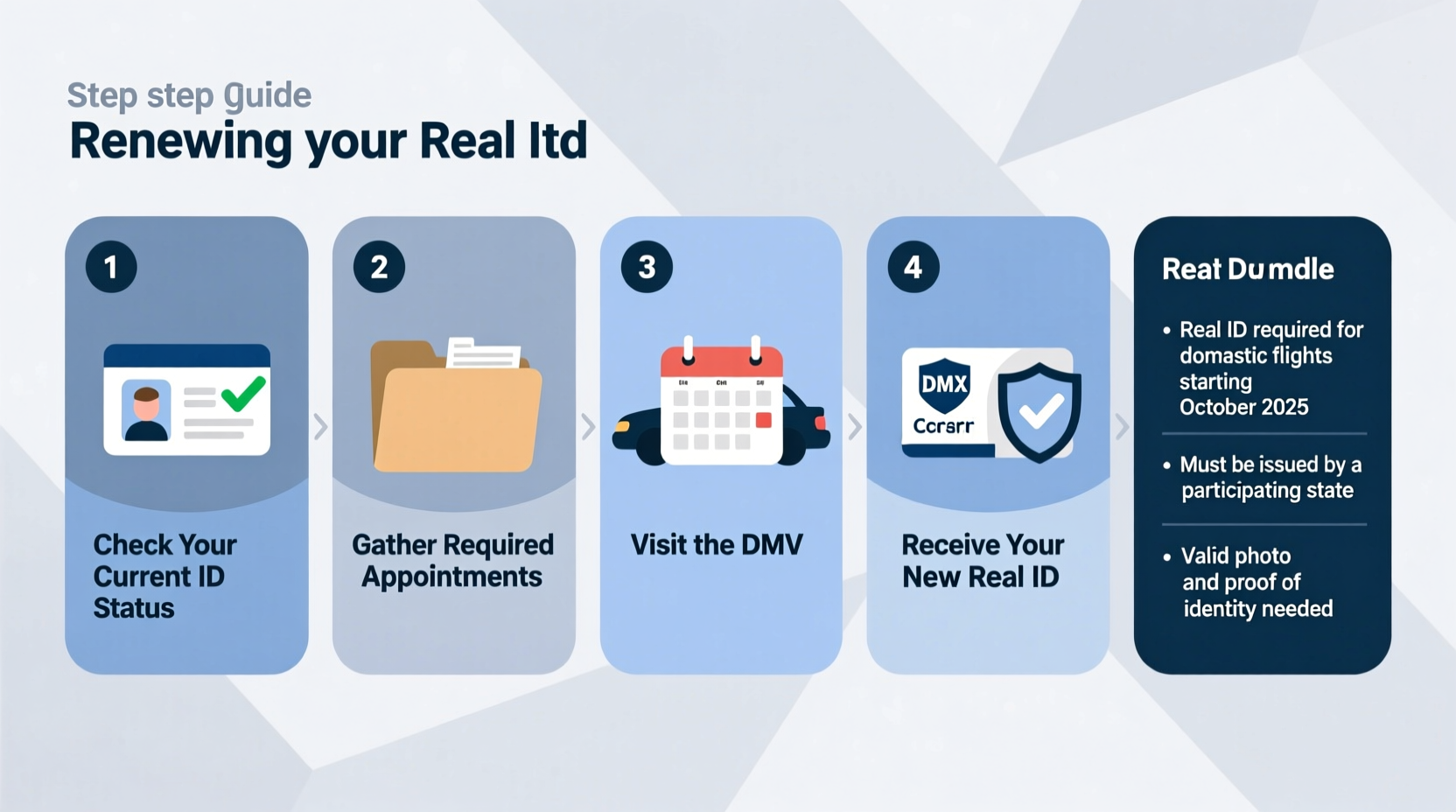
The REAL ID is a federally compliant form of identification that meets minimum security standards set by the Department of Homeland Security (DHS). Unlike standard licenses, a REAL ID allows you to board commercial flights within the U.S., access secure federal buildings, and enter nuclear facilities without additional verification.
Not all states issue REAL IDs by default. In many cases, you must actively choose to upgrade during renewal. Look for a star in the upper right corner of your license—if it's absent, your ID is not REAL ID-compliant.
“REAL ID is not mandatory, but if you plan to fly domestically after October 2025, you’ll need either a passport, enhanced license, or a REAL ID.” — Transportation Security Administration (TSA)
Step-by-Step Renewal Process
Renewing your REAL ID involves more than just updating an expiration date. Because it requires identity verification, the process demands careful preparation. Follow these steps to ensure a smooth experience:
- Determine Your Eligibility: You must be a U.S. citizen or lawful permanent resident. Some states allow non-residents to apply under specific conditions.
- Gather Required Documents: You’ll need proof of identity, Social Security number, and two proofs of residency. These must be original or certified copies.
- Complete the Application Form: Most states offer online pre-application options to save time at the DMV.
- Schedule an Appointment: Walk-ins are accepted in some locations, but appointments reduce wait times significantly.
- Visit a DMV Office: Submit documents, have your photo taken, and pay fees in person.
- Receive Your REAL ID: Cards are typically mailed within 2–3 weeks.
Required Documents Checklist
To prove your identity and residency, you must present original or certified copies of the following:
- Proof of Identity: U.S. birth certificate, valid passport, or Certificate of Naturalization
- Social Security Card: Or W-2/pay stub showing full SSN (not acceptable in all states)
- Two Proofs of Residency: Utility bill, lease agreement, bank statement, or voter registration card dated within the last 90 days
If your name has changed due to marriage, divorce, or legal action, bring official documentation such as a marriage certificate or court order.
What Not to Bring
| Do Bring | Do Not Bring |
|---|---|
| Original or certified birth certificate | Xeroxed or digital copies of ID documents |
| Valid Social Security card | Expired passports used as sole ID proof |
| Recent utility bills with your address | P.O. Box statements (not considered valid address proof) |
| Government-issued photo ID (if available) | Handwritten letters without official letterhead |
Real-Life Example: Maria’s Smooth Renewal Experience
Maria, a 42-year-old teacher from Phoenix, Arizona, waited until six months before her license expired to begin the renewal process. She visited her state’s Motor Vehicle Division website, downloaded the REAL ID checklist, and gathered her U.S. birth certificate, Social Security card, and two recent bank statements showing her home address. She completed the online application and scheduled an appointment at her local MVD office.
On the day of her visit, she arrived 10 minutes early with printed confirmation and originals in hand. The entire in-person process took less than 20 minutes. Three weeks later, her new star-marked REAL ID arrived in the mail. By planning ahead and following the checklist, Maria avoided rush-hour crowds and last-minute stress.
“Being organized made all the difference. I didn’t realize how strict the document rules were until I read the guidelines carefully.” — Maria R., Arizona resident
Frequently Asked Questions
Can I renew my REAL ID online?
In most states, no. While you can start the application online, in-person verification is required due to the need for biometric data (photo) and document inspection. A few states allow online renewal for existing REAL ID holders with updated information, but first-time applicants must appear in person.
How much does a REAL ID renewal cost?
Costs vary by state but typically range from $25 to $60. This fee is usually comparable to a standard license renewal. For example, California charges $36, while Florida charges $25 plus a $7.50 service fee. Check your state’s DMV website for exact pricing.
What if I don’t get a REAL ID by October 2025?
You can still travel domestically using another federally approved ID, such as a U.S. passport, passport card, or military ID. However, relying on a passport for routine airport screening may be inconvenient. The REAL ID offers a convenient alternative for everyday use.
Pro Tips for a Hassle-Free Experience
- Start Early: Begin the process at least 60–90 days before your license expires to account for mailing delays.
- Double-Check State Rules: Requirements differ slightly between states. Visit your official DMV website—avoid third-party sites that charge convenience fees.
- Dress Appropriately for Your Photo: Wear normal street clothes (no hats or sunglasses), and avoid heavy makeup or filters. The photo must reflect your everyday appearance.
- Bring All Family Members Needing IDs: If renewing for multiple people, schedule a group appointment if available. Each person must provide their own documents.
- Track Your Application: Most states provide an online tool to check the status of your REAL ID delivery.
Final Thoughts and Next Steps
Renewing your REAL ID isn’t just about staying compliant—it’s about ensuring uninterrupted access to air travel and secure facilities. With proper preparation, the process is straightforward and efficient. The key is gathering documents early, understanding your state’s specific rules, and scheduling a DMV visit during off-peak hours.
Don’t wait until the final weeks before the enforcement deadline. Thousands are expected to flood DMVs nationwide, leading to long waits and potential delays. Take control now: print your state’s document checklist, verify your current license status, and book your appointment today.




 浙公网安备
33010002000092号
浙公网安备
33010002000092号 浙B2-20120091-4
Comments
No comments yet. Why don't you start the discussion?