
Openable bangle bracelets offer a perfect blend of elegance and convenience, allowing wearers to slip them on and off with ease. Unlike rigid bangles that require precise sizing, these flexible designs feature a small gap or hinge mechanism that enables slight adjustments. However, over time, the fit may loosen due to regular use or accidental bending. When this happens, resizing becomes necessary to restore comfort and security. Done improperly, adjustment can lead to breakage, misshaping, or loss of structural integrity. This guide walks you through a safe, effective method for resizing your openable bangle—preserving both its appearance and function.
Understanding Openable Bangle Construction
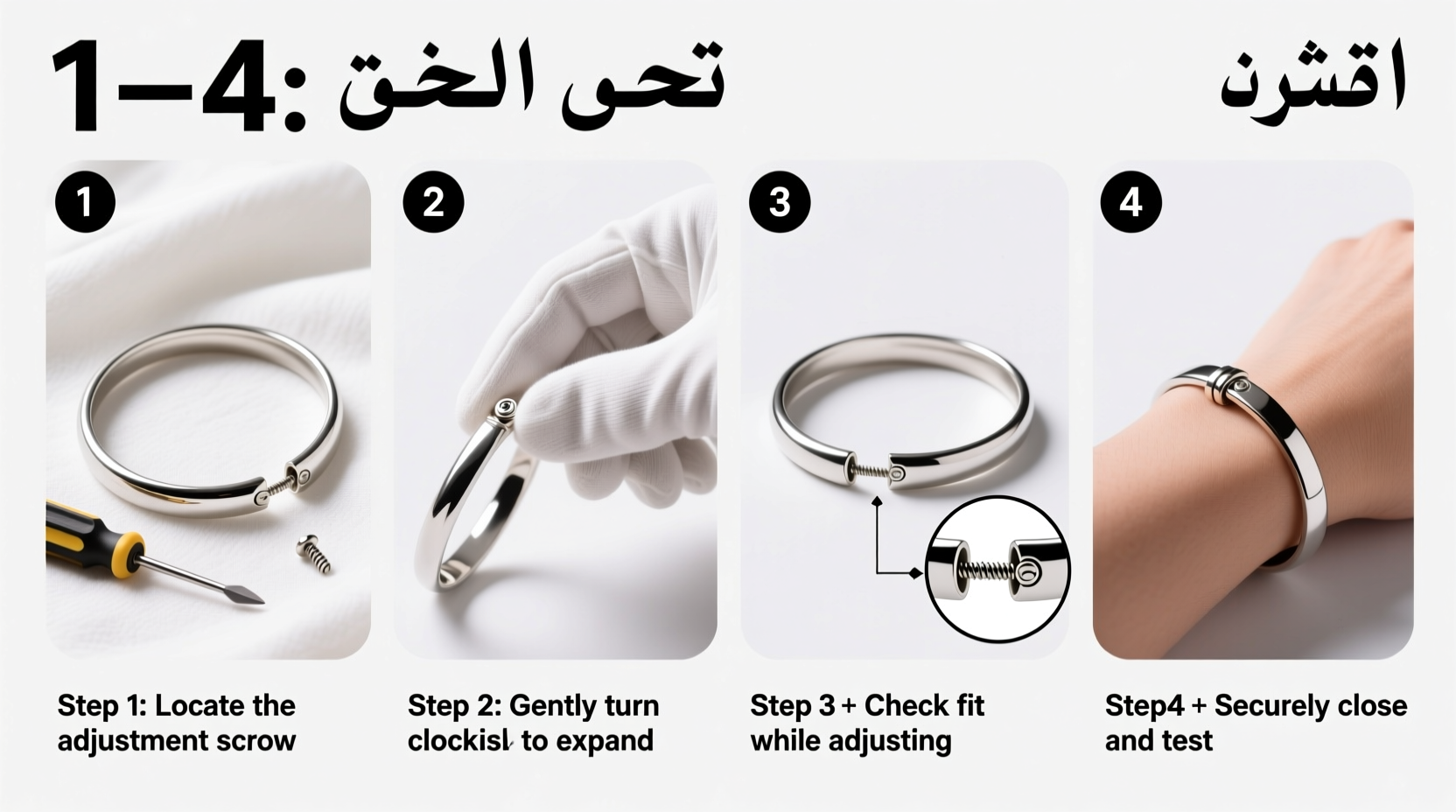
Before attempting any adjustment, it’s essential to understand how openable bangles work. These bracelets typically consist of a solid metal band with a deliberate gap between the two ends. The tension in the metal holds the bangle securely around the wrist while still allowing it to be gently flexed open for removal. Most are crafted from gold, silver, stainless steel, or plated alloys, each with different levels of malleability and resilience.
The key to successful resizing lies in respecting the natural spring tension of the band. Over-bending weakens the metal, especially at stress points near the opening. Jewelry experts emphasize that even minor misalignment can compromise long-term durability.
“An openable bangle relies on balanced tension. Resizing isn’t about forcing it smaller or larger—it’s about recalibrating that balance.” — Lena Patel, Master Jeweler & Designer at Heritage Metals Studio
Essential Tools and Materials
Resizing at home requires precision and care. Using improper tools can scratch the surface or create weak spots. Below is a list of recommended items:
- Soft-jaw pliers – Prevents scratching delicate metal surfaces
- Jeweler’s file – For smoothing rough edges (if needed)
- Measuring tape or caliper – Ensures accurate wrist and bangle measurements
- Cloth-lined vise or padded clamp – Holds the bangle steady during adjustment
- Gloves – Protects hands and improves grip control
- Lint-free cloth – For cleaning before and after handling
Step-by-Step Guide to Adjusting Your Bangle Size
Follow this careful process to resize your openable bangle without causing damage:
- Measure your wrist: Wrap a flexible measuring tape snugly around the widest part of your hand (usually across the knuckles) and note the circumference. Add ½ inch (1.3 cm) to ensure comfortable passage. This is your ideal internal diameter.
- Assess current fit: Try slipping the bangle over your hand. If it passes too easily or feels loose on the wrist, it likely needs tightening. If it won’t go on at all, slight widening may be required.
- Secure the bangle: Place the bracelet in a cloth-lined vise or hold it firmly with padded clamps. Position the gap so one end rests against the stationary jaw and the other remains free for manipulation.
- Apply gradual pressure: Using soft-jaw pliers, grasp the free end of the bangle. Gently bend it inward (to tighten) or outward (to loosen), applying force slowly in small increments—no more than 5 degrees at a time.
- Test frequently: After each adjustment, remove the bangle and test the fit. Avoid over-correcting; metal fatigue occurs quickly under repeated stress.
- Check symmetry: Ensure both ends align parallel when closed around the wrist. Misaligned ends indicate uneven bending and should be corrected immediately.
- Polish if necessary: Light buffing with a jewelry cloth removes fingerprints and restores shine. Use a jeweler’s file only if sharp edges develop—file minimally and smooth thoroughly.
Timeline for Safe Adjustment
| Step | Time Required | Frequency During Process |
|---|---|---|
| Measurement & Assessment | 5 minutes | Once at start |
| Securing Bangle | 2 minutes | Once per session |
| Adjustment (per increment) | 1–2 minutes | 3–5 times max |
| Fitting Test | 1 minute | After every adjustment |
| Final Inspection | 3 minutes | Once at end |
Do’s and Don’ts of Bangle Resizing
To prevent irreversible damage, follow these best practices:
| Do’s | Don’ts |
|---|---|
| Work slowly and test often | Rush the process or make large bends |
| Use protective padding on tools | Use bare metal pliers or hammers |
| Clean the bangle before adjusting | Handle with dirty or oily hands |
| Wear gloves for better control | Resize near gemstone settings (risk loosening stones) |
| Store properly after adjustment | Bend repeatedly in the same spot |
Real-Life Example: Restoring a Heirloom Bangle
Sophie inherited a vintage sterling silver openable bangle from her grandmother. Though beautiful, it slipped off her wrist with minimal movement—a sign of years of gentle stretching. She attempted to resize it using kitchen pliers but left visible tooth marks and worsened the fit. Concerned, she consulted a local artisan who guided her through a proper repair.
Using soft-jaw pliers and a padded vise, Sophie carefully compressed the bangle in 3-degree increments. After four adjustments and consistent testing, the bangle fit snugly yet comfortably. The artisan reminded her, “This piece has history. Treat it with patience, not force.” Today, Sophie wears it daily, proud of having preserved its legacy with informed care.
Expert Checklist for Safe Resizing
Use this checklist before beginning any adjustment:
- ☐ Confirm the bangle is truly openable (not a rigid design with a clasp)
- ☐ Clean the bracelet with a lint-free cloth
- ☐ Measure your wrist accurately
- ☐ Prepare soft-jaw pliers and a padded holding device
- ☐ Work in a well-lit, stable environment
- ☐ Plan incremental changes—not sudden bends
- ☐ Inspect for existing cracks or weak spots
- ☐ Avoid resizing near decorative elements or stones
Frequently Asked Questions
Can I resize an openable bangle multiple times?
Yes, but with caution. Each adjustment stresses the metal. Limit resizing to 2–3 times over the bracelet’s lifetime to avoid fatigue-induced breakage. After repeated changes, consider professional reinforcement or replacement.
What if my bangle breaks during adjustment?
If the metal snaps, stop immediately. Most broken bangles can be soldered by a professional jeweler. Attempting DIY fixes with glue or wire compromises safety and aesthetics. Take it to a reputable repair service for restoration.
Is it safe to resize plated or hollow bangles?
Extreme caution is required. Plated bangles risk exposing base metal if scratched during resizing. Hollow designs may collapse under pressure. For such pieces, professional assistance is strongly recommended.
Conclusion: Preserve Beauty Through Careful Handling
Adjusting the size of an openable bangle doesn’t require advanced skills—but it does demand respect for craftsmanship and material limits. With the right tools, a methodical approach, and attention to detail, you can maintain a perfect fit for years. Whether it’s a sentimental heirloom or a favorite fashion accessory, proper care ensures your bangle continues to grace your wrist with elegance and confidence.




 浙公网安备
33010002000092号
浙公网安备
33010002000092号 浙B2-20120091-4
Comments
No comments yet. Why don't you start the discussion?