
Removing the back of a watch is often necessary for battery replacement, cleaning, or inspecting internal components. While it may seem like a simple task, doing it incorrectly can lead to scratches, stripped screws, or even water resistance failure. With the right tools and approach, you can open your watch case safely at home. This guide walks you through every critical step, explains different case types, and shares professional insights to help preserve your timepiece’s integrity.
Understanding Watch Case Back Types
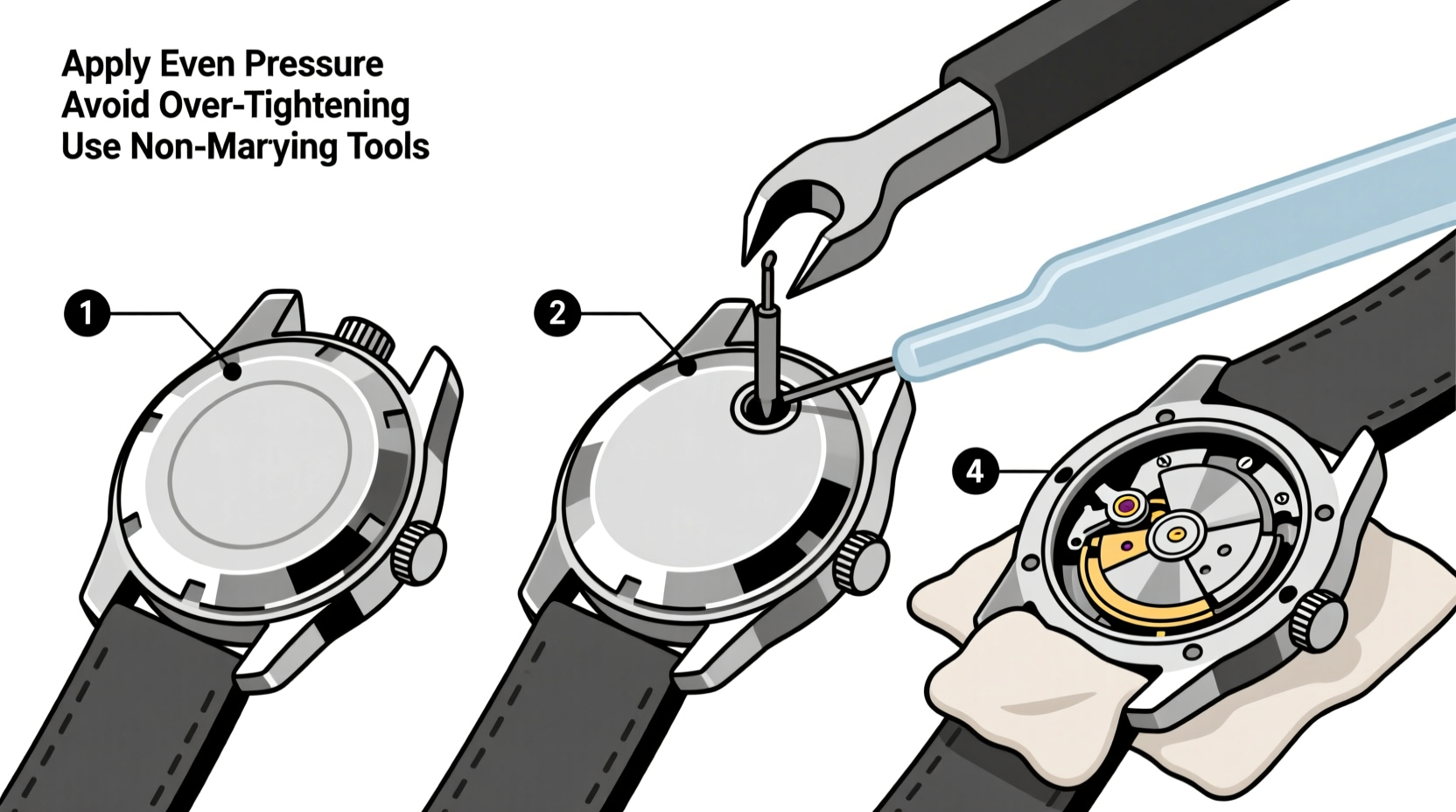
Before attempting removal, identify the type of case back on your watch. Each design requires a specific method and toolset. Mistaking one for another is a common cause of damage.
| Type | Description | Common Tools Needed | Found On |
|---|---|---|---|
| Snap-Off (Press-Back) | Held in place by friction; circular rim fits into grooves inside the case | Case knife, lever tool | Classic dress watches, vintage models |
| Screw-Down | Threaded edge that screws into the case; often has notches or indentations | Case wrench, pin spanner | Dive watches, Rolex, Omega |
| Screw-Back (Screw-in with Screws) | Secured with visible small screws around the perimeter | Precision screwdrivers (Jaxa or Jeweler’s set) | Casio G-Shock, some Citizen models |
| Hybrid (Screw Case with Snap-On Outer Ring) | Combination of threaded center and snap-on outer ring | Specialized wrench + case knife | Some modern chronographs |
Misidentifying the case type leads to using the wrong tool—often resulting in marring or irreversible damage. Always examine the edge closely under bright light before proceeding.
Essential Tools for Safe Removal
Using improper tools—like knives, pliers, or flathead screwdrivers—increases the risk of slipping and scratching the case. Invest in precision instruments designed for horology.
- Jeweler’s Screwdriver Set: Precision-ground tips prevent cam-out and protect tiny screws.
- Watch Case Opener (Knife): Thin, curved blade designed to wedge between case and back without gouging metal.
- Pin Spanner Wrench: Fits into notches on screw-down backs; available in multiple sizes.
- Case Wrench (Hook-Type): Engages lugs on certain screw-down cases for even torque distribution.
- Non-Slip Mat: Keeps the watch stable during work; rubber or micro-suction pads are ideal.
- Magnifier or Loupe: Helps inspect fine details and alignment before applying force.
“Amateurs often underestimate how little force is needed. A watch case is engineered for precision, not brute strength.” — Daniel Reyes, Master Watchmaker, Swiss Time Institute
Step-by-Step Guide to Removing the Watch Back
Follow this universal sequence tailored to each major case type. Work slowly, maintain control, and never rush the process.
- Prepare Your Workspace
Choose a clean, well-lit surface. Lay down a soft cloth or non-slip mat. Keep tools organized and within reach. - Identify the Case Type
Examine the back under magnification. Look for notches, screws, or seams. Confirm whether it's snap, screw, or hybrid. - Secure the Watch
Hold firmly but gently. Use a case holder if available, or place the watch face-down on a padded surface with only the back exposed. - Apply the Correct Tool
For Snap-Back Cases: Insert the tip of a case knife into the gap between the case and back. Rotate slightly to release tension. Move around the edge in small increments.
For Screw-Down Cases: Align the pins of a pin spanner with the notches. Turn counterclockwise with steady, gentle pressure. Do not rock side-to-side.
For Screw-Back Models: Use the correct-sized screwdriver. Remove screws in a crisscross pattern to avoid warping the back plate. - Lift the Back Carefully
Once loosened, lift straight off. Avoid tilting or twisting, especially if gaskets are present. Inspect the interior for dust, moisture, or corrosion. - Store Screws Safely
Place removed screws in a labeled container or magnetic tray. Losing even one can compromise reassembly and water resistance.
Reassembly Tips
When closing the case, ensure the gasket (if present) is clean and seated properly. For screw-down and snap-back models, press or tighten evenly. Over-tightening can distort threads or crush seals.
Common Mistakes and How to Avoid Them
Even experienced hobbyists make errors when fatigued or rushed. Recognizing these pitfalls improves success rates.
- Using household tools: Kitchen knives or pliers lack precision and can slip, damaging both case and hands.
- Applying uneven pressure: Turning a wrench with one hand while holding the watch loosely causes wobbling and slippage.
- Ignoring gasket condition: A cracked or dry gasket compromises water resistance—even if the case closes perfectly.
- Skipping cleaning: Dirt trapped between the case and back prevents proper sealing and accelerates wear.
Do’s and Don’ts Summary
| Do’s | Don’ts |
|---|---|
| Use purpose-built watch tools | Use improvised tools like butter knives |
| Work under bright, focused light | Rush the process in dim lighting |
| Clean the case seam before opening | Force the back if it resists |
| Inspect gaskets and lugs regularly | Expose movement to dust or moisture unnecessarily |
Real Example: Repairing a Vintage Seiko Dress Watch
A collector named Marcus received a 1972 Seiko 5 with a dead battery. The case back was a snap-off type, but years of oxidation had sealed it tightly. Instead of prying aggressively, he placed the watch on a warm towel (not hot) for two minutes—the slight expansion helped break the seal. Using a plastic stylus wrapped in tape to protect the finish, he gently worked around the edge until the back released. He replaced the battery, cleaned the contact points, and reused the original gasket after conditioning it with silicone grease. The watch regained its water resistance and continues to run accurately.
This case highlights patience and understanding material behavior—heat and time can be more effective than force.
Frequently Asked Questions
Can I damage my watch just by opening the back?
Yes. Improper technique can scratch the case, strip notches, or dislodge internal components. Even minor misalignment can compromise water resistance. Always use the correct tool and proceed cautiously.
What should I do if the back won’t budge?
Do not apply excessive force. First, confirm you’re using the right tool and method. Try warming the outer case slightly with your hands or a warm cloth to expand the metal. If still stuck, stop and consult a professional—forcing it risks permanent damage.
Is it safe to open a waterproof watch at home?
It can be, provided you understand the resealing process. Opening breaks the factory seal. To restore water resistance, the gasket must be intact, clean, and properly lubricated. If in doubt, have a jeweler test the pressure seal after reassembly.
Final Checklist Before You Begin
- ✅ Identify the case back type (snap, screw, or screw-in)
- ✅ Gather appropriate tools (no substitutes)
- ✅ Clean the case edge to remove debris
- ✅ Work on a stable, padded surface
- ✅ Have a secure place to store screws and small parts
- ✅ Inspect gasket condition before reassembly
- ✅ Test timekeeping and functions afterward
Conclusion
Opening a watch back doesn’t require a degree in horology, but it does demand respect for precision engineering. By identifying your case type, using the correct tools, and following a methodical approach, you can perform basic maintenance without harm. Whether replacing a battery or simply admiring the craftsmanship beneath the dial, doing it right protects both function and value.




 浙公网安备
33010002000092号
浙公网安备
33010002000092号 浙B2-20120091-4
Comments
No comments yet. Why don't you start the discussion?