
Quartz watches are reliable, accurate, and often cherished for their craftsmanship or sentimental value. When the second hand begins to stutter or stop altogether, the culprit is usually a dead battery. While many people take their watches to jewelers for replacement, doing it yourself can save time and money—especially if you own multiple timepieces. With the right tools and careful attention, replacing a quartz watch battery at home is a manageable task. This guide walks you through each stage, from identifying your watch case type to resealing and testing, ensuring the job is done safely and correctly.
Understanding Your Watch Case Type
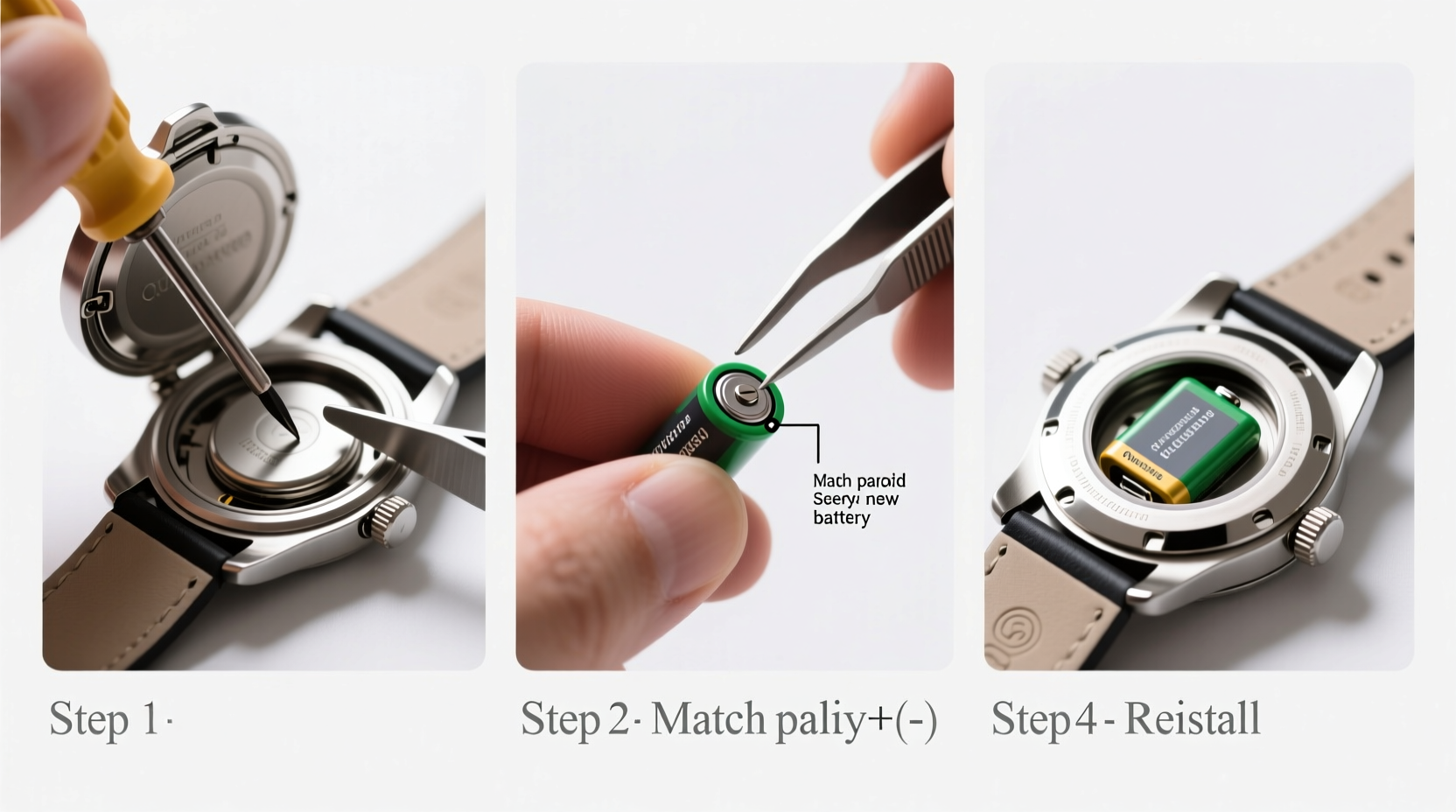
Before attempting any disassembly, it’s essential to identify how your watch case opens. There are three primary types: snap-back, screw-back, and case-back with screws. Each requires a different approach and set of tools.
- Snap-back: The back panel is pressed into place and can be pried open with a thin blade or case knife.
- Screw-back: Features notches around the edge; requires a specialized wrench to unscrew.
- Screw-down (with visible screws): Has small screws securing the back—common in dive watches. Requires precision screwdrivers.
Misidentifying the case type can lead to scratches, stripped edges, or even cracked crystals. Always examine the back carefully under good lighting before proceeding.
Tools and Materials You’ll Need
Attempting this without the proper tools increases the risk of damage. Here’s what you should have on hand:
| Tool/Material | Purpose |
|---|---|
| Case opening tool or precision knife | To gently pry open snap-back cases |
| Case wrench (for screw-back models) | To grip and unscrew the back safely |
| Precision screwdriver set (0.5–1.5mm) | For watches with retaining screws |
| Plastic or non-metallic tweezers | To handle the battery without shorting it |
| Blu-Tack or lint-free cloth | To secure the watch face down during work |
| New battery (correct model) | Match voltage and size exactly—usually labeled inside the case |
| Latex or nitrile gloves | To prevent oils from fingers contaminating internal parts |
| Watch crystal protector (optional) | Prevents accidental scratching of the glass |
“Replacing a watch battery seems simple, but one slip with a metal tool can scratch the movement or cause a short. Patience and the right tools make all the difference.” — Daniel Reeves, Master Watchmaker
Step-by-Step Guide to Battery Replacement
Follow these steps carefully to ensure a successful and safe battery change:
- Prepare your workspace: Choose a clean, well-lit area free of dust and clutter. Lay out all tools and materials. Wear gloves to avoid transferring skin oils to delicate components.
- Identify the correct battery: Open the old battery compartment and note the number printed on the battery (e.g., CR2032, SR626SW). Purchase an exact replacement—lithium vs. silver oxide chemistry matters for longevity and voltage stability.
- Open the case back:
- For snap-back cases: Place the watch face-down on a soft cloth. Insert the case knife into the groove and gently twist to pop the back off.
- For screw-back cases: Align the case wrench with the notches and turn counterclockwise until loose.
- For screw-secured backs: Use the appropriate screwdriver to remove each tiny screw carefully. Keep them in a labeled container.
- Remove the movement cover (if present): Some watches have a metal shield over the movement. Unscrew or unclip it using plastic tools to avoid scratching.
- Locate and remove the battery: Identify the battery holder. If there’s a clip, gently lift it with a plastic tool. Use non-conductive tweezers to remove the old battery. Never use metal tweezers—they can short the circuit.
- Clean the battery compartment: Wipe away any corrosion with a cotton swab lightly dampened with isopropyl alcohol. Let it dry completely before inserting the new battery.
- Insert the new battery: Ensure the positive (+) side faces up unless otherwise indicated. Gently press it into place and reattach the clip or retainer.
- Test the watch: Wait 10–15 seconds for the circuit to activate. The second hand should begin moving steadily. If not, double-check the battery orientation and contact points.
- Reassemble the case: Replace any shields, then carefully align and close the back. For snap-backs, press evenly around the edge until it clicks. For screw-backs, tighten securely but do not over-torque.
- Check water resistance (if applicable): If your watch is water-resistant, consider replacing the gasket during reassembly. Without a fresh seal, moisture can enter and damage the movement.
Common Mistakes and How to Avoid Them
Even experienced DIYers can make errors when working with tiny components. Awareness helps prevent costly damage.
- Using metal tools near the movement: Can cause scratches or electrical shorts. Stick to plastic or nylon implements.
- Touching the battery with fingers: Skin oils reduce battery life. Always handle with tweezers.
- Forcing the case back: Misalignment can warp the case or break the seal. Ensure perfect alignment before closing.
- Ignoring gasket condition: A dried-out or cracked gasket compromises water resistance. Inspect it and replace if necessary.
- Using the wrong battery: Incorrect voltage or size can damage the movement. Always match the original specification.
Mini Case Study: Reviving a Heirloom Watch
Sarah inherited her grandfather’s vintage Citizen quartz watch—a classic piece from the 1980s. It hadn’t worked in years. Instead of paying $40 for a professional service, she decided to try replacing the battery herself. After identifying the snap-back case and sourcing a CR1616 battery, she followed the steps outlined here. She discovered minor corrosion in the compartment, cleaned it gently, and inserted the new battery. To her delight, the watch started immediately. She later replaced the aged gasket and now wears it regularly. The total cost was under $10, and the emotional value was priceless.
Frequently Asked Questions
How long does a quartz watch battery typically last?
Most last between 1.5 to 3 years, depending on the model, features (like backlight or chronograph), and usage. Some high-efficiency movements can run up to 5 years.
Can I damage my watch by replacing the battery myself?
You can—if you use improper tools, force components, or introduce dust or moisture. However, with care and the correct method, the risk is minimal. Watches without water resistance are generally safer to attempt at home.
What should I do if the watch doesn’t start after battery replacement?
First, verify the battery is inserted correctly. Check for poor contact or debris in the holder. If still unresponsive, the movement may need servicing. Avoid repeated attempts that could drain the new battery.
Final Checklist Before You Begin
- ✅ Clean, well-lit workspace
- Minimizes risk of losing small parts.
- ✅ Correct replacement battery
- Double-check model number and chemistry.
- ✅ Proper tools assembled
- No improvisation with knives or pliers.
- ✅ Gloves and non-static surface
- Protects against contamination and static discharge.
- ✅ Time and patience
- Rushing leads to mistakes. Set aside 20–30 minutes.
Conclusion
Replacing a quartz watch battery at home is a practical skill that empowers you to maintain your timepieces without relying on third parties. With attention to detail, the right tools, and a steady hand, you can preserve both function and sentiment. Whether it’s a daily wearer or a family heirloom, giving it new life is deeply satisfying. Start with a less valuable watch to build confidence, then apply your knowledge across your collection.




 浙公网安备
33010002000092号
浙公网安备
33010002000092号 浙B2-20120091-4
Comments
No comments yet. Why don't you start the discussion?