
Garage door extension springs play a critical role in counterbalancing the weight of your garage door, making it easier to open and close. Over time, these springs weaken or break due to constant tension and wear. Replacing them is not only necessary for smooth operation but also essential for safety. While many homeowners hesitate to tackle this job themselves, doing so correctly can save hundreds on service calls—provided you follow strict safety protocols. This guide walks you through every phase of replacing extension springs safely, efficiently, and like a seasoned technician.
Why Safety Comes First
Extension springs are under high tension even when the garage door is closed. A sudden release of that energy can cause serious injury or damage. According to the U.S. Consumer Product Safety Commission, thousands of garage door-related injuries occur annually—many involving spring replacement attempts without proper precautions.
Before touching any hardware, understand that these springs store significant kinetic energy. One misstep—such as failing to secure the door or releasing tension incorrectly—can send metal flying at dangerous speeds. Always wear protective eyewear, gloves, and long sleeves. Never attempt this repair if you're unsure or uncomfortable at any point.
“Garage door springs are among the most hazardous components in a home system. Respect the tension, use the right tools, and never rush.” — James Holloway, Certified Door Technician (CDT), 15+ years in residential garage systems
Tools and Materials Checklist
Gathering everything beforehand ensures a smooth process and reduces the risk of having to stop mid-job. Here’s what you’ll need:
- Safety goggles and work gloves
- Two C-clamps or locking pliers
- A sturdy ladder (6–8 feet)
- Wrench set (adjustable or combination wrenches)
- Socket set
- Tape measure
- New extension springs (matched to door weight and length)
- Replacement pulleys and cables (if worn)
- Open-end wrench (size depends on fasteners used)
- Workbench vise (optional, for pre-stretching springs)
Step-by-Step Replacement Process
Follow this timeline-based sequence carefully. Allow 2–3 hours for the full job, especially if it's your first time.
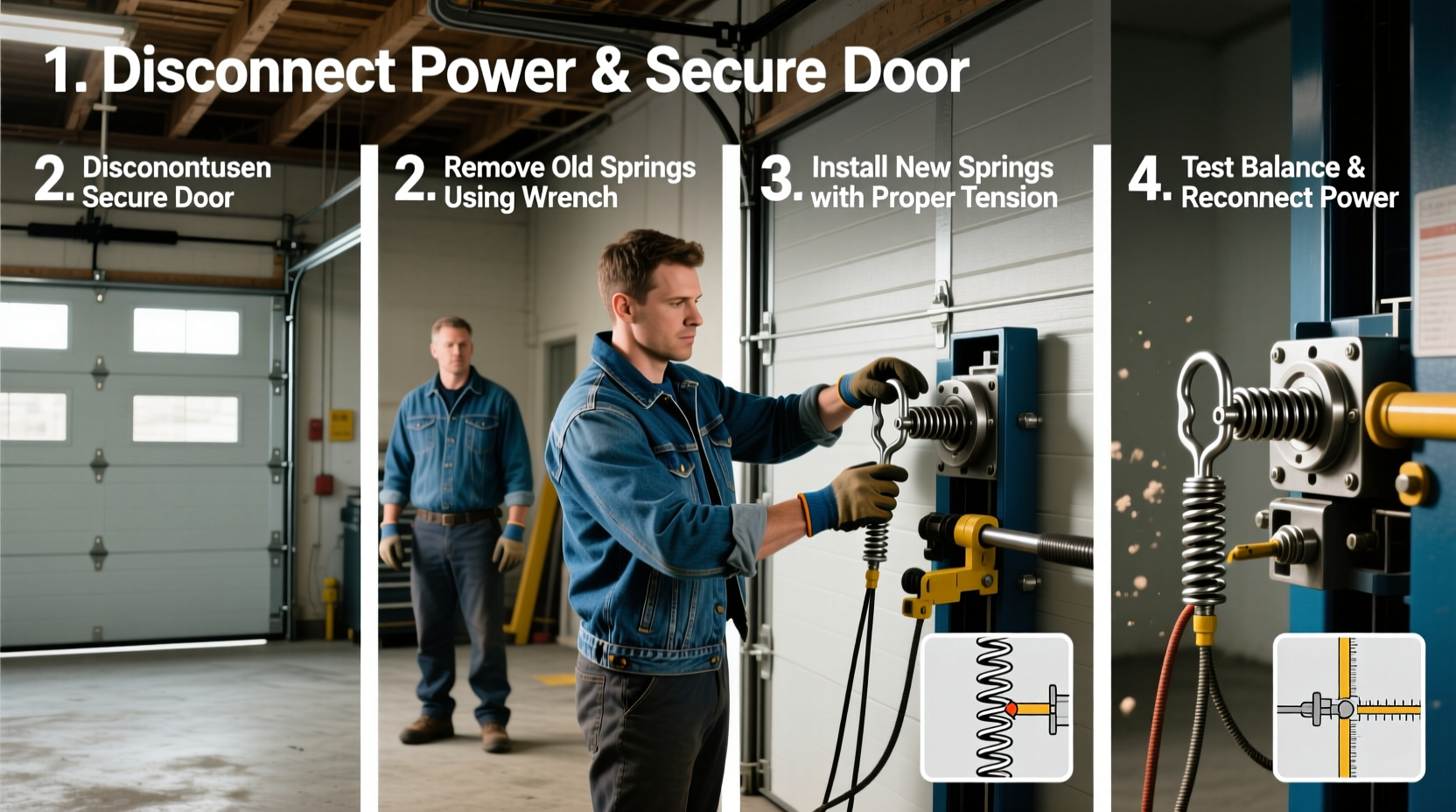
- Disconnect the garage door opener: Pull the emergency release cord to disengage the motor. This prevents accidental activation while working.
- Close the garage door completely: Ensure it’s fully shut and stable. Do not proceed if the door sags or moves unevenly.
- Secure the door with C-clamps: Place heavy-duty C-clamps just below the bottom rollers on both vertical tracks. This prevents the door from lifting unexpectedly.
- Relieve tension from old springs: Use a wrench to loosen the eye bolt holding the spring to the track bracket. Let the spring retract slowly—never let go abruptly.
- Remove the old spring and cable assembly: Detach the pulley end from the header bracket and unhook the cable from the roller bracket. Inspect pulleys and rollers for cracks or wear.
- Measure and match new springs: Confirm the length, wire thickness (gauge), and stretch capacity. Most standard single-car doors require 0.250-inch diameter springs stretched to 42 inches; double-car doors often need longer or heavier-duty versions.
- Install the new spring and cable: Hook one end into the track bracket and thread the cable through the pulley. Attach the pulley to the header bracket using a clevis pin and cotter pin.
- Pre-stretch the spring (recommended): Using a vise or specialized tool, gently stretch the new spring to about 80% of its operating length before final attachment. This reduces initial shock load.
- Reattach and adjust tension: Reconnect the spring eye bolt and tighten securely. The cable should be taut but not overly tight when the door is closed.
- Test manually: Remove C-clamps and lift the door halfway. It should stay in place without drifting up or down. If it doesn’t, adjust spring tension incrementally.
- Reconnect the opener and test: Re-engage the garage door opener and run several cycles. Listen for grinding, squeaking, or uneven movement.
Do’s and Don’ts: Critical Guidelines
| Do’s | Don’ts |
|---|---|
| Always wear eye protection and gloves | Never stand directly beneath the spring or track |
| Double-check spring specifications before buying | Don’t reuse frayed cables or cracked pulleys |
| Use C-clamps to lock the door in place | Don’t skip disconnecting the automatic opener |
| Test balance after installation | Don’t over-tighten bolts or force misaligned parts |
| Lubricate pulleys and tracks post-installation | Don’t attempt repairs during windy or wet conditions |
Real-World Example: Homeowner Success Story
Mark T., a DIY enthusiast from Ohio, replaced both extension springs on his 16x7 insulated steel door after noticing slow response and loud popping noises. He followed the steps outlined here, measuring the old springs precisely and ordering exact replacements online. By securing the door with C-clamps and pre-stretching the new springs, he avoided imbalance issues. After reassembly, the door lifted smoothly and stayed balanced midway. “I saved $320 on a service call,” Mark said. “But more importantly, I now know how my garage system works and feel confident maintaining it.”
Frequently Asked Questions
How do I know if my extension springs need replacing?
Signs include visible gaps in the coil (indicating breakage), sagging on one side, loud snapping or banging sounds, or difficulty opening the door manually. Springs typically last 10,000 cycles—about 7–10 years with average use.
Can I replace just one spring instead of both?
No. Even if only one breaks, the other is equally fatigued. Replacing both ensures balanced tension and prevents future strain on the newer spring. Mismatched springs lead to uneven lifting and accelerated wear.
What size extension spring do I need?
The correct size depends on door weight, height, and material. Measure the old spring’s length when relaxed and note the wire gauge. For example, a typical 7-foot-high, 160-pound door uses two 0.250-inch-diameter springs stretched to 42 inches. Manufacturer labels or online lookup tools based on door model can also help.
Final Thoughts and Call to Action
Replacing garage door extension springs isn’t trivial—but with the right knowledge, tools, and caution, it’s a manageable project that empowers homeowners and saves money. You don’t need to be a licensed technician to do quality work; you just need attention to detail and respect for the forces involved. Take your time, follow each step deliberately, and prioritize safety above speed.
If you’ve successfully replaced your springs, consider sharing your experience with others tackling the same job. Whether it’s a photo-free tip or a cautionary note, your insight could prevent an injury or inspire confidence in someone else. The DIY community thrives on shared wisdom—join the conversation and help raise standards for safe home maintenance.




 浙公网安备
33010002000092号
浙公网安备
33010002000092号 浙B2-20120091-4
Comments
No comments yet. Why don't you start the discussion?