
Quartz watches are prized for their precision and reliability, but even the most dependable timepiece will eventually need a new battery. While many owners default to professional servicing, replacing a quartz watch battery at home is entirely feasible with the right tools and knowledge. Done correctly, it saves money and gives you greater control over your watch’s maintenance. However, improper handling can lead to damage, moisture intrusion, or loss of water resistance. This comprehensive guide walks you through each stage of the process—safely, efficiently, and without unnecessary risk.
Gather the Right Tools and Materials
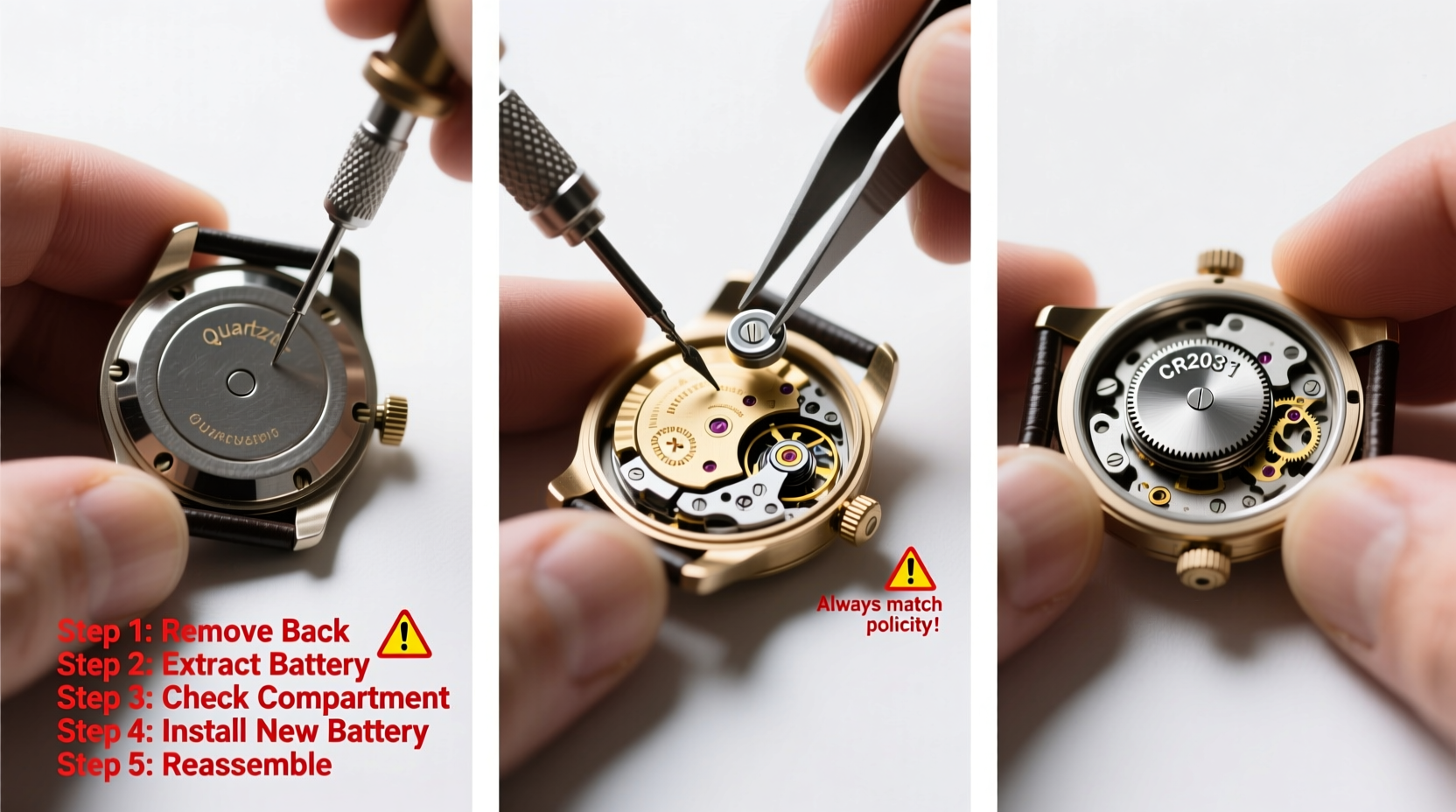
Before attempting any work on your watch, ensure you have the proper equipment. Using improvised tools like screwdrivers or pliers increases the risk of scratching the case or damaging delicate components. Invest in a basic watch repair toolkit, which typically includes:
- Case back opener (either a friction ring tool or a set of precision screwdrivers)
- Plastic or non-magnetic tweezers
- Blade-style knife or plastic pry tool
- Loupe or magnifying glass
- Cleaning brush or soft cloth
- New battery (correct size and model for your watch)
- Rubber mat or soft surface to prevent scratches
Ensure your workspace is clean, well-lit, and free of static electricity. Dust and lint can interfere with internal mechanisms, so consider working in a low-humidity area away from open windows or fans.
Understanding Your Watch Case Back Type
The first physical challenge lies in opening the case back. There are three common types, each requiring a different approach:
| Case Back Type | Description | Opening Method |
|---|---|---|
| Friction-Fit (Snap-On) | Pressed into place with a groove; common in older or budget models | Use a case knife or pry tool at the notch |
| Screw-Down | Has notches around the edge that thread into the case; often used in water-resistant watches | Use a friction ring tool or specialized wrench |
| Screw-Off (with screws) | Secured by small screws around the perimeter | Use a precision Phillips or flathead screwdriver |
Identify your case back before applying force. Forcing a snap-back cover with a screw tool can deform the rim and compromise the seal. Similarly, using a knife on a screw-down back may strip the notches.
“Many people ruin their watches at the very first step by using the wrong tool. A $15 case opener prevents hundreds in replacement costs.” — Daniel Reyes, Master Watch Technician, Swiss Timeworks
Step-by-Step Battery Replacement Process
Follow this sequence carefully to minimize risk and ensure a smooth reassembly.
- Power down the watch: Remove the current battery or let it drain completely. This avoids accidental short-circuiting during handling.
- Clean the exterior: Wipe the case with a microfiber cloth to remove dust and oils. This reduces contamination when opened.
- Open the case back:
- For snap-on backs: Insert the blade into the notch and gently twist to pop it open.
- For screw-down backs: Align the friction tool and turn counterclockwise until loose.
- For screw-off backs: Carefully unscrew each screw and place them on a labeled tray.
- Inspect the interior: Look for signs of moisture, corrosion, or debris. If condensation or rust is present, do not proceed—seek professional service.
- Remove the old battery: Use plastic tweezers to lift the battery out. Avoid touching the movement with metal tools.
- Clean the battery compartment: Gently brush away any residue. Do not use liquids or solvents.
- Insert the new battery: Ensure correct polarity (+ side up, unless specified otherwise). Press it firmly into the holder.
- Test the watch: Wait a few seconds for the hands to start moving. Confirm the second hand ticks smoothly.
- Re-seal the case:
- For snap-on: Align the back and press evenly around the edges until it clicks.
- For screw-down: Re-engage threads and tighten with moderate pressure.
- For screw-off: Replace screws and tighten uniformly to avoid warping.
- Check timekeeping: Set the correct time and observe accuracy over 24 hours.
Avoiding Common Mistakes: Do’s and Don’ts
Even experienced hobbyists make errors that compromise function or longevity. Refer to this checklist to stay on track.
| Action | Do | Don't |
|---|---|---|
| Handling the movement | Use plastic tweezers and avoid touching gears | Use metal tools near circuitry |
| Battery installation | Verify voltage and size before insertion | Force a misfitting battery |
| Reassembly | Ensure gasket is seated properly (if present) | Overtighten screws or unevenly clamp the case |
| Post-repair | Wipe seals and apply a tiny drop of silicone grease if needed | Expose to water immediately after repair |
One of the most frequent oversights is neglecting the rubber gasket. In water-resistant models, this small ring maintains the seal. If damaged or displaced during removal, water can enter the case, leading to fogging or corrosion. Inspect it closely and replace it every 2–3 battery changes.
Real Example: Sarah’s Successful DIY Repair
Sarah, a teacher and vintage watch collector, inherited her grandmother’s 1980s Seiko quartz dress watch. It had stopped running, and local jewelers quoted $40 just for a battery change—including labor and case polishing she didn’t want. After researching online, she purchased a $25 tool kit and identified her watch as having a screw-down case back. She followed a methodical process: cleaned the exterior, used a friction tool to open the back, replaced the SR626SW battery, and confirmed operation within seconds. The entire job took 18 minutes. Two months later, the watch remains accurate and holds sentimental value far beyond its monetary worth.
Her experience highlights how a little preparation empowers owners to maintain heirloom pieces without surrendering them to third parties.
Frequently Asked Questions
How often should I replace my quartz watch battery?
Most quartz batteries last between 1.5 and 3 years, depending on features like backlighting or chronograph functions. Replace it as soon as the watch starts losing time or stops altogether to prevent leakage.
Can I damage my watch by replacing the battery myself?
You can, if you use incorrect tools or mishandle internal parts. However, with patience and the right kit, the risk is minimal. Watches without water resistance are generally safer to open at home.
What should I do if the watch doesn’t start after battery replacement?
Double-check the battery orientation and contact points. Sometimes the battery needs a few minutes to engage. If still unresponsive, the movement may be faulty or the battery dead on arrival—try a fresh one before concluding failure.
Final Checklist Before You Begin
- ✅ Identify your case back type
- ✅ Obtain the correct replacement battery
- ✅ Prepare a clean, static-free workspace
- ✅ Use only non-metallic tools near the movement
- ✅ Inspect gaskets and seals for wear
- ✅ Test operation before final closure
- ✅ Record the date of replacement for future tracking
Conclusion
Replacing a quartz watch battery is a straightforward task when approached with care and the right tools. Beyond saving money, mastering this skill fosters a deeper appreciation for horology and empowers you to preserve timepieces that matter. Whether it’s a daily wearer or a family heirloom, taking ownership of its maintenance ensures it continues ticking for years to come. With practice, what once seemed daunting becomes routine—and deeply satisfying.




 浙公网安备
33010002000092号
浙公网安备
33010002000092号 浙B2-20120091-4
Comments
No comments yet. Why don't you start the discussion?