
Replacing the battery in a quartz watch might seem like a simple task, but doing it incorrectly can compromise water resistance, damage the movement, or even scratch the case. Many people opt for professional services, but with the right tools and careful attention, you can perform this maintenance at home—saving time and money while gaining confidence in handling delicate instruments. This guide walks you through each phase of the process, from preparation to reassembly, ensuring your watch continues to keep precise time.
Gather the Right Tools and Materials
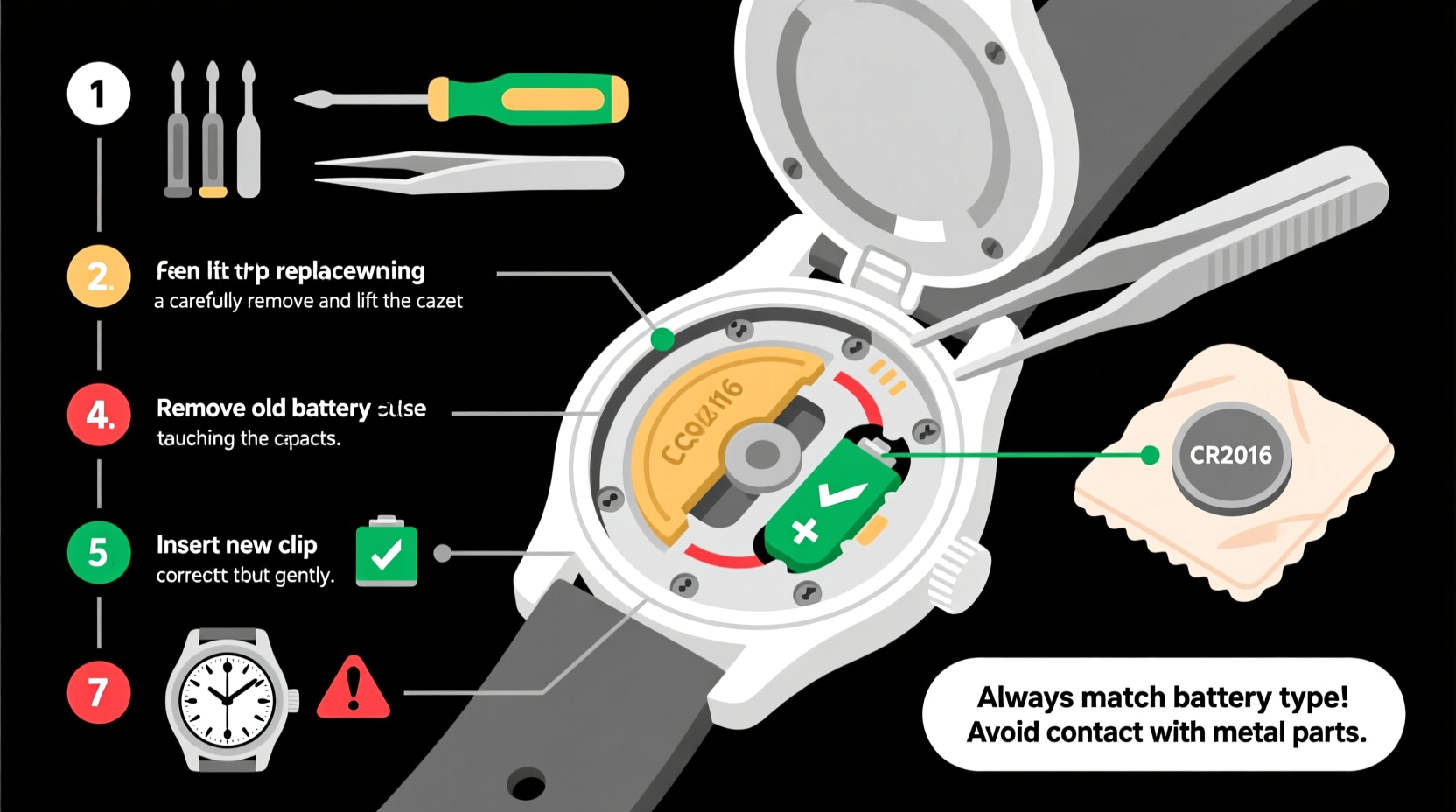
Before opening your watch, ensure you have all necessary tools on hand. Using improper equipment increases the risk of slipping, scratching, or damaging internal components. The following items are essential:
- Case back opener (either a lug wrench for snap-back cases or a screwcase tool for threaded backs)
- Plastic or nylon tweezers (metal can short-circuit the movement)
- Blade-type or plastic spudger for prying open tight cases
- Watchmaker’s loupe or magnifying glass
- Clean, lint-free cloth or mat
- New battery (matched precisely to your model’s specification)
- Rubber ball or demagnetizer (optional, for static removal)
Step-by-Step Battery Replacement Process
- Power Down Safely: Remove the current battery only after preparing your workspace. Avoid touching the circuitry with bare fingers to prevent oil transfer.
- Open the Case Back: For snap-back models, place the watch face-down on a soft cloth. Align the case opener with the notches and apply steady pressure counterclockwise. For screw-back cases, turn the tool clockwise to loosen.
- Inspect the Interior: Once open, use a loupe to examine the movement. Look for corrosion, moisture, or debris. If present, do not proceed—seek professional cleaning.
- Remove the Old Battery: Use plastic tweezers to gently lift the battery from its holder. Some models have a retaining clip; carefully release it before extraction.
- Clean the Battery Compartment: Wipe around the contact points with a dry cotton swab. Do not use liquids unless advised by the manufacturer.
- Insert the New Battery: Place the new battery with the positive side up (unless specified otherwise). Ensure it sits flush and does not tilt.
- Test Before Closing: Wait 10–15 seconds for the movement to activate. Check that the second hand moves smoothly. If not, reseat the battery.
- Reattach the Case Back: For snap-backs, align the case and press evenly using a rubber pad or palm press. For screw-backs, thread carefully by hand first, then tighten with moderate force.
Preserving Water Resistance and Longevity
One of the most overlooked aspects of DIY battery replacement is maintaining water resistance. Most watches lose their seal integrity when opened, especially if the gasket isn’t inspected or lubricated.
| Maintenance Step | Recommended Action | Avoid |
|---|---|---|
| Gasket Inspection | Check for cracks, flattening, or brittleness | Using a damaged or aged gasket |
| Gasket Lubrication | Apply silicone-based grease sparingly | Using petroleum jelly or excessive lube |
| Seal Testing | Have pressure tested professionally post-replacement | Assuming water resistance remains intact |
“Even a minor misalignment in the case back can compromise a 100-meter water-resistant rating. After any service, pressure testing is non-negotiable.” — Daniel Reeves, Master Watch Technician, Geneva Horology Institute
Common Mistakes and How to Avoid Them
Amateur repairs often fail due to small oversights. These recurring errors can be prevented with awareness:
- Using metal tools near the movement: Risk of shorting the circuit or scratching the dial.
- Touching the battery with fingers: Skin oils reduce battery life and may cause leakage.
- Forcing a stuck case back: Can deform the case or break lugs. Apply penetrating oil and wait 5 minutes if resistant.
- Ignoring battery expiration dates: Old stock batteries may have diminished charge. Buy from reputable suppliers.
Mini Case Study: A Recovered Heirloom Watch
Sarah inherited her grandfather’s vintage Seiko quartz from the 1980s. It hadn’t run in over a decade. She attempted a battery swap using kitchen tweezers and a flathead screwdriver. The second hand jittered but stopped after two minutes. Upon closer inspection, she realized the battery was slightly tilted and the case back wasn’t sealing. After purchasing proper tools and a fresh SR626SW battery, she reopened the watch, cleaned the contacts, and seated the battery correctly. The watch resumed ticking instantly. She later sent it to a local jeweler for a $20 pressure test, restoring both function and sentimental value.
Essential Checklist for Safe Battery Replacement
- ✔ Identify correct battery type via model number
- ✔ Work on a clean, static-free surface
- ✔ Use non-conductive tools (plastic tweezers, nylon spudger)
- ✔ Inspect gasket condition and lubricate if needed
- ✔ Test operation before fully closing the case
- ✔ Re-seal the case back properly and evenly
- ✔ Schedule professional pressure test if water resistance matters
Frequently Asked Questions
How often should I replace my quartz watch battery?
Most quartz batteries last between 1.5 to 3 years. Signs of low power include erratic timekeeping, a second hand jumping in two-second intervals, or complete stoppage. Replace promptly to avoid potential leakage.
Can I damage the movement by replacing the battery myself?
Yes—if you use metal tools, touch sensitive parts, or introduce dust into the movement. However, with proper tools and technique, the risk is minimal. Avoid touching the coil or circuit board directly.
Is it worth replacing the battery in a cheap watch?
It depends. If the watch has sentimental value or reliable timekeeping, yes. But consider that labor costs at jewelers often exceed the watch’s value. DIY makes economic sense here, provided you’re cautious.
Final Thoughts and Call to Action
Replacing a quartz watch battery at home is a skill that combines precision, patience, and respect for fine mechanics. When done correctly, it extends the life of your timepiece and deepens your appreciation for its engineering. Whether you're maintaining a daily wearer or reviving a family heirloom, the ability to service your own watch empowers you to take control of its care.




 浙公网安备
33010002000092号
浙公网安备
33010002000092号 浙B2-20120091-4
Comments
No comments yet. Why don't you start the discussion?