
Obtaining a Permanent Resident Card—commonly known as a Green Card—is a pivotal milestone for immigrants seeking long-term stability in the United States. It grants the legal right to live and work permanently in the country and serves as a critical step toward U.S. citizenship. However, the process is complex, highly regulated, and often overwhelming without proper guidance. This comprehensive guide walks you through every essential phase—from determining eligibility to receiving your card—ensuring you approach each step with clarity and confidence.
Determine Your Eligibility Pathway
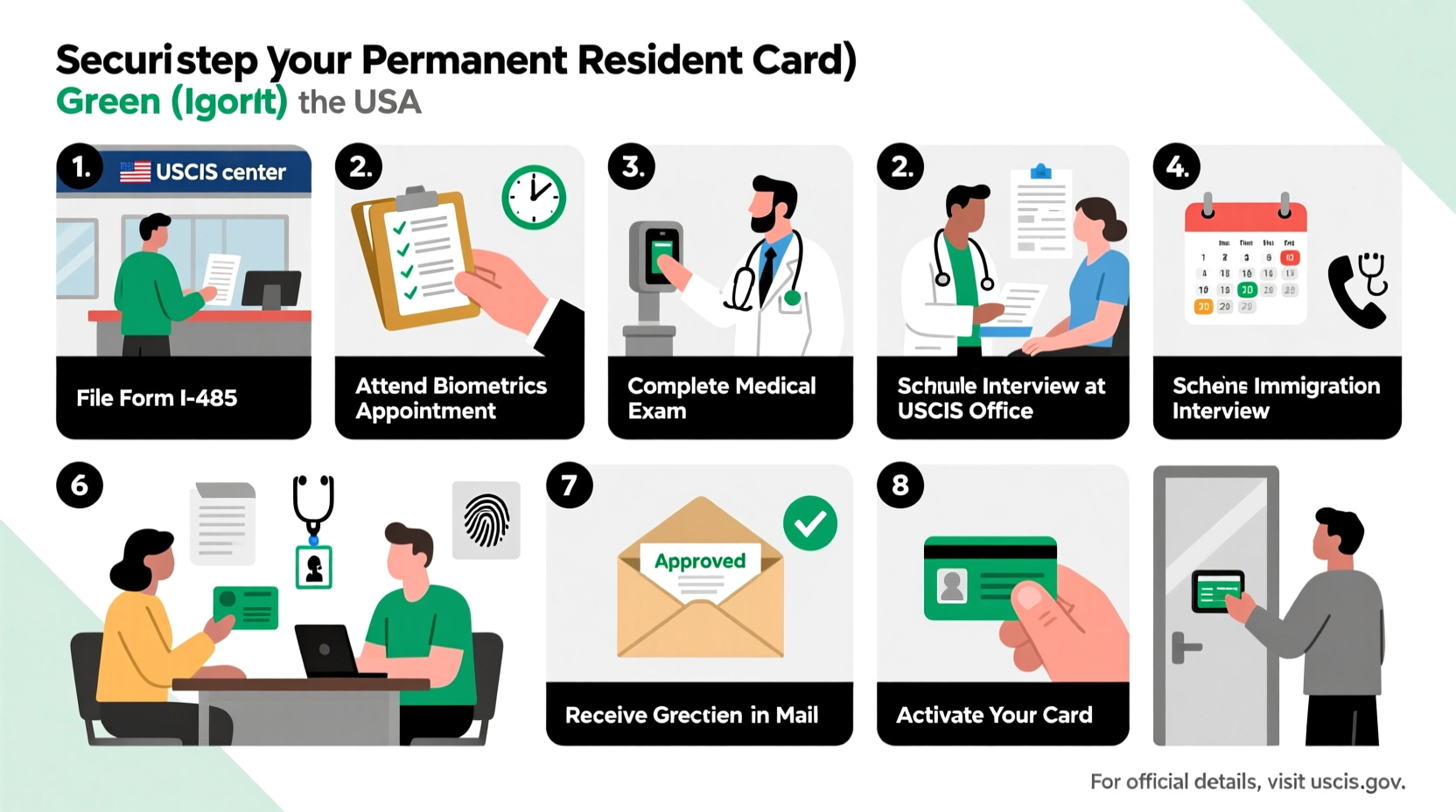
The first and most crucial step is identifying which category qualifies you for permanent residency. The U.S. Citizenship and Immigration Services (USCIS) recognizes several primary pathways:
- Family-sponsored immigration: Immediate relatives of U.S. citizens (spouses, parents, unmarried children under 21) or other qualifying family members.
- Employment-based immigration: Individuals with job offers in specific categories (e.g., skilled workers, professionals, investors).
- Diversity Visa Lottery: A random selection program for nationals from countries with low U.S. immigration rates.
- Refugee or Asylee Status: Those granted asylum or refugee status may apply after one year.
- Special programs: Includes victims of abuse (VAWA), certain religious workers, and others under humanitarian provisions.
Your eligibility determines not only whether you can apply but also how long the process might take. For example, immediate relatives of U.S. citizens typically face shorter wait times than those in employment-based preference categories subject to annual caps.
File the Appropriate Petition and Wait for Approval
Most Green Card applications require a petition to be filed on your behalf before you can even begin your personal application. This stage varies depending on your pathway:
- Family-based: A U.S. citizen or lawful permanent resident relative files Form I-130, Petition for Alien Relative.
- Employment-based: Your employer submits Form I-140, Immigrant Petition for Alien Worker.
- Diversity Visa: No petition required; winners are selected via lottery and notified directly.
Once the petition is approved, USCIS issues a priority date—the date your petition was received. This date is critical because it determines your place in line when visas are limited. You cannot move forward until your priority date becomes “current,” as listed in the Department of State’s monthly Visa Bulletin.
“Understanding your priority date is key. Many applicants mistakenly believe approval means immediate eligibility, but visa availability often creates significant delays.” — Maria Lopez, Accredited Immigration Counselor
Complete the Green Card Application (Form I-485 or Consular Processing)
When your priority date is current, you may proceed with the final application. There are two main tracks:
- Adjustment of Status (Form I-485): Used if you're already in the U.S. legally.
- Consular Processing: Required if you're outside the U.S. or ineligible to adjust status.
If applying via Form I-485, gather all required documents carefully:
- Copy of Form I-797 (approval notice for the underlying petition)
- Valid passport-style photos
- Birth certificate
- Marriage certificate (if applicable)
- Proof of financial support (Form I-864, Affidavit of Support)
- Medical examination results (Form I-693, completed by a USCIS-approved doctor)
- Copy of visa and entry stamps
- Filing fee payment ($1,440 as of 2024, including biometrics)
Submit your package to the appropriate USCIS lockbox based on your location and method of delivery (mail or online).
| Document | Purpose | Common Mistake |
|---|---|---|
| I-693 Medical Exam | Proves you meet health requirements | Using a non-approved doctor |
| I-864 Affidavit of Support | Shows financial sponsorship | Incomplete tax documentation |
| Passport Photos | Identification | Incorrect size or background color |
| Priority Date Proof | Establishes eligibility timing | Not checking the Visa Bulletin regularly |
Attend Biometrics Appointment and Interview
After USCIS receives your Form I-485, you'll receive a notice for a biometrics appointment at a local Application Support Center (ASC). During this visit, officials will collect your fingerprints, photograph, and signature for background checks.
Several weeks or months later, you’ll be scheduled for an in-person interview at a USCIS office. While some employment-based or immediate family cases may be waived, most applicants must attend. Be prepared to:
- Present original documents (marriage certificates, pay stubs, lease agreements)
- Answer questions about your relationship (for family-based cases)
- Demonstrate basic knowledge of U.S. civics if over 65 or have disabilities
- Confirm your address, employment, and intent to reside in the U.S.
The officer may request additional evidence (RFE) if anything is unclear. Respond promptly and thoroughly to avoid denial.
Real Example: Navigating a Marriage-Based Adjustment
Sophia and James, married in Texas in 2022, began the Green Card process shortly after. James, a U.S. citizen, filed Form I-130 in March 2023. After six months, it was approved, establishing Sophia’s priority date. Because she was the spouse of a U.S. citizen, her date was immediately current.
They filed Form I-485 along with I-864, I-765 (work permit), and I-131 (travel permit). Three months later, Sophia attended her biometrics appointment. Five months after filing, they were called for an interview. The officer reviewed their joint bank account, lease, and photos from their wedding and vacations. After 20 minutes, the officer approved the case on the spot. Sophia received her Green Card three weeks later.
Their success stemmed from thorough preparation, timely responses, and consistent documentation proving a bona fide marriage.
Avoid Common Pitfalls and Monitor Your Case
Even minor oversights can delay or derail your application. Key mistakes include:
- Moving without updating your address with USCIS (use Form AR-11 or update online)
- Failing to respond to RFEs within the deadline (typically 30–90 days)
- Traveling abroad without advance parole (risks abandoning the application)
- Providing inconsistent information across forms
Use the USCIS Case Status online tool regularly. If processing times exceed published averages, consider submitting a service request or consulting an attorney.
Checklist: Securing Your Green Card Successfully
- ✅ Confirm eligibility under a recognized immigration category
- ✅ Ensure the qualifying petition (I-130 or I-140) is approved
- ✅ Verify your priority date is current using the Visa Bulletin
- ✅ Complete Form I-485 or initiate consular processing
- ✅ Gather all supporting documents and file with correct fees
- ✅ Attend biometrics appointment and follow up on requests
- ✅ Prepare for and attend the Green Card interview
- ✅ Receive your Permanent Resident Card by mail
Frequently Asked Questions
Can I work while waiting for my Green Card?
Yes, if you file Form I-765 as part of your I-485 application, you can obtain Employment Authorization Document (EAD) within 90 days. Once approved, you may legally work in the U.S.
How long does the Green Card process take?
Processing times vary widely. Immediate relatives of U.S. citizens may receive cards in 10–14 months. Others, especially in backlogged categories, may wait several years due to visa availability.
What happens if my application is denied?
You’ll receive a written notice explaining the reason. Depending on the cause, you may appeal, reapply, or seek administrative review. Legal counsel is strongly advised in such cases.
Final Steps and Moving Forward
Upon approval, USCIS will mail your Green Card to your registered address. Review it immediately for accuracy—name, birth date, and expiration date (valid for 10 years, or 2 years for conditional residents). Keep it safe; it’s vital for employment, travel, and future naturalization.
Becoming a lawful permanent resident is more than a legal achievement—it’s the foundation for building a life in America. With careful planning, attention to detail, and adherence to procedures, you can navigate the system successfully and secure your future with confidence.




 浙公网安备
33010002000092号
浙公网安备
33010002000092号 浙B2-20120091-4
Comments
No comments yet. Why don't you start the discussion?