
Air conditioning systems are essential for comfort during hot months, but they can lose efficiency over time if not properly maintained. A neglected unit works harder, consumes more energy, and delivers inconsistent cooling. The good news? Most homeowners can perform basic AC servicing themselves—without calling a technician every time. With a few simple steps and regular attention, you can boost performance, extend the lifespan of your system, and reduce energy bills.
Why Regular AC Maintenance Matters
Your air conditioner is more than just a button that cools the room—it’s a complex system involving airflow, refrigerant cycles, and electrical components. Over time, dust accumulates, filters clog, and parts wear down. These issues force the system to run longer and harder to achieve the same results.
The U.S. Department of Energy estimates that routine maintenance can improve an AC’s efficiency by up to 15%. That translates into noticeable savings on your monthly electricity bill and fewer costly repairs down the line.
“An ounce of prevention is worth a pound of cure when it comes to HVAC systems. Simple homeowner care can delay major service needs by years.” — Carlos Mendez, HVAC Technician with 18 years of field experience
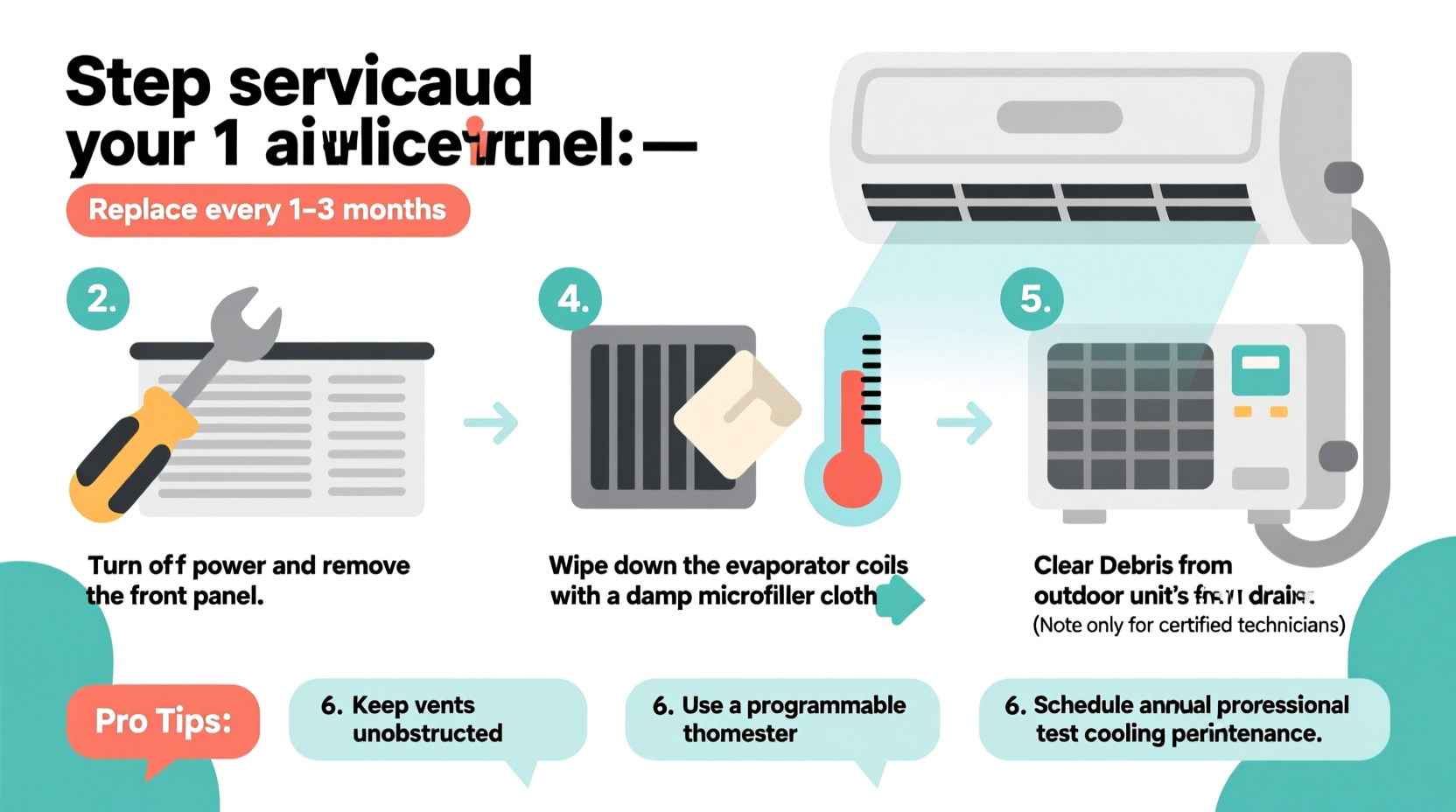
Step-by-Step Guide to Servicing Your AC
Servicing your air conditioner doesn’t require advanced tools or technical knowledge. Follow this timeline-based checklist each season—especially before peak summer—to keep your system running smoothly.
- Turn Off Power
Before starting any work, switch off the power at the circuit breaker. This prevents accidental startups and protects you from electrical hazards. - Remove and Clean the Air Filter
Locate the return air grill or filter compartment (usually near the indoor unit or furnace). Slide out the filter. If it’s reusable, wash it gently with warm water and mild soap. Let it dry completely before reinstalling. Replace disposable filters every 1–3 months depending on usage and air quality. - Clean the Evaporator and Condenser Coils
The evaporator coil (indoor) and condenser coil (outdoor) absorb and release heat. Dust buildup insulates these coils, reducing their ability to transfer heat efficiently. Use a soft brush or vacuum with a brush attachment to remove surface debris. For deeper cleaning, apply a no-rinse coil cleaner according to manufacturer instructions. - Inspect and Clear the Condensate Drain Line
This tube removes moisture collected during cooling. Clogs can cause water leaks or even shutdowns. Pour a cup of distilled white vinegar or a mixture of water and bleach (1:1 ratio) into the drain pan to dissolve algae and mold. Do this every 3–6 months. - Check and Straighten Fins on the Outdoor Unit
The aluminum fins surrounding the condenser coil can bend easily, blocking airflow. Use a fin comb (available at hardware stores) to gently straighten them. Always work carefully to avoid breaking the delicate metal. - Clear Debris Around the Outdoor Unit
Ensure at least 2 feet of clearance around the condenser. Trim back shrubs, remove leaves, grass clippings, and other obstructions. Good airflow is critical for efficient operation. - Test Thermostat Functionality
Verify that your thermostat reads room temperature accurately and responds correctly when you adjust settings. Consider upgrading to a programmable or smart thermostat if yours is outdated. - Listen for Unusual Noises During Operation
After powering the system back on, listen closely. Grinding, squealing, or rattling sounds may indicate mechanical problems requiring professional attention.
Seasonal AC Maintenance Checklist
To stay organized, follow this seasonal schedule. It ensures your system receives consistent care without overwhelming effort.
| Time of Year | Action Items | Frequency |
|---|---|---|
| Spring (Pre-Cooling Season) | Replace filter, clean coils, clear drain line, inspect outdoor unit, test thermostat | Once per year |
| Summer (Peak Usage) | Check filter monthly, clear debris weekly, monitor cooling performance | Monthly / As needed |
| Fall (Post-Season) | Cover outdoor unit (if in snowy region), inspect ductwork, schedule professional tune-up | Once per year |
| Winter | Keep cover secure, avoid storing items near unit, check thermostat settings | Occasional |
Common Mistakes That Reduce AC Efficiency
Even well-intentioned homeowners sometimes make errors that counteract their maintenance efforts. Avoid these common pitfalls:
- Ignoring the filter: A dirty filter restricts airflow, forcing the blower motor to work harder and increasing energy use.
- Blocking the outdoor unit: Placing furniture, laundry, or storage near vents indoors or enclosing the outdoor unit reduces efficiency.
- Setting the thermostat too low: Cranking it down won’t cool the house faster—it only makes the system run longer.
- Skipping annual professional inspections: DIY care is valuable, but licensed technicians can detect refrigerant leaks, electrical faults, and compressor issues early.
- Using incorrect cleaning products: Harsh chemicals can damage coils and insulation. Stick to manufacturer-approved cleaners.
Real Example: How One Family Cut Cooling Costs by 20%
The Thompson family in Phoenix noticed their summer electric bill had jumped to $320—up from $240 the previous year. Their 8-year-old central AC struggled to maintain 75°F even when set to 70°F. After reading about basic maintenance, they cleaned the filter, cleared the condensate line, and washed the outdoor coils using a foaming spray.
Within two days, airflow improved noticeably. The system reached the desired temperature faster and cycled off sooner. They followed up with a professional tune-up, which revealed slightly low refrigerant levels. After a refill and calibration, their next bill dropped to $255—a 20% reduction. “We didn’t realize how much dirt was slowing everything down,” said Sarah Thompson. “Now we clean the filter every month.”
FAQ: Common Questions About AC Servicing
How often should I service my air conditioner?
At minimum, perform basic cleaning and inspection once a year—preferably in spring. Check and replace the air filter every 1–3 months during active cooling periods. Schedule a professional tune-up every 1–2 years, especially for older units.
Can I clean the AC coils myself?
Yes, both evaporator and condenser coils can be safely cleaned by homeowners using a soft brush, vacuum, and a commercial coil cleaner. Just ensure the power is off and follow product instructions carefully. Avoid bending the fins or using high-pressure water.
What signs mean I need a professional?
Call an HVAC technician if you notice: weak airflow despite clean filters, unusual noises (grinding, screeching), frequent cycling, visible refrigerant leaks (oily residue), or warm air blowing when the system is running. These indicate internal issues beyond DIY fixes.
Maximize Comfort and Savings with Consistent Care
Maintaining your air conditioner isn’t just about staying cool—it’s about operating efficiently, minimizing strain on the system, and protecting your investment. By dedicating a few hours each year to proactive care, you’ll enjoy stronger cooling, quieter operation, and lower energy costs. The steps outlined here are simple, cost-effective, and within reach for most homeowners.
Start now. Turn off the power, locate your filter, and take the first step toward a better-performing AC. Share your experience or ask questions in the comments below—your insights could help others keep their homes comfortable all summer long.




 浙公网安备
33010002000092号
浙公网安备
33010002000092号 浙B2-20120091-4
Comments
No comments yet. Why don't you start the discussion?