
As more households shift away from traditional cable and DSL services, T-Mobile Home Internet has emerged as a compelling alternative—offering affordable, no-contract wireless broadband powered by 5G and 4G LTE networks. For those in suburban or rural areas where fiber isn’t available, or for renters who can’t install permanent infrastructure, T-Mobile’s fixed wireless service provides a practical solution. However, getting the most out of your connection requires proper setup, optimal placement, and ongoing maintenance. This guide walks you through every stage—from unboxing to optimizing performance—with actionable steps, real-world insights, and expert-backed strategies.
Understanding T-Mobile Home Internet: How It Works
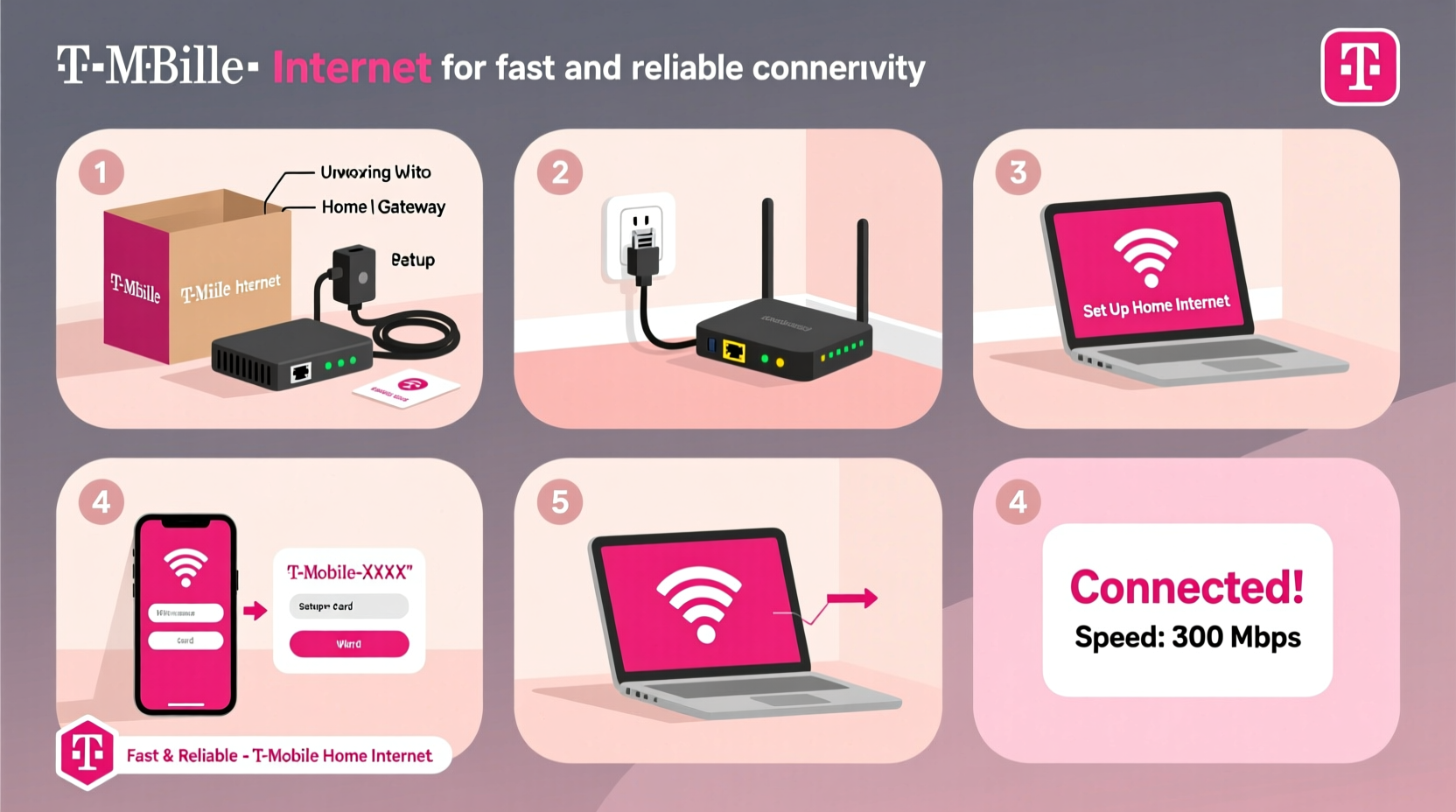
T-Mobile Home Internet uses its nationwide 5G and LTE network to deliver broadband directly to your home via a wireless gateway (router). Unlike traditional ISPs that rely on underground cables or phone lines, this service connects through radio signals transmitted from nearby cell towers. The gateway receives the signal and converts it into Wi-Fi, enabling multiple devices to connect simultaneously.
Performance varies based on location, tower proximity, signal strength, and network congestion. Average speeds range from 30 Mbps to over 200 Mbps, with low latency suitable for streaming, remote work, and online learning. There are no data caps, contracts, or installation fees, making it an attractive option for budget-conscious users.
“Fixed wireless internet like T-Mobile’s is closing the digital divide by bringing high-speed access to homes previously underserved by wired providers.” — Dr. Lena Patel, Broadband Access Researcher at Urban Connectivity Institute
Your Step-by-Step Setup Process
Setting up T-Mobile Home Internet is designed to be user-friendly, but attention to detail ensures reliability and peak performance. Follow these steps carefully:
- Unbox and inspect components: Your kit includes the T-Mobile Gateway (model TG508), power adapter, Ethernet cable, and quick start guide. Confirm all parts are present and undamaged.
- Choose the ideal location: Place the gateway near a window facing the nearest T-Mobile tower if possible. Avoid basements, metal enclosures, or areas behind thick walls. Elevate the device off the floor using a shelf or stand.
- Connect and power on: Plug the power adapter into the gateway and a wall outlet. Wait 2–3 minutes for the lights to stabilize. A solid white light indicates a strong signal; blinking green means connecting; red suggests poor signal.
- Verify activation: Open a browser on any connected device and go to
http://192.168.8.1. This internal page shows signal strength, IP address, and network status. Alternatively, use the My T-Mobile app to confirm activation. - Connect your devices: Use the default Wi-Fi name (SSID) and password printed on the gateway label. Connect laptops, phones, smart TVs, and other devices wirelessly or via Ethernet for better stability.
- Update firmware: The gateway automatically checks for updates, but you can manually verify under “System” settings on the admin page. Keeping firmware current improves security and performance.
Optimizing Performance After Installation
Initial setup gets you online, but fine-tuning ensures consistent speed and coverage. Consider these optimization techniques:
- Use the My T-Mobile App: Monitor real-time speeds, manage connected devices, pause Wi-Fi for specific gadgets, and receive outage alerts.
- Enable Quality of Service (QoS): Prioritize bandwidth for critical activities like video conferencing or gaming through the gateway settings menu.
- Add a mesh extender if needed: While the built-in Wi-Fi covers most small to medium homes, larger layouts may benefit from adding a separate Wi-Fi 6 mesh system linked via Ethernet backhaul.
- Reduce interference: Keep the gateway away from microwaves, cordless phones, baby monitors, and Bluetooth speakers which operate on the same 2.4 GHz band.
- Reboot monthly: Restart the gateway every 4–6 weeks to clear cache, refresh DNS, and restore responsiveness.
Real-World Example: Improving Connectivity in a Two-Story Ranch
Sarah, a freelance graphic designer in central Iowa, switched to T-Mobile Home Internet after her DSL provider failed to support video uploads reliably. Her initial setup placed the gateway in a closet on the ground floor, resulting in frequent buffering and dropped Zoom calls. After consulting the My T-Mobile signal map and testing placements, she moved the device to a south-facing window upstairs—closer to the nearest tower. Signal improved from 2 bars to full strength, and her average download speed increased from 42 Mbps to 178 Mbps. She also connected her desktop via Ethernet and set QoS rules to prioritize design software traffic. The result? Seamless cloud rendering and uninterrupted client meetings.
Do’s and Don’ts: Best Practices Summary
| Do’s | Don’ts |
|---|---|
| Place the gateway near a window with line-of-sight to cell towers | Install in basements, garages, or enclosed cabinets |
| Check signal strength using the admin portal or app | |
| Use wired connections for stationary devices like PCs and smart TVs | Overload the network with too many simultaneous 4K streams without testing limits |
| Keep firmware updated and reboot periodically | Ignore red or amber signal lights—take action immediately |
| Contact T-Mobile support if speeds consistently fall below 25 Mbps | Modify antenna settings or flash third-party firmware (voids warranty) |
Frequently Asked Questions
Can I use my own router instead of the T-Mobile Gateway?
Yes, but only in bridge mode. You’ll need to contact T-Mobile support to enable passthrough mode, which disables the gateway’s routing functions and allows your preferred router to handle network management. Note: doing so may limit access to certain app-based features.
What happens during peak hours or network congestion?
T-Mobile prioritizes mobile data first, so Home Internet users may experience slower speeds during high-demand periods, especially in densely populated areas. However, most customers report stable performance even in evenings. If slowdowns persist, consider scheduling large downloads for off-peak times (e.g., late night).
Is T-Mobile Home Internet suitable for gaming and streaming?
Absolutely—if you have good signal strength. With ping rates typically between 20–50 ms and sufficient bandwidth, most online games run smoothly. Streaming 4K content on multiple devices is feasible, though avoid exceeding five concurrent HD+ streams unless you’ve tested your connection under load.
Final Checklist Before Going Live
- ✅ Unboxed and inspected all equipment
- Ensure nothing is missing or damaged.
- ✅ Positioned gateway optimally
- Near a window, elevated, away from obstructions.
- ✅ Powered on and confirmed signal light is white or solid green
- If not, adjust position and wait 5 minutes.
- ✅ Connected primary devices via Wi-Fi or Ethernet
- Test one at a time to confirm login success.
- ✅ Verified internet access with speed test
- Run a test at speedtest.net and compare results to expected benchmarks for your area.
- ✅ Set up parental controls and guest network (optional)
- Available through the admin interface or My T-Mobile app.
Take Control of Your Home Internet Experience
T-Mobile Home Internet offers a modern, flexible alternative to legacy broadband systems—but its success depends on how well you configure and maintain it. By following this structured approach, you’re not just installing a router; you’re building a resilient digital foundation for work, education, entertainment, and connection. Whether you're cutting the cord, escaping data caps, or simply seeking a simpler billing model, taking the time to optimize your setup pays dividends in daily usability and long-term satisfaction.




 浙公网安备
33010002000092号
浙公网安备
33010002000092号 浙B2-20120091-4
Comments
No comments yet. Why don't you start the discussion?