
Selling handmade candles online has become one of the most accessible and rewarding side hustles for creative entrepreneurs. With low startup costs, high-profit margins, and growing consumer interest in artisanal home goods, this niche offers real potential. Whether you're crafting soy wax candles with essential oils or designing luxury vessels with custom scents, turning your passion into profit is entirely achievable—with the right approach.
This guide walks through every stage of building a candle business from the ground up. From perfecting your craft to launching your first online store and marketing your products effectively, each step is designed to help you avoid common pitfalls and build a sustainable brand.
1. Master the Craft: Create High-Quality, Consistent Candles
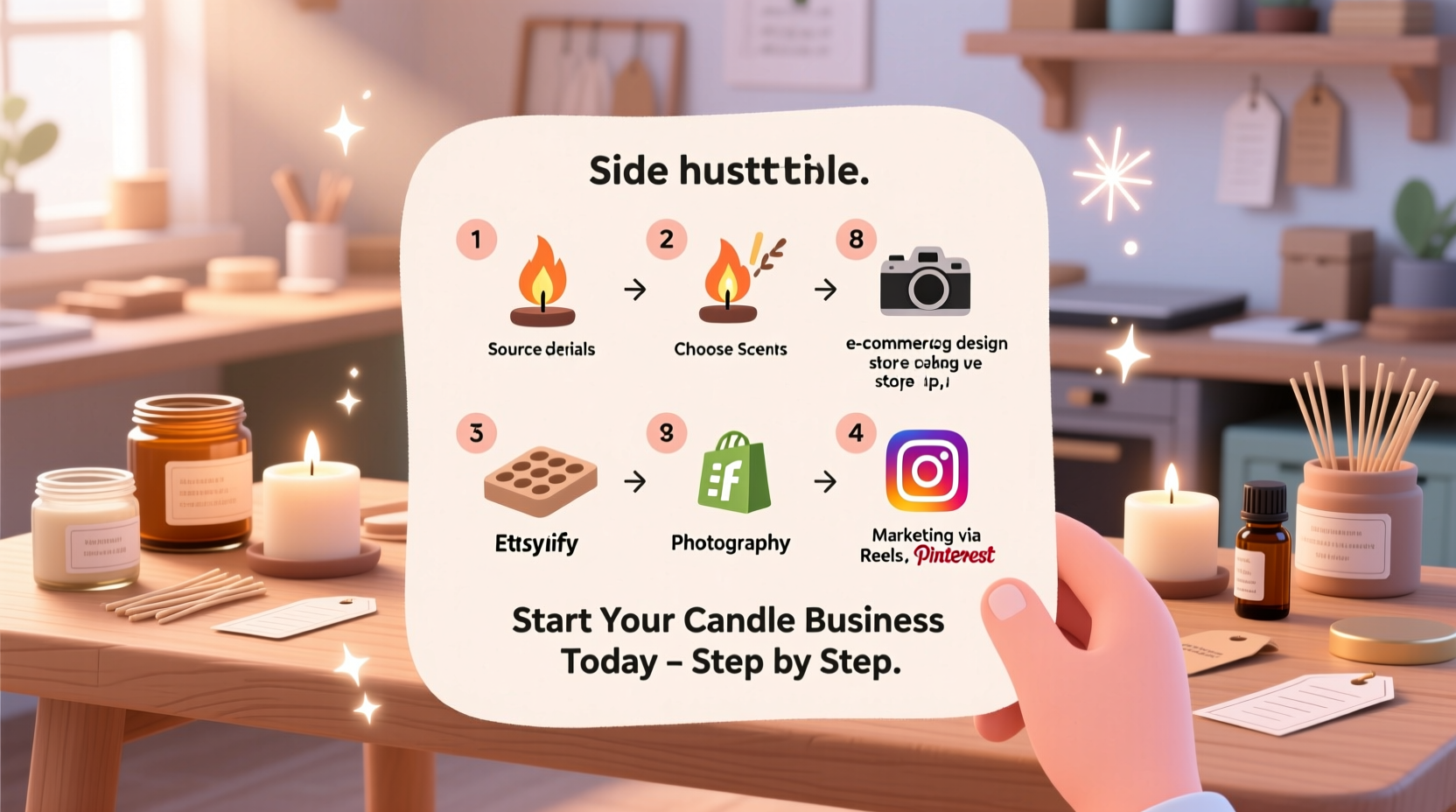
Before you sell a single candle, you need to develop a product that stands out. Quality matters more than quantity when starting out. Customers return for consistency in scent throw, burn time, and appearance.
Begin by experimenting with different waxes—soy, coconut, beeswax, or paraffin—each with distinct benefits. Soy wax is popular for its clean burn and eco-friendly image, while coconut-soy blends offer excellent scent retention. Pair your wax with cotton or wood wicks depending on your vessel size and desired flame aesthetic.
Fragrance selection is where personality shines. Use premium fragrance oils (not essential oils alone, unless clearly labeled) designed specifically for candle making. Test multiple ratios—typically 6–10% fragrance load—to find the optimal balance between scent strength and safety.
Pouring technique affects both performance and presentation. Pour at the recommended temperature (usually 135°F for soy), and allow slow cooling to prevent sinkholes. Cure your candles for at least 48–72 hours before testing; some complex scents benefit from a two-week cure for maximum cold and hot throw.
“Your first 50 candles should be experiments, not products. Focus on learning, not selling.” — Dana Reyes, Founder of Crafted Flame Supply
2. Define Your Brand Identity and Target Market
A strong brand separates hobbyists from professionals. Think beyond just making candles—consider who they’re for, what story they tell, and how they make customers feel.
Start by identifying your ideal customer. Are you targeting eco-conscious millennials who value sustainability? Busy professionals seeking relaxation through aromatherapy? Gift shoppers looking for unique presents? The clearer your audience, the better your messaging and design choices will resonate.
Your brand identity includes:
- Name: Memorable, available as a domain and social handle.
- Visuals: Logo, color palette, typography, and packaging style.
- Tone: Warm and inviting? Minimalist and modern? Playful and nostalgic?
For example, a brand like “Evening Wick” might focus on evening relaxation with lavender-vanilla blends in matte black jars, using soft spoken-word descriptions and calming imagery. In contrast, “Citrus & Co.” could embrace bright colors, zesty scents, and energetic copywriting aimed at morning motivation.
| Brand Element | Questions to Ask |
|---|---|
| Name & Domain | Is it unique? Is the .com available? Does it reflect the mood of your candles? |
| Packaging | Is it functional, sustainable, and visually aligned with your brand? Can it survive shipping? |
| Scent Descriptions | Do they evoke emotion or memory? Are they clear and enticing? |
| Pricing Strategy | Does it reflect material quality, labor, and perceived value? |
3. Set Up Your Online Store: Platforms, Legalities, and Logistics
Once your product and brand are defined, it’s time to go live. You don’t need a massive budget to launch—just a reliable platform, basic legal setup, and a plan for fulfillment.
Choose the Right E-Commerce Platform
Three top options for beginners:
- Etsy: Ideal for handmade sellers. Built-in traffic, easy listing process, and trusted buyer base. Fees include $0.20 per listing and 6.5% transaction fee.
- Shopify: Full control over branding and customer experience. Monthly cost starts at $29, plus payment processing fees (~2.9%). Best if you plan long-term growth.
- Amazon Handmade: High visibility but stricter approval and competition. Commission ranges from 15–20%.
Many successful candle makers start on Etsy to validate demand, then expand to Shopify as their brand grows.
Legal and Safety Requirements
Candle businesses must comply with labeling laws and safety standards. In the U.S., the National Candle Association recommends including:
- Business name and location
- Net weight (e.g., “10 oz”)
- Full ingredient list (especially if allergens are present)
- Warning labels: “Keep away from children and pets,” “Never leave unattended,” etc.
Additionally, consider product liability insurance. A single incident involving fire or allergic reaction can have serious consequences. Policies tailored for artisans start around $300/year and are often required by market organizers or retailers.
Fulfillment and Packaging
Design packaging that protects the candle during transit while reinforcing your brand. Use rigid boxes, bubble wrap, or molded pulp inserts to prevent movement. Include a thank-you note or sample-sized product to encourage repeat purchases.
Shipping costs can eat into profits. Use services like Pirate Ship or Shippo to access discounted USPS rates. Offer free shipping only when built into the price (e.g., increase item cost by $5 and advertise “Free Shipping”).
4. Marketing That Converts: Attracting and Retaining Customers
Creating beautiful candles isn’t enough—you need eyes on them. Effective marketing combines organic reach, paid ads, and community engagement.
Leverage Social Media Strategically
Instagram and TikTok are visual platforms ideal for showcasing candle aesthetics. Post behind-the-scenes clips of pouring, scent testing, or packaging orders. Use trending audio and relevant hashtags like #handmadecandles, #candlemaker, or #smallbusinesscheck.
Focus on storytelling. Instead of just saying “New lavender candle,” try: “This scent reminds me of walking through my grandmother’s garden at dusk—the kind of calm you carry with you all night.” Emotional connection drives shares and sales.
Build an Email List Early
Email remains one of the highest-converting channels. Offer a small incentive—like a 10% discount or free digital guide (“5 Ways to Maximize Your Candle’s Lifespan”)—in exchange for sign-ups via a pop-up or landing page.
Send regular updates: new launches, restocks, limited editions, or seasonal tips. Personalize subject lines and segment your list over time (e.g., gift buyers vs. self-purchasers).
Run Targeted Paid Ads
Once you’ve made 10–20 sales organically, consider reinvesting 10–20% of revenue into Facebook and Instagram ads. Start with a simple campaign promoting your best-selling candle to women aged 25–45 within a 50-mile radius of major cities (or nationwide, depending on budget).
Use high-quality photos showing the candle lit in a cozy setting. Copy should highlight benefits: “Hand-poured with natural soy wax and calming French lavender—designed to help you unwind after a long day.”
“Most candle sellers fail because they stop marketing after launch. The first sale is just the beginning.” — Jordan Lee, E-Commerce Growth Consultant
5. Scale Sustainably: From Side Hustle to Real Business
Growth should be intentional, not chaotic. Scaling too fast leads to burnout, quality drops, and cash flow problems. Instead, follow a phased approach.
Step-by-Step Timeline for First 6 Months
- Week 1–2: Finalize 3 core candle scents and test extensively.
- Week 3: Design branding elements (logo, label template, packaging).
- Week 4: Set up Etsy shop or Shopify site; list first products.
- Month 2: Launch with friends/family promo; collect reviews.
- Month 3: Begin posting daily on Instagram/TikTok; run first ad set ($5/day).
- Month 4: Introduce a limited-edition seasonal scent to drive urgency.
- Month 5: Attend a local market or pop-up to gather feedback.
- Month 6: Analyze top sellers; refine offerings and re-invest profits into inventory.
Checklist: Launch-Ready Verification
- ✅ Tested candles burn evenly with strong scent throw
- ✅ Business name registered and domain secured
- ✅ Product liability insurance obtained
- ✅ All required warning labels and ingredients disclosed
- ✅ Online store live with clear photos and descriptions
- ✅ Packaging tested for durability during shipping
- ✅ First 3–5 customer reviews collected
- ✅ Basic social media profiles active and branded
Mini Case Study: How Sarah Turned Her Kitchen Experiments into $3k/Month
Sarah, a teacher from Portland, started making candles to relax after work. After receiving constant compliments from friends, she decided to sell a few on Etsy. She began with three scents: Cedar + Sage, Vanilla Bourbon, and Rain (a fresh ozone blend).
She invested $200 in supplies and listed her candles at $24 each. To stand out, she used minimalist kraft boxes with handwritten notes and included a tea bag labeled “Companion Brew” with each order—a subtle touch that delighted customers.
By consistently posting short videos of her process on TikTok and engaging with commenters, she gained traction. Within four months, she was averaging 125 orders per month, mostly through organic discovery. She reinvested profits into better photography and launched a subscription option: “Monthly Mood Candle.” Today, she earns over $3,000/month and works on her business part-time.
FAQ
How much does it cost to start a candle side hustle?
Startup costs typically range from $150–$500, covering wax, wicks, fragrance oils, containers, labels, and basic tools like a double boiler and thermometer. Packaging and branding add another $100–$200 if outsourced.
Are handmade candles profitable?
Yes. Most handmade candles cost $3–$6 to produce and sell for $18–$30. At a 70–80% profit margin, selling 50 candles per month at $24 each generates $1,200 in revenue and roughly $800–$900 in profit after materials and fees.
Can I sell candles from home legally?
In most U.S. states, yes—but you must comply with local cottage food laws. Some states require kitchen inspections or prohibit open-flame products. Always check your state’s regulations and obtain necessary permits. Liability insurance is strongly advised regardless.
Conclusion
Starting a side hustle selling handmade candles online is more than just a trend—it's a viable path to financial independence and creative fulfillment. With careful planning, attention to detail, and consistent effort, you can turn a simple craft into a thriving business.
The journey begins with a single pour. Refine your formula, define your voice, launch with confidence, and connect authentically with customers who appreciate what you create. Every candle tells a story. Make yours unforgettable.




 浙公网安备
33010002000092号
浙公网安备
33010002000092号 浙B2-20120091-4
Comments
No comments yet. Why don't you start the discussion?