
For women with petite frames—typically 5'4\" and under—navigating fashion can sometimes feel like walking a tightrope between style and proportion. The midi wrap dress, beloved for its flattering silhouette and timeless elegance, often lands on wishlists. Yet, when not styled thoughtfully, it can visually shorten the frame or create an unbalanced look. The key lies not in avoiding the style altogether, but in mastering how to wear it intentionally. With the right adjustments in length, cut, footwear, and accessories, a midi wrap dress can become one of the most empowering pieces in a petite wardrobe.
Understanding Proportions: Why Fit Matters for Petite Frames
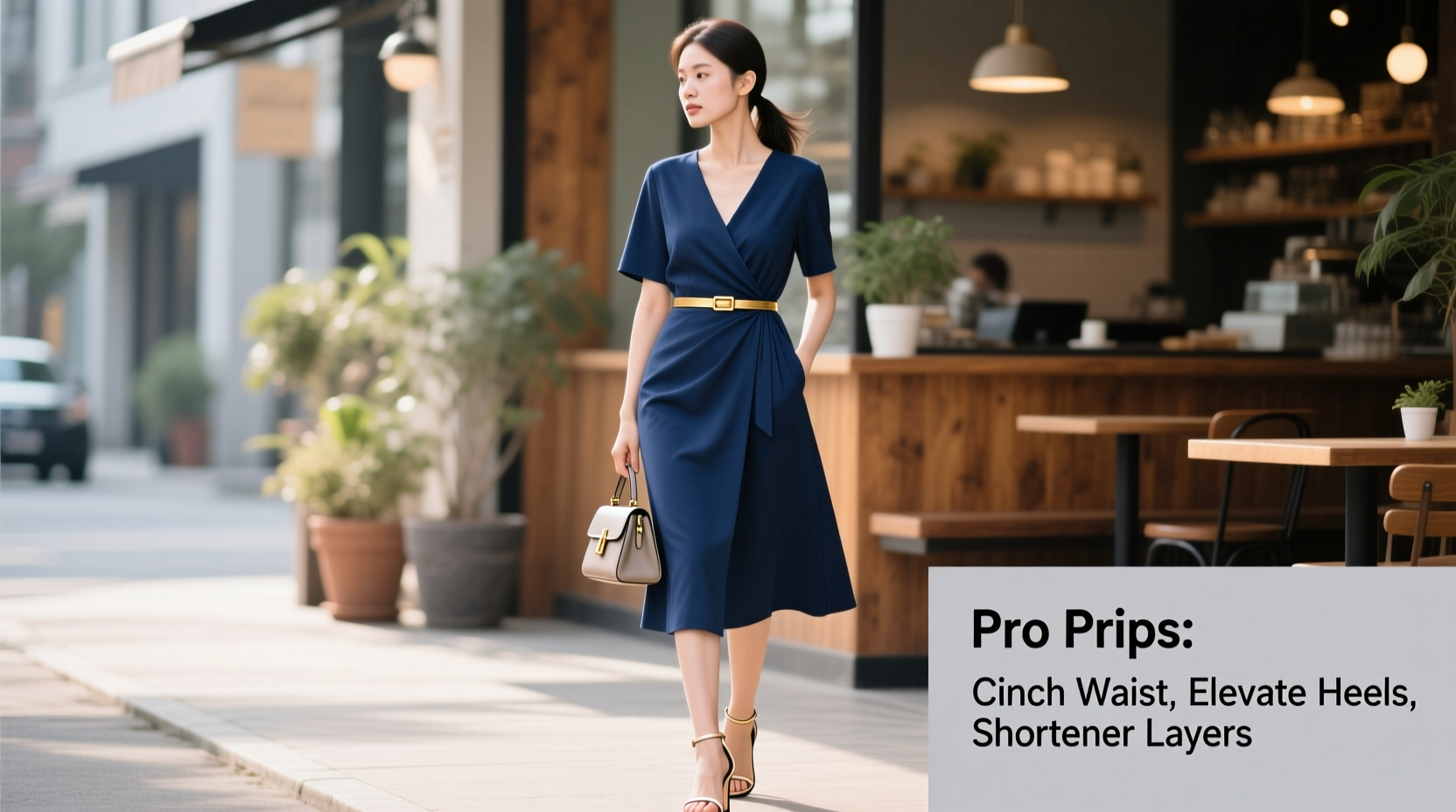
Petite dressing isn’t about wearing smaller versions of standard clothing—it’s about understanding balance, vertical lines, and visual weight. A poorly proportioned midi wrap dress can pool at the hem, obscure the waistline, or make legs appear shorter due to excess fabric. The goal is to elongate the torso and legs while maintaining the dress’s signature fluidity.
The wrap design naturally creates a V-shape at the front, which draws the eye vertically—a benefit for petite figures. However, if the neckline plunges too low or the waist tie sits too low, it can chop the body into uneven segments. Similarly, a hem that hits mid-calf without structure can ground the look rather than lift it.
“Proportion is everything for petite dressing. A well-placed waistline and strategic seam placement can add up to two inches of perceived height.” — Lena Torres, Fashion Stylist & Petite Fit Consultant
Selecting the Right Midi Wrap Dress: Key Features to Look For
Not all midi wrap dresses are created equal—especially for petite figures. Prioritize styles engineered with shorter torsos and adjusted seam placements. Here’s what to search for when shopping:
- Shorter bodice length: Avoid dresses designed for average or tall torsos. Look for brands that specify “petite-friendly” or offer adjustable ties inside the bodice.
- Higher waist tie: The knot or tie should sit at or just above natural waist level (near the navel), not lower down on the hips.
- Defined waist seam: A sewn-in seam at the waist adds structure and prevents the wrap from gaping or sagging.
- Vertical details: Subtle elements like pintucks, center-front seams, or narrow piping draw the eye up and down, enhancing elongation.
- Hem that skims the calf: Opt for a hemline between 2–3 inches above the ankle. Avoid ones that fall directly at the widest part of the calf.
Do’s and Don’ts When Choosing a Midi Wrap Dress
| Do | Don’t |
|---|---|
| Choose wrap dresses with built-in waist definition | Wear oversized wraps with loose, shapeless silhouettes |
| Look for higher necklines or modest V-necks | Opt for extremely deep V-necks that extend below the bust |
| Pick fabrics with some structure (e.g., cotton poplin, viscose blend) | Select overly flowy materials like chiffon or georgette without lining |
| Try adjustable inner ties or hidden snaps for security | Rely solely on outer ties that may gape open |
| Check sleeve length—3/4 or short sleeves often work best | Wear long, billowy sleeves that overwhelm small frames |
Step-by-Step Guide to Styling Your Midi Wrap Dress
Once you’ve selected the right dress, styling becomes the next critical phase. Follow this five-step process to ensure a balanced, elongated, and polished appearance.
- Adjust the Wrap Ties for Proper Placement
Before securing the outer tie, fasten any internal ties or snaps first. This stabilizes the fit and prevents gaping. Then, cross the panels snugly over the bust and tie the waistband at your natural waist—not lower. If the dress gaps at the bust, consider adding discreet fashion tape or opting for a version with a snap placket. - Define the Waist with a Belt (If Needed)
Even if the dress has a tie, adding a slim belt (½ to 1 inch wide) over the knot can sharpen the waistline and prevent bulkiness. Choose a belt in a matching or metallic tone to maintain continuity. Avoid wide belts that can cut the torso awkwardly. - Pair with Heeled Shoes to Elevate the Silhouette
Footwear is non-negotiable for petite styling. A heel—even a modest 1.5 to 2.5 inches—creates a continuous leg line. Pointed-toe flats, ankle boots with heels, or nude block-heel sandals work best. Avoid chunky soles or shoes with horizontal straps across the foot, as they shorten the leg. - Keep Outer Layers Fitted and Cropped
If layering, choose jackets or cardigans that end at or above the hip. A cropped blazer, boxy denim jacket, or structured bolero preserves the waist definition. Long coats should be belted or tailored to avoid swamping the frame. - Accessorize Strategically to Draw the Eye Upward
Use jewelry to create vertical interest. A medium-length pendant necklace, layered delicate chains, or statement earrings guide attention toward the face. Avoid large bags that hang below the hip; instead, opt for crossbody styles worn higher on the torso or top-handle bags carried at elbow level.
Real-Life Example: Transforming a Common Wardrobe Challenge
Sophie, 5’2”, had always loved the idea of wrap dresses but avoided them after a disappointing experience with a floral midi wrap that made her look “drowned in fabric.” The dress had a low waist tie, a deep V-neck, and a hem that hit exactly at her calf’s fullest point. She felt shapeless and shorter than usual.
After consulting a stylist, she returned with three changes: First, she chose a wrap dress in cobalt blue with a higher waist seam and internal snap closure. Second, she wore it with almond-toe nude pumps that matched her skin tone. Third, she added a thin gold chain and kept her hair in a half-up style to emphasize her neckline.
The transformation was immediate. The dress now accentuated her curves without overwhelming her frame. The heel added nearly an inch of leg length, and the color drew attention upward. Sophie reported feeling “confident and put-together” at her office holiday party—proof that thoughtful adjustments make all the difference.
Essential Checklist for Petite Wrap Dress Success
Before wearing your midi wrap dress, run through this checklist to ensure optimal styling:
- ✅ Bodice fits snugly across the bust without gaping
- ✅ Waist tie sits at natural waist level (not on hips)
- ✅ Hemline ends between knee and mid-calf, ideally closer to lower calf
- ✅ Fabric has enough body to hold shape but isn’t stiff
- ✅ Worn with heeled or pointed-toe shoes for leg extension
- ✅ Outer layers (if any) are cropped or tailored
- ✅ Accessories enhance vertical lines (necklaces, earrings)
- ✅ Bag is carried high (crossbody or top handle)
Frequently Asked Questions
Can I wear a midi wrap dress if I’m under 5'3\"?
Absolutely—height alone doesn’t disqualify you from wearing a midi wrap dress. The determining factors are proportion and styling. Choose a version with a shorter bodice, higher waist, and appropriate hem length. Pair it with heels and minimal lower-body distractions to maintain balance.
What if my wrap dress gaps at the bust?
Gaping is common, especially in off-the-rack styles. Use double-sided fashion tape along the inner edges of the wrap panel. Alternatively, look for dresses with interior ties, button closures beneath the wrap, or magnetic snaps. Some brands offer “gap-free” designs specifically for smaller busts or narrower frames.
Are maxi wrap dresses ever suitable for petite women?
Maxi wrap dresses require more caution. They can work if the dress has a high waist, vertical detailing, and is worn with substantial heels (3 inches or more). However, for everyday wear, a midi length offers more control over proportion and versatility. Reserve maxis for beach cover-ups or flowing evening looks where drama is desired.
Final Thoughts: Own Your Style with Confidence
Styling a midi wrap dress as a petite woman isn’t about compromise—it’s about precision. The wrap dress, with its inherent waist emphasis and graceful drape, can be one of the most flattering garments in your closet when chosen and styled with intention. By focusing on proportion, structure, and subtle elongation techniques, you transform potential pitfalls into standout moments.
Remember, fashion rules are guidelines, not laws. What matters most is how you feel in your clothes. When you select a dress that honors your frame and enhances your confidence, you’re not just following trends—you’re defining your own style narrative.




 浙公网安备
33010002000092号
浙公网安备
33010002000092号 浙B2-20120091-4
Comments
No comments yet. Why don't you start the discussion?