
Applying for a small loan doesn’t have to be intimidating. Whether you're covering an unexpected expense, consolidating debt, or funding a personal project, a well-prepared application increases your chances of approval and helps you secure favorable terms. The key is understanding the process, knowing what lenders look for, and positioning yourself as a reliable borrower. This guide walks you through each stage with practical steps, real-world insights, and expert-backed strategies to apply with confidence.
Assess Your Financial Situation First
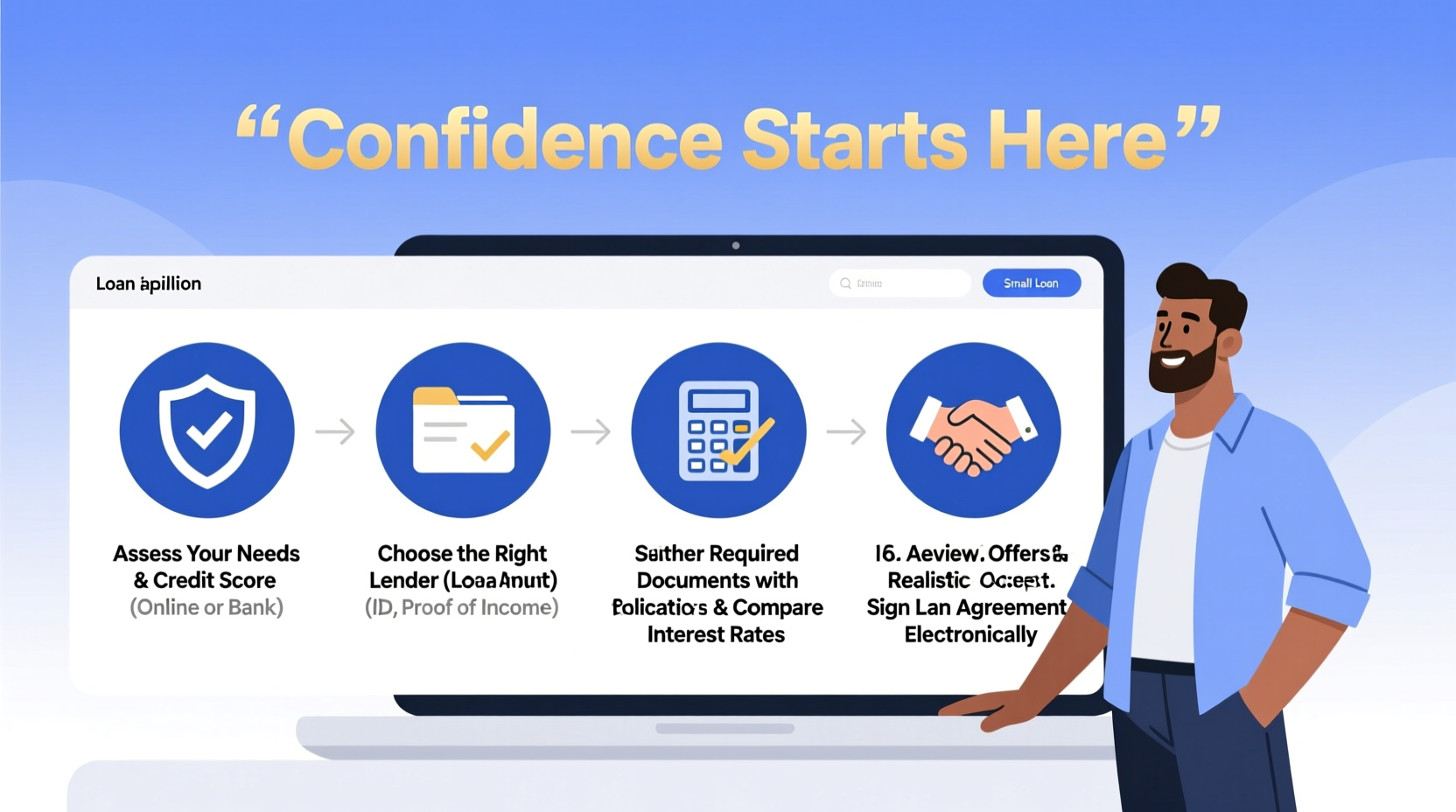
Before contacting any lender, take time to evaluate your financial health. A clear picture of your income, expenses, debts, and credit standing prevents overborrowing and ensures you choose a loan that fits your budget.
Start by calculating your monthly net income and listing all recurring expenses—rent, utilities, groceries, transportation, and existing debt payments. Subtract expenses from income to determine how much you can realistically afford toward a new loan payment.
Next, review your credit report. You’re entitled to one free report annually from each major bureau via AnnualCreditReport.com. Look for errors such as incorrect late payments or unfamiliar accounts. Dispute inaccuracies early—they can impact your eligibility and interest rate.
“Knowing your numbers gives you power. Borrowers who understand their credit score and debt-to-income ratio negotiate better terms.” — Lena Torres, Certified Financial Counselor
Determine the Right Loan Type and Amount
Not all small loans are the same. Choosing the right type depends on your purpose, timeline, and repayment capacity.
| Loan Type | Best For | Avg. APR Range | Repayment Term |
|---|---|---|---|
| Personal Installment Loan | Planned expenses, debt consolidation | 6% – 36% | 12–60 months |
| Payday Loan | Emergency cash (high risk) | 300%+ (often) | 2–4 weeks |
| Credit Union Loan | Lower rates, community borrowers | 5.99% – 18% | 6–48 months |
| Online Lender Loan | Fast funding, flexible criteria | 5.99% – 35.99% | 3–84 months |
Only borrow what you need. Requesting more than necessary inflates your debt and may raise red flags for lenders. If you need $1,500 for car repairs, don’t round up to $2,500 “just in case.” Precision shows responsibility.
Step-by-Step Application Process
Follow this proven sequence to submit a strong, error-free application:
- Research Lenders: Compare at least three options—banks, credit unions, and reputable online lenders. Prioritize those offering prequalification with soft credit checks.
- Check Prequalification Offers: Enter basic details to see estimated rates without affecting your credit score.
- Gather Required Documents: Common items include government ID, proof of income (pay stubs, tax returns), bank statements, and Social Security number.
- Complete the Application: Fill out forms carefully. Double-check entries for accuracy—typos in income or employment dates can delay approval.
- Review Terms Before Accepting: Confirm the APR, fees, repayment schedule, and any penalties. Never sign until you fully understand the agreement.
- Receive Funds: Most lenders deposit money within 1–5 business days after approval.
Real Example: Maria’s Smart Loan Move
Maria, a freelance graphic designer, needed $2,000 to replace her failing laptop. She didn’t rush to the first lender she found. Instead, she spent a weekend preparing.
She pulled her credit report, corrected a billing error that was lowering her score, and calculated her DTI (debt-to-income ratio) at 18%. With a FICO score of 720, she knew she qualified for competitive rates.
Maria prequalified with two online lenders and a local credit union. The credit union offered the lowest APR at 9.4%, with no origination fee. She submitted her application with scanned copies of her last two pay stubs and driver’s license. Approval came in 48 hours, and funds were in her account by day three.
By taking her time and preparing thoroughly, Maria saved over $400 in interest compared to the highest-rate offer she received.
Common Mistakes to Avoid
- Applying to too many lenders at once: Multiple hard inquiries in a short period can ding your credit score. Use prequalification to narrow choices first.
- Ignoring hidden fees: Some loans carry origination fees (up to 10%), late payment penalties, or prepayment charges. Read the fine print.
- Borrowing from high-cost lenders without alternatives: Payday or title loans may seem accessible but often trap borrowers in cycles of debt.
- Missing documentation: Incomplete applications are rejected or delayed. Have everything ready before starting.
Expert-Backed Checklist for Success
Use this checklist to stay organized and confident throughout the process:
- Checked credit score and report for errors
- Calculated affordable monthly payment
- Determined exact loan amount needed
- Prequalified with 2–3 lenders
- Collected required documents (ID, income proof, bank info)
- Compared APRs, fees, and repayment terms
- Submitted application with accurate information
- Reviewed final loan agreement before accepting
Frequently Asked Questions
Can I get a small loan with bad credit?
Yes, some lenders specialize in borrowers with lower credit scores. However, expect higher interest rates and stricter terms. Consider improving your score first or applying with a co-signer to increase approval odds.
How long does approval take?
It varies. Online lenders may approve within minutes and fund in 1–2 days. Traditional banks or credit unions might take 3–7 business days due to manual verification processes.
Does applying for a loan hurt my credit?
Prequalification uses a soft inquiry, which doesn’t affect your score. But a formal application triggers a hard inquiry, which may temporarily lower your score by a few points. Multiple hard inquiries in a short window can have a larger impact.
Final Thoughts: Confidence Comes from Preparation
Securing a small loan doesn’t require perfect credit or deep financial knowledge—it requires preparation. When you understand your finances, compare offers wisely, and avoid common pitfalls, you shift from feeling anxious to feeling in control. Lenders respond positively to organized, informed applicants. Every document gathered, every term reviewed, and every question asked strengthens your position.
The goal isn’t just to get approved—it’s to walk away with a loan that serves you, not one that burdens you. Take the time to do it right. Your future self will thank you when payments are manageable, interest is low, and peace of mind remains intact.




 浙公网安备
33010002000092号
浙公网安备
33010002000092号 浙B2-20120091-4
Comments
No comments yet. Why don't you start the discussion?