
Getting your learner’s permit is a major milestone—especially for teens and new drivers. It marks the beginning of independence, responsibility, and the road toward full licensure. But while it may seem straightforward, the process varies by state, involves multiple steps, and requires careful preparation. Skipping even one requirement can delay your progress. This comprehensive guide walks you through each stage, outlines key eligibility rules, shares proven tips, and helps you avoid common pitfalls so you can get your permit smoothly and efficiently.
Understand Your State’s Eligibility Requirements
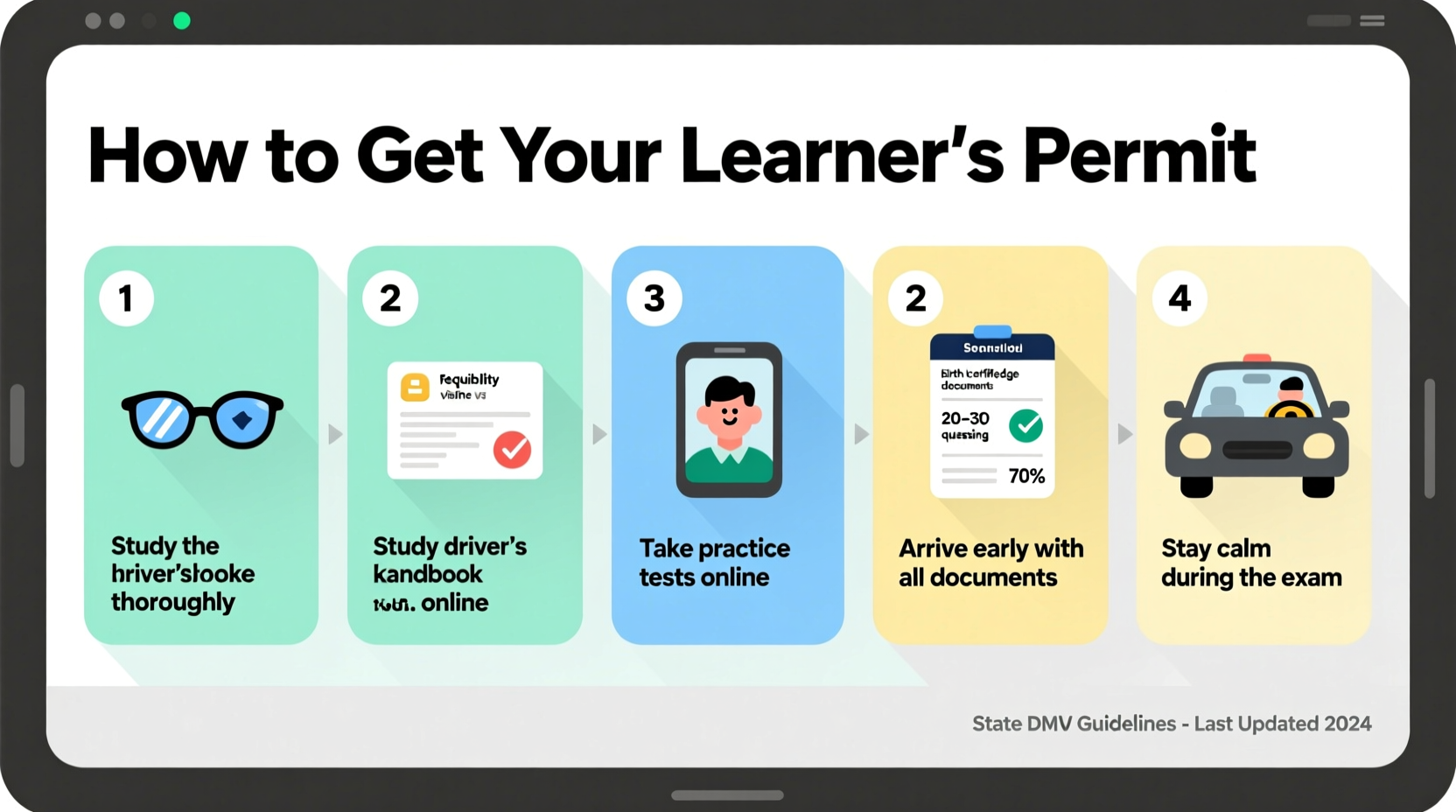
The first thing to recognize is that driver licensing in the U.S. is managed at the state level. That means age requirements, documentation, testing procedures, and restrictions differ depending on where you live. However, most states follow a graduated driver licensing (GDL) system, which includes a learner’s permit as the first phase.
Generally, the minimum age to apply for a learner’s permit ranges from 14 to 16 years old. For example:
| State | Minimum Age | Supervised Driving Required |
|---|---|---|
| California | 15½ | 50 hours (10 at night) |
| Texas | 15 | 30 hours (10 at night) |
| New York | 16 | 50 hours (15 at night) |
| Florida | 15 | 50 hours (10 at night) |
In addition to age, most states require applicants to provide proof of identity, residency, Social Security number, and school enrollment (if under 18). Always check your local Department of Motor Vehicles (DMV) website for the most accurate and up-to-date information.
Step-by-Step Process to Obtain Your Learner’s Permit
Follow this sequence to move through the application process without delays:
- Determine eligibility: Confirm you meet your state’s age and documentation criteria.
- Gather documents: Collect originals (not copies) of ID, proof of address, SSN, and any additional forms like parental consent.
- Complete a driver education course (if required): Some states mandate classroom or online instruction before applying.
- Schedule a visit to the DMV: Appointments reduce wait times significantly—book online if possible.
- Pass the vision and knowledge test: You’ll be tested on traffic signs, road rules, and safe driving practices.
- Pay the application fee: Fees range from $15 to $40 depending on location.
- Get photographed and receive your permit: Once approved, you’ll leave with a temporary or physical permit.
This entire process can take just one day if you’re prepared. However, failing the written test means you’ll need to reschedule, often after a waiting period of 1–7 days.
How to Prepare for the Knowledge Test
The written exam is often the biggest hurdle. It typically includes 25–50 multiple-choice questions drawn directly from your state’s driver handbook. To pass, you usually need to score 80% or higher.
Here’s how to study effectively:
- Read the official driver manual cover to cover. Don’t skip sections—even obscure rules appear on tests.
- Take practice tests online. The DMV website and third-party platforms like DriversEd.com offer free quizzes that simulate real exam conditions.
- Focus on high-risk topics: Right-of-way rules, speed limits in school zones, DUI penalties, and pedestrian right-of-way are frequently tested.
- Use flashcards for traffic signs. There are over 50 standard signs—knowing their colors, shapes, and meanings is essential.
“Most test failures come from misunderstanding basic signage and intersection rules. Students who review consistently for 30 minutes a day over two weeks have a 90%+ pass rate.” — Carlos Mendez, Driver Education Instructor, Virginia
Avoid These Common Mistakes
Even with preparation, many applicants make preventable errors. Here are the top ones and how to avoid them:
| Mistake | Why It Matters | How to Avoid |
|---|---|---|
| Bringing photocopies instead of originals | DMVs require original documents for verification | Double-check the DMV’s document checklist the night before |
| Failing to have a parent or guardian sign consent forms | Minors cannot apply without notarized or witnessed signatures | Review all forms ahead of time and schedule time for signing |
| Arriving without an appointment | Walk-ins may be turned away due to capacity limits | Book online; some states allow same-day slots |
| Not knowing supervised driving rules | Violating restrictions can result in permit suspension | Learn who can supervise (usually licensed adult 21+), curfew hours, and passenger limits |
Real Example: How Sarah Got Her Permit on the First Try
Sarah, a 15-year-old from Austin, Texas, wanted her permit before summer so she could start practicing with her dad. She began preparing six weeks in advance. Each week, she spent 20 minutes reading the Texas Driver Handbook and took two online practice tests. She created a folder with her birth certificate, school ID, utility bill (for proof of address), and her father’s signed DL-90A form.
She booked a DMV appointment two weeks ahead using the Texas DPS website. On test day, she arrived 15 minutes early, passed the vision screening, and scored 46 out of 50 on the written exam. Within 30 minutes, she walked out with her learner’s permit and a smile.
Her advice? “Don’t wing it. Use the free resources. And bring water—waiting can be stressful.”
Essential Checklist Before Going to the DMV
Before you leave home, verify you have everything you need:
- ✅ Original birth certificate or passport
- ✅ Proof of state residency (e.g., utility bill, lease agreement)
- ✅ Social Security card or W-2 with full SSN
- ✅ Parental consent form (signed in front of DMV employee or notary)
- ✅ Proof of school enrollment (if under 18)
- ✅ Completed application form (downloaded from DMV site)
- ✅ Payment for fees (cash, card, or money order—check what’s accepted)
- ✅ Practice test results (optional but builds confidence)
Frequently Asked Questions
Can I drive immediately after getting my learner’s permit?
No. You must always be accompanied by a licensed driver who is at least 21 years old (in most states). You cannot drive alone under any circumstances during the learner phase.
How long do I need to hold a learner’s permit before getting a license?
Typically between 6 months and 1 year, depending on your state and age. Teens under 18 almost always have a mandatory holding period. Completing a driver education course may shorten this time.
What happens if I fail the written test?
You can retake it, but most states impose a waiting period (often 1–7 days) and may charge a retest fee. Review the incorrect answers, study the handbook sections, and try again.
Final Steps and What Comes Next
Earning your learner’s permit is just the beginning. Once you have it, focus on logging supervised driving hours, practicing in varied conditions (rain, night, highways), and building confidence. Most states require a log signed by a parent or instructor.
After meeting the time and hour requirements, you’ll schedule a road test to advance to a provisional or full license. The habits you build now—like checking mirrors, signaling early, and staying calm in traffic—will serve you for life.
“The learner’s permit isn’t just about permission to drive—it’s about proving you’re ready to learn responsibly.” — National Highway Traffic Safety Administration (NHTSA)
Conclusion
Getting your learner’s permit doesn’t have to be stressful or complicated. With clear planning, the right documents, and focused study, you can complete the process efficiently and safely. Remember: every experienced driver once stood where you are now—nervous, excited, and eager to begin. Take it step by step, follow the rules, and use the resources available. Your journey to becoming a confident, licensed driver starts today.




 浙公网安备
33010002000092号
浙公网安备
33010002000092号 浙B2-20120091-4
Comments
No comments yet. Why don't you start the discussion?