
Teaching a parrot to speak is one of the most rewarding aspects of bird ownership. Unlike programmed machines, parrots learn through repetition, social bonding, and positive reinforcement. However, many owners grow discouraged when progress stalls or their bird seems uninterested. The truth is, success lies not in pushing the bird to perform, but in creating an environment where vocal learning feels natural and enjoyable. This guide walks you through a proven, stress-free method to help your parrot pick up basic words—one syllable at a time.
Understanding How Parrots Learn to Speak
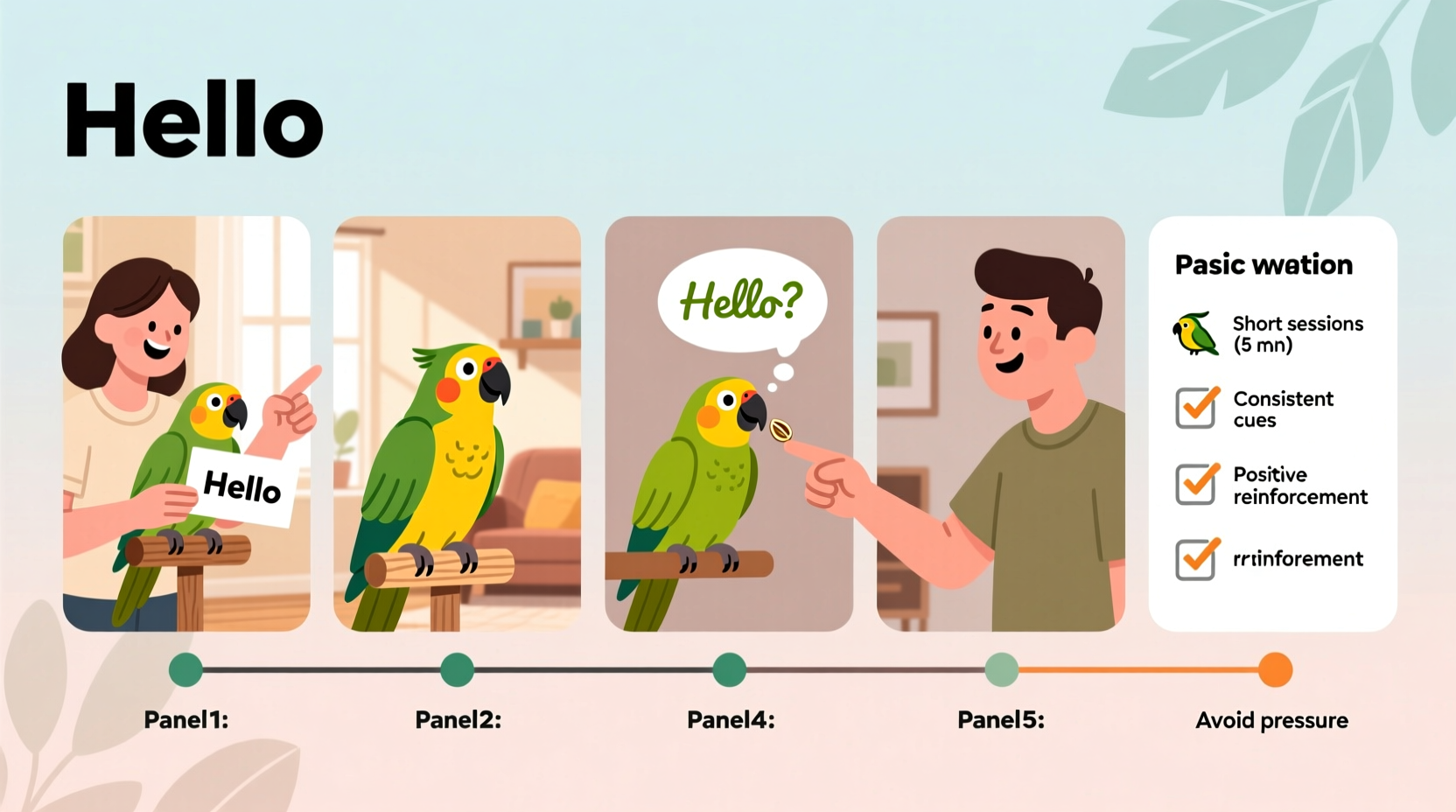
Parrots are not mimicking sounds randomly; they are socially motivated learners. In the wild, flock members use calls to maintain contact, signal danger, and reinforce bonds. Captive parrots apply this same instinct to human speech. They don’t understand grammar or meaning initially—they associate sounds with context, tone, and reaction.
Species vary widely in their ability and willingness to talk. African Greys, Amazon parrots, and Budgerigars are among the most vocal, while Pionus or certain conures may prefer whistles over words. Age also plays a role: younger birds, especially those under two years old, tend to be more receptive to vocal training.
“Parrots don’t learn language like children—they learn it like musicians learning melodies. Tone, rhythm, and repetition are everything.” — Dr. Irene Pepperberg, Avian Cognition Researcher
The key is consistency paired with patience. Rushing or repeating phrases during stressful moments (like yelling “No!”) teaches the bird emotional reactivity, not communication. Instead, focus on calm, joyful interactions where speech is part of a positive experience.
Setting the Right Environment for Learning
A parrot won’t learn well if it’s anxious, distracted, or isolated. Before introducing words, ensure your bird’s physical and emotional needs are met. A stressed parrot shuts down cognitively; a secure one engages readily.
- Daily interaction: Spend at least 30–60 minutes outside the cage engaging with your parrot.
- Low-noise setting: Choose a quiet room free from sudden loud sounds or competing conversations.
- Consistent routine: Birds thrive on predictability. Train at the same time each day, such as mid-morning after breakfast.
- Positive associations: Pair speaking attempts with treats, head scratches, or gentle praise.
Avoid training when the bird is molting, tired, or displaying fear. These states inhibit learning. Also, never punish incorrect attempts—this creates fear of sound-making altogether.
Step-by-Step Training Process
Effective word teaching follows a clear progression. Jumping ahead too quickly leads to confusion and disengagement. Follow these six stages to build confidence—for both you and your parrot.
- Select one simple word: Start with short, clear words like “hi,” “hello,” “bye,” or “name” (your name). Avoid complex phrases like “pretty bird.”
- Say it clearly and consistently: Use the same tone and pronunciation every time. Exaggerate slightly: “HIIII!” with a smile.
- Repeat in context: Say “Hi!” every time you enter the room. Say “Bye!” when leaving. Let the word anchor a real-life moment.
- Wait for response: After saying the word, pause 5–10 seconds. Watch for any vocalization—even a squeak. Reward effort, not perfection.
- Reinforce immediately: If your parrot makes a sound resembling the word, respond with excitement and a treat. Timing matters—reward within 2 seconds.
- Repeat daily: Practice 2–3 times per day for 5–7 minutes. Stop while your bird is still engaged, not when it loses interest.
After 2–3 weeks, once the first word is reliably attempted, introduce a second word—but only after mastery of the first. Overloading causes confusion.
Sample Daily Routine
| Time | Action | Word Used | Reward |
|---|---|---|---|
| 9:00 AM | Enter room, make eye contact | “Hi, Charlie!” | Pumpkin seed + praise |
| 12:30 PM | Offer fresh water | “Water?” (pause for sound) | Small piece of apple |
| 6:00 PM | Return from work, wave hand | “Bye-bye!” | Head scratch + verbal praise |
This structured repetition builds neural pathways. Your parrot begins to anticipate the word and associate it with outcomes.
Common Mistakes That Cause Frustration
Many owners unknowingly sabotage progress by falling into predictable traps. Recognizing these pitfalls can save months of stalled development.
| Do | Don’t |
|---|---|
| Use a cheerful, consistent tone | Yell or repeat words aggressively |
| Keep sessions under 7 minutes | Train for 30+ minutes straight |
| Reward approximations (e.g., “ah” for “hi”) | Wait only for perfect pronunciation |
| Practice in the same location daily | Try training in different rooms with distractions |
| Pair words with actions (e.g., “up” when lifting) | Use abstract phrases with no context |
One of the most damaging habits is expecting rapid results. Some parrots take weeks to produce even a whisper of a word. Others may go silent for days after making progress. This is normal. Learning happens in bursts, not linearly.
Real Progress: A Mini Case Study
Sarah adopted a one-year-old male Budgie named Milo. Initially, he chirped constantly but showed no interest in human sounds. Following the steps above, she began using the word “Hey!” every time she approached his cage in the morning. She used a high-pitched, friendly tone and offered a millet spray after any vocal response.
For the first 10 days, Milo did nothing. On day 11, he emitted a faint “eh” sound as she said “Hey!” She rewarded him instantly. By day 18, he was clearly attempting “Hey!” with rising intonation. At six weeks, he used it spontaneously when she entered the kitchen—even from another room.
Sarah never pushed beyond one word for the first two months. Only after Milo used “Hey!” reliably did she introduce “Milo?” as a call-and-response game. Today, at ten months old, Milo says four words and combines them contextually—like “Hey! Milo?” when seeking attention.
The turning point wasn’t intensity—it was consistency and emotional safety.
Expanding Beyond Single Words
Once your parrot masters 2–3 words, you can begin linking them or introducing short phrases. But do so carefully. The goal is clarity, not volume of vocabulary.
- Chaining: After your bird says “Hi,” wait and say “Charlie?” in a questioning tone. Eventually, it may string “Hi Charlie?” together.
- Contextual labeling: Name objects during interaction: “Bell!” when touching a toy, “Apple!” when offering fruit.
- Response training: Ask a question like “Want nut?” and reward vocalizations that follow.
Not all parrots will form sentences, and that’s fine. Even a few meaningful words create powerful connection. Remember: your bird is communicating, not performing.
Checklist: First 30 Days of Word Training
- ☐ Choose one simple word (e.g., “hi,” “bye,” “name”)
- ☐ Practice 2–3 times daily for 5 minutes
- ☐ Use the same tone and pronunciation each time
- ☐ Pair the word with a daily action (entering room, feeding, etc.)
- ☐ Reward any vocal attempt immediately with treat or praise
- ☐ Keep the environment calm and distraction-free
- ☐ Track progress in a journal (note first attempts, dates, reactions)
- ☐ Avoid introducing new words until the first is consistently used
Frequently Asked Questions
How long does it take for a parrot to say its first word?
It varies widely. Some parrots begin mimicking within weeks; others take 3–6 months. Young birds typically learn faster than adults. Consistency matters more than speed—daily micro-interactions yield better results than marathon sessions.
My parrot only whistles or makes random noises. Can it still learn words?
Yes. Whistling doesn’t mean your bird can’t talk—it may just prefer musical sounds. Continue modeling clear speech during calm, positive moments. Some parrots switch from whistling to talking suddenly, often after months of silence.
Should I play recordings of words to my parrot?
Generally, no. Parrots learn best from live, interactive models. Recordings lack social context and can confuse birds. If used at all, keep them low-volume and limited—real-time human interaction is far more effective.
Final Thoughts and Next Steps
Teaching your parrot to speak isn’t about forcing obedience—it’s about building a shared language rooted in trust. Every squawk, chirp, or mumbled syllable is an attempt to connect. When you respond with patience and positivity, you’re not just teaching words; you’re deepening a relationship.
Success doesn’t require a vocabulary of fifty words. It means your parrot feels safe enough to try, and you’re attentive enough to notice when it does. Celebrate small victories. Keep sessions joyful. And remember: the most important “word” your parrot learns might be your name—because that’s how it calls you back into conversation.




 浙公网安备
33010002000092号
浙公网安备
33010002000092号 浙B2-20120091-4
Comments
No comments yet. Why don't you start the discussion?