
Over time, mineral buildup from water can accumulate inside your Keurig coffee maker, affecting both performance and the taste of your brew. This scale—primarily composed of calcium and magnesium—forms naturally when hard water is heated. Left unchecked, it can slow down brewing times, reduce water flow, or even cause machine failure. The good news: regular descaling with Keurig’s official descaling solution restores efficiency, improves flavor, and extends the life of your machine. This comprehensive guide walks you through every step, offers practical tips, and explains why proper maintenance matters.
Why Descaling Matters for Coffee Quality and Machine Longevity
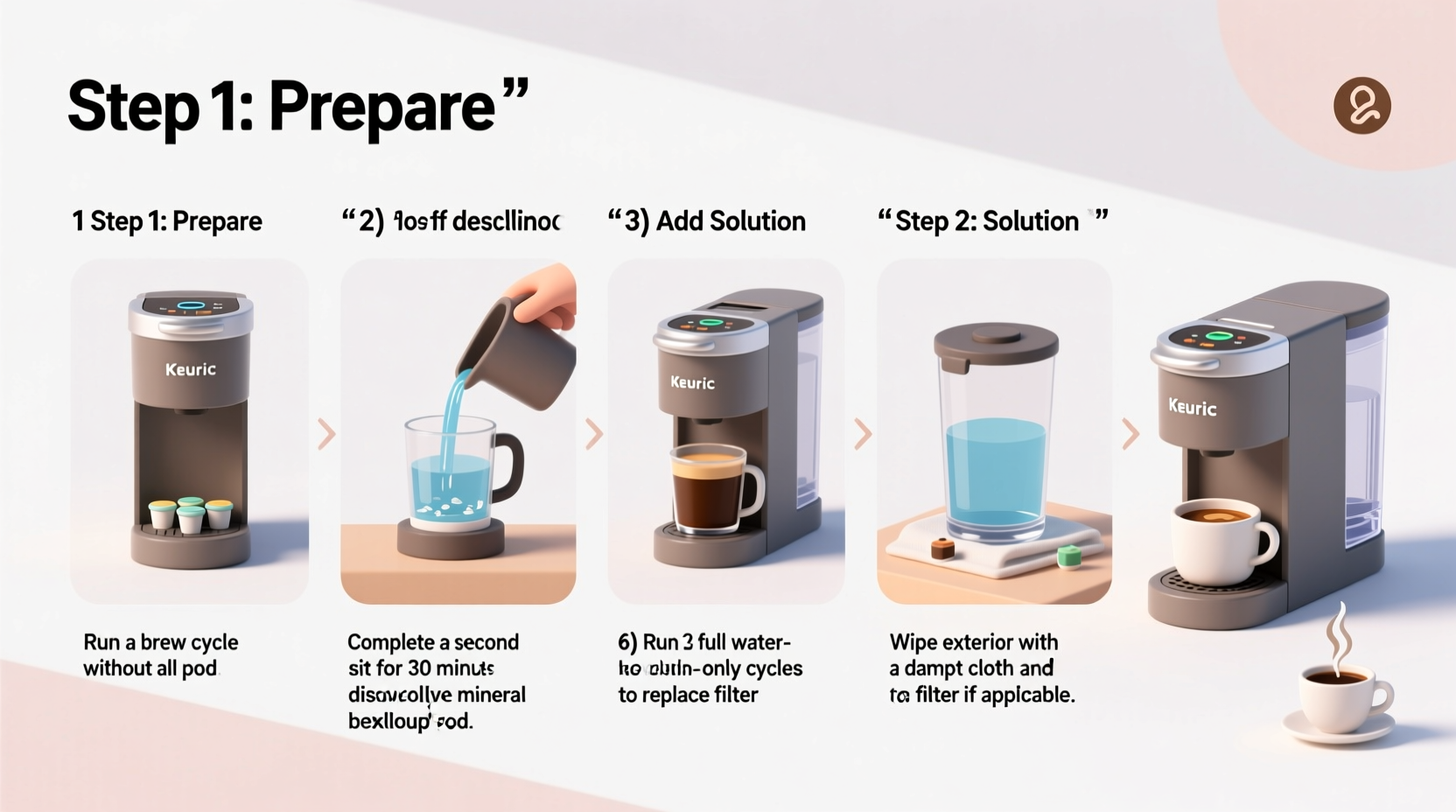
Your Keurig heats water rapidly to brew coffee, which accelerates mineral deposit formation. These deposits coat internal components like the heating element and water pump. As scale builds up, the machine must work harder, increasing energy use and wear. More importantly, impurities in the water can subtly alter the taste of your coffee, introducing bitterness or flatness even with high-quality beans.
Manufacturers recommend descaling every 3–6 months, depending on usage and water hardness. If you notice slower brewing, incomplete pod puncturing, or off-flavors despite clean pods and fresh water, it’s likely time to descale.
“Regular descaling isn’t just about machine health—it directly impacts flavor clarity and extraction consistency.” — Dr. Alan Prescott, Home Appliance Engineer
What You’ll Need: The Right Tools for Effective Descaling
Using genuine Keurig descaling solution ensures compatibility and optimal results. While some users turn to vinegar, Keurig advises against it due to potential lingering odors and less effective scale removal in complex internal pathways.
- Keurig descaling solution (8 oz bottle)
- Water (preferably distilled or filtered)
- A large mug (at least 16 oz capacity)
- Clean, damp cloth
- Dish towel (optional, for spill protection)
Step-by-Step Guide to Descaling Your Keurig Coffee Maker
Follow this timeline-based process carefully. The entire procedure takes approximately 30–45 minutes, including soak time.
- Turn off and unplug the machine. Safety first. Ensure the brewer is powered down before beginning.
- Remove the water reservoir, K-Cup holder, and drip tray. Wash these parts in warm, soapy water. Rinse and set aside to dry.
- Empty any remaining water from the reservoir. Wipe it clean with a soft cloth.
- Pour the full 8 oz bottle of Keurig descaling solution into the reservoir. Then fill the rest of the reservoir with water up to the maximum line.
- Reattach the reservoir to the machine. Plug in the brewer and turn it on.
- Enter descaling mode: Press and hold the “Brew” and “Strong” buttons simultaneously for 3 seconds (model-dependent). On most models, the display will show “DESCALE” or a light indicator will blink.
- Place a large mug on the drip tray. Begin the descaling cycle by pressing the brew button. Let the machine run a partial brew—about half a cup—then stop.
- Let the solution sit for 30 minutes. This allows the solution to dissolve stubborn scale deposits. Do not skip this step; dwell time is critical.
- Resume the descaling cycle. After 30 minutes, press brew again to continue dispensing the solution. Repeat until the reservoir is empty.
- Rinse the reservoir thoroughly. Refill it with fresh water to the max line.
- Run multiple cleansing brews. Without inserting a K-Cup, brew plain water through the machine 6–12 times until the water runs clear and no soapy or chemical odor remains.
- Reassemble all removable parts. Reinsert the K-Cup holder and drip tray. Wipe the exterior with a damp cloth.
- Exit descaling mode. On most models, the machine exits automatically after rinsing. If not, consult your user manual for reset instructions.
Do’s and Don’ts When Using Keurig Descaling Solution
| Do’s | Don’ts |
|---|---|
| Use only Keurig-approved descaling solution | Do not use vinegar or citric acid unless specified by model |
| Allow full 30-minute soak during descaling | Don’t rush the rinse cycles—under-rinsing leaves residue |
| Descale every 3–6 months based on use | Don’t ignore error messages related to water flow or heating |
| Use filtered or distilled water daily | Don’t leave standing solution in the machine overnight |
| Clean exterior and drip tray weekly | Don’t submerge the main unit in water |
Real Example: How One Household Fixed Slow Brewing Issues
The Thompson family in Denver noticed their Keurig K-Classic was taking nearly twice as long to brew coffee. Despite cleaning the needle and using fresh pods, the issue persisted. They were considering replacement—until they discovered the descaling function. Following the official steps with Keurig solution, they completed the process over a weekend morning. After the full cycle, brew time dropped from 2 minutes back to 45 seconds. More importantly, their morning dark roast regained its smooth, rich profile without a metallic aftertaste. They now descale every four months religiously and have extended their machine’s life well beyond two years of daily use.
Frequently Asked Questions
Can I use vinegar instead of Keurig descaling solution?
While vinegar is a common household alternative, Keurig does not recommend it. Vinegar may leave behind odors that affect coffee taste and is less effective at dissolving certain types of scale in modern internal systems. The official solution is formulated specifically for Keurig components and materials.
How do I know when my Keurig needs descaling?
Most newer Keurig models have a “Descale” indicator light that turns on after a set number of brews. If yours doesn’t, watch for signs like delayed brewing, reduced water output, or inconsistent temperature. In hard water areas, descale every 3 months; elsewhere, every 6 months is sufficient.
Is Keurig descaling solution safe for all models?
Yes, the standard Keurig descaling solution is compatible with all current single-cup brewers, including K-Mini, K-Elite, K-Duo, and K-Supreme models. Always check your user manual if unsure, but universal compatibility is designed into the formula.
Maintaining Peak Performance: A Simple Checklist
To keep your Keurig running smoothly between descaling sessions, follow this monthly maintenance checklist:
- Wipe down the exterior with a damp cloth
- Remove and rinse the drip tray and K-Cup holder
- Clean the needle with a paperclip or专用 cleaning tool
- Refill the reservoir with filtered water
- Run a hot water brew (no pod) once a week to flush minor residues
- Check for firmware updates (on smart models)
Final Thoughts: Make Descaling Part of Your Routine
A clean Keurig doesn’t just make better coffee—it lasts longer, performs reliably, and reduces long-term costs. Descaling with Keurig’s dedicated solution is a simple, science-backed method to maintain peak functionality. By dedicating less than an hour every few months, you preserve the integrity of your machine and ensure every cup tastes as intended: fresh, balanced, and satisfying.




 浙公网安备
33010002000092号
浙公网安备
33010002000092号 浙B2-20120091-4
Comments
No comments yet. Why don't you start the discussion?