
Starting a record label is more than just signing artists—it’s about building a sustainable business that amplifies talent, shapes culture, and generates value. With the music industry increasingly accessible through digital platforms, launching a label from the ground up is feasible with the right strategy. However, success doesn’t come overnight. It requires planning, legal diligence, branding, and a deep understanding of both music and business.
This guide walks through actionable steps to build a record label that stands out, operates professionally, and grows sustainably—even with limited initial resources.
1. Define Your Vision and Niche
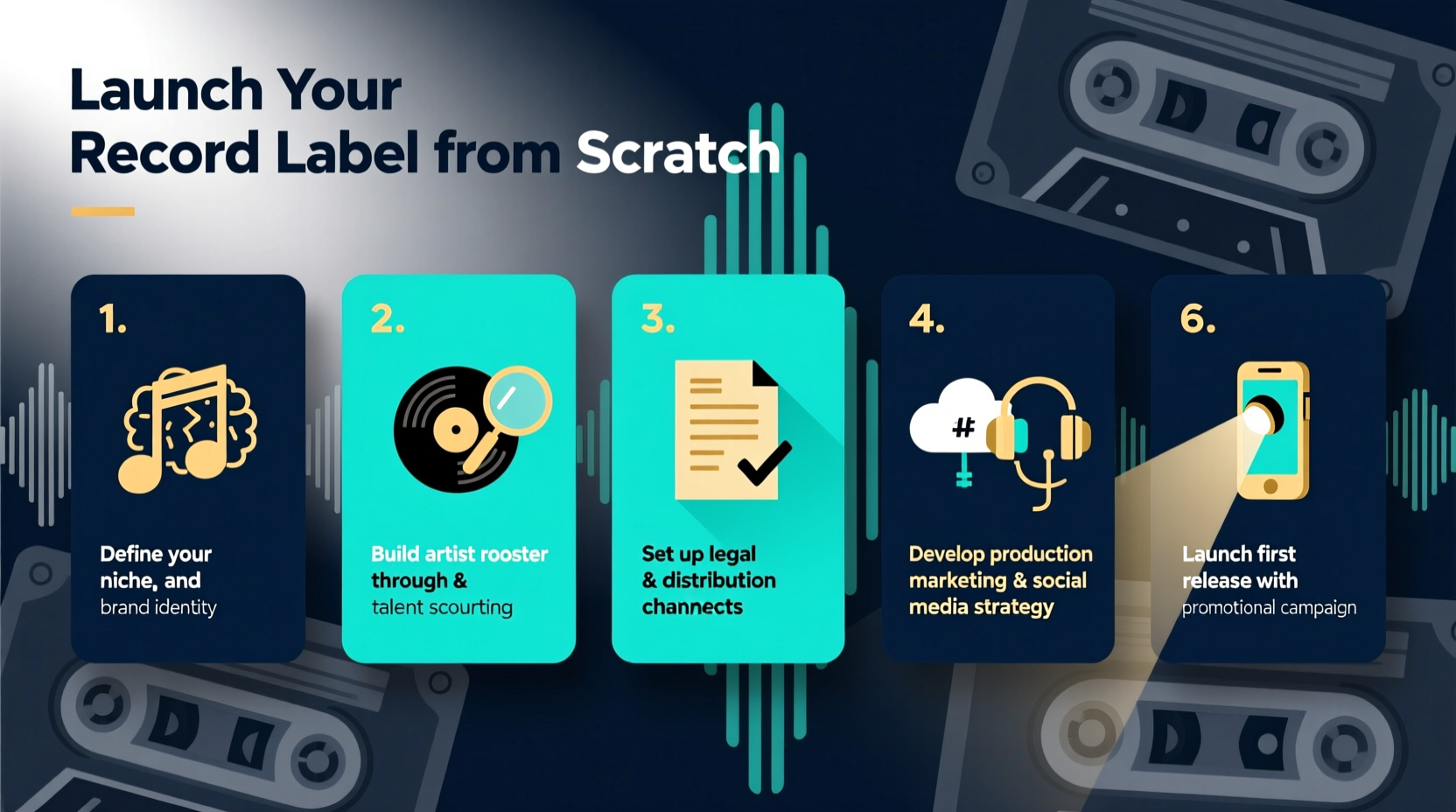
Before investing time or money, clarify your label’s identity. What genre will you focus on? Who is your target audience? What values will guide your decisions? A strong vision acts as a compass for every decision—from artist selection to marketing tone.
Niche labels often succeed faster than generalist ones because they attract dedicated fans and artists within a specific community. For example, a label focused solely on underground lo-fi hip-hop or regional Afrobeat can build authority more quickly than one trying to cover all genres.
Key Questions to Answer:
- What kind of music do I genuinely love and understand?
- Who are the artists I want to support?
- What makes my label different from others in this space?
- Am I aiming for cultural impact, profitability, or both?
2. Legal and Business Foundation
A professional record label must operate as a legitimate business. Skipping legal steps can lead to disputes, financial loss, or even shutdowns down the line.
- Choose a business structure: Most independent labels start as LLCs (Limited Liability Companies) for liability protection and tax flexibility.
- Register your business name: Ensure it’s unique and trademarkable. Check availability through your country’s intellectual property office.
- Obtain an EIN (Employer Identification Number): Required for opening bank accounts and filing taxes in the U.S.
- Draft contracts: Artist agreements, distribution deals, and publishing splits should be reviewed by an entertainment lawyer.
- Set up accounting: Use tools like QuickBooks or Wave to track income, royalties, and expenses from day one.
“Never sign an artist without a clear contract. Even a simple one-page agreement prevents misunderstandings later.” — Lena Torres, Music Attorney & Founder of SoundLaw Advisors
3. Build Infrastructure and Brand Identity
Your label isn’t just a legal entity—it’s a brand. Artists and fans need to recognize and trust your name.
| Component | Action Steps | Budget-Friendly Options |
|---|---|---|
| Logo & Visual Identity | Hire a designer or use platforms like Canva or Looka | Fiverr, 99designs contests |
| Website | Create a site with artist bios, music player, press kit, contact form | Carrd.co, WordPress + Bandzoogle themes |
| Social Media | Launch Instagram, TikTok, X (Twitter), YouTube | Use free scheduling tools like Buffer or Hootsuite |
| Email List | Collect emails via website pop-ups or giveaways | Mailchimp (free tier), Substack |
Consistency across platforms strengthens recognition. Use the same profile picture, bio format, and posting rhythm. Your brand voice should reflect your label’s ethos—whether edgy, minimalist, or community-driven.
4. Scout and Sign Talent Strategically
Artists are your core product. But don’t sign everyone who sounds good. Look for musicians who align with your vision, show consistency, and have some existing audience or hustle.
Where to Find Emerging Artists:
- Local open mics, college radio stations, and DIY venues
- SoundCloud, YouTube, and TikTok (search niche hashtags)
- Music forums like Reddit’s r/WeAreTheMusicMakers
- Collaborative networks like Splice or Kompoz
When approaching artists, focus on partnership. Offer more than just recording support—think marketing guidance, networking access, and career development.
Mini Case Study: Rise of Neon Groove Records
Jamal Reed launched Neon Groove Records in 2021 focusing on synthwave and retro-electronic acts. Instead of chasing viral stars, he partnered with two mid-tier producers who had small but loyal followings on Patreon. He funded their first EPs, handled distribution, and created themed video content that gained traction on TikTok. Within 18 months, one artist surpassed 5 million streams, attracting licensing deals and investor interest. The label’s curated aesthetic and consistent release schedule built trust across the niche community.
5. Distribution, Marketing, and Release Strategy
Getting music heard is harder than ever. A structured rollout plan increases visibility and momentum.
Step-by-Step Release Timeline (6 Weeks Out):
- Week 6: Finalize artwork, metadata, and upload to distributor (e.g., DistroKid, CD Baby).
- Week 5: Announce release with teaser visuals; begin email list buildup.
- Week 4: Drop a 15-second preview on TikTok/Reels; pitch to indie blogs.
- Week 3: Share behind-the-scenes content; secure playlist adds via SubmitHub.
- Week 2: Launch pre-save campaign; run targeted Instagram ads.
- Release Week: Coordinate premiere (e.g., YouTube First), engage fans, track metrics.
- Post-Release: Pitch to Spotify editorial playlists, analyze performance, plan next single.
Distribution platforms allow global access to Spotify, Apple Music, and Amazon. Choose one that offers quick payouts, easy uploads, and optional promotional tools.
Checklist: Pre-Release Essentials
- ✅ Mastered audio files (WAV/FLAC)
- ✅ Cover art (minimum 3000x3000 px)
- ✅ ISRC codes (assigned by distributor)
- ✅ Metadata (artist name, title, genre, explicit flag)
- ✅ Pre-save link embedded on website and social bios
- ✅ Press kit ready (bio, photos, one-sheet)
- ✅ At least 3 promotional assets (videos, graphics, quotes)
6. Monetization and Long-Term Growth
Revenue shouldn’t rely solely on streaming. Top indie labels diversify income through:
- Licensing music for TV, film, and ads
- Selling vinyl, merch, or digital bundles
- Hosting live events or label showcases
- Offering production or management services
Reinvest early profits into better equipment, marketing campaigns, or hiring part-time help. As your catalog grows, consider sync licensing agencies or joining a collection society like ASCAP, BMI, or SOCAN to collect publishing royalties.
FAQ
How much does it cost to start a record label?
You can launch for under $500 if you handle tasks yourself. Budget for registration ($100–200), website ($50), design ($100), and initial marketing/distribution ($100). Physical releases and studio time increase costs.
Do I need a license to release music?
No, but you must own or have rights to the master recordings and compositions. If you’re releasing covers, you’ll need mechanical licenses (available via services like Easy Song Licensing).
Can I run a label while working full-time?
Yes—many successful labels began as side projects. Dedicate 5–10 hours per week consistently. Focus on quality over quantity, especially in the first year.
Conclusion
Launching a record label from scratch is challenging but deeply rewarding. By defining your niche, establishing a legal foundation, signing the right artists, and executing strategic releases, you create more than a business—you build a cultural hub for music lovers.
The most successful labels aren’t those with the biggest budgets, but those with clarity, consistency, and passion. Start small, stay focused, and grow with purpose.




 浙公网安备
33010002000092号
浙公网安备
33010002000092号 浙B2-20120091-4
Comments
No comments yet. Why don't you start the discussion?