
Earning a teaching certification is a pivotal step toward building a rewarding career in education. While the process can seem overwhelming, especially with varying state requirements and bureaucratic hurdles, it doesn’t have to be slow or stressful. With the right planning, resources, and mindset, you can navigate the path efficiently and emerge confident in your qualifications. This guide breaks down actionable, real-world strategies that educators and credentialing specialists use to streamline certification—saving time, reducing anxiety, and positioning candidates for success from day one.
Understand Your State’s Certification Requirements
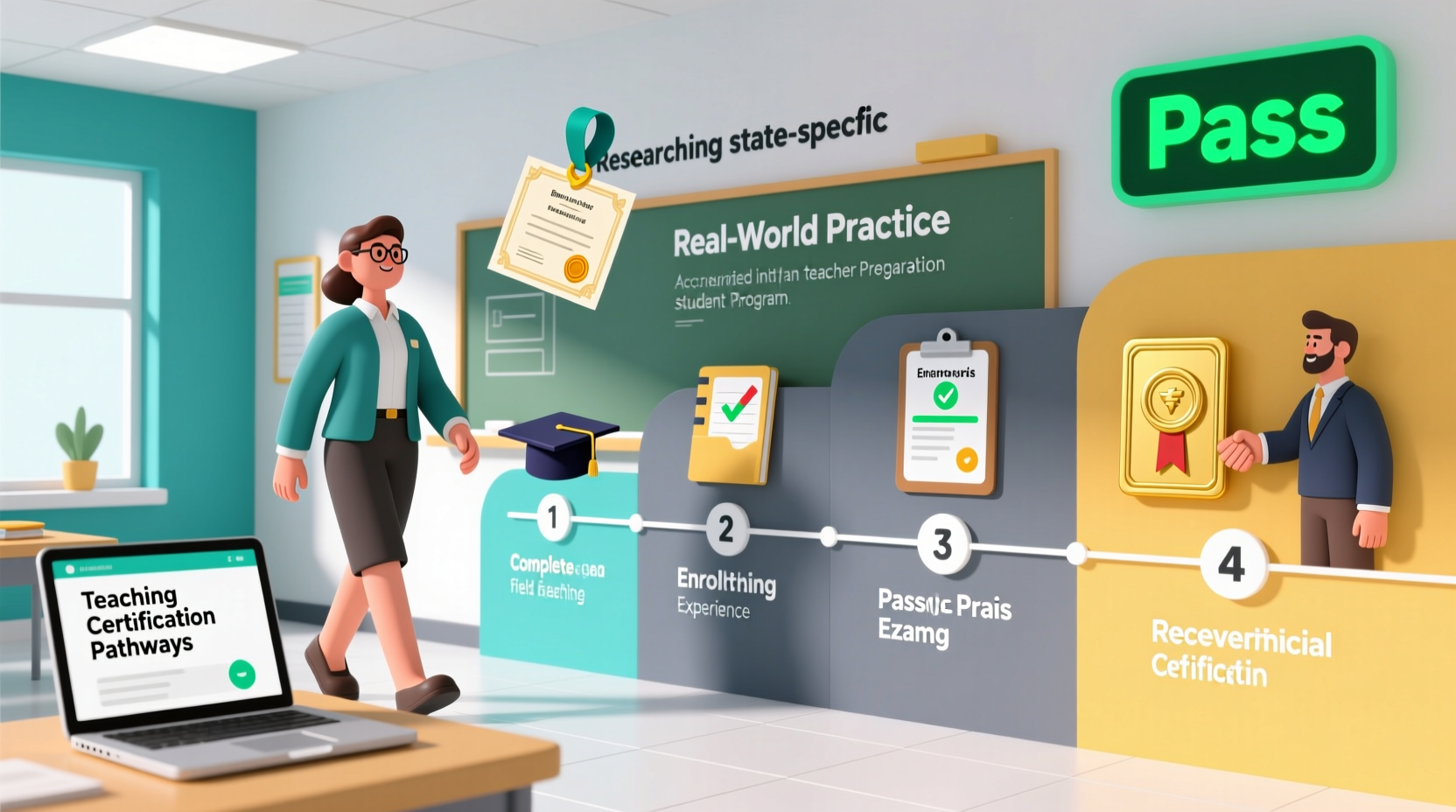
Teaching certification is not standardized across the U.S.; each state sets its own rules. The first—and most critical—step is researching your specific state’s Department of Education website to identify exact requirements. These typically include:
- Minimum degree level (usually a bachelor’s)
- Approved educator preparation program completion
- Passing scores on required exams (such as Praxis, edTPA, or state-specific tests)
- Fingerprinting and background checks
- Student teaching or clinical experience hours
Mistaking one requirement can delay your application by months. For example, some states require subject-area testing before starting student teaching, while others allow testing after program completion.
Choose the Right Certification Path
There are multiple routes to certification, and selecting the most efficient one depends on your background. Consider these common pathways:
| Pathway | Best For | Avg. Timeline | Key Advantage |
|---|---|---|---|
| Traditional Teacher Prep Program | Undergraduates or career-changers enrolling in college | 4–5 years | Full support, field placements, automatic eligibility |
| Alternative Certification (e.g., Teach For America, Residency Programs) | Career changers with a bachelor’s in another field | 1–2 years | Fast-track; earn while you learn |
| Out-of-State Reciprocity | Teachers relocating from another state | 3–6 months | Leverages existing credentials |
| Emergency/Provisional License | High-demand areas (STEM, special ed) | Immediate–1 year | Start teaching now, complete requirements later |
If you already hold a bachelor’s degree but lack education coursework, an alternative certification program may be your fastest route. These programs often partner with school districts and allow you to begin teaching under supervision while completing pedagogy training.
“Many talented professionals hesitate because they assume they need to go back to school for years. That’s rarely true. Alternative pathways can get qualified candidates into classrooms in under 12 months.” — Dr. Linda Reyes, Director of Educator Licensing, Ohio Department of Education
Accelerate Your Exam Preparation
Most states require at least one standardized test, such as the Praxis Core, Praxis Subject Assessments, or state equivalents like the MTEL (Massachusetts) or CSET (California). These exams are often the biggest bottleneck.
To pass efficiently:
- Register early to secure your preferred test date and location.
- Use official prep materials—ETS offers free study guides and practice tests for Praxis exams.
- Create a study schedule of 6–8 weeks, dedicating 10–15 hours per week.
- Focus on weak areas using diagnostic tools from practice exams.
- Simulate test conditions with timed full-length practice runs.
Some candidates attempt exams without structured prep and end up retaking them, adding weeks or months to their timeline. A focused approach prevents this setback.
Complete Field Experience Strategically
Student teaching or clinical experience is non-negotiable—but how you approach it impacts speed and confidence. Many traditional programs assign placements months in advance, but proactive candidates can accelerate the process.
Consider this real-world scenario:
Mini Case Study: Maria’s Fast-Track Student Teaching
Maria was enrolled in an alternative certification program in Texas. Instead of waiting for her cohort’s assigned placement, she reached out directly to two high-need middle schools in her district. She introduced herself, shared her resume, and expressed interest in supporting math instruction. One school responded within a week, offering her a co-teaching role during summer school. By completing 60% of her required hours over the summer, she finished her full placement two months ahead of schedule and secured a job offer before certification was issued.
The lesson? Initiative matters. Schools often welcome motivated candidates, especially in shortage areas.
Streamline Documentation and Application Submission
Even after meeting all requirements, delays often occur during the final application phase. Incomplete transcripts, missing recommendation forms, or unsigned verification letters can stall processing for weeks.
Use this checklist to ensure a smooth submission:
✅ Certification Application Checklist
- Official transcripts sent directly from institutions
- Test score reports submitted via testing service
- Completed fingerprinting and background check confirmation
- Verified student teaching evaluation form signed by supervisor
- Application fee payment receipt
- Copy of government-issued ID
- Program completion verification letter from your institution
Submit everything electronically if possible. Many states now use online portals like ELIS (Illinois), TEA (Texas), or NYATEP (New York), which provide real-time status updates and reduce mailing delays.
FAQ: Common Questions About Fast-Tracking Certification
Can I get certified without a teaching degree?
Yes, if you pursue an alternative certification route. Most states accept candidates with a bachelor’s in any field, provided they complete an approved teacher preparation program and pass required exams.
How long does certification take if I already have a job offer?
In many cases, you can begin teaching under a temporary license while fulfilling certification requirements. This “hire first, certify later” model is common in high-need subjects and can shorten your path to the classroom by several months.
Does my certification work in other states?
Most states participate in reciprocity agreements, meaning they recognize out-of-state credentials. However, you may still need to pass additional exams or complete supplemental coursework. Use the NASDTEC Interstate Agreement tool to check eligibility.
Final Steps and Confidence-Building Practices
As you near certification, focus on building professional confidence. Join local teacher networks, attend curriculum workshops, or volunteer in classrooms. These experiences reinforce your readiness and make the transition from candidate to educator seamless.
One overlooked strategy is mock interviews. Practice answering common questions like, “How do you differentiate instruction?” or “Describe your classroom management philosophy.” Being able to articulate your teaching identity strengthens both your application and job search.
“The best-prepared candidates aren’t just certified—they’re confident. They’ve rehearsed their philosophy, practiced their presence, and know their worth.” — Jamal Peterson, Hiring Principal, Denver Public Schools
Conclusion
Earning your teaching certification doesn’t have to be a drawn-out ordeal. By understanding your state’s rules, choosing the fastest viable pathway, preparing strategically for exams, taking initiative in fieldwork, and submitting a flawless application, you can become certified faster than you think. More importantly, approaching each step with intention builds the confidence that will serve you throughout your teaching career.




 浙公网安备
33010002000092号
浙公网安备
33010002000092号 浙B2-20120091-4
Comments
No comments yet. Why don't you start the discussion?