
Growing parsley from seed is one of the most rewarding yet underrated practices in home gardening. While many cooks reach for the plastic clamshell of pre-washed parsley at the grocery store, few realize how much more vibrant, aromatic, and sustainable their culinary herbs can be when grown from seed in a backyard, balcony, or even a sunny windowsill. Though parsley has a reputation for slow germination and finicky starts, the process becomes straightforward with proper technique and timing. This comprehensive guide walks through every stage—from seed selection to harvest—offering professional insights that ensure success whether you're a first-time gardener or refining your herb-growing expertise.
Definition & Overview
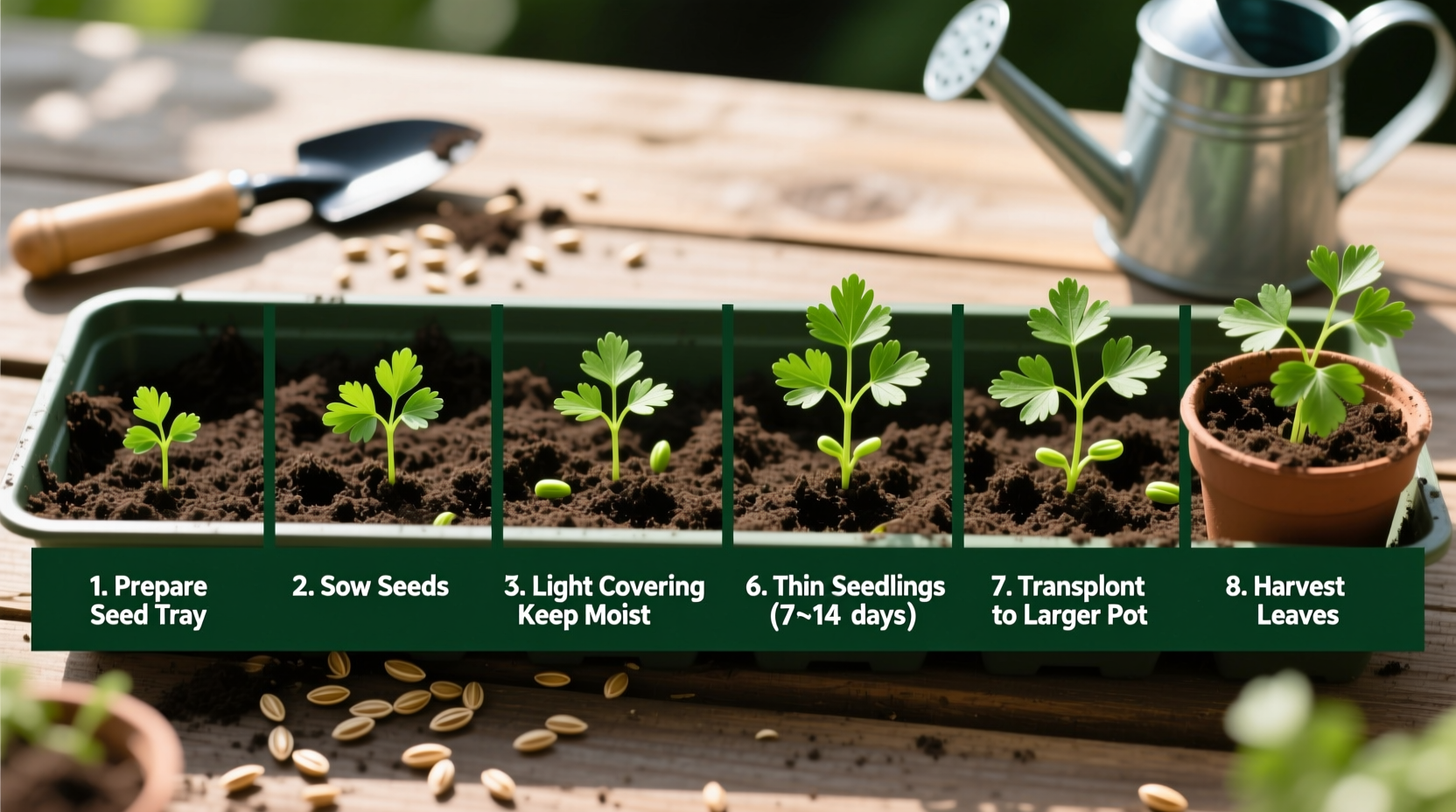
Parsley (Petroselinum crispum) is a biennial herb belonging to the Apiaceae family, which includes carrots, celery, and dill. Native to the central Mediterranean region, it has been cultivated for over 2,000 years, initially as a medicinal plant before becoming a cornerstone of global cuisine. Today, parsley is primarily used as a culinary herb, prized not only for its bright, clean flavor but also for its ability to enhance both savory and fresh dishes. Unlike many herbs that lose potency when dried, parsley delivers its fullest character when consumed fresh—making home cultivation especially valuable.
There are two primary forms: curly leaf and Italian (flat-leaf) parsley. Both are grown from seed and share similar growing requirements, though they differ subtly in flavor and use. Because parsley develops a long taproot, it does not transplant well once established, which makes starting from seed directly in its final location the preferred method for most growers.
Key Characteristics of Parsley
| Attribute | Description |
|---|---|
| Flavor Profile | Bright, slightly peppery, with grassy and citrusy notes; flat-leaf is more robust, curly is milder. |
| Aroma | Fresh, green, with subtle herbal sweetness and a faint earthiness. |
| Color/Form | Deep green leaves; curly type has ruffled foliage, flat-leaf has broader, smooth-edged leaves. |
| Heat Level | None. Parsley is non-pungent and does not contribute heat. |
| Culinary Function | Used as a garnish, fresh ingredient in sauces (e.g., chimichurri, gremolata), soups, stews, tabbouleh, and herb blends. |
| Shelf Life (Fresh) | 7–10 days refrigerated; significantly longer when grown in living soil. |
| Plant Type | Biennial (lives two years); typically grown as an annual. |
| Days to Germination | 14–28 days, depending on conditions. |
| Days to Harvest | 70–90 days from seed. |
Why Grow Parsley from Seed?
While nursery-bought transplants are available, starting parsley from seed offers several advantages:
- Cost-effective: A single packet of seeds (often under $3) can yield multiple plants over a growing season.
- Better root development: Seeds sown directly avoid root disturbance, leading to stronger, more resilient plants.
- Variety control: Seed catalogs offer heirloom and specialty types not found in stores.
- Continuous harvest: Succession planting from seed allows for year-round supply in mild climates.
The main challenge lies in parsley’s notoriously slow and inconsistent germination. The seeds contain natural germination inhibitors, and their essential oils degrade slowly. However, this hurdle is easily overcome with simple pre-treatment methods.
Step-by-Step Growing Process
Step 1: Choose the Right Variety
Select a parsley type based on intended use:
- Curly Leaf Parsley (Petroselinum crispum): Mild flavor, decorative appearance. Ideal for garnishes and salads where texture matters.
- Italian (Flat-Leaf) Parsley (Petroselinum crispum neapolitanum): More intense, robust flavor. Preferred by chefs for cooking, sauces, and Middle Eastern dishes like tabbouleh.
- Japanese Parsley (Petroselinum tanacetum): A perennial variant with higher cold tolerance, suitable for zones 6 and below.
For beginners, Italian parsley is recommended due to its superior flavor and better performance in garden beds.
Step 2: Timing and Climate Considerations
Parsley is a cool-season herb that thrives in temperatures between 50°F and 75°F (10°C–24°C). It can tolerate light frosts but bolts (goes to seed) quickly in sustained heat above 80°F (27°C).
Best times to sow:
- Spring: 4–6 weeks before the last frost date, indoors or under cover.
- Fall: 10–12 weeks before first frost for overwintering in zones 7+.
In USDA zones 7 and warmer, parsley can often survive winter and produce a second-year harvest before flowering.
Step 3: Seed Preparation (Critical for Success)
To counteract slow germination, soak seeds before planting:
- Place seeds in a small bowl.
- Cover with warm water (not hot).
- Soak for 24–48 hours, changing water once after 24 hours.
- Drain and plant immediately.
This process breaks down the outer coating and leaches out germination-inhibiting compounds, improving sprout rates by up to 50%.
Pro Tip: For faster results, combine soaking with scarification—lightly rub seeds between two sheets of fine sandpaper before soaking to further weaken the seed coat.
Step 4: Soil and Container Setup
Parsley requires well-draining, nutrient-rich soil with a pH between 6.0 and 7.0. Use the following mix for containers:
- 60% high-quality potting soil
- 30% compost
- 10% perlite or coarse sand
For in-ground planting, amend native soil with 2–3 inches of compost and till to a depth of 8–10 inches to accommodate the taproot.
Choose containers at least 8–10 inches deep with drainage holes. Parsley roots grow vertically and need space to develop.
Step 5: Sowing the Seeds
Follow these guidelines for optimal spacing and depth:
- Sow seeds ¼ inch deep.
- Space seeds 2–3 inches apart in rows 6–8 inches apart.
- Label the container—germination takes time, and it's easy to mistake bare soil for failure.
- Water gently after sowing to avoid displacing seeds.
For indoor starts, use a seed-starting tray with individual cells (at least 2 inches wide) to minimize root disturbance during transplanting.
Step 6: Provide Optimal Germination Conditions
Maintain consistent moisture and warmth:
- Keep soil moist but not soggy—use a spray bottle to avoid overwatering.
- Cover trays with a humidity dome or plastic wrap to retain moisture.
- Place in a warm area (70°F/21°C ideal) such as on top of a refrigerator or near a heater.
- Provide indirect light until sprouts emerge.
Germination typically begins around day 14 but may take up to four weeks. Patience is essential—do not replant prematurely.
Step 7: Transplanting (If Started Indoors)
Once seedlings have developed 3–4 true leaves and outdoor temperatures are stable above 50°F (10°C), begin hardening off:
- Expose seedlings to outdoor conditions for 1–2 hours daily.
- Gradually increase exposure over 7–10 days.
- Transplant into final location in late afternoon or on an overcast day to reduce shock.
When transplanting, dig a hole slightly larger than the root ball and avoid burying the crown. Water thoroughly after planting.
Step 8: Ongoing Care and Maintenance
Once established, parsley is relatively low-maintenance but benefits from consistent care:
- Watering: 1–1.5 inches per week. Keep soil evenly moist—avoid drying out completely.
- Fertilizing: Apply balanced organic fertilizer (e.g., 5-5-5) every 4–6 weeks. Over-fertilizing reduces flavor intensity.
- Weeding: Keep area free of weeds, especially in early growth stages.
- Mulching: Apply 1–2 inches of straw or shredded leaves to retain moisture and regulate soil temperature.
Parsley rarely suffers from pests but watch for aphids or carrot flies. Remove affected leaves promptly; use insecticidal soap if needed.
Step 9: Harvesting Parsley
Begin harvesting once plants have at least 10–12 healthy leaves. Never remove more than one-third of the foliage at once.
Harvesting technique:
- Cut outer stems at the base using sharp scissors or pruners.
- This encourages new growth from the center.
- Harvest in the morning when essential oils are most concentrated.
Regular harvesting delays bolting and extends the productive life of the plant. In mild climates, parsley can yield continuously for 12–18 months.
Storage Tip: To extend freshness, place cut stems in a glass of water (like cut flowers) and cover loosely with a plastic bag. Store in the refrigerator for up to two weeks.
Variants and Forms of Parsley
Beyond the common types, several specialized cultivars exist for specific growing conditions or culinary uses:
| Variety | Characteristics | Best Use Case |
|---|---|---|
| 'Forest Green' | Deep green, tightly curled leaves; high yield | Garnishes, container gardens |
| 'Italian Giant' | Larger, flatter leaves; bold flavor | Cooking, sauces, freezing |
| 'Hamburg Rooted' | Thick, edible parsnip-like root; leafy tops | Root vegetable dishes, European cuisine |
| 'Moss Curled' | Finely textured, dense curls; ornamental | Edging beds, visual appeal |
Seed savers may also collect seeds from second-year plants, though cross-pollination with other umbellifers is possible.
Comparison with Similar Herbs
Parsley is often confused with cilantro and curly endive. Understanding the differences ensures correct culinary use.
| Herb | Flavor | Appearance | Best Culinary Use |
|---|---|---|---|
| Parsley (Flat-Leaf) | Fresh, mildly peppery, clean | Broad, flat leaves with serrated edges | Tabbouleh, gremolata, finishing dishes |
| Cilantro | Distinctive, citrusy, polarizing (soapy note for some) | Similar shape but more delicate, lacy | Salsas, Asian curries, Latin American dishes |
| Curly Endive | Bitter, slightly nutty | Tightly curled, pale green, thinner texture | Salads, bitter greens mixes |
\"Parsley isn't just a plate decoration—it's a foundational herb that lifts entire dishes. When grown from seed, its flavor depth surpasses anything store-bought.\" — Chef Elena Ruiz, Culinary Herb Instructor
Practical Tips & FAQs
Why won’t my parsley seeds germinate?
The most common cause is age—parsley seeds lose viability after 1–2 years. Always check the packet date. Second, insufficient moisture or low temperatures inhibit sprouting. Pre-soaking and maintaining warmth significantly improve success.
Can I grow parsley indoors year-round?
Yes, provided it receives at least 6 hours of direct sunlight or supplemental grow lights. Use a south-facing window and rotate the pot weekly for even growth. Ensure good air circulation to prevent mold.
Does parsley come back every year?
As a biennial, it grows foliage in year one and flowers in year two. In mild climates, it often overwinters and produces a final flush before seeding. Many gardeners treat it as an annual for peak flavor.
How do I prevent bolting?
Plant in spring or fall to avoid summer heat. Provide afternoon shade in hot regions. Regular harvesting delays flowering. Once bolting begins, cut flower stalks to prolong leaf production.
Can I freeze fresh parsley?
Yes. Chop leaves, pack into ice cube trays, cover with water or olive oil, and freeze. Transfer cubes to a sealed bag. Use directly in soups, stews, and sauces.
Is parsley safe for pets?
In small amounts, parsley is safe for dogs and cats and may aid digestion. However, large quantities—especially of the seed or root—can be toxic due to furanocoumarins. Stick to culinary portions.
Succession Planting Checklist:
- Sow new seeds every 4–6 weeks from early spring to mid-summer.
- Start fall crop 10 weeks before first frost.
- Use staggered planting to ensure continuous harvest.
- Label sowing dates on containers.
Summary & Key Takeaways
Growing parsley from seed is a practical, economical way to elevate your kitchen’s flavor potential. Despite its slow start, parsley rewards patience with months of fresh, aromatic foliage. Key steps include selecting the right variety, pre-soaking seeds, providing well-drained soil, and maintaining consistent moisture during germination. Once established, parsley requires minimal care but delivers maximum culinary return.
Whether you're cultivating flat-leaf for chimichurri or curly parsley for elegant garnishes, homegrown herbs outperform store-bought in flavor, sustainability, and cost. With proper timing and technique, even novice gardeners can achieve reliable harvests year after year.
Start a small parsley patch this season—your recipes will taste the difference. For best results, begin soaking seeds now and plan your first sowing within the next 2–3 weeks.




 浙公网安备
33010002000092号
浙公网安备
33010002000092号 浙B2-20120091-4
Comments
No comments yet. Why don't you start the discussion?