
Choosing the right sunscreen isn’t just about SPF numbers or skin type—it’s also about how well it covers your skin. While both stick and lotion sunscreens promise protection, their real-world performance varies significantly based on how they’re applied. Many people assume that slathering on a thick layer ensures full coverage, but studies show that application method often determines whether you’re truly shielded from UV damage. With rising skin cancer rates and increasing awareness around sun safety, understanding which format—stick or lotion—delivers more consistent, complete coverage is essential.
The Science Behind Sunscreen Coverage
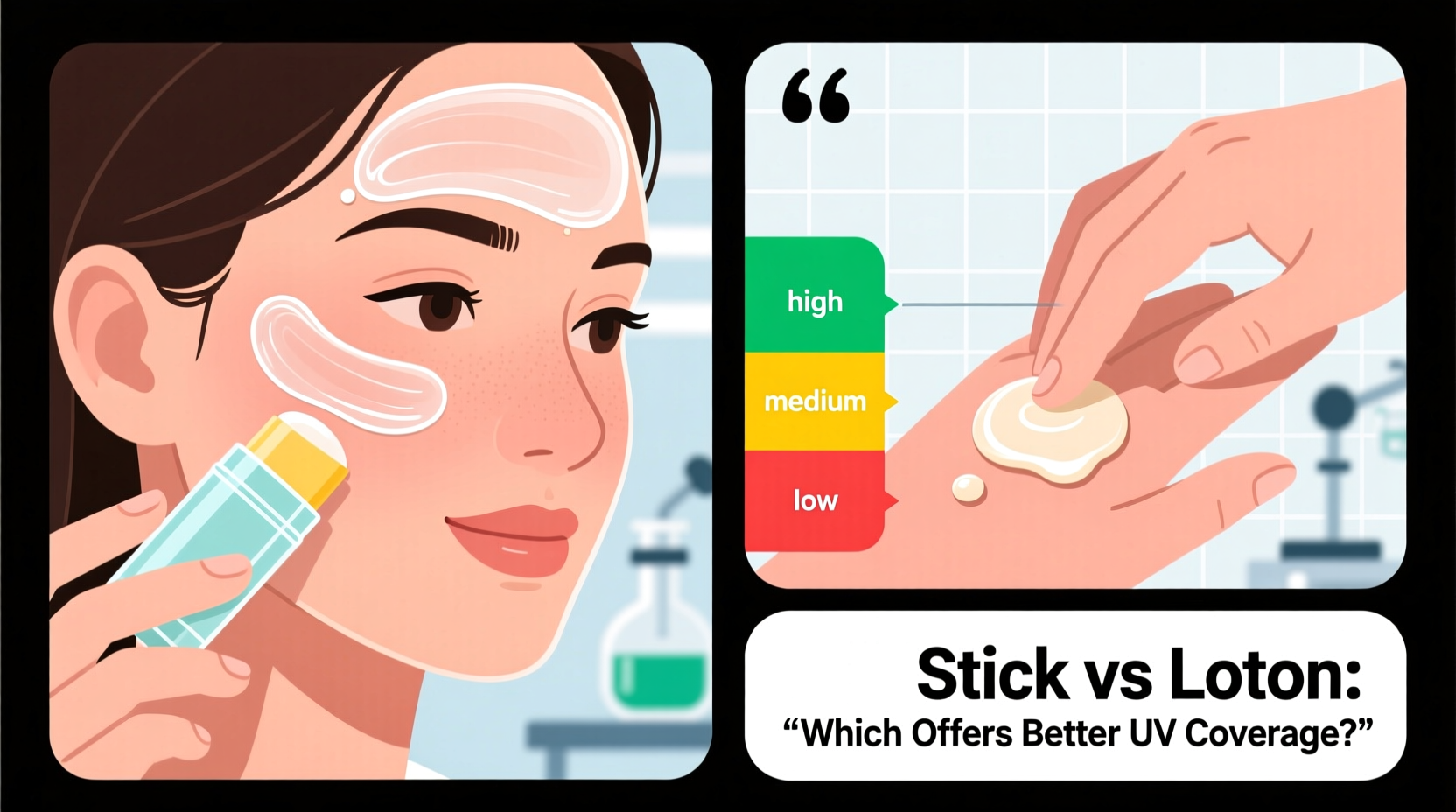
Coverage refers to how evenly and thoroughly a sunscreen coats the skin, forming a protective barrier against UVA and UVB rays. The FDA and dermatological guidelines recommend applying 2 milligrams of sunscreen per square centimeter of skin—the equivalent of about one ounce (a shot glass full) for the entire body. However, most people apply only 25–50% of that amount, drastically reducing protection.
Lotion sunscreens are traditionally measured in fluid ounces and dispensed by the pump or squeeze bottle, making it easier to estimate volume. Stick sunscreens, meanwhile, come in solid form and are rubbed directly onto the skin like a deodorant. This fundamental difference affects not only how much product is used but also where and how evenly it spreads.
A 2020 study published in the Journal of the American Academy of Dermatology found that participants using lotion applied closer to the recommended dose than those using sticks—especially on larger areas like arms, legs, and torso. Sticks were more likely to be under-applied, resulting in patchy protection.
“Most people don’t realize how little they’re actually applying with a stick. It feels sufficient because it’s waxy and leaves a visible line, but that doesn’t mean it’s providing even, broad-spectrum coverage.” — Dr. Nina Rodriguez, Board-Certified Dermatologist
Application Mechanics: How Each Type Spreads on Skin
The way sunscreen moves across the skin plays a crucial role in coverage. Lotions, especially lotions labeled as “broad-spectrum” and “water-resistant,” are designed to spread easily with fingers or hands. Their fluid consistency allows for controlled, overlapping strokes, helping ensure no spot is missed.
In contrast, stick sunscreens have a higher wax-to-oil ratio, which gives them structure but limits glide. They tend to drag rather than glide, requiring multiple passes to cover a small area adequately. This increases the risk of skipping zones—especially on uneven surfaces like elbows, knees, or shoulders.
Moreover, stick formulas often leave a white cast or residue that users mistake for full coverage. In reality, this residue may be concentrated in certain spots while adjacent areas remain unprotected. One common issue is “stripe application”—drawing lines with the stick and assuming they’ll blend together, when in fact gaps often remain between them.
Comparing Coverage by Body Area
Different parts of the body require different application strategies. Here's how stick and lotion sunscreens perform across key zones:
| Body Area | Stick Sunscreen Performance | Lotion Sunscreen Performance |
|---|---|---|
| Face | Good for targeted use (nose, cheeks), but hard to spread evenly over forehead and chin without rubbing. | Superior coverage; easy to blend with fingers or applicator for uniform layer. |
| Ears & Neck | Moderate; awkward shape makes full coverage difficult with rigid stick. | Excellent; lotion can be dabbed behind ears and along necklines smoothly. |
| Arms & Legs | Poor; time-consuming and inconsistent due to large surface area. | Highly effective; quick to apply and distribute evenly with palms. |
| Back | Very limited; nearly impossible to self-apply fully without assistance. | Better if using spray lotion or with help; traditional lotion requires partner or applicator tool. |
| Scalp (parted hair) | Fair; precise for part lines, but messy and waxy on hair. | Fair; best with spray versions, though lotions can work carefully at part lines. |
For facial use, especially around sensitive areas like the eyes, sticks offer precision. But for full-body protection—particularly during extended outdoor exposure—lotions consistently outperform sticks in both speed and completeness of coverage.
Real-World Example: Beach Day Application Habits
Consider Sarah, a 34-year-old teacher who spends weekends at the beach with her kids. She prefers stick sunscreen because it’s mess-free and fits easily in her tote. On a recent outing, she applied her SPF 50 stick to her face, shoulders, and tops of feet—swiping each area once and moving on. Her husband used a lotion, squeezing a quarter-sized amount for each limb and massaging it in.
By mid-afternoon, Sarah developed a faint burn along her jawline and shoulder—areas where the stick had been applied lightly and not blended. Her husband remained unburned. When they reviewed their routines later, Sarah realized she’d spent less than half the time applying sunscreen and hadn’t reapplied after swimming. The stick felt convenient, but convenience came at the cost of protection.
This scenario reflects a common pattern: consumers choose sticks for portability and perceived ease, but fail to compensate for lower product delivery and uneven distribution.
Step-by-Step Guide to Maximizing Coverage
Whether you prefer stick or lotion, following a structured routine improves coverage. Use this timeline before sun exposure:
- 15 minutes before going outside: Begin application indoors under good lighting.
- Start with largest areas: Apply lotion liberally to arms, legs, torso, and back (use a mirror or helper).
- Move to face and neck: Use lotion for full-face coverage or a stick for precision on nose, ears, and lips.
- Rub thoroughly: For sticks, make three passes and then blend with fingertips to eliminate streaks.
- Don’t forget edges: Include back of hands, tops of feet, ears, and hairline.
- Set timer for reapplication: Reapply every two hours, or immediately after swimming, sweating, or towel drying.
This method ensures no zone is overlooked and accounts for the limitations of each format. If using only a stick, double or triple the number of swipes per area to approximate proper dosage.
Expert Recommendations and Industry Insights
Dermatologists overwhelmingly recommend lotions for primary sun protection, reserving sticks for touch-ups or specific zones. According to the Skin Cancer Foundation, “Creams and lotions allow better control over the amount applied and are more likely to provide adequate, even coverage.”
Additionally, many stick sunscreens contain lower concentrations of active ingredients due to formulation constraints. To maintain solidity, manufacturers must reduce liquid content, which can dilute UV filters. Some popular stick products list SPF 50 but deliver closer to SPF 30 in real-world conditions due to thin application.
“The stick isn’t inherently bad, but it’s often misused. People think one swipe equals protection. That’s dangerous. If you’re relying solely on a stick for full-body coverage, you’re likely underprotected.” — Dr. Marcus Lee, Clinical Dermatologist and UV Researcher
That said, sticks excel in reapplication scenarios. Hikers, runners, and parents managing kids appreciate the no-mess design for midday top-offs. Just remember: reapplying a poorly applied base layer won’t fix initial gaps.
Checklist: Choosing and Using Sunscreen for Optimal Coverage
- ✅ Use lotion as your primary sunscreen for full-body application
- ✅ Choose a broad-spectrum formula with SPF 30 or higher
- ✅ Apply at least 15 minutes before sun exposure
- ✅ Measure proper amounts: 1/4 to 1/2 teaspoon for face, shot glass for body
- ✅ Rub in thoroughly—even with sticks—to eliminate streaks
- ✅ Reapply every two hours, or after water/sweat exposure
- ✅ Carry a stick for convenient reapplication on-the-go
- ✅ Check expiration dates—sunscreen loses potency over time
Frequently Asked Questions
Can I rely only on sunscreen stick for full-body protection?
No. Stick sunscreens are impractical for covering large areas adequately. They deliver too little product per swipe to meet recommended amounts. Use lotion for initial application and reserve sticks for touch-ups on face, ears, or shoulders.
Why does my sunscreen stick leave white marks?
White residue usually indicates mineral blockers like zinc oxide or titanium dioxide. These are safe and effective, but the marks mean the product hasn’t been blended fully. Rub with fingertips to disperse evenly and ensure invisible, continuous coverage.
Do sunscreen sticks last as long as lotions?
Sticks typically contain less product—usually 0.5 to 0.7 ounces—versus 3-ounce lotions. At recommended usage, a single stick may only provide 5–7 full-body applications. They’re compact but not cost-effective for frequent or family use.
Final Verdict: Lotion Wins for Coverage, But Sticks Have Their Place
When it comes to actual, measurable coverage, lotion sunscreen outperforms stick formulations across every major metric: application thickness, spreadability, consistency, and user compliance with dosage. Scientific evidence, dermatologist consensus, and real-world outcomes all point to lotions as the superior choice for reliable, full-body UV protection.
However, stick sunscreens serve a valuable secondary role. Their portability, precision, and mess-free design make them ideal for reapplication throughout the day—especially on the go. Used correctly, they complement a lotion-based routine rather than replace it.
The bottom line: start with a high-quality lotion to build a solid foundation of protection. Keep a stick in your bag or car for easy midday refreshers. Never let convenience compromise coverage—your skin’s health depends on both the product you choose and how you use it.




 浙公网安备
33010002000092号
浙公网安备
33010002000092号 浙B2-20120091-4
Comments
No comments yet. Why don't you start the discussion?