
In the ongoing battle against household clutter, storage solutions are essential—not just for organization but also for maintaining a clean, inviting aesthetic. Two popular options stand out in living rooms, bedrooms, and entryways: storage basket sets and ottomans. Both promise to conceal everyday messes, but they deliver in very different ways. One excels in flexibility and affordability, the other in dual-purpose design and elegance. So, which truly hides clutter better while enhancing your decor?
The answer isn’t straightforward. It depends on your space, lifestyle, and design goals. This article breaks down the strengths and weaknesses of each option, compares their visual appeal and practicality, and offers expert-backed guidance to help you choose the right solution for your home.
Functionality: How Well Do They Hide Clutter?
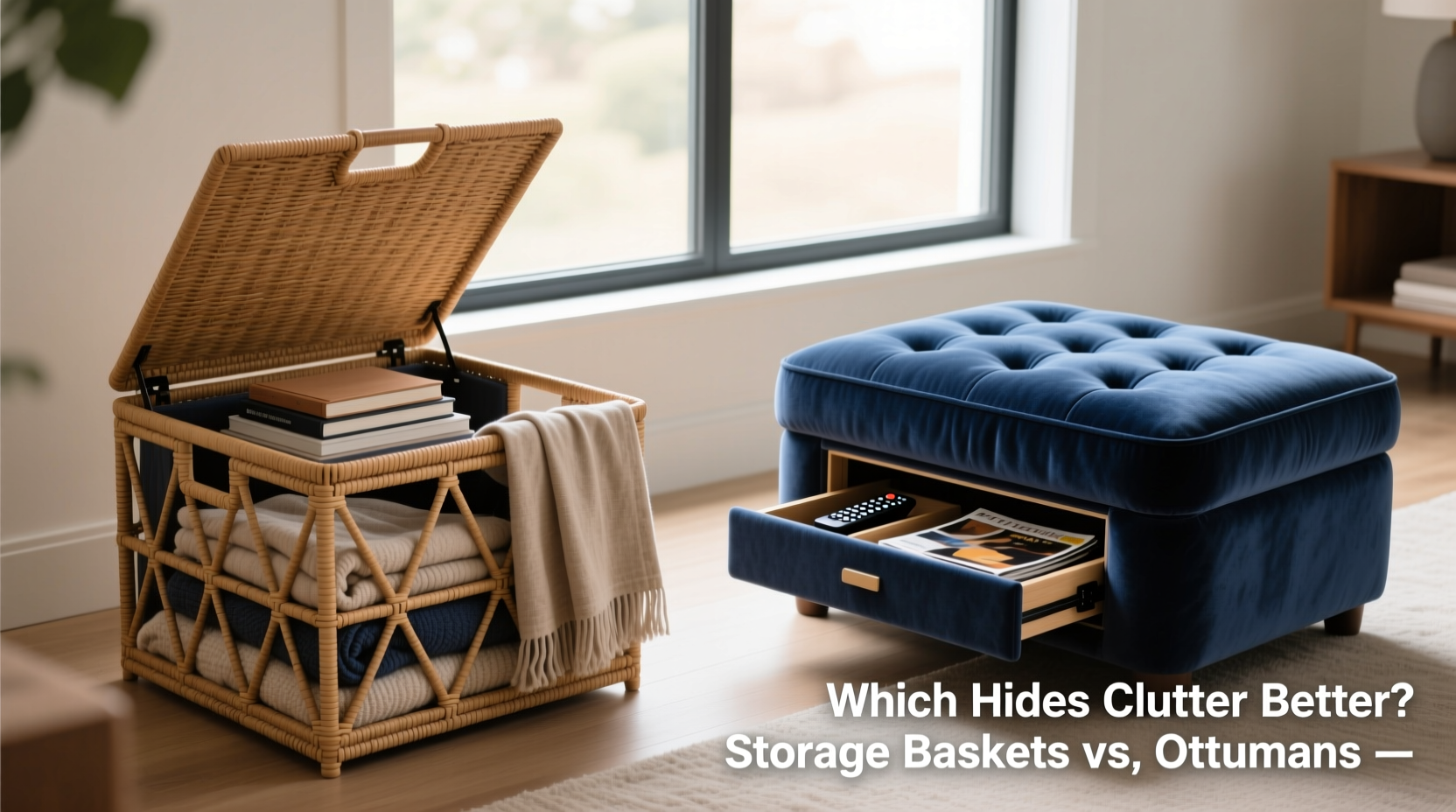
At their core, both storage baskets and ottomans serve to reduce visual chaos by providing concealed storage. However, their mechanisms differ significantly.
Storage basket sets typically consist of multiple woven or fabric bins—often sold in matching sets—that fit neatly into shelves, under beds, or inside cabinets. Their open-top design makes access easy, but that same openness can expose contents if not used carefully. To truly hide clutter, baskets must be placed within enclosed furniture like bookshelves with doors or cubbies where the basket itself remains partially shielded.
Ottomans with storage compartments, on the other hand, feature hinged or removable lids that fully enclose the interior. This means whatever you store—blankets, toys, magazines, or seasonal accessories—is completely out of sight when the lid is closed. The sealed nature of an ottoman provides superior concealment, especially in high-traffic areas like living rooms or hallways.
Aesthetic Appeal: Which Looks Better in Your Space?
Visual harmony matters. A storage solution shouldn’t just work—it should elevate the room.
Basket sets come in a wide range of materials—seagrass, wicker, cotton canvas, felt—offering natural textures that blend well with bohemian, farmhouse, or minimalist interiors. When arranged symmetrically in a shelving unit, they create a curated, intentional look. However, mismatched contents or overfilled baskets can quickly appear messy.
Ottomans, by contrast, function as both furniture and storage. Available in leather, velvet, linen, and tufted finishes, they add polish and comfort to any room. Positioned at the foot of a bed or beside a sofa, a stylish ottoman becomes a focal point rather than a hidden utility. Interior designers often favor ottomans for their ability to combine form and function seamlessly.
“An ottoman does more than store—it anchors a seating area, adds texture, and contributes to the room’s overall balance.” — Lila Monroe, Interior Stylist & Home Organization Consultant
Comparison Table: Key Features at a Glance
| Feature | Storage Basket Sets | Ottomans with Storage |
|---|---|---|
| Clutter Concealment | Moderate (contents visible if uncovered) | High (fully enclosed) |
| Aesthetic Flexibility | High (many styles, colors, materials) | Moderate (must match furniture style) |
| Mobility | High (lightweight, easy to move) | Low to Moderate (bulky, heavier) |
| Comfort & Dual Use | None (purely storage) | Yes (seat, footrest, table surface) |
| Cost | Low to Medium ($15–$60 for a set) | Medium to High ($100–$300+) |
| Durability | Varies (woven materials may fray) | Generally high (solid frames, upholstery) |
Real-Life Scenario: A Small Living Room Transformation
Sarah, a freelance designer living in a 700-square-foot apartment, struggled with toy storage and guest seating. Her toddler’s toys were always scattered across the floor, and she had no extra chairs for visitors. She initially tried using large seagrass baskets under her TV stand. While they held stuffed animals and puzzle pieces, the open tops meant the room still looked disorganized.
After consulting an interior organizer, she replaced the baskets with a single upholstered storage ottoman in neutral linen. Not only did it fully hide the toys, but it also doubled as a coffee table and extra seat during gatherings. The room instantly felt larger and more put-together. “It’s amazing how one piece changed the whole energy,” Sarah said. “Now I don’t dread having people over.”
This case illustrates a key advantage of ottomans: they solve multiple problems at once. Baskets offer modular storage, but ottomans transform space.
When to Choose Basket Sets
Basket sets shine in situations where flexibility and low cost are priorities. Consider them if:
- You need to organize irregular spaces (e.g., under stairs, closet corners).
- You prefer rotating or seasonal storage (easy to swap out).
- Your budget is limited but you want a cohesive look.
- You’re organizing lightweight items like scarves, books, or craft supplies.
They’re also ideal for households with changing needs—parents who want to reconfigure nursery storage, renters who can’t invest in bulky furniture, or anyone who values minimalism without sacrificing accessibility.
When Ottomans Are the Better Choice
Ottomans make sense when you want to upgrade both function and style. Opt for one if:
- You need multipurpose furniture in a small space.
- You frequently host guests and need extra seating.
- You want a polished, finished look in your main living areas.
- You’re storing bulky items like blankets, board games, or pet supplies.
Just ensure the ottoman fits your room’s scale. Oversized models can overwhelm compact spaces, while too-small ones may not provide meaningful storage.
Checklist: Choosing the Right Solution for Your Home
- Assess your primary clutter zones (toys, linens, shoes, etc.).
- Determine whether you need seating or just storage.
- Measure available space to avoid overcrowding.
- Evaluate your existing decor style—do baskets or ottomans complement it better?
- Set a budget and compare long-term value (durability, versatility).
- Consider ease of access—do you need frequent item retrieval?
- Test samples if possible (feel fabric, check weight, open/close mechanism).
Frequently Asked Questions
Can storage baskets really hide clutter effectively?
Only if used strategically. Open baskets display contents, so they work best when filled neatly and placed inside cabinets or behind doors. For true concealment, choose baskets with lids or pair them with slipcovers.
Are ottomans difficult to keep clean?
It depends on the material. Fabric ottomans may require spot-cleaning or professional care, while leather or performance fabrics are easier to wipe down. Always check cleaning instructions before purchasing.
Do storage ottomans smell if kept closed?
Prolonged sealing of damp or unwashed items can cause mildew odors. Always air out linens and blankets before storing, and consider adding cedar blocks or silica gel packs to absorb moisture.
Final Recommendation: Balance Practicality and Design
If your goal is to hide clutter more effectively, ottomans win. Their enclosed design ensures nothing spills into view, and their furniture-grade finish elevates any room. But if you prioritize affordability, adaptability, and modular organization, basket sets offer unmatched versatility.
The smartest approach? Combine both. Use baskets inside closets or behind closed doors for everyday categorization, and place a stylish ottoman in your main living area to handle bulkier items and serve as functional decor.




 浙公网安备
33010002000092号
浙公网安备
33010002000092号 浙B2-20120091-4
Comments
No comments yet. Why don't you start the discussion?