
When building a versatile wardrobe, few pieces are as pivotal as the jacket. It’s the outer layer that frames your silhouette, defines your mood, and communicates your sartorial intent. Among the most debated choices is whether to go with a striped jacket or a solid one. At first glance, the decision may seem purely aesthetic—but it runs deeper. The pattern of your jacket doesn’t just alter appearance; it influences perception, adaptability, and even confidence. Understanding the subtle yet significant differences between striped and solid jackets can elevate your styling from reactive to intentional.
The Visual Psychology of Pattern
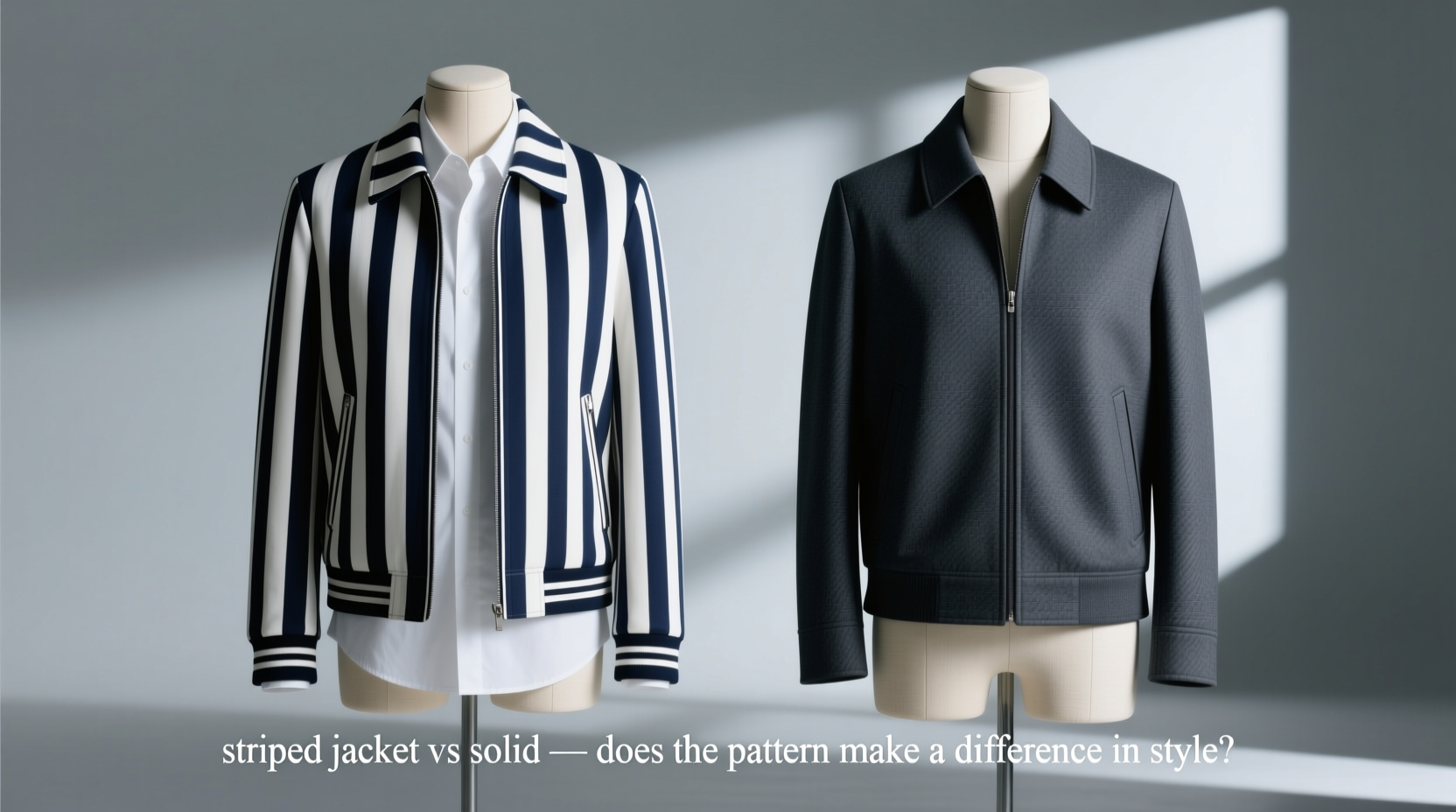
Patterns trigger psychological responses. A solid jacket conveys stability, focus, and minimalism. Its uniform surface draws attention to the cut, fabric quality, and how it fits—making it ideal for situations where authority or restraint is valued. In contrast, a striped jacket introduces movement and rhythm. Vertical stripes elongate the torso, creating a leaner illusion, while horizontal or pinstripes add structure and formality. Stripes inherently attract the eye, making them conversation starters in social or professional environments.
Fashion psychologist Dr. Lena Moreau notes:
“Patterns like stripes activate visual interest before words are exchanged. They signal approachability paired with intention—a balance many professionals aim for.”
This isn't just theory. In client-facing roles—from law to creative direction—the right pattern can set tone without saying a word. A navy pinstripe blazer projects competence; a soft herringbone or micro-stripe sports coat suggests creativity within discipline.
Versatility Across Occasions
A core factor in choosing between striped and solid jackets is adaptability. Solid jackets—particularly in neutral tones like charcoal, navy, or black—are the foundation of capsule wardrobes. They pair effortlessly with nearly any shirt, tie, or trousers, making them suitable for everything from job interviews to evening dinners.
Striped jackets, however, require more thoughtful coordination. While a subtle stripe can enhance an outfit, a bold one risks clashing if not balanced properly. That said, their specificity is also their strength. A windowpane check or chalk stripe blazer becomes a signature piece—ideal for events where you want to be remembered.
| Feature | Solid Jacket | Striped Jacket |
|---|---|---|
| Formal Wear Compatibility | Excellent (standard in business attire) | Good (best with subdued patterns) |
| Casual Styling Ease | High (pairs with tees, jeans) | Moderate (requires careful pairing) |
| Seasonal Flexibility | Year-round | Better in fall/winter; lighter stripes work in spring |
| Coordination Difficulty | Low | Medium to High |
| Statement Value | Minimal (focus on wearer) | High (pattern draws attention) |
Building a Balanced Wardrobe: How Many of Each?
You don’t have to choose one over the other—strategic balance is key. Start with two foundational solid jackets: one in navy, one in gray. These cover 80% of formal and semi-formal needs. Then, introduce one or two patterned options based on lifestyle.
- Business Professionals: Add a pinstripe or chalk stripe wool blazer for boardroom presence.
- Creative Fields: Consider a bolder stripe—like candy or Bengal stripe—in cotton or linen for summer events.
- Casual Enthusiasts: A denim jacket with subtle fading or a corduroy piece with wale lines offers textured “stripe-like” depth without literal patterns.
“A man’s jacket should serve his life, not dictate it. If you’re in meetings all week, start solid. If you host clients or speak publicly, a stripe adds distinction.” — Marcus Teller, Menswear Consultant & Author
Styling Strategies: Making the Right Match
The success of a striped jacket often depends on what it’s worn with. Follow these guidelines to avoid visual overload:
- Keep the rest of the outfit simple. Pair a striped blazer with a solid shirt—preferably white, light blue, or pale gray. Avoid busy ties unless they complement, not compete with, the stripe.
- Match scale to setting. Fine pinstripes suit conservative environments; wider stripes work in relaxed or creative spaces.
- Use texture to balance pattern. A knit crewneck under a striped sports coat adds warmth without competing visually.
- Watch color harmony. Navy with rust, charcoal with cream, or black with deep burgundy creates contrast without clash.
Mini Case Study: James, the Startup Founder
James runs a tech startup and frequently presents to investors. Initially, he wore only solid navy blazers—safe but forgettable. After consulting a stylist, he introduced a subtle herringbone-patterned jacket in charcoal wool. The texture caught light differently during presentations, adding dimension on video calls. Clients began commenting on his “polished yet personable” style. He didn’t change his message—but his delivery, aided by clothing, became more memorable. He now rotates three jackets: two solids for routine days, one patterned for high-stakes meetings.
Common Mistakes to Avoid
- Mixing multiple patterns. Wearing a striped jacket with a checked shirt or plaid tie overwhelms the eye. Stick to one dominant pattern.
- Ignoring stripe direction. Horizontal stripes can shorten the torso; use them sparingly and only if proportionally balanced.
- Over-accessorizing. A patterned jacket is already a statement. Skip loud pocket squares or flashy lapel pins.
- Poor fit. No pattern compensates for ill-fitting shoulders or sleeves. Tailoring always comes first.
FAQ
Can I wear a striped jacket to a formal event like a wedding?
Yes, if the stripe is subtle—such as a fine pinstripe in dark wool—and paired with a solid tie and dress shirt. Avoid bright or wide stripes in black-tie-adjacent settings.
Is a striped jacket appropriate for job interviews?
In conservative industries (finance, law), a solid jacket is safer. In creative or tech fields, a muted stripe can demonstrate personality without overstepping. When uncertain, opt for solid.
How do I store striped and solid jackets long-term?
Both should be stored on broad, padded hangers in a cool, dry closet. Use breathable garment bags—never plastic—to prevent moisture buildup. Rotate seasonal pieces to maintain shape and freshness.
Checklist: Choosing Between Striped and Solid Jackets
- Assess your primary use: formal, casual, or mixed?
- Determine how much visual impact you want to make.
- Check your existing wardrobe—do you have enough solids to balance a pattern?
- Evaluate fit and fabric quality before considering pattern.
- Test the jacket with at least three different outfits to gauge versatility.
- Ask: Does this reflect who I am—or who I want to become?
Conclusion
The choice between a striped jacket and a solid one isn’t merely about fashion—it’s about function, identity, and intention. A solid jacket offers reliability and timelessness, serving as the anchor of a disciplined wardrobe. A striped jacket brings rhythm and individuality, allowing personality to surface through design. The most stylish men aren’t defined by their patterns, but by their understanding of when to blend in and when to stand out. Build your collection with purpose, prioritize fit, and let each jacket serve a role in the story you present to the world.




 浙公网安备
33010002000092号
浙公网安备
33010002000092号 浙B2-20120091-4
Comments
No comments yet. Why don't you start the discussion?