
A simple decision—wearing a striped tee or a solid one—can quietly shape how others perceive your look. While both are wardrobe staples, their visual language diverges in subtle but meaningful ways. The pattern on a T-shirt isn't just decoration; it influences proportion, mood, formality, and even confidence. Whether you're dressing for a casual weekend, a relaxed office environment, or a date night, understanding the nuances between striped and solid tees can elevate your everyday style from predictable to purposeful.
The Visual Psychology of Patterns
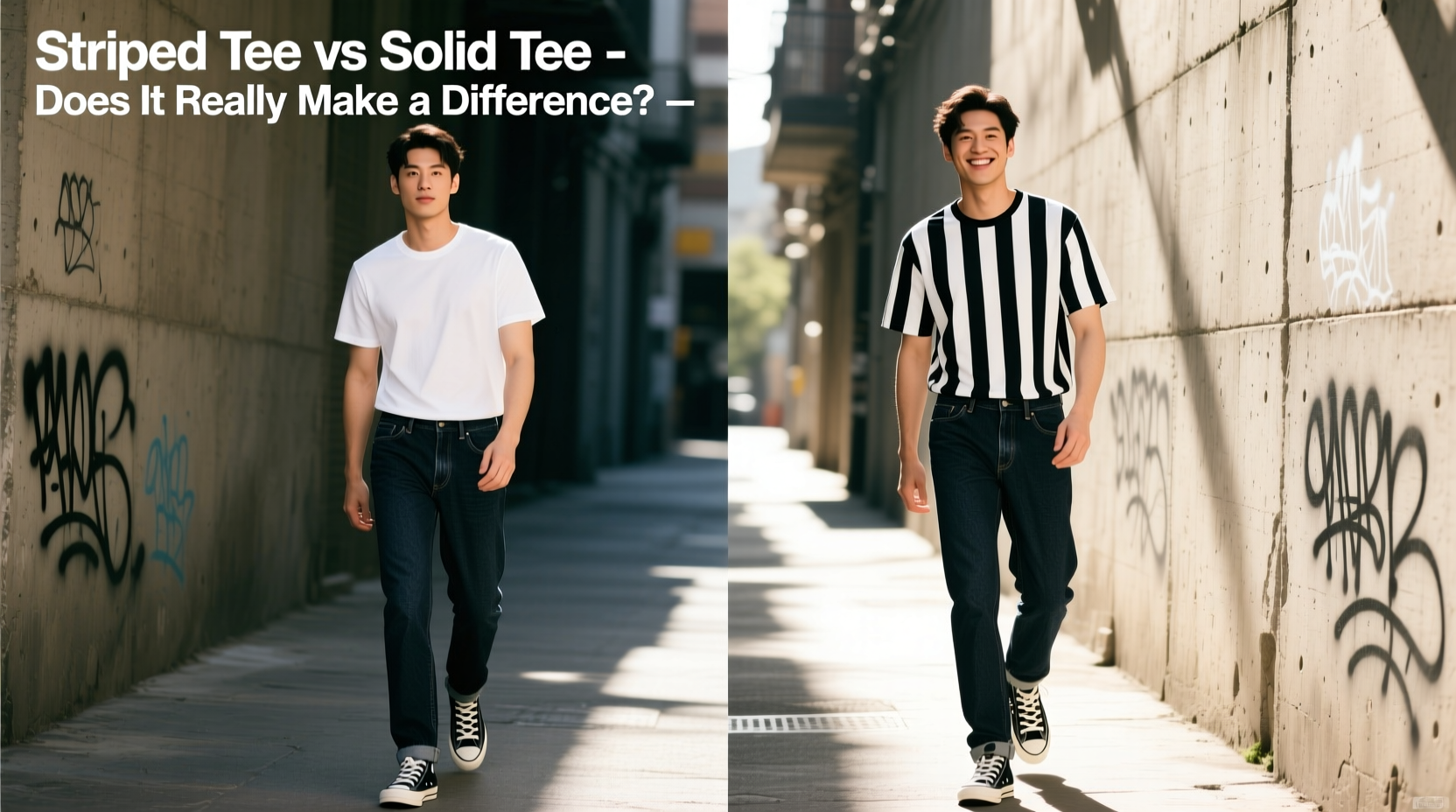
Patterns carry psychological weight. A solid tee communicates simplicity, neutrality, and focus on fit and fabric. It’s a blank canvas that allows other elements—like outerwear, accessories, or tailored pants—to take center stage. In contrast, stripes introduce movement and rhythm. Vertical stripes have long been associated with elongation, subtly making the wearer appear taller or leaner. Horizontal stripes, while sometimes criticized for adding width, can project boldness and energy when styled correctly.
Fashion psychologist Dr. Lena Hart explains:
“Stripes activate peripheral vision more than solids, making the wearer more visually engaging at a distance. But this also means poor-quality stripes—uneven spacing, faded colors—can be more distracting than a wrinkled solid tee.” — Dr. Lena Hart, Fashion Psychology Researcher
This sensitivity to detail means that choosing a striped tee demands more attention to cut, color harmony, and coordination than a solid one.
Versatility Compared: When Each Shines
Solid tees are often considered the ultimate base layer. Their strength lies in adaptability. A black or white crew neck pairs effortlessly with jeans, chinos, blazers, or even under a suit jacket in smart-casual settings. They’re reliable, timeless, and rarely clash.
Striped tees, particularly nautical-inspired navy-and-white designs, bring character. They originated as part of sailor uniforms in the 19th century and entered mainstream fashion through icons like Coco Chanel and later, James Dean. Today, they signal a deliberate choice—a nod to heritage, travel, or effortless European flair.
However, not all stripes are created equal. Breton stripes (wide horizontal bands) work best in casual or coastal aesthetics, while fine pinstripes can bridge into semi-formal territory when layered under a navy shawl-collar cardigan.
Comparison Table: Striped vs Solid Tees at a Glance
| Factor | Solid Tee | Striped Tee |
|---|---|---|
| Style Flexibility | High – works with everything | Moderate – depends on stripe type and color |
| Formality Range | Casual to Smart-Casual | Mostly Casual, some Smart-Casual exceptions |
| Layering Potential | Excellent – doesn’t compete visually | Good – best with neutral outer layers |
| Wash & Wear Longevity | High – patterns don’t fade | Moderate – stripes may blur over time |
| Confidence Boost | Subtle – focuses on fit | Noticeable – makes a statement |
Real-Life Style Scenarios
Case Study: Alex’s Job Interview Dilemma
Alex had two options for a creative agency interview: a crisp white solid tee under a linen blazer, or a navy-and-white striped tee with the same jacket. He chose the striped version, thinking it would reflect his personality. However, the wide horizontal stripes drew attention to his midsection, and the overall look felt too nautical for the setting. Feedback from the hiring manager mentioned he “seemed stylish but slightly out of context.”
For the second-round interview, Alex switched to a solid heather gray tee. The minimalist look paired better with tailored trousers and leather sneakers. This time, the feedback was positive: “You looked approachable and professional.”
The takeaway? Stripes can express individuality, but in environments where subtlety is valued, solids often communicate competence more effectively.
How to Choose the Right Tee for Any Occasion
Selecting between striped and solid isn’t about rules—it’s about intention. Follow this step-by-step guide to decide based on context:
- Assess the occasion. Is it relaxed, professional, social, or romantic? Formal-leaning events favor solids.
- Consider your silhouette. If you want to appear slimmer, opt for vertical or narrow stripes. Avoid wide horizontal stripes if broad through the torso.
- Check your bottom half. Striped tees pair best with solid-colored pants. Avoid pairing with patterned shorts or checked trousers unless you’re aiming for bold eclecticism.
- Evaluate your outerwear. Blazers, denim jackets, or overshirts in neutral tones work with both, but solids give more flexibility.
- Ask: Do I want to blend or stand out? Solids help you integrate into a group; stripes naturally draw eyes.
Styling Checklist: Maximizing Impact
- ✅ Match stripe color to your skin tone—navy and white flatter cool undertones; burgundy or khaki stripes suit warm tones.
- ✅ Ensure the tee fits well at the shoulders and chest—baggy stripes distort proportion.
- ✅ Wash striped tees inside out to preserve print clarity.
- ✅ Pair solid tees with patterned outerwear (e.g., plaid shirt open) for balanced contrast.
- ✅ Use a striped tee as the focal point—keep the rest of the outfit neutral.
Common Misconceptions Debunked
Myth 1: “Horizontal stripes make you look fat.”
Modern tailoring and fabric technology have made this outdated. A well-fitted horizontal-striped tee on a confident wearer projects charisma, not bulk.
Myth 2: “Stripes are only for summer or beachwear.”
Fine-gauge merino wool striped tees work beautifully under peacoats in winter. Pattern isn’t limited by season—it’s about fabric weight and layering.
Myth 3: “Solid tees are boring.”
A perfectly fitted solid tee in an unexpected color—like olive, rust, or deep plum—can be more striking than a basic stripe. Minimalism, when executed well, commands attention through precision.
FAQ: Your Top Questions Answered
Can I wear a striped tee to the office?
Yes, if your workplace allows smart-casual attire. Choose subtle, narrow stripes in muted tones (charcoal, navy, burgundy), and layer under a solid blazer. Avoid loud or wide stripes in corporate settings.
Which lasts longer—striped or solid tees?
Solid tees typically last longer in appearance because the dye is uniform. Screen-printed or dyed stripes may fade unevenly over time, especially with frequent washing. High-quality garment-dyed striped tees minimize this issue.
Should beginners avoid striped tees?
Not at all. Start with classic combinations like navy/white or black/gray in a slim fit. Practice styling them with dark jeans and neutral sneakers. Build confidence before experimenting with bolder variations.
Final Thoughts: Intention Over Habit
The difference between a striped and solid tee isn’t just aesthetic—it’s strategic. One reinforces consistency; the other invites conversation. The best wardrobes don’t rely on one or the other but use both with purpose. A solid tee grounds an outfit; a striped tee energizes it. Knowing when to deploy each is what separates habitual dressing from intentional style.
You don’t need dozens of T-shirts. You need a few excellent ones—well-cut, thoughtfully chosen, and worn with awareness. Whether you reach for a clean white cotton tee or a vintage-inspired Breton stripe, let the choice reflect your mood, your moment, and your message.




 浙公网安备
33010002000092号
浙公网安备
33010002000092号 浙B2-20120091-4
Comments
No comments yet. Why don't you start the discussion?