
Walk into any beauty store or scroll through your favorite influencer’s feed, and you’ll find two products promising the same thing: radiant, lit-from-within glow. One comes in a sleek pot of creamy formula—strobing cream. The other, a compact filled with shimmering powders—highlighter palette. On the surface, they seem interchangeable. But dig deeper, and subtle yet significant differences emerge. Is the distinction real, or is it clever branding capitalizing on trends? Let’s dissect both products beyond the hype.
The Core Difference: Formula & Finish
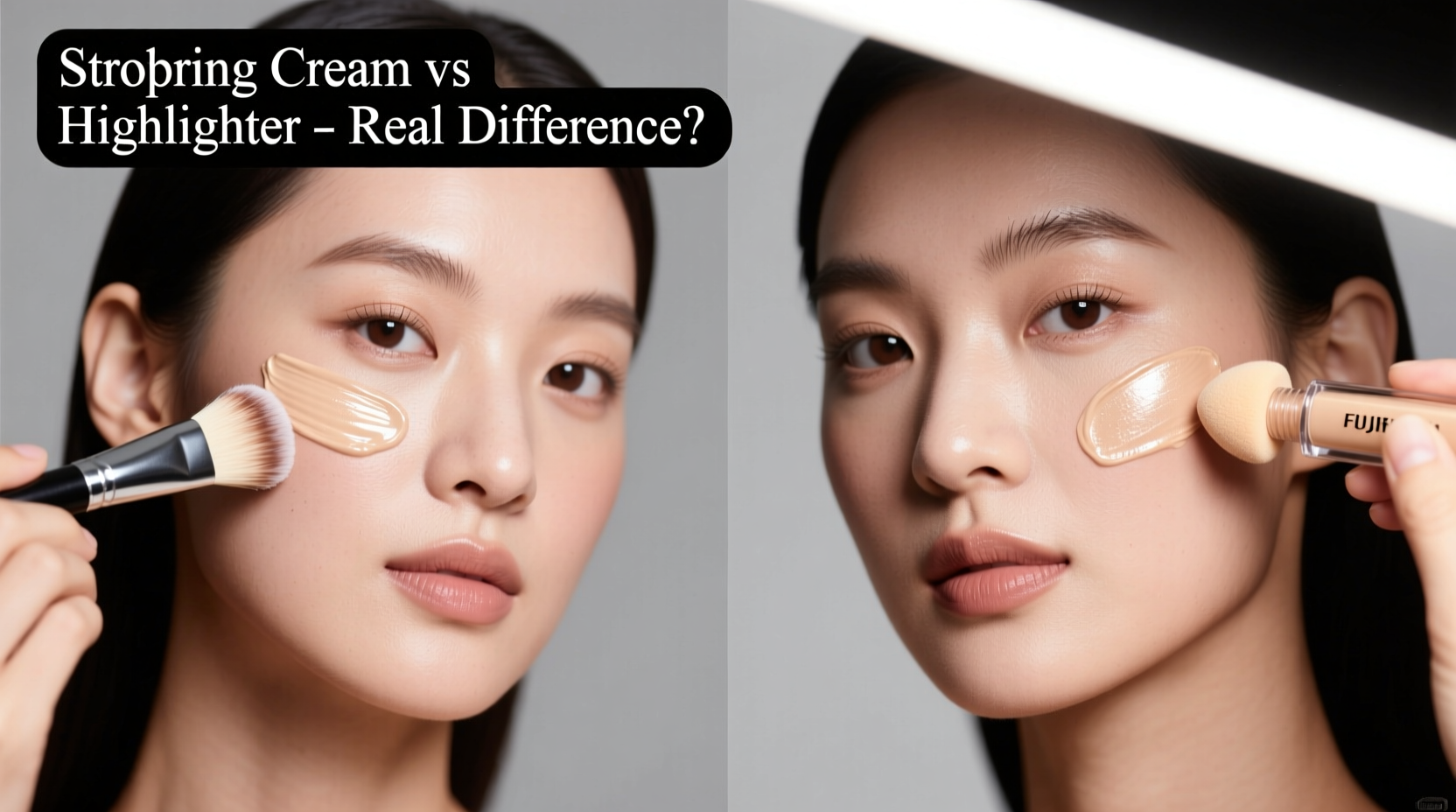
At their foundation, strobing creams and highlighter palettes differ primarily in texture and finish. Strobing creams are typically emollient-based, designed to melt into the skin and deliver a wet-looking sheen. They often contain light-reflecting particles suspended in hydrating bases like silicones or oils, making them ideal for dewy complexions.
Highlighter palettes, on the other hand, are predominantly powder-based. They offer more control over intensity and longevity, especially in humid conditions. While some powders aim for a natural glow, many lean toward visible shimmer—sometimes bordering on sparkle.
This fundamental divergence affects not only how the product feels but also how it performs under different lighting and on various skin types.
Application Techniques That Matter
How you apply these products changes the outcome dramatically. Strobing creams work best when blended with fingers or a damp sponge. The warmth of your skin helps activate the formula, creating a seamless transition between skin and shine. They’re often layered under or mixed with foundation for an all-over glow, or patted onto high points of the face—cheekbones, brow bones, cupid’s bow.
Highlighter palettes require brushes for precision. A fan brush diffuses shimmer across cheekbones; a small tapered brush targets inner corners of the eyes. Because powders don’t blend into the skin the way creams do, placement becomes critical. Too much pressure or poor blending can result in patchiness or excessive glitter.
One key advantage of palettes? Multiple shades. You can switch from champagne to gold depending on your outfit or occasion—all in one compact.
Performance Across Skin Types and Conditions
The real test of any makeup product lies in its performance throughout the day. Here’s where formulation impacts results.
| Skin Type | Strobing Cream Performance | Highlighter Palette Performance |
|---|---|---|
| Dry | Excellent – adds moisture and prevents flakiness | Fair – powders can emphasize texture if not prepped well |
| Oily | Poor – may slip or look greasy by midday | Excellent – long-lasting with minimal migration |
| Combination | Good – works on drier zones, avoid T-zone | Good – customizable application per zone |
| Mature | Caution – can settle into fine lines if too emollient | Choose matte-glow formulas; avoid chunky glitter |
Environmental factors also play a role. In humid climates, strobing creams may break down faster, while powders hold up better. Conversely, in dry, cold weather, creams provide needed hydration and prevent flatness.
“Creams mimic natural skin luminosity, while powders draw attention through contrast. They serve different aesthetic goals.” — Lena Park, Celebrity Makeup Artist
Real Example: A Day in the Life of Two Glow Seekers
Consider Sarah, a freelance photographer with combination skin. She prefers a natural look for client meetings. In the morning, she applies a pea-sized amount of strobing cream mixed with her moisturizer before foundation. By noon, her cheeks still catch the light softly, but the center of her forehead shows slight shine. She carries blotting papers but avoids reapplying highlighter to keep the effect skin-like.
Now meet Jamal, a performer who needs his features visible under stage lights. He uses a multi-shade highlighter palette nightly, building intensity with layers—from soft pearl on cheekbones to icy silver on the bridge of his nose. The powder stays intact through sweat and movement, reflecting light dramatically. A strobing cream wouldn’t survive the heat of the spotlight.
Same goal—glow—but entirely different paths based on need, environment, and expression.
Marketing Hype vs. Functional Reality
Let’s address the elephant in the room: Are brands inventing distinctions to sell more products?
In part, yes. The term “strobing” was popularized as a softer alternative to “highlighting,” appealing to consumers wary of glitter or obvious shimmer. It suggested a minimalist, skin-first approach aligned with the “no-makeup makeup” trend. Meanwhile, highlighter palettes evolved into collectible items—luxury packaging, Instagrammable color gradients, limited editions.
But functional differences remain. A strobing cream isn’t just a highlighter in cream form. Its formulation prioritizes integration with skin, often including skincare ingredients like hyaluronic acid or antioxidants. Highlighter palettes focus on pigment payoff, blendability, and wear time, sometimes sacrificing skin-feel for visual impact.
Brands amplify nuances into categories, but the core technologies behind them are distinct enough to justify separate development—and consumer choice.
How to Choose: A Practical Checklist
- Evaluate your skin type: Dry? Lean toward strobing creams. Oily? Opt for powders.
- Assess your lifestyle: Long days, sweating, or touching your face frequently? Powders generally last longer.
- Define your desired finish: Natural dew? Try cream. Bold shimmer? Go for powder.
- Check layering compatibility: Can you mix the strobing cream with your foundation? Does the palette include buildable shades?
- Consider touch-up convenience: Creams often require fingers (less hygienic), while powders can be reapplied over makeup.
- Review ingredient lists: Look for non-comedogenic formulas if prone to breakouts.
Can You Use Both? A Step-by-Step Layering Guide
Many professionals combine both for maximum dimension. Here’s how:
- Prep skin: Cleanse, moisturize, and prime. Allow moisturizer to absorb fully.
- Apply strobing cream: Dab a small amount on cheekbones, bridge of nose, and chin. Blend gently with fingertips.
- Apply foundation: Use a damp sponge to press product over the cream for a unified base.
- Set strategically: Use translucent powder only on oily areas (T-zone). Avoid highlighting zones.
- Layer highlighter: With a fan brush, sweep a matching shade from your palette over the same areas.
- Diffuse edges: Use a clean brush to soften any harsh lines for a seamless glow.
This technique—called “baking the glow”—creates depth. The cream provides internal radiance; the powder adds external reflection.
FAQ
Can I use a strobing cream as a primer?
Yes, many are formulated to double as illuminating primers. Apply a thin layer before foundation for an even glow. Avoid heavy application, which can cause pilling.
Do highlighter palettes waste product?
Some argue that multi-shade palettes lead to unused colors. However, having options allows seasonal or mood-based changes. If you only want one shade, a single compact is more economical.
Are strobing creams just tinted moisturizers with glitter?
No. While both are creamy, strobing creams specifically target light reflection using specialized pigments (like mica or silica spheres) at precise particle sizes. Tinted moisturizers focus on coverage and SPF, not strategic luminosity.
Final Verdict: More Than Just Marketing
The difference between strobing creams and highlighter palettes isn’t fabricated—it’s rooted in formulation, function, and user intent. Marketing has certainly amplified the divide, giving each product a personality and audience. But beneath the buzzwords lie genuine contrasts in texture, wear, and suitability.
You wouldn’t use a water-based serum the same way as a setting spray, even if both claim to “refresh” your face. Similarly, strobing creams and highlighter palettes serve overlapping purposes but excel in different contexts.
Understanding this empowers you to make informed choices—not based on what’s trending, but on what works for your skin, routine, and aesthetic.




 浙公网安备
33010002000092号
浙公网安备
33010002000092号 浙B2-20120091-4
Comments
No comments yet. Why don't you start the discussion?