
Navigating crowded spaces with children is one of the most underrated challenges of modern parenting. Whether you're squeezing through a packed grocery aisle, weaving between families at a farmers market, or boarding a busy subway platform, the right stroller can make the difference between a smooth outing and a logistical nightmare. As parents increasingly weigh options between stroller wagons and traditional double strollers, one question surfaces repeatedly: which is actually easier to maneuver in tight, high-traffic environments?
The answer isn't as straightforward as it seems. While stroller wagons offer generous storage and a roomy ride for multiple kids, their size and design can become liabilities in dense settings. Double strollers, though more compact, come in various configurations—side-by-side, tandem, jogging—that affect agility differently. To help parents make an informed decision, we’ll break down real-world performance, analyze design trade-offs, and hear from those who’ve tested both in chaotic public spaces.
Understanding the Core Differences
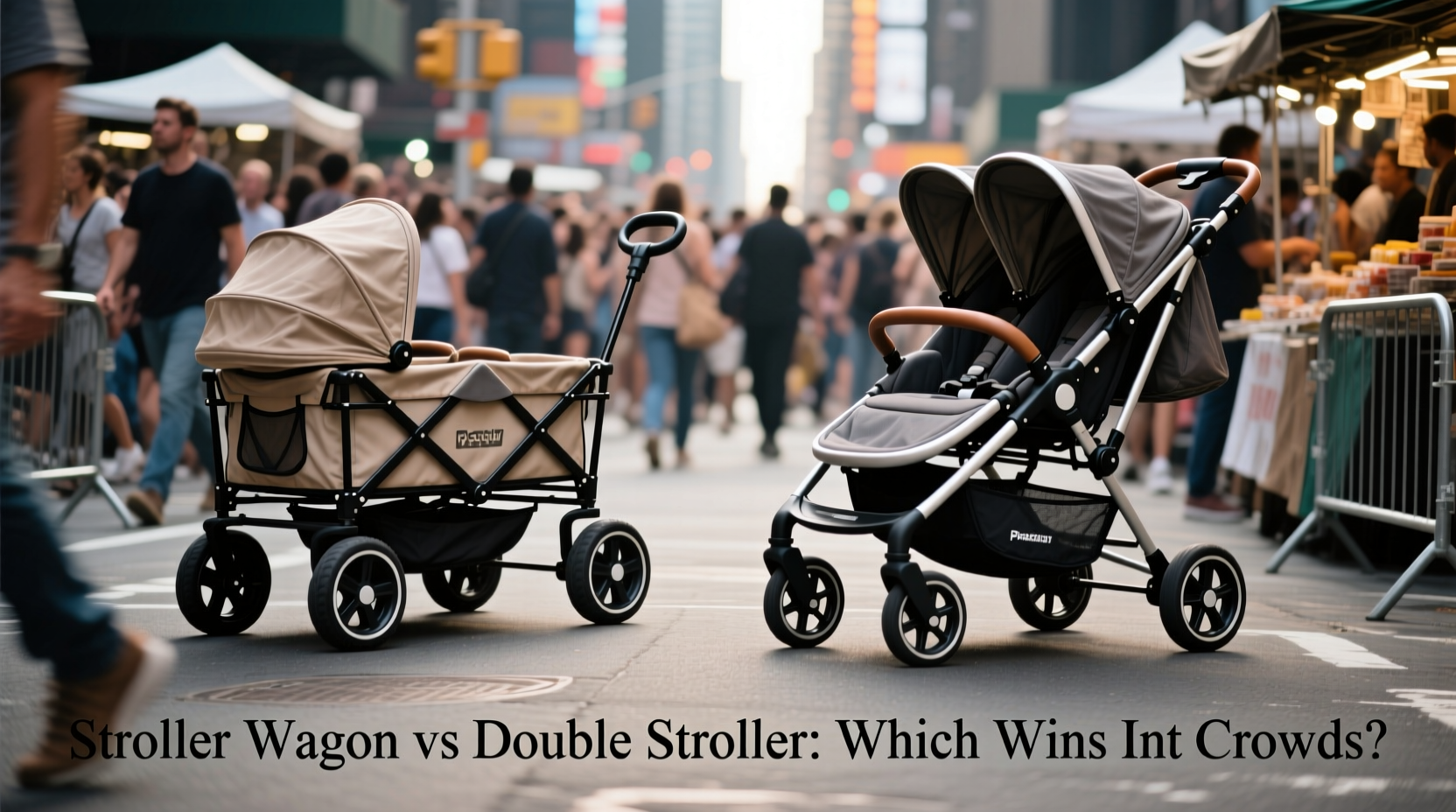
Before assessing maneuverability, it's essential to distinguish the fundamental designs of stroller wagons and double strollers.
Stroller wagons resemble small carts with four wheels, often featuring bench-style seating for two or more children. They typically have a push handle at the rear and are designed to carry not only kids but also groceries, diaper bags, and even picnic supplies. Their larger footprint and lower center of gravity provide stability on flat terrain but limit flexibility in narrow passages.
Double strollers, by contrast, are built like extended single strollers. They come in two primary layouts: side-by-side (each child sits next to the other) and tandem (one child sits behind the other). Most models fold compactly, fit through standard doorways, and are engineered for urban environments where space is at a premium.
These structural differences directly influence how each performs when navigating crowds. A stroller wagon may win in comfort and cargo capacity, but does it sacrifice practicality when you’re dodging pedestrians at a festival?
Key Factors Affecting Maneuverability
Maneuverability isn’t just about how easily a stroller turns—it’s a combination of several interrelated factors:
- Turning radius: How tightly can the stroller pivot without requiring multiple adjustments?
- Width: Does it fit through standard store aisles (typically 30–36 inches wide)?
- Wheel configuration: Swivel front wheels improve agility; fixed wheels offer straight-line stability.
- Weight distribution: Heavier loads in wagons can make them harder to redirect quickly.
- Foldability and portability: Can you collapse it easily if you need to take stairs or board transit?
Real-World Performance in Crowded Environments
To evaluate how these strollers perform under pressure, consider three common scenarios: shopping at a weekend farmer’s market, navigating a busy mall during holiday season, and moving through airport terminals.
Farmer’s Market Challenge
Farmers markets are quintessential crowd-testing grounds—narrow pathways, uneven ground, and frequent stops. In this environment, stroller wagons often struggle. Their wide frames make passing other shoppers difficult, and sharp turns around produce stands require backing up or asking others to move aside.
In contrast, tandem double strollers with swivel front wheels glide through gaps with minimal disruption. Parents report being able to keep one hand free for grabbing items while steering with the other—a luxury rarely afforded by bulkier wagons.
Mall Navigation
Inside enclosed malls, space constraints intensify. Escalators, automatic doors, and kiosks create bottlenecks. Here, the average stroller wagon (often 32–38 inches wide) fails to pass through many automatic doors, which are typically designed for 32-inch clearances. Some parents resort to folding wagons mid-journey just to enter stores—an impractical solution when hands are full.
Double strollers, especially tandem models like the UPPAbaby Vista or Baby Jogger City Mini GT2, maintain widths around 25–28 inches, allowing seamless movement through doorways and elevators. Their ability to fold with one hand further enhances usability in congested areas.
Airport and Transit Use
For travel, maneuverability becomes critical. Airports demand quick direction changes, queue navigation, and stair avoidance. Stroller wagons are generally discouraged by airlines due to size and are often required to be checked at the gate—adding stress and potential damage.
Double strollers that meet airline under-seat dimensions (rare, but some compact models do) offer significant advantages. Even when gate-checked, their smaller folded profile makes them easier to manage at security checkpoints and boarding zones.
“Parents consistently overestimate how much cargo space they need versus how much mobility they’ll lose. In high-density areas, agility beats storage every time.” — Dr. Lena Torres, Urban Parenting Researcher, Family Mobility Lab at MIT
Side-by-Side Comparison: Stroller Wagon vs Double Stroller
| Feature | Stroller Wagon | Double Stroller (Tandem) |
|---|---|---|
| Average Width | 32–38 inches | 25–28 inches |
| Fits Through Standard Doorway? | Rarely | Yes |
| Turning Radius | Wide arc, requires backing up | Tight turn, swivel wheels available |
| Cargo Capacity | High (up to 50+ lbs) | Moderate (10–20 lbs) |
| Folding Mechanism | Bulkier, often two-step | One-handed, compact fold |
| Suitable for Crowds? | Limited | Excellent |
| Best For | Parks, outdoor events, home use | Urban errands, travel, shopping |
Mini Case Study: A Day at Disneyland
Consider Sarah, a mother of twins aged 3, visiting Disneyland with her extended family. She brought a popular stroller wagon, drawn by its promise of shade canopy, cup holders, and room for souvenirs. By midday, however, she found herself stuck in Main Street crowds, unable to turn corners without blocking foot traffic. Cast members politely asked her to use designated stroller parking near rides rather than bring it into queues.
Meanwhile, another parent, James, used a lightweight tandem double stroller. He navigated ride lines, ducked into air-conditioned shops, and even managed baby gear swaps during naptime without leaving the stroller unattended. Though he carried fewer items, his mobility gave him greater control over the day’s pace.
Sarah later admitted: “I thought I was preparing for everything, but I ended up feeling like I was dragging a moving truck through a hallway.”
When a Stroller Wagon Makes Sense
It’s important to acknowledge that stroller wagons excel in specific contexts. If your routine involves long days at parks, beach outings, or backyard gatherings where space isn’t limited, the extra legroom and storage are invaluable. They’re also ideal for parents who want both children seated forward-facing, enabling interaction and visibility.
However, these benefits diminish sharply in environments where spatial freedom is restricted. The larger the crowd, the more a wagon becomes a liability rather than an asset.
Step-by-Step Guide: Choosing Based on Your Environment
If you're torn between these two options, follow this decision framework based on your typical usage patterns:
- Assess your weekly routes: Map out where you go most often—grocery stores, playgrounds, transit hubs. Note any narrow entrances or crowded walkways.
- Measure key spaces: Check the width of your front door, elevator, and favorite store aisles. If any are under 32 inches, a stroller wagon will likely cause issues.
- Evaluate your cargo needs: Are you regularly hauling groceries, sports gear, or diaper bags? Or do you prefer packing light and using backpacks?
- Test drive both types: Visit a baby store and try pushing each model through mock aisles. Pay attention to turning effort and visibility.
- Consider future flexibility: Some systems, like modular strollers (e.g., UPPAbaby Vista), allow you to attach a wagon-style seat later, offering adaptability.
Expert Recommendations and Common Misconceptions
Many parents assume that because stroller wagons are marketed as “family-friendly” or “all-in-one,” they must be superior. But industry experts caution against equating size with functionality.
“The biggest mistake I see is choosing convenience today at the cost of mobility tomorrow. A stroller should enhance your independence, not restrict it.” — Marcus Reed, Pediatric Mobility Consultant
Another misconception is that double strollers are outdated or cramped. Modern tandem models feature reclining seats, adjustable canopies, and suspension systems that rival wagons in comfort—without sacrificing agility.
Additionally, some believe that swivel wheels on double strollers lead to instability. In reality, most high-end models allow locking the front wheel for rough terrain and unlocking it for tight turns—giving parents full control when needed.
FAQ
Can I use a stroller wagon in a supermarket?
Possibly, but not reliably. Many supermarkets have aisles narrower than 36 inches, and stroller wagons often exceed that width. You may block other shoppers or be asked to park it outside the cart area. Compact double strollers are far more practical for grocery runs.
Are there narrow stroller wagons?
A few brands offer \"slim\" wagons (e.g., Tot Rider GoGo), measuring around 30 inches wide. These improve accessibility but still lack the nimbleness of double strollers. They represent a compromise—not a full solution—for crowded spaces.
Do double strollers work for toddlers who don’t want to sit together?
Yes. Tandem models position children at different heights, reducing direct interaction. Many parents find this reduces rivalry compared to side-by-side setups. Adjustable seating angles and independent canopies also increase personal space.
Final Verdict: Which Is Easier to Maneuver in Crowds?
After evaluating design, real-world performance, expert input, and user experiences, the conclusion is clear: double strollers are significantly easier to maneuver in crowds than stroller wagons.
Their narrower profile, tighter turning radius, and compatibility with urban infrastructure make them the smarter choice for anyone regularly navigating tight spaces. While stroller wagons offer undeniable perks in open environments, their limitations in congestion outweigh their benefits for most city dwellers and frequent travelers.
That said, the ideal solution may not be “either/or.” Some families benefit from owning both: a compact double stroller for daily errands and a wagon for weekend excursions. This dual-system approach maximizes versatility without compromising on mobility when it matters most.
Conclusion
Choosing between a stroller wagon and a double stroller isn’t just about comfort or cargo—it’s about freedom of movement. In crowded spaces, every inch and ounce counts. Prioritizing maneuverability doesn’t mean sacrificing quality time with your children; it means ensuring those moments happen smoothly, without frustration or obstruction.
If your lifestyle includes regular trips to busy places—stores, transit centers, festivals, or amusement parks—a well-designed double stroller will serve you better than a bulky wagon. Invest in agility, and you’ll gain back time, energy, and peace of mind.




 浙公网安备
33010002000092号
浙公网安备
33010002000092号 浙B2-20120091-4
Comments
No comments yet. Why don't you start the discussion?