
When it comes to sun protection, few accessories are as practical and stylish as wide-brimmed hats. Among the most popular choices for outdoor enthusiasts, beachgoers, and urban explorers are the structured bucket hat and the floppy sun hat. Both promise shade from UV rays, but they differ significantly in design, function, and facial coverage. Choosing between them isn’t just about fashion—it’s a decision that affects how well your skin is shielded from prolonged sun exposure. Understanding the nuances of brim shape, material rigidity, and wearability can help you make an informed choice based on your lifestyle and sun safety needs.
The Role of Face Coverage in Sun Protection
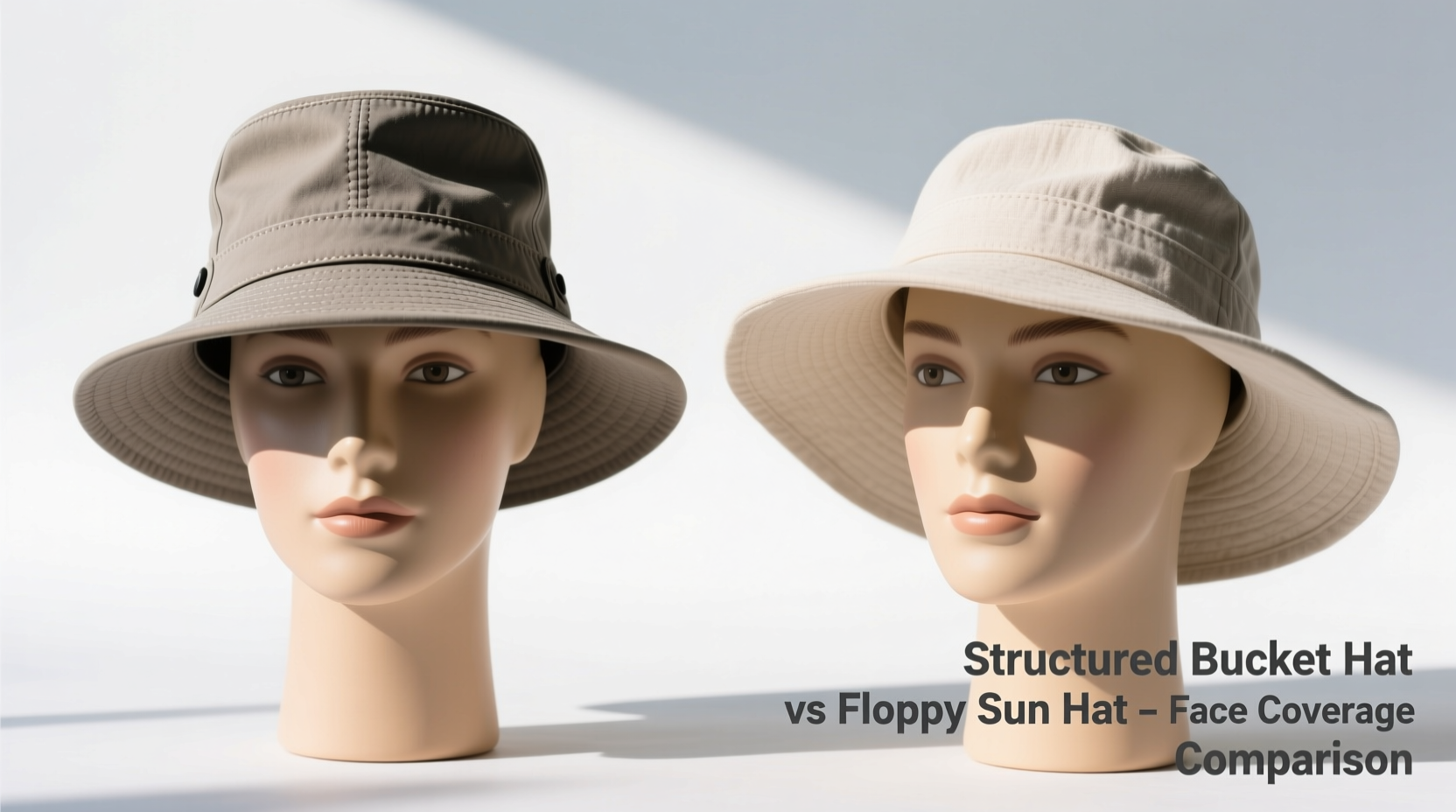
Sun damage doesn’t discriminate. Ultraviolet (UV) radiation contributes to premature aging, hyperpigmentation, and increases the risk of skin cancer—especially on exposed areas like the face, ears, and neck. According to the Skin Cancer Foundation, up to 80% of visible facial aging is caused by cumulative sun exposure. Wearing a hat with adequate facial coverage is one of the most effective non-topical ways to reduce this risk.
Effective face coverage means shielding not only the forehead but also the cheeks, nose, chin, and ideally the sides of the face and ears. The angle, depth, and circumference of a hat's brim determine how much direct sunlight reaches these zones. While sunscreen remains essential, a well-designed hat acts as a physical barrier, reducing reliance on reapplication and minimizing missed spots.
Two primary styles dominate the sun-safe accessory market: the structured bucket hat and the floppy sun hat. Each has strengths, but their effectiveness in protecting the face varies due to construction and intended use.
Design Differences: Structure vs. Flow
The fundamental distinction between a structured bucket hat and a floppy sun hat lies in their silhouette and materials. These differences directly influence how consistently and broadly they provide shade.
Structured Bucket Hat: Typically made from stiffer fabrics like cotton canvas, nylon, or polyester blends with internal reinforcement, this style maintains its shape. It features a medium-width brim (usually 2–3 inches), a high crown, and often includes ventilation eyelets. The brim sits at a consistent downward angle, offering predictable coverage around the face and temples.
Floppy Sun Hat: Crafted from soft, pliable materials such as raffia, straw, lightweight cotton, or unlined linen, the floppy sun hat has a wide brim—often 4 inches or more—that naturally curves downward. Its lack of internal structure allows it to drape gently over the head, creating a broader shadow zone. However, the brim may shift with wind or movement, altering coverage.
In terms of geometry, the floppy hat casts a wider arc of shade, potentially covering more of the jawline and upper neck. But because it lacks rigidity, its position relative to the face can be inconsistent. The structured bucket hat, while narrower in brim span, delivers stable, repeatable protection due to its fixed form.
Comparative Analysis: Who Covers More of the Face?
To assess which hat provides superior facial coverage, several factors must be evaluated: brim width, brim curvature, crown height, adjustability, and wear context.
| Feature | Structured Bucket Hat | Floppy Sun Hat |
|---|---|---|
| Brim Width | 2–3 inches | 4+ inches |
| Brim Rigidity | High – holds shape | Low – drapes naturally |
| Frontal Coverage (nose/cheeks) | Moderate, consistent | High when positioned correctly |
| Sideways/Lateral Coverage | Good, uniform | Variable; depends on brim sag |
| Neck & Ear Protection | Limited | Superior, especially rear |
| Stability in Wind | Excellent | Poor without tie-downs |
| Fashion Versatility | Urban, casual, sporty | Beach, resort, bohemian |
The data shows a clear trade-off: the floppy sun hat wins in total shaded area, particularly at the sides and back of the head, making it ideal for stationary use in open environments like beaches or gardens. In contrast, the structured bucket hat excels in dynamic situations—hiking, walking, or city exploration—where stability and consistent positioning matter more than maximum spread.
A study conducted by the Australian Radiation Protection and Nuclear Safety Agency (ARPANSA) found that hats with brims of at least 7.5 cm (about 3 inches) reduced UV exposure to the face by up to 60%. While both hats meet or exceed this threshold, the floppy hat’s larger brim theoretically offers greater reduction—but only if worn properly and kept in optimal alignment.
“Brim size matters, but so does brim behavior. A floppy hat that tilts upward in a breeze leaves the wearer vulnerable, even if it looks protective at rest.” — Dr. Lena Torres, Dermatologist & UV Researcher
Real-World Performance: A Day at the Beach
Consider Sarah, a landscape photographer who spends weekends shooting coastal scenes under full sun. She owns both a navy structured bucket hat and a natural raffia floppy sun hat. On a recent shoot, she alternated between the two to test comfort and coverage.
During midday sessions near reflective sand and water, she wore the floppy hat first. Initially impressed by the deep shadow it cast over her face and shoulders, she soon noticed issues. A gust of wind lifted the left side of the brim, exposing her cheek and temple to direct sun for nearly ten minutes before she adjusted it. Later, while crouching for low-angle shots, the brim drooped forward, obstructing her view and forcing her to tilt her head back—an awkward posture that reduced neck coverage.
The next day, she switched to the structured bucket hat. Though narrower, the brim stayed evenly positioned throughout the day. Even during active movement, the hat maintained consistent protection across her forehead, nose, and upper cheeks. She did notice increased glare on her jawline, confirming less lower-face coverage, but appreciated the reliability and ease of wear.
Sarah concluded that for static photography setups, the floppy hat was preferable for its expansive shade. But for mobile work involving walking, bending, and variable lighting, the structured bucket hat provided more dependable facial protection.
Choosing Based on Activity and Environment
Your daily routine and environment should guide your choice. Neither hat is universally superior—the best option aligns with how and where you spend time outdoors.
- Beach lounging or garden seating: Floppy sun hats are ideal. Their broad brims create a large canopy of shade, perfect for relaxed, seated activities where movement is minimal.
- Hiking, biking, or urban commuting: Structured bucket hats perform better. Their secure fit and resistance to wind ensure continuous protection without constant adjustment.
- Travel in mixed climates: Consider packability. Floppy hats often lose shape when folded, while many structured bucket hats are designed to retain form, making them travel-friendly.
- Sensitive skin or high UV index areas: Prioritize consistency. If you're prone to sunburn or live in regions with intense sunlight (e.g., desert or equatorial zones), a stable, predictable brim is crucial—even if slightly narrower.
Additionally, look for UPF-rated materials. Many modern versions of both hat types come with Ultraviolet Protection Factor (UPF) labeling, indicating tested fabric resistance to UV penetration. A UPF 50+ rating blocks over 98% of harmful rays, adding another layer of defense beyond physical coverage.
Checklist: How to Select the Right Hat for Facial Sun Protection
- Measure the brim width—aim for at least 3 inches for meaningful face coverage.
- Test brim stability—gently press down on different sections to see if it springs back into place.
- Assess your typical posture—do you move frequently or stay seated? Choose accordingly.
- Check for adjustable features like chin straps or inner sweatbands for improved fit.
- Look for UPF certification on the label for added assurance.
- Evaluate breathability—ventilation prevents overheating during extended wear.
- Try it on with your usual sunglasses to ensure no interference with vision or coverage.
Expert Recommendations and Common Misconceptions
Many assume that bigger always means better when it comes to sun hat brims. However, dermatologists caution against prioritizing size over fit. “A 5-inch floppy brim sounds impressive, but if it flaps in the wind or slips sideways, critical areas like the eye sockets and nose bridge remain exposed,” explains Dr. Alan Mehta, a clinical dermatologist specializing in photodamage.
He recommends combining hat use with other protective measures: applying broad-spectrum SPF 30+ to uncovered areas, wearing UV-blocking sunglasses, and seeking shade during peak UV hours (10 a.m. to 4 p.m.).
Another common oversight is neglecting the neck and ears. While neither hat fully covers these zones, some floppy styles include built-in neck capes or offer deeper back brims. Bucket hats rarely extend beyond ear level, leaving the nape vulnerable unless paired with a scarf or high-collar clothing.
Frequently Asked Questions
Can a bucket hat protect my ears and neck as well as a floppy sun hat?
Generally, no. Most structured bucket hats have shorter brims that cover the forehead and temples well but leave the ears and neck partially exposed. Floppy sun hats, with their wider, draped brims, typically extend further down the sides and back, offering superior protection to these areas—provided the brim remains in position.
Are there structured bucket hats with wider brims?
Yes. Some brands now offer \"wide-brimmed bucket hats\" with 4-inch+ brims, merging the stability of a structured crown with expanded coverage. These hybrid designs are gaining popularity among hikers and travelers seeking both function and protection.
Which hat is better for people with round faces?
This depends on aesthetic preference, but structurally, the high crown of a bucket hat can elongate the appearance of a round face. Floppy hats with very wide brims may visually shorten the face if the brim sits too low on the forehead. Trying both styles is the best way to determine flattering fit.
Final Thoughts: Matching Form, Function, and Lifestyle
The debate between structured bucket hats and floppy sun hats isn't about declaring a single winner—it's about matching protection to purpose. If your priority is maximum, all-around facial and neck coverage during leisurely outdoor moments, the floppy sun hat is likely the better choice. Its expansive brim creates a broad shield, ideal for stillness under open skies.
However, if you value consistency, durability, and mobility, the structured bucket hat delivers reliable, no-fuss protection. Its engineered shape ensures that every inch of its brim works efficiently, even when you’re on the move. For those who split their time between activity and relaxation, owning both styles might be the smartest long-term strategy.
Sun protection is personal. What works for a surfer may not suit a gardener. By evaluating your daily habits, environmental conditions, and sensitivity to UV exposure, you can select a hat that doesn’t just look good—but actively defends your skin.




 浙公网安备
33010002000092号
浙公网安备
33010002000092号 浙B2-20120091-4
Comments
No comments yet. Why don't you start the discussion?