
When it comes to choosing a handbag that balances function and fashion, two styles consistently rise to the top: the structured handbag and the slouchy hobo. Both have loyal followings, but they serve different needs—and aesthetics. The real question isn’t just about personal taste; it’s about performance. Which one actually fits more while still maintaining a polished, stylish appearance? Whether you're commuting, running errands, or heading to brunch, your bag should do more than look good—it should work for your lifestyle.
The answer isn’t as straightforward as it seems. While the slouchy hobo appears roomier at first glance, its shape can make organization difficult. Meanwhile, the structured handbag may seem compact, but its architectural design often maximizes usable space. To help you decide, let’s break down both styles in terms of capacity, versatility, aesthetic appeal, and real-world usability.
Understanding the Silhouettes
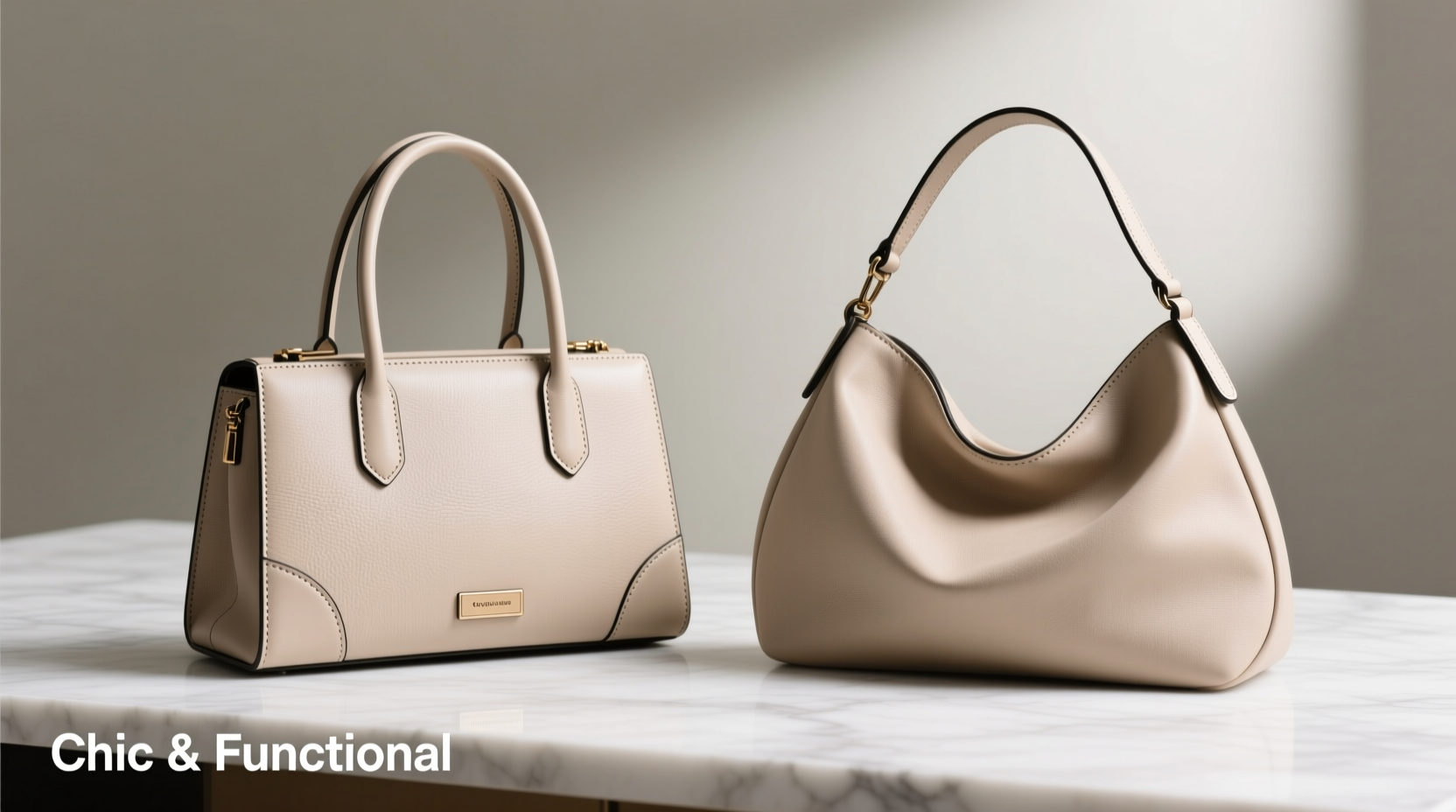
Before comparing functionality, it’s essential to understand what defines each style.
A structured handbag is built with rigid frames, stiff linings, and defined shapes—often rectangular or trapezoidal. It stands upright on its own, maintains its form when filled, and typically features clean lines and minimal hardware. Think of classic designs like the Gucci Jackie or the Coach Rogue: sleek, professional, and ready for anything.
In contrast, a slouchy hobo is characterized by its soft, relaxed drape. It usually has a crescent shape, a single shoulder strap, and no internal frame. The lack of structure allows it to collapse slightly when empty but expand when loaded. Popularized by brands like Bottega Veneta and Longchamp, the hobo exudes effortless elegance and bohemian flair.
At first glance, the hobo seems like the obvious choice for volume. But appearances can be deceiving—especially when daily essentials start piling up.
Capacity and Interior Organization
Capacity isn’t just about how much a bag can hold; it’s about how well it holds it. A bag that swallows your keys whole or lets your lipstick roll into a dark corner isn’t truly functional, no matter how spacious it looks.
Structured handbags often feature multiple compartments, zip pockets, and padded interiors. Their vertical orientation creates distinct zones: one for your phone, another for cards, and a central cavity for larger items like a tablet or notebook. Because the sides don’t collapse, every inch of space is predictable and accessible.
Slouchy hobos, on the other hand, rely on open, cavernous interiors. This gives them an initial advantage in sheer volume—they can stretch to accommodate bulky items like scarves, water bottles, or even a small laptop. However, without dividers or stiff walls, contents tend to shift and settle at the bottom. Retrieving small items becomes a game of dig-and-hope.
Real-World Use: What Fits Inside?
To test practical capacity, consider a typical day’s load:
- Smartphone
- Wallet
- Keys
- Makeup pouch
- Reusable water bottle (small)
- Umbrella (compact)
- Notebook and pen
- Face mask and hand sanitizer
In a medium-sized structured bag (approx. 12” x 9”), these items fit neatly when organized. The rigid walls prevent compression, so nothing gets crushed. Most models also include a secure zip-top or flap closure, reducing the risk of spillage when you set it down.
A similarly sized slouchy hobo can technically fit the same items—but only if you’re willing to rummage. Without internal structure, heavier objects sink, and lighter ones get buried. Closing the bag can be tricky if overfilled, and the soft exterior offers less protection against bumps or drops.
“Functionality begins with form. A bag that loses its shape under load isn’t maximizing its potential.” — Clara Nguyen, Fashion Editor & Accessory Stylist
Style and Chic Factor: Which Looks More Polished?
Chicness is subjective, but certain cues signal sophistication across fashion circles. Clean lines, balanced proportions, and intentional design elevate a bag from accessory to statement.
Structured handbags excel here. Their geometric precision complements tailored clothing, office wear, and evening ensembles. They project confidence and intentionality—ideal for meetings, travel, or events where your appearance matters. Designers often use premium leathers and refined hardware to enhance their timeless appeal.
Slouchy hobos lean into casual elegance. Draped over one shoulder, they create a relaxed silhouette that pairs beautifully with jeans, flowy dresses, or oversized knits. Their charm lies in looking effortlessly put-together, even when you’re not trying too hard. However, this laid-back vibe can border on disheveled if the bag is overstuffed or poorly maintained.
Consider context: a structured tote reads “I’ve got my life together,” while a slouchy hobo whispers “I’m stylishly spontaneous.” Both are valid, but only one consistently maintains its chic factor under pressure.
Material and Maintenance Impact on Appearance
Materials play a crucial role in how each bag ages and retains its look.
Structured bags often use full-grain leather, coated canvas, or synthetic composites that resist sagging. These materials hold shape over time and recover from minor scuffs. With proper care, a structured bag can last a decade or more without losing its crisp profile.
Slouchy hobos frequently use softer leathers or textiles that enhance drape but are prone to stretching. Over time, especially with heavy daily use, the straps may lengthen, and the body can lose its original curve. Once a hobo sags excessively, it no longer looks intentionally slouchy—it looks worn out.
Comparative Overview: Structured vs Slouchy
| Feature | Structured Handbag | Slouchy Hobo |
|---|---|---|
| Capacity (Effective) | High – organized, accessible space | Moderate-High – loose, deep interior |
| Organization | Excellent – multiple pockets and dividers | Poor – typically one open compartment |
| Style Consistency | Always polished, even when full | Chic when lightly filled; sloppy when overstuffed |
| Durability | High – resistant to warping | Moderate – prone to stretching over time |
| Outfit Pairing | Office, formal, smart-casual | Casual, weekend, artistic |
| Weight Distribution | Balanced – often dual handles or crossbody options | Shoulder-focused – single strap can dig in |
Mini Case Study: The Commuter’s Dilemma
Sophia, a 32-year-old marketing manager in Chicago, used to swear by her buttery-soft hobo. It was her go-to for weekend markets and coffee runs. But when she started commuting via train and walking ten blocks to the office, the bag became a liability. Her laptop slipped to the bottom, her transit card vanished, and the strap dug into her shoulder after hours of wear.
She switched to a structured satchel with a padded laptop sleeve, front zip pocket, and adjustable strap. Though slightly smaller in volume, it held everything more efficiently. “I was surprised,” she said. “The new bag doesn’t *look* bigger, but I stopped forgetting things. And I feel more put-together walking into meetings.”
Her experience highlights a key insight: effective capacity matters more than maximum capacity. A bag that organizes your life is inherently roomier than one that merely swallows it whole.
When the Slouchy Hobo Shines
That said, the hobo isn’t obsolete. It excels in specific scenarios:
- Weekend getaways: Its soft body conforms to luggage and absorbs irregular shapes.
- Festival or market days: You need to carry layers, a water bottle, and souvenirs without looking corporate.
- Minimalist carry: If you only need a phone, wallet, and lip balm, the hobo drapes beautifully and feels light.
For those prioritizing comfort and fluid style over strict organization, the slouchy hobo remains a compelling option.
Choosing Your Ideal Bag: A Checklist
Use this checklist to determine which style suits your lifestyle:
- Do you carry more than five daily essentials? → Lean toward structured
- Do you value quick access to your phone or keys? → Structured wins
- Do you wear tailored or professional attire regularly? → Structured enhances polish
- Do you prefer a relaxed, flowing aesthetic? → Hobo supports this look
- Will the bag bear heavy loads daily? → Structured handles weight better
- Do you want a long-term investment piece? → Structured bags age more gracefully
Frequently Asked Questions
Can a slouchy hobo be chic when fully packed?
It can, but only if carefully curated. Overstuffing distorts its shape and undermines its elegance. For a polished look, limit contents and choose a hobo with subtle top rigidity or a drawstring closure to maintain silhouette.
Are structured bags uncomfortable to carry?
Not necessarily. Many modern structured bags feature padded straps, ergonomic shapes, and lightweight materials. Some even convert to crossbody or backpack styles for added comfort during extended wear.
Is there a hybrid option that offers both structure and softness?
Yes. Several designers now offer \"semi-structured\" bags—soft enough to drape slightly but firm enough to hold shape. Look for models with bonded linings, molded bases, or hidden frames. These combine the best of both worlds: accessible storage and fluid style.
Final Verdict: Which Fits More While Looking Chic?
The slouchy hobo may win on raw volume, but the structured handbag delivers superior functional capacity and enduring chicness. It organizes more effectively, protects your belongings, and maintains a sharp appearance regardless of load. For anyone balancing a busy schedule with a desire for style, the structured bag is the smarter, more sustainable choice.
That doesn’t mean retiring the hobo entirely. Keep it for low-stress days when ease and attitude matter more than efficiency. But for daily reliability—when you need to find your keys fast, impress in a meeting, or carry a full load without strain—the structured handbag proves that true spaciousness isn’t about depth; it’s about design intelligence.




 浙公网安备
33010002000092号
浙公网安备
33010002000092号 浙B2-20120091-4
Comments
No comments yet. Why don't you start the discussion?