
In the rhythm of modern life, where a single day can shift from boardroom presentations to rooftop cocktails, the right handbag does more than hold your essentials—it defines your confidence. The choice between a structured handbag and a slouchy hobo isn’t just about aesthetics; it’s a strategic decision that affects comfort, professionalism, and adaptability. Both styles have loyal followings, but only one may truly bridge the gap between 9-to-5 precision and after-hours ease. Understanding their strengths, limitations, and real-world performance is essential for anyone who values both form and function.
The Anatomy of the Structured Handbag
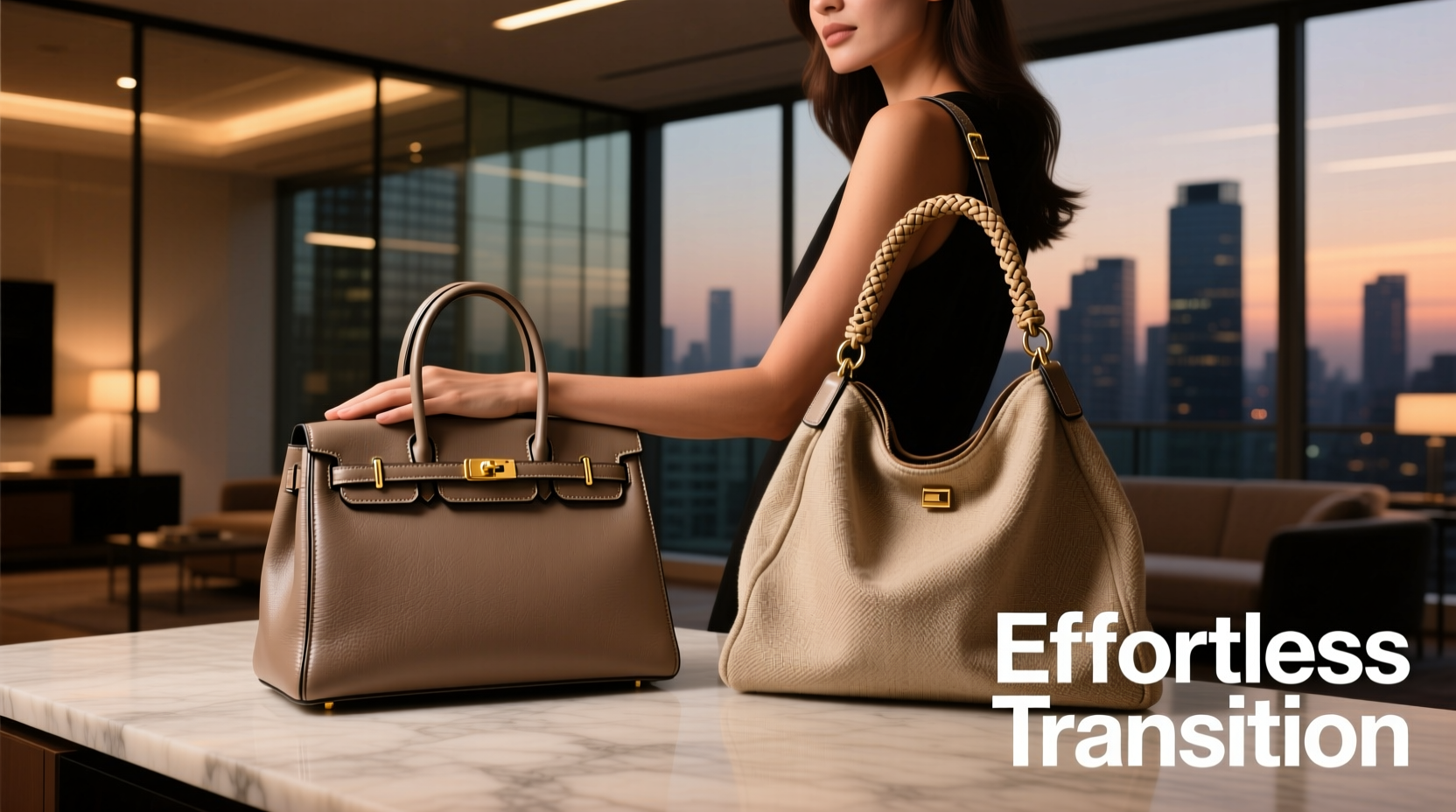
A structured handbag is defined by its rigid frame, clean lines, and architectural silhouette. Typically crafted from firm leathers or reinforced materials, these bags maintain their shape regardless of contents. Think of classic designs like the Kelly bag, the flap satchel, or the boxy tote—each exudes authority and polish.
The appeal lies in organization. Structured bags often feature multiple compartments, zipped closures, and dedicated slots for laptops, notebooks, and tablets. This makes them ideal for professionals who carry work documents, tech accessories, and cosmetics without wanting everything to jumble together.
However, their rigidity comes at a cost. They are less forgiving when overfilled, and their formal demeanor can feel out of place in relaxed evening settings unless deliberately styled down with soft silhouettes or statement jewelry.
The Slouchy Hobo: Effortless, But Functional?
The slouchy hobo, by contrast, embraces fluidity. With its crescent shape, soft leather, and open or gently cinched top, it drapes naturally over the shoulder, conforming to the body rather than imposing structure. Originally popularized by brands like Bottega Veneta and Longchamp, the hobo conveys laid-back sophistication—a favorite among creatives and urbanites who prioritize comfort and movement.
Its flexibility allows it to expand with added items, making it surprisingly capacious. Many models now include interior zip pockets and RFID-lined compartments, addressing earlier criticisms about disorganization. The casual elegance of a well-worn hobo can transition smoothly into dinner or drinks, especially when paired with metallic accents or luxe textures.
Yet, the very qualities that make it appealing—its looseness and informality—can undermine its credibility in conservative office environments. A bulging hobo pulled from under a coat during a client meeting might send the wrong message if not carefully managed.
“Transition dressing is about balance. A slouchy bag can elevate an outfit when it looks intentional, not accidental.” — Lena Moretti, Style Director at *Urban Edit Magazine*
Comparative Breakdown: Office Readiness vs Evening Adaptability
To determine which style offers the best day-to-night performance, consider five key factors: professionalism, capacity, styling potential, durability, and ease of access.
| Feature | Structured Handbag | Slouchy Hobo |
|---|---|---|
| Office Suitability | Excellent – projects authority and preparedness | Fair to Good – depends on material and coordination |
| Evening Transition | Good – works with dressier ensembles but may require styling effort | Excellent – naturally complements relaxed or chic-casual looks |
| Organization | Superior – built-in compartments and secure closures | Moderate – varies widely by model; prone to clutter if unlined |
| Comfort & Wearability | Fair – can dig into shoulder if heavy; less adaptable to body shape | Excellent – molds to the body, distributes weight evenly |
| Durability | High – maintains shape and resists deformation | Moderate – soft leathers crease easily; prone to scuffing if uncoated |
The data suggests a clear trade-off: structure wins in professionalism and organization, while the hobo leads in comfort and evening readiness. The ideal transitional bag must strike a balance—offering enough order for the workplace while retaining the ease needed after hours.
Real-World Case: Maya’s Midweek Transition
Maya, a 34-year-old marketing strategist based in Chicago, juggles client meetings, team workshops, and networking events—all within a single day. Her go-to bag for years was a black structured satchel: polished, professional, and reliable. But she found herself switching bags before evening engagements, carrying a second clutch or crossbody for post-work drinks.
Last spring, she invested in a medium-sized taupe hobo made from grained calf leather with a subtle magnetic closure and interior organizer panel. The texture gave it a tactile richness, and the neutral tone worked with both tailored trousers and flowy midi dresses.
She discovered that with minimal adjustments—removing her laptop into a brief portfolio during meetings and keeping only essentials in the hobo—she could maintain credibility in the office while flowing into dinner seamlessly. By adding a delicate chain strap extension, she transformed the bag into a crossbody for hands-free mobility during receptions.
“It wasn’t about abandoning professionalism,” she says. “It was about redefining what professionalism looks like when your day doesn’t end at five.”
Step-by-Step: Choosing Your Transitional Bag
Selecting the right bag for dual-purpose use requires deliberate consideration. Follow this timeline to make an informed decision:
- Assess Your Daily Load (Day 1–2): Track what you carry for three consecutive workdays. Note essentials like phone, wallet, keys, makeup, tablet, umbrella, etc. Identify what’s necessary versus optional.
- Evaluate Your Work Environment (Day 3): Is your office conservative, business-casual, or creative? A law firm may demand sharper lines than a design studio where individuality is celebrated.
- Map Evening Activities (Day 4): Do you attend dinners, gallery openings, or casual meetups? The frequency and formality of after-hours events influence whether soft drape or crisp edges are preferable.
- Test Material Options (Day 5–7): Visit stores or browse curated online collections. Feel different leathers—grained for durability, smooth for polish, suede for texture. Avoid overly shiny finishes if aiming for understated elegance.
- Try Real-Life Simulation (Day 8–10): Load your shortlisted bags with daily items. Wear each during a full day, including a commute and a casual outing. Pay attention to shoulder strain, ease of access, and how it feels when transitioning locations.
- Finalize Based on Balance (Day 11): Choose the bag that best harmonizes structure with softness, professionalism with personality. It should feel like an extension of your lifestyle—not a compromise.
Checklist: The Ideal Transitional Bag Must-Haves
- ✅ Medium size (fits phone, wallet, lipstick, keys, and small clutch)
- ✅ Neutral color (black, tan, taupe, navy, or deep burgundy)
- ✅ High-quality, textured leather (resists scuffs and adds depth)
- ✅ Secure closure (magnetic snap, twist-lock, or zip-top)
- ✅ Interior organization (zip pocket, slip compartments)
- ✅ Adjustable or removable strap (for shoulder or crossbody wear)
- ✅ Subtle hardware (avoid oversized logos or excessive shine)
- ✅ Balanced weight (under 2.5 lbs empty)
This checklist ensures functionality without sacrificing style. A bag that ticks seven or more boxes is likely a strong contender for all-day versatility.
Expert Insight: What Designers Say About Dual-Purpose Design
Contemporary handbag designers increasingly focus on hybrid functionality. Brands like Polène, Wandler, and Staud build structural integrity into softer forms—creating what some call \"semi-structured\" bags. These hybrids offer upright posture without stiffness, combining the best of both worlds.
“The future of handbags is fluid architecture. We’re designing pieces that support the user’s journey, not confine it.” — Camille Polin, Founder of Polène
This philosophy reflects a broader cultural shift: work-life boundaries are blurring, and fashion must evolve accordingly. A bag that serves only one context is becoming obsolete. The most valuable accessory is one that adapts as effortlessly as its owner.
FAQ: Common Questions About Office-to-Evening Bags
Can I use a slouchy hobo in a corporate office?
Yes, but choose wisely. Opt for refined materials like pebbled leather, minimalist hardware, and neutral tones. Avoid overly large sizes or distressed finishes. Pair it with sharp tailoring to maintain balance. In highly traditional settings, consider a smaller hobo used as a secondary bag alongside a briefcase.
How do I keep a structured bag from looking too severe at night?
Softening a structured bag is about pairing and proportion. Drape a lightweight wrap or patterned scarf over the handle. Wear it with a slip dress or wide-leg jumpsuit to contrast its formality. Metallic hardware or a snakeskin-embossed finish can also add evening-ready allure.
Is there a third option beyond structured and slouchy?
Absolutely. The \"semi-structured\" category is growing rapidly. These bags have enough internal reinforcement to hold shape but use supple leathers and curved lines for warmth. Examples include the Polène Numéro Dix, the Wandler Hester, or the Mansur Gavriel half-moon tote. They offer a balanced solution for those unwilling to choose sides.
Conclusion: Embrace Fluidity Without Sacrificing Substance
The debate between structured handbags and slouchy hobos isn’t about declaring a winner—it’s about understanding context, personal needs, and evolving lifestyles. For strict corporate environments, the structured bag remains the gold standard. For creative fields or dynamic schedules, the slouchy hobo offers unmatched ease.
But the most compelling path forward lies in synthesis. Seek out designs that honor both principles: clarity and comfort, order and openness. Whether you lean toward the crisp geometry of a satchel or the languid curve of a hobo, your bag should empower you—not constrain you—as you move through the varied rhythms of your day.
Ultimately, the best transitional bag isn’t defined by its shape, but by its ability to disappear into your routine—so you’re noticed not for what you carry, but for how you carry yourself.




 浙公网安备
33010002000092号
浙公网安备
33010002000092号 浙B2-20120091-4
Comments
No comments yet. Why don't you start the discussion?