
The modern man has more sartorial freedom than ever before. Among the most visible shifts in menswear is the move away from rigid, board-like tailoring toward softer, more fluid silhouettes. The rise of unstructured jackets—lightweight, minimally padded, and often without canvas lining—has redefined what a jacket can be. But while fashion publications celebrate the relaxed elegance of the soft look, a critical question remains: does it actually work for everyone?
The answer isn’t a simple yes or no. It depends on build, occasion, personal style, and even posture. Understanding the differences between structured and unstructured jackets—and how they interact with the human form—is essential to making an informed wardrobe decision.
Understanding the Core Differences
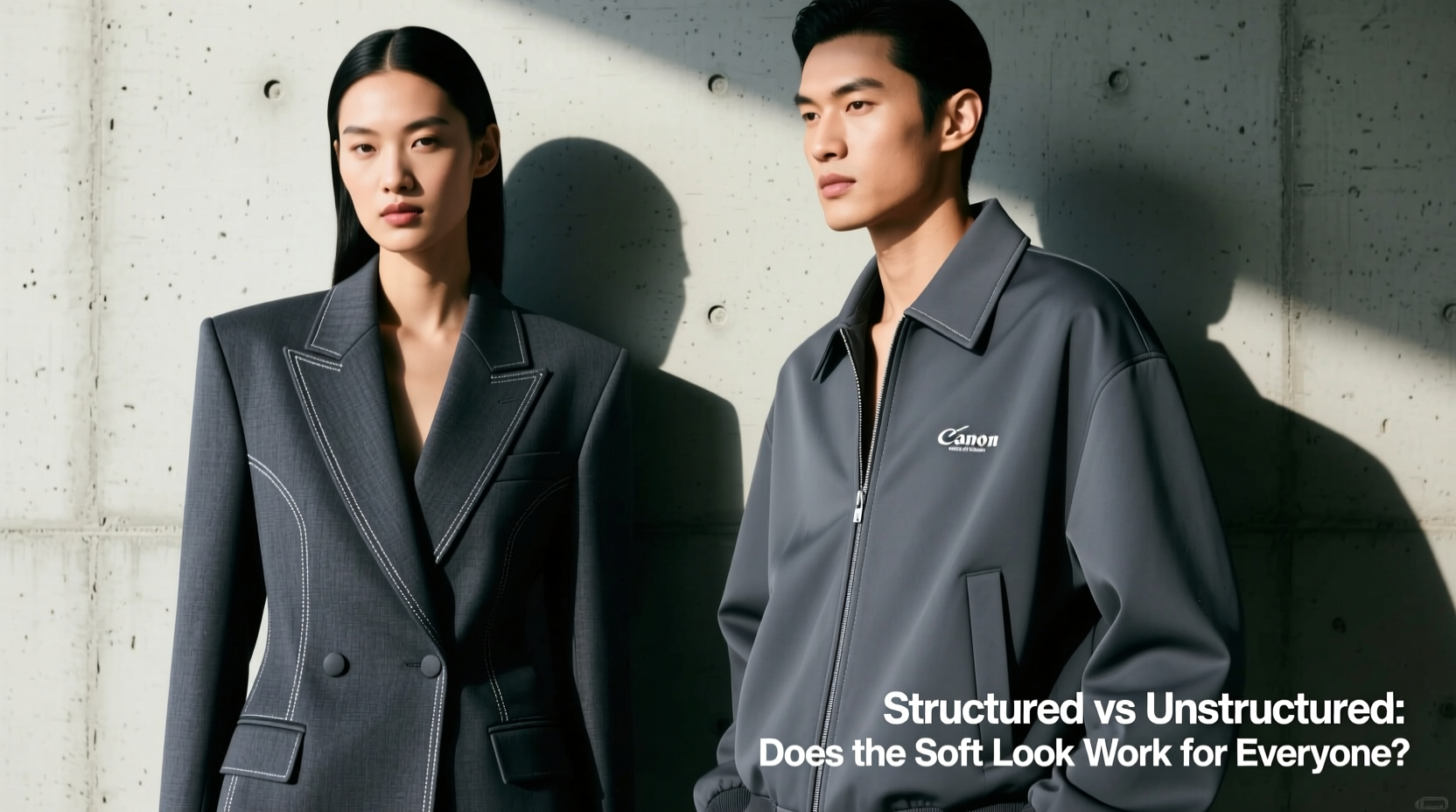
At their foundation, structured and unstructured jackets differ in construction, materials, and intent.
- Structured jackets feature internal canvas (often horsehair or wool), shoulder padding, defined lapels, and reinforced chest pieces. These elements give the jacket shape, structure, and longevity. Think classic Italian or British tailoring—sharp, architectural, and designed to sculpt the silhouette.
- Unstructured jackets strip away much of that rigidity. They may lack padding, use minimal or floating canvassing, and rely on soft fabrics like linen, cotton, or lightweight wool. The result is a drape that follows the body rather than imposing a shape upon it.
The choice between them isn’t just aesthetic—it’s functional. A banker walking into a boardroom might benefit from the authority of a structured double-breasted blazer. A creative director at a weekend retreat might prefer the ease of a navy unstructured jacket over a T-shirt.
When Structure Adds Value
Structure excels in environments where presence matters. Formal events, professional settings, or any situation where you want your clothing to project confidence and polish call for a structured approach.
Fabrics like flannel, tweed, or worsted wool naturally lend themselves to structure. The canvas inside molds to the wearer over time, improving fit with wear—a hallmark of high-end bespoke tailoring.
“Structure isn’t about restriction; it’s about intention. A well-made canvas gives a jacket life—it breathes, moves, and evolves with the wearer.” — Luca Moretti, Master Tailor, Milan
The Allure of the Soft Look
Unstructured jackets gained popularity through Neapolitan tailoring and the influence of designers like Loro Piana and Brunello Cucinelli. Their appeal lies in comfort, natural movement, and understated luxury.
These jackets often use soft shoulders (sometimes with only a slight roping at the sleeve head), no chest padding, and minimal interfacing. The fabric drapes loosely, creating a lived-in elegance. For warm climates or casual settings, this makes perfect sense.
However, the soft look doesn’t automatically equate to sophistication. Without the right fabric or cut, an unstructured jacket can appear sloppy—like a shirt worn untucked by accident, not design.
Body Type Considerations
This is where the “does it work for everyone?” question becomes crucial. The soft look favors certain physiques and can challenge others.
| Body Type | Structured Jacket Effect | Unstructured Jacket Effect |
|---|---|---|
| Broad Shoulders, Athletic Build | Enhances power and proportion; balances lower body | Can appear boxy or lose definition if too loose |
| Narrow Shoulders, Slim Frame | Adds presence and creates balanced silhouette | Risks looking swallowed by fabric; lacks shape |
| Shorter Stature | Clean lines elongate; structured lapels add height | Soft drape may shorten torso; harder to tailor precisely |
| Fuller Midsection | Can emphasize bulk if poorly fitted | May drape better, but risk looking shapeless |
| Tall and Lean | Classic elegance; enhances natural proportions | Excellent choice—soft tailoring complements height |
As the table shows, unstructured jackets tend to work best on taller, leaner frames where natural vertical lines already exist. On smaller or broader builds, structure often provides necessary definition.
A Real-World Example: James, the Startup Founder
James, 34, runs a tech consultancy based in Austin. He wanted to upgrade his wardrobe for client meetings but disliked the stiffness of traditional suits. After trying both styles, he found that off-the-rack unstructured jackets looked great in photos but sagged by midday, especially in humidity.
He consulted a tailor who suggested a hybrid: a lightly canvassed sport coat with minimal shoulder padding. The result? A jacket that moved with him, maintained its shape, and projected approachable authority. His experience underscores a key insight—sometimes the best solution isn’t choosing one extreme over the other, but finding a middle ground.
How to Choose What Works for You
Selecting the right jacket type shouldn’t be dictated by trends alone. Follow these steps to make a personalized decision.
- Assess your lifestyle. Do you spend most days in meetings, or moving between cafes and co-working spaces? Structure suits formal routines; soft tailoring fits dynamic ones.
- Evaluate your build honestly. Stand sideways in a mirror. Do you have strong shoulders? A defined waist? If not, structure can help create those lines.
- Consider climate. Unstructured jackets breathe better and are ideal for hot or humid environments. Structured ones offer warmth and crispness in cooler seasons.
- Test the drape. Try on both styles. Walk around, sit down, raise your arms. Notice where the fabric pulls or sags. A good jacket should allow motion without distortion.
- Invest in fit. Even the finest unstructured jacket fails if it’s too long, too wide, or rides up when buttoned.
Hybrid Options Are Growing
Today’s market offers many middle-ground solutions. “Semi-structured” jackets combine light canvas with soft shoulders, offering shape without stiffness. Brands like Incotex, Canali, and Kiton produce models that bridge the gap—ideal for men who want versatility across settings.
These hybrids are particularly effective for travelers or those in hybrid work environments. They resist wrinkles, maintain form, and transition from day to evening with ease.
Frequently Asked Questions
Can short men wear unstructured jackets?
Yes, but with caution. Opt for shorter lengths, higher button stances, and fabrics with some body (like hopsack or fresco). Avoid overly slouchy cuts that can visually shorten the torso.
Do unstructured jackets last as long as structured ones?
Generally, no. The lack of canvas means they’re more prone to stretching and losing shape over time. However, with careful wear and rotation, they can still last several years—especially if made from durable natural fibers.
Is the soft look appropriate for job interviews?
It depends on industry and region. In creative fields (design, media, startups), a well-fitted unstructured jacket in navy or grey can convey confidence without rigidity. In finance or law, a structured blazer remains the safer choice.
Final Thoughts: Style Is Personal, Not Prescriptive
The soft look has earned its place in modern menswear. It represents a shift toward comfort, authenticity, and individuality. But like any trend, it shouldn’t be adopted universally. Just because something looks effortless on one person doesn’t mean it will work the same way on another.
True style isn’t about following what’s popular—it’s about understanding what serves you. Whether you choose a sharply tailored three-piece or a languid linen jacket, the goal is alignment: between your clothes, your body, and your life.
Instead of asking, “Does the soft look work for everyone?” perhaps the better question is: “What kind of impression do I want to make—and what tools will help me get there?”




 浙公网安备
33010002000092号
浙公网安备
33010002000092号 浙B2-20120091-4
Comments
No comments yet. Why don't you start the discussion?