
Every day, we walk into buildings, cross bridges, and live in homes without a second thought about whether they’ll collapse. Yet behind every stable structure lies a complex interplay of forces, materials, and design choices that ensure safety and durability. Structural integrity is not magic—it’s science. It’s the careful balance of tension, compression, load distribution, and material strength that keeps everything from skyscrapers to footbridges standing firm.
Understanding why things don’t fall down reveals the hidden intelligence in architecture and civil engineering. This knowledge isn’t just for professionals; it empowers homeowners, students, and curious minds to appreciate how stability is achieved—and what happens when it fails.
The Fundamental Forces at Play
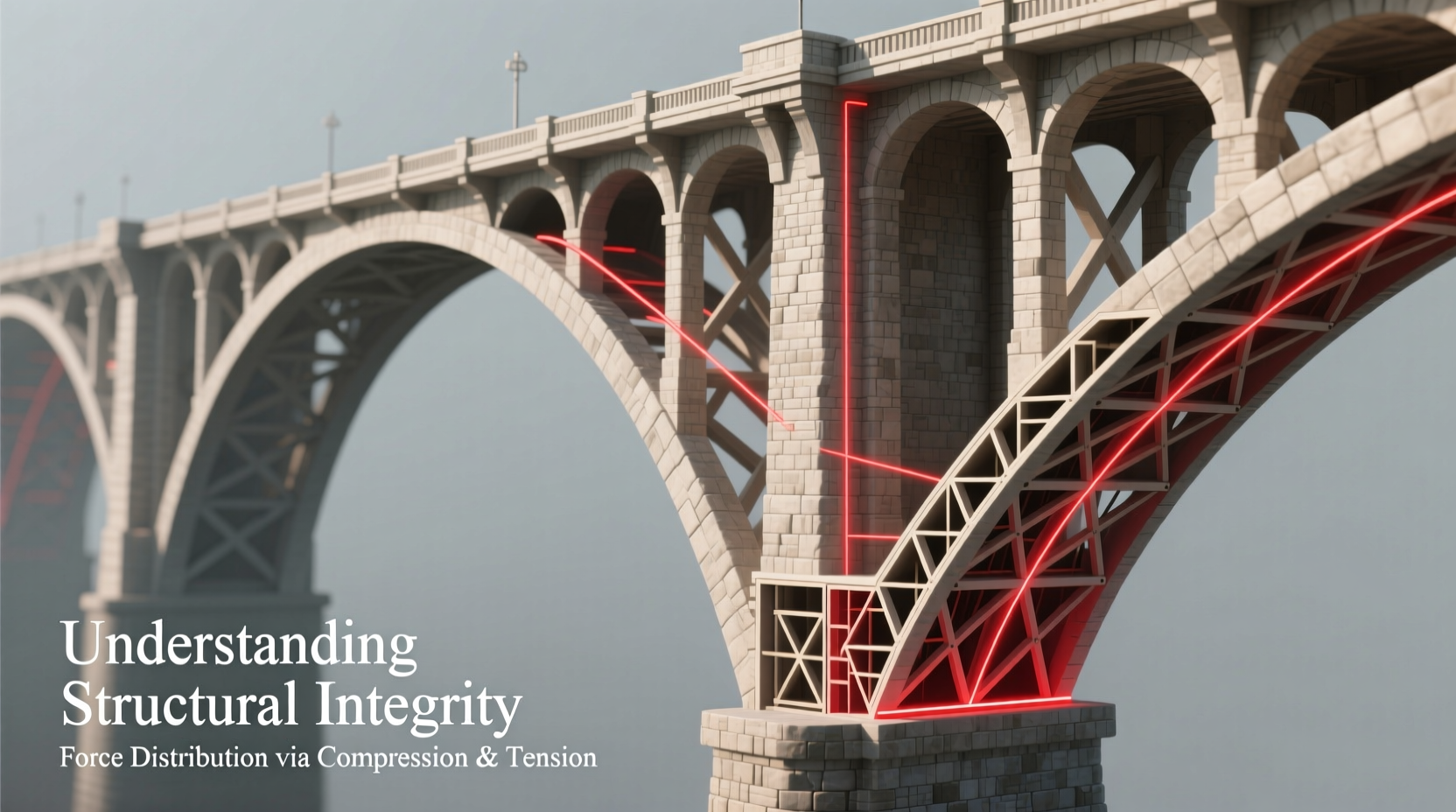
All structures must resist four primary forces: compression, tension, shear, and torsion. These forces act constantly, whether from gravity, wind, seismic activity, or human use.
- Compression: The force that squeezes or shortens a material. Columns in buildings experience compression as they bear the weight above them.
- Tension: The opposite of compression—this force stretches or pulls apart a material. Suspension bridge cables are designed to handle high tension.
- Shear: A force that causes parts of a material to slide past one another. Poorly anchored beams can fail under shear stress.
- Torsion: A twisting force, often seen in bridges during high winds or earthquakes.
Engineers design structures to channel these forces safely into the ground through foundations. For example, a well-designed beam redirects loads to supporting columns, which transfer them into footings buried deep in stable soil.
Material Science: Strength Meets Design
No matter how brilliant the design, a structure is only as strong as its weakest material. Modern construction relies on materials engineered for specific roles:
| Material | Strengths | Common Uses |
|---|---|---|
| Steel | High tensile strength, ductile, recyclable | Skeletons of skyscrapers, bridge trusses |
| Reinforced Concrete | Strong in compression, resists fire and weather | Floors, foundations, dams |
| Wood | Lightweight, renewable, good insulation | Residential framing, roofing |
| Composite Materials | Tailored strength-to-weight ratio | Aerospace structures, retrofitting old bridges |
Concrete, for instance, excels under compression but cracks easily under tension. That’s why steel rebar is embedded within it—to absorb tensile stresses. This synergy creates reinforced concrete, one of the most widely used building materials in the world.
“Materials don’t fail—designs do. The key is matching the right material to the right force.” — Dr. Lena Patel, Structural Engineer, MIT
Design Principles That Prevent Collapse
Engineering elegance lies in simplicity. The best structures distribute loads efficiently using proven geometric forms.
Arches, for example, have been used since ancient Rome because they convert vertical loads into compressive forces along their curve, directing stress into the supports on either side. Domes work similarly, spreading pressure evenly across their surface.
Trusses—triangular frameworks commonly seen in bridges—are another genius solution. Triangles are inherently stable shapes; unlike squares or rectangles, they resist deformation under load because their angles are fixed. By combining multiple triangles, engineers create lightweight yet rigid frameworks capable of spanning great distances.
In high-rise buildings, the frame acts like a hollow tube, resisting lateral forces such as wind. Skyscrapers like the John Hancock Center in Chicago use an exterior braced tube design, allowing them to sway slightly without breaking—a controlled flexibility that prevents catastrophic failure.
Mini Case Study: The Tacoma Narrows Bridge Collapse
In 1940, the original Tacoma Narrows Bridge in Washington State collapsed just months after opening. Nicknamed “Galloping Gertie,” the bridge began oscillating violently in moderate winds until it tore itself apart.
The cause? Aerodynamic instability. The flat, narrow deck acted like an airplane wing, creating lift and vortex shedding that induced torsional flutter. Engineers had focused on static loads but underestimated dynamic forces.
This disaster became a landmark case in structural dynamics, leading to mandatory wind tunnel testing for all major bridges. It underscored that stability isn’t just about strength—it’s about responsiveness to environmental forces.
Assessing Structural Integrity: A Step-by-Step Guide
Whether inspecting your own home or evaluating public infrastructure, assessing structural health follows a logical process:
- Visual Inspection: Look for cracks, sagging floors, misaligned doors, or rust on metal supports.
- Identify Load Paths: Trace how weight moves from roof to foundation. Are walls bearing loads where intended?
- Check Material Condition: Inspect wood for rot, concrete for spalling, steel for corrosion.
- Evaluate Environmental Stressors: Consider exposure to moisture, temperature swings, or seismic zones.
- Consult Documentation: Review blueprints or engineering reports if available.
- Engage a Professional: For any signs of serious compromise, hire a licensed structural engineer.
Common Mistakes That Compromise Stability
Even sound designs can fail due to poor execution or oversight. Some frequent errors include:
- Removing load-bearing walls during renovations without proper reinforcement.
- Using undersized beams or incorrect fasteners.
- Ignoring drainage around foundations, leading to soil erosion or hydrostatic pressure.
- Overloading roofs with heavy equipment or snow accumulation.
- Failing to maintain expansion joints in large structures.
One homeowner removed a central wall to open up a living space, unaware it supported upper-floor joists. Within weeks, the floor above began sinking. Restoration cost far more than the initial project—and could have endangered the family.
Checklist: Ensuring Structural Safety in Residential Buildings
- ✅ Confirm which interior walls are load-bearing before remodeling.
- ✅ Inspect basement beams and crawl space supports annually.
- ✅ Ensure gutters direct water away from the foundation.
- ✅ Repair visible cracks in masonry or concrete promptly.
- ✅ Avoid storing heavy items near unsupported floor edges.
- ✅ Schedule professional inspection if selling or buying an older property.
Frequently Asked Questions
Can a building be structurally unsound even if it looks fine?
Yes. Internal damage like termite-infested support beams, corroded rebar, or shifted footings may not be visible but can severely weaken a structure. Regular inspections help catch hidden problems early.
What is redundancy in structural design?
Redundancy means incorporating backup load paths so that if one component fails, others can take over the load. This principle is critical in earthquake-resistant buildings and ensures partial failures don’t lead to total collapse.
How do skyscrapers withstand earthquakes?
Modern high-rises use base isolators (rubber bearings between building and foundation), damping systems (like giant pendulums or fluid shock absorbers), and flexible frames that absorb and dissipate seismic energy rather than resist it rigidly.
Conclusion: Building Confidence Through Knowledge
Structural integrity is the silent guardian of modern life. From the chair you sit on to the airport terminal you walk through, every stable object owes its existence to thoughtful engineering. Understanding the principles behind why things don’t fall down transforms passive users into informed observers—people who recognize warning signs, ask better questions, and make smarter decisions about their homes and communities.
Next time you enter a building, pause for a moment. Notice the columns, the span of the ceiling, the way the stairs feel underfoot. You’re not just seeing architecture—you’re witnessing physics in perfect harmony.




 浙公网安备
33010002000092号
浙公网安备
33010002000092号 浙B2-20120091-4
Comments
No comments yet. Why don't you start the discussion?