
The loose fit blazer has emerged as a cornerstone of modern wardrobes—effortlessly chic, versatile, and inherently empowering. No longer confined to boardrooms or formal occasions, today’s oversized blazers drape across shoulders with relaxed elegance, offering both comfort and style. But while their appeal is universal, how they look on *you* depends on thoughtful styling tailored to your body shape, proportions, and lifestyle. The secret isn’t in wearing the trend—it’s in mastering it.
A poorly styled loose blazer can overwhelm your frame or create unflattering bulk. Conversely, when balanced correctly, it elongates the torso, defines the waist, and adds structure without sacrificing ease. This guide breaks down how to wear loose fit blazers in ways that enhance—not hide—your natural silhouette.
Understanding Proportion: Why Fit Matters Even in Oversized Styles
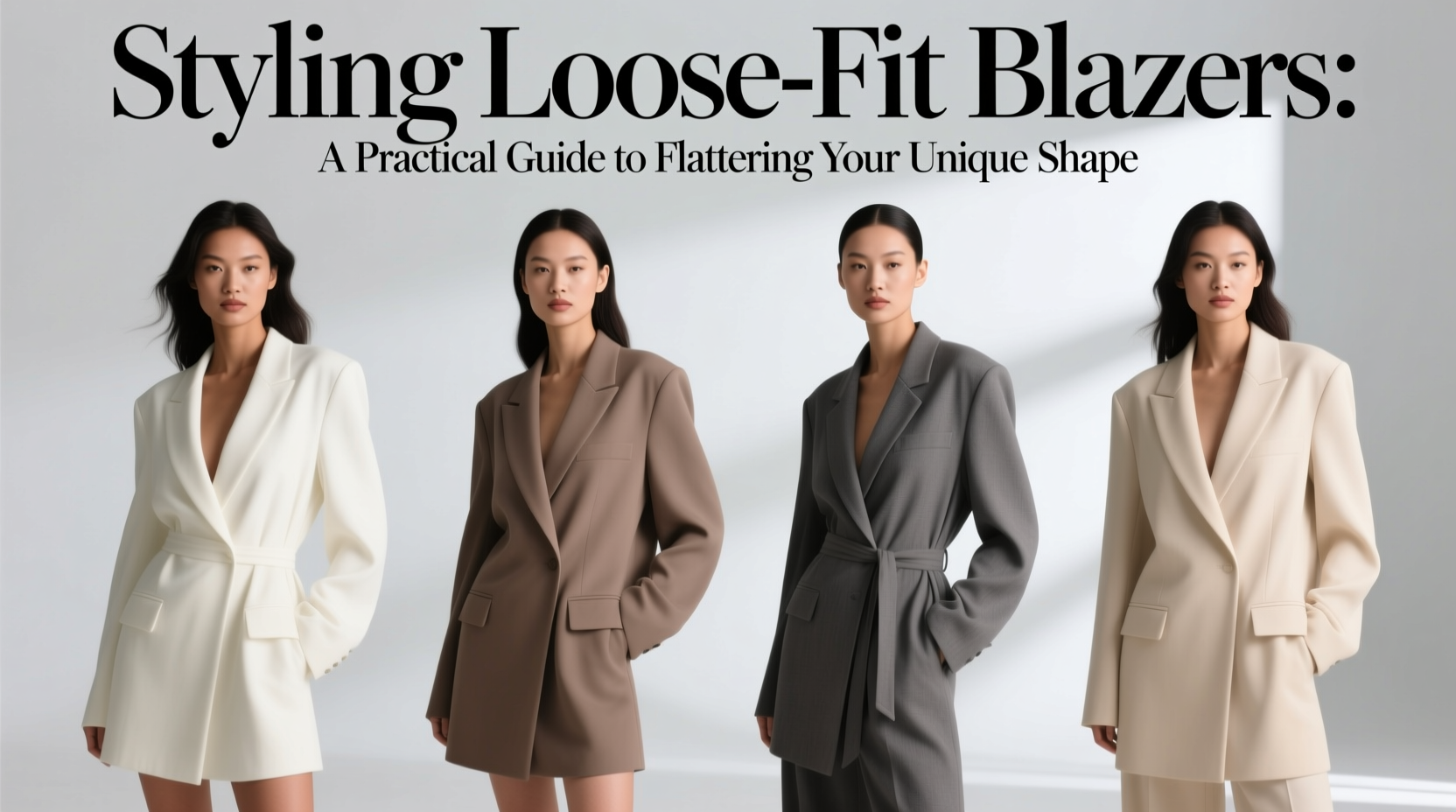
Oversized doesn’t mean shapeless. The most flattering looks come from intentional imbalance—using volume in one area to draw attention or balance another. For example, adding width at the shoulders can make hips appear narrower; a long blazer can visually lengthen a shorter torso.
Fabric weight also plays a crucial role. Heavy wool or structured cotton will hold its shape and add volume, while lightweight linen or rayon drapes softly, creating fluidity rather than bulk. Choosing the right fabric ensures movement and comfort without overwhelming your frame.
Styling by Body Shape: Customizing the Look for You
There is no single “best” way to wear a loose blazer—only what works best for your individual proportions. Below are tailored recommendations based on common body types.
Apple Shape (Broader Upper Body, Less Defined Waist)
Focus on creating vertical lines and drawing the eye downward. Opt for longer blazers that fall below the hip, paired with high-waisted pants or skirts. Avoid double-breasted styles that add width across the midsection.
- Wear with a tucked-in blouse and wide-leg trousers for elongation.
- Choose V-necks or open-front layering to break up chest volume.
- Select fabrics with drape—like crepe or soft blends—to avoid boxiness.
Pear Shape (Hips Wider Than Shoulders)
Balance your lower half by adding structure up top. A slightly padded shoulder or a bold lapel draws attention upward. Cropped or hip-length loose blazers work well, especially when cinched subtly with a belt.
“The key for pear shapes is equilibrium. A voluminous blazer balances wider hips beautifully—but only if it’s styled with intention.” — Lena Torres, Celebrity Stylist & Fit Consultant
Hourglass Shape (Well-Defined Waist, Balanced Hips and Shoulders)
You have the advantage of natural symmetry. Emphasize your waist even in looser cuts. Try belting the blazer at the narrowest point or pairing it with form-fitting pieces underneath.
Rectangle Shape (Minimal Waist Definition)
Create illusion of curves with strategic tailoring. A longline blazer worn open over a fitted dress or slim jeans introduces dimension. Rolled sleeves and contrasting inner layers (like a patterned camisole) add visual interest.
Inverted Triangle (Broad Shoulders, Narrow Hips)
Be mindful not to exaggerate shoulder volume. Choose blazers with soft shoulders or minimal padding. Stick to single-breasted cuts and avoid exaggerated peak lapels. Pair with A-line skirts or flared pants to widen the lower body.
Step-by-Step Guide: How to Style a Loose Blazer for Any Occasion
Follow this five-step process to build a polished, proportionate outfit around your loose fit blazer.
- Determine your goal: Are you aiming for professional polish, weekend ease, or evening elegance? This dictates fabric, color, and coordination.
- Choose the right length: Hip-length suits casual pairings; thigh-to-knee length offers versatility; midi or longline blazers elevate formal looks.
- Control volume with layering: Underneath, opt for streamlined pieces—a bodysuit, slim turtleneck, or fitted tank. Avoid bulky knits unless balanced below.
- Add waist definition (optional): Use a thin belt over the blazer, or wear it open with a cinched dress or high-waisted bottoms.
- Finish with footwear: Pointed-toe flats or heels elongate legs under a long blazer. Chunky boots ground a slouchy silhouette for edgy contrast.
Do’s and Don’ts: Common Mistakes and How to Avoid Them
| Scenario | Do | Don't |
|---|---|---|
| Pairing with jeans | Choose high-waisted, straight or wide-leg denim | Wear low-rise or overly tight jeans |
| Office wear | Layer over a silk shell with tailored trousers | Combine with baggy tees and sneakers (unless policy allows) |
| Evening styling | Add metallic heels and a sleek clutch | Over-accessorize—let the blazer be the statement |
| Shorter frames | Opt for cropped or 3/4-length blazers | Wear floor-grazing lengths that cut off mid-shin |
| Warm climates | Choose linen or cotton blends | Wear heavy wool in summer heat |
Real-Life Example: Transforming a Wardrobe Staple
Sophia, 34, works in marketing and owns a charcoal gray oversized blazer she bought during a sale. Initially, she avoided wearing it because it made her feel “swallowed up.” After assessing her hourglass figure, she began experimenting: first, she tried it open over a black turtleneck and mom jeans—too shapeless. Then, she added a 1.5-inch leather belt at her natural waist and swapped the jeans for cigarette trousers. Finally, she rolled the sleeves and added pointed ankle boots.
The transformation was immediate. The belt emphasized her waist, the trousers created clean lines, and the boots extended her leg line. Colleagues began complimenting her “sharp yet relaxed” look. Sophia now wears the same blazer three ways: belted for meetings, open with a crop top for after-work drinks, and layered over a slip dress for events.
Checklist: Your Go-To Guide Before Wearing a Loose Blazer
- ✅ Shoulder seam aligns with the edge of your shoulder bone
- ✅ Sleeve length allows for wrist visibility when arms are down
- ✅ Length complements your height (shorter if under 5'4\", longer if over 5'7\")
- ✅ Inner layers are fitted or intentionally textured
- ✅ Bottom half balances the top (e.g., wide-leg pants with a boxy blazer)
- ✅ Shoes add proportion—heels for elongation, flats for grounding
- ✅ Movement feels unrestricted but not sloppy
Frequently Asked Questions
Can short women wear longline blazers?
Yes—but with strategy. Choose blazers that end just below the knee or at mid-calf, never breaking at the widest part of the calf. Pair with monochromatic bottoms and heels to maintain a continuous line. Avoid overly wide lapels or exaggerated shoulders, which can overpower a petite frame.
How do I keep a loose blazer from looking messy?
Structure starts beneath. Wear smooth, wrinkle-free layers underneath. Keep hems aligned—avoid tucking only the front of a shirt unless intentional. Store the blazer on a padded hanger to maintain shoulder shape. And remember: grooming matters. Neat hair and polished shoes elevate any silhouette.
Is it okay to belt an oversized blazer?
Absolutely—and often recommended. A belt reintroduces shape without fighting the design. Use a slim belt over the fabric, or choose a blazer with a built-in tie waist. Just ensure the belt sits at your natural waist, not your hips, for the most flattering effect.
Final Thoughts: Own Your Silhouette, Not the Trend
The loose fit blazer isn’t about hiding your body—it’s about redefining how you present it. When chosen and styled with awareness, it becomes a tool of empowerment: adding authority, softening edges, or introducing drama, depending on your intent. The most stylish people aren’t those who follow trends blindly, but those who adapt them to their lives.
Start with one blazer. Experiment with tucks, belts, and hemlines. Notice what makes you feel confident versus concealed. Take photos from different angles. Eventually, you’ll develop an instinct for what works—and that’s when fashion truly serves you.




 浙公网安备
33010002000092号
浙公网安备
33010002000092号 浙B2-20120091-4
Comments
No comments yet. Why don't you start the discussion?