
In a world where convenience and style go hand in hand, the humble keychain has evolved from a simple metal ring into a sophisticated organizational tool. Whether juggling house, car, office, and gym keys or carrying an ID badge, access card, and USB drive, the modern professional needs more than just a clunky chain. A well-designed keychain system reduces clutter, saves time, and adds a touch of personal flair to everyday carry. The best solutions balance durability, accessibility, and design—offering effortless organization without sacrificing aesthetics.
The Problem with Traditional Keychains
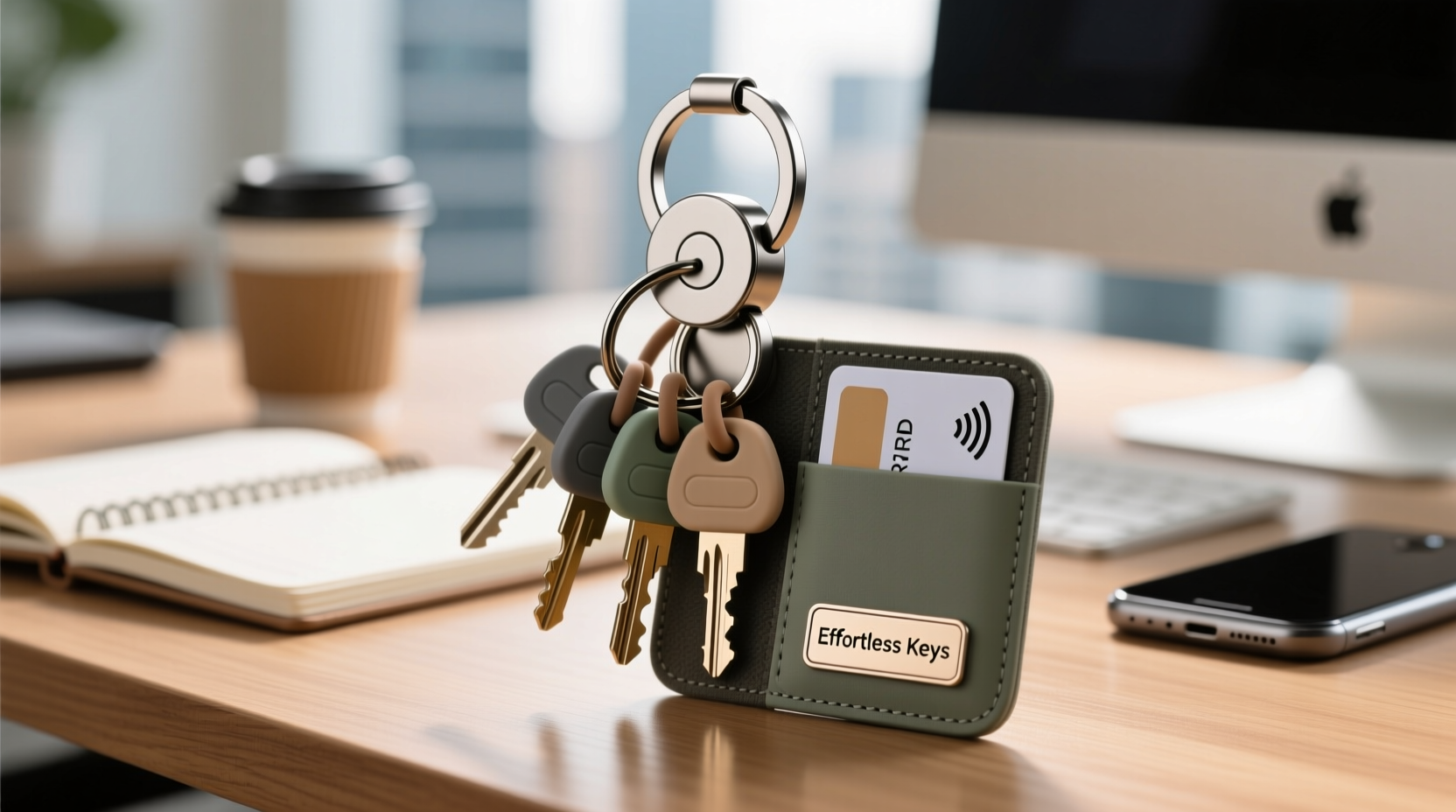
Most people still rely on basic split rings or generic leather loops. These may hold keys, but they rarely solve real-world issues: tangled keys, difficulty identifying the right one quickly, bulkiness in pockets, or lack of space for additional essentials like IDs or tools. Over time, this disorganization leads to frustration, lost items, and unnecessary wear on both keys and bags.
A 2023 consumer survey by Urban Gear Review found that 68% of respondents spent at least 10 seconds searching for the correct key each day—adding up to nearly 6 hours per year. Multiply that by misplaced IDs or fumbling with access cards, and the inefficiency becomes significant. The solution lies not in reducing what you carry, but in rethinking how you carry it.
Top Functional Keychain Designs That Work
Today’s market offers innovative alternatives that prioritize both form and function. Below are the most effective styles currently used by professionals, travelers, and urban commuters.
1. Rotating Key Organizers
These compact devices feature a central hub with individual slots for each key. Rotate the dial to bring the desired key forward. Made from aircraft-grade aluminum or reinforced polymer, they prevent tangling and protect key teeth from damage.
2. Modular Key Systems
Brands like KeySmart and ClickLock offer modular platforms where users attach keys, bottle openers, flashlights, or even small multitools. Components snap in and out magnetically or via secure clips, allowing customization based on daily needs.
3. RFID-Protected Card Holders with Key Loops
Ideal for office workers and remote employees, these slim wallets integrate key retention systems alongside secure card storage. Many include RFID-blocking layers to protect IDs and credit cards from digital theft.
4. Leather Key Fobs with Detachable Straps
Crafted from full-grain leather, these minimalist fobs wrap around a single key or small bundle. A detachable strap allows attachment to bags or belts, combining elegance with utility. Popular among designers and creatives who value subtle sophistication.
5. Smart Trackers with Integrated Keychains
Devices like Tile Pro or Apple AirTag come with durable keychain mounts. When paired with smartphone apps, they enable real-time tracking, proximity alerts, and last-known location history—ideal for preventing loss.
“Modern key organization isn’t about minimizing keys—it’s about maximizing control. The right system turns chaos into clarity.” — Jordan Lee, Industrial Designer & Carry Gear Consultant
How to Choose the Right Keychain Solution
Selecting the ideal organizer depends on lifestyle, number of keys, and additional items carried. Consider the following factors before purchasing:
- Capacity: How many keys and accessories do you regularly use?
- Portability: Will it fit comfortably in a pocket, purse, or bag?
- Durability: Is it made from corrosion-resistant materials like stainless steel or anodized aluminum?
- Security: Does it include anti-loss features like locking mechanisms or tracker compatibility?
- Aesthetics: Does the design reflect your personal style—minimalist, rugged, or professional?
Step-by-Step Guide to Organizing Your Keys
Follow this practical timeline to declutter and streamline your key management:
- Day 1 – Audit Your Keys: Remove every key from your current chain. Identify which ones you actually use daily (e.g., home, car, office). Set aside duplicates or rarely used spares.
- Day 2 – Categorize Accessories: List non-key items you carry—ID badge, USB drive, garage opener, etc. Determine if any can be digitized or replaced (e.g., using mobile access passes).
- Day 3 – Select Your System: Based on your audit, choose a keychain type. For example, use a rotating organizer if you have 4–6 keys; opt for a modular system if adding tools.
- Day 4 – Assemble & Label: Install keys into designated slots. Use colored silicone tags or engraved labels for quick identification (e.g., red for car, blue for office).
- Day 5 – Integrate & Test: Attach the new system to your usual carry method. Use it for one week, noting ease of access, comfort, and durability.
- Day 12 – Refine: Remove underused components. Consider upgrading to a slimmer model or adding a tracker if misplacement remains an issue.
Comparison Table: Keychain Types at a Glance
| Keychain Type | Best For | Pros | Cons |
|---|---|---|---|
| Rotating Organizer | Multiple keys, frequent switching | No tangles, compact, protects key cuts | Limited accessory space |
| Modular System | Tool integration, customization | Add/remove parts, durable build | Bulkier, higher cost |
| RFID Wallet + Key Loop | Office professionals, security focus | All-in-one, blocks digital theft | Less key capacity |
| Leather Key Fob | Minimalists, style-conscious users | Elegant, ages beautifully | Fewer keys supported |
| Smart Tracker Mount | Travelers, forgetful users | Real-time location, replaceable | Requires charging/app setup |
Real-Life Example: From Chaos to Control
Sarah M., a project manager in Chicago, used to carry a heavy bundle of seven keys, two access cards, and a mini flashlight clipped haphazardly to her jeans. She often dropped them during morning commutes or left them behind at coffee shops. After researching options, she switched to a modular titanium key organizer with magnetic attachments. She now carries only four essential keys, stores backup cards digitally, and uses a Tile tracker linked to her phone.
Within two weeks, Sarah reported saving over five minutes daily and eliminated all key-related delays. “It’s not just about being organized,” she said. “It’s about feeling prepared. I don’t dread reaching into my bag anymore.”
Checklist: Building Your Ideal Key System
Use this actionable checklist to ensure your setup meets both functional and aesthetic goals:
- ☐ Audit and remove unused keys
- ☐ Count total keys and accessories to determine capacity needs
- ☐ Decide between rotation, modularity, or minimalism
- ☐ Choose a material (metal, leather, composite) matching your lifestyle
- ☐ Add identification tags or color-coding for fast access
- ☐ Incorporate a smart tracker if prone to misplacing items
- ☐ Test the system for one week and adjust as needed
Frequently Asked Questions
Can a key organizer damage my keys?
No—if designed properly. High-quality organizers use smooth, non-abrasive interiors and secure retention clips that prevent scratching or bending. Avoid cheap plastic models with sharp edges.
Are smart trackers worth it for keys?
Yes, especially if you frequently misplace keys. Devices like AirTags or Tile offer precision finding via Bluetooth and GPS networks. They pay for themselves after recovering just one lost set.
How do I clean and maintain my keychain?
Wipe metal organizers with a microfiber cloth monthly. For leather fobs, condition once every three months with natural oil. Remove dirt buildup from crevices using a soft brush. Replace worn rubber seals or magnets promptly.
Final Thoughts: Elevate Your Everyday Carry
Your keychain shouldn’t be an afterthought. It’s one of the most frequently handled items in your daily life—a small object with a big impact on efficiency and peace of mind. By investing in a stylish yet functional solution, you’re not just organizing metal pieces; you’re streamlining routines, reducing stress, and expressing personal attention to detail.
From sleek rotating hubs to rugged modular builds, today’s options prove that practicality and design can coexist. The goal isn’t perfection—it’s progress. Start with one change: declutter, upgrade, or simply label your keys. Small steps lead to lasting improvements.




 浙公网安备
33010002000092号
浙公网安备
33010002000092号 浙B2-20120091-4
Comments
No comments yet. Why don't you start the discussion?