
A well-dressed table does more than hold dinner—it sets the mood, reflects personality, and enhances the dining experience. At the heart of many contemporary tablescapes lies the table runner: a long, narrow textile that runs down the center of the table, anchoring the design and adding visual interest. When used thoughtfully, a runner can transform an ordinary meal into something memorable. But achieving a look that’s both stylish and functional requires attention to proportion, texture, color, and context.
Whether you're hosting a holiday feast, a casual brunch, or simply elevating your everyday meals, integrating a runner into your table setting offers endless creative possibilities. The key is balancing aesthetics with practicality so your table looks polished without sacrificing comfort or usability.
Choose the Right Fabric for Function and Style
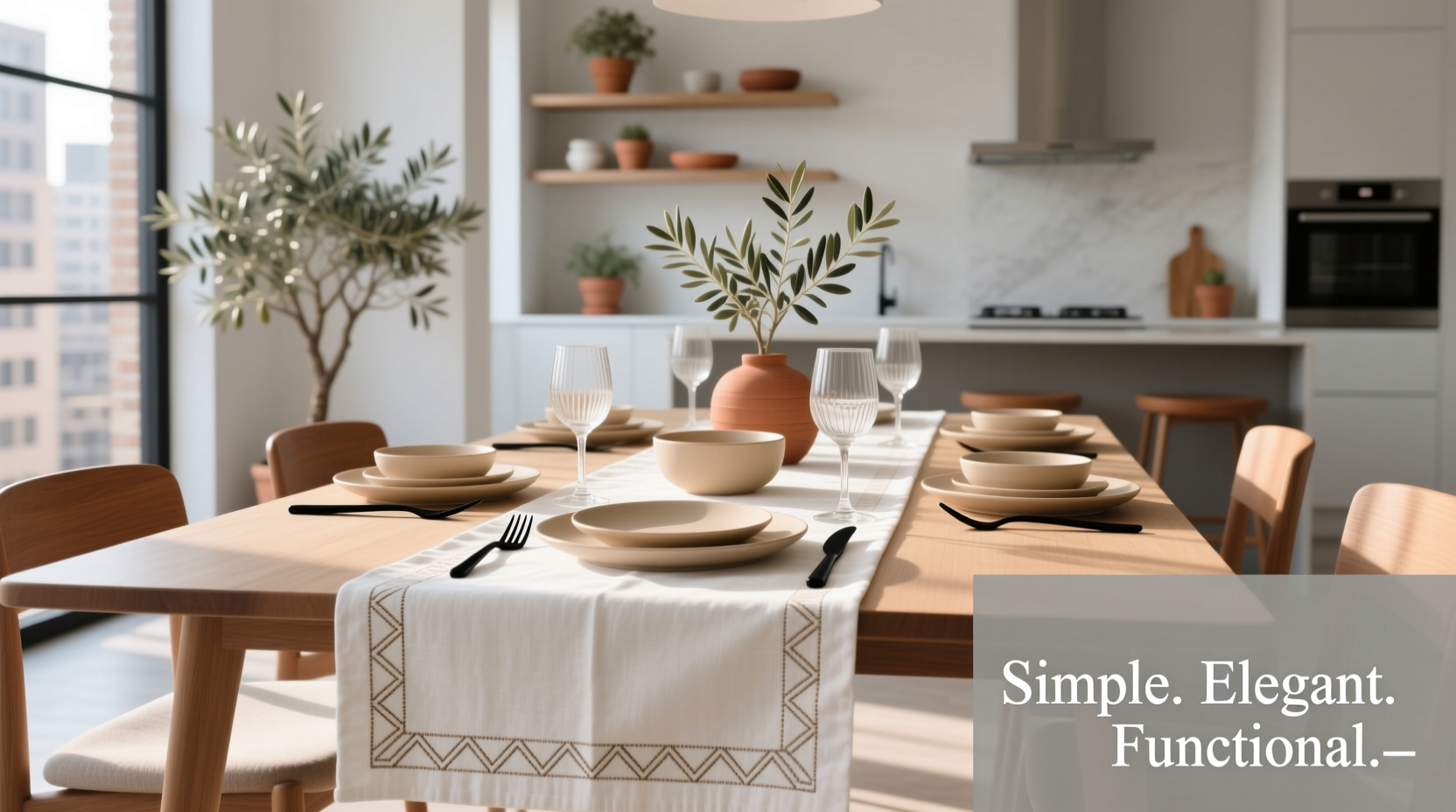
The fabric of your runner influences not only how your table looks but also how it performs during a meal. Natural fibers like linen, cotton, and hemp bring a relaxed, organic elegance ideal for rustic-modern or minimalist settings. Linen, in particular, is favored for its textured surface and ability to drape beautifully, though it wrinkles easily—a feature some embrace as part of its charm.
Synthetic blends or performance fabrics (such as polyester-cotton mixes) offer durability and stain resistance, making them excellent choices for families or frequent entertainers. Velvet and silk runners add opulence and are best reserved for formal occasions where spills are less likely.
Common Runner Fabrics Compared
| Fabric | Best For | Durability | Care Level |
|---|---|---|---|
| Linen | Casual, rustic, or coastal styles | Moderate | Machine wash, expect wrinkling |
| Cotton | Everyday use, farmhouse chic | High | Easy care, often machine washable |
| Velvet | Formal dinners, winter holidays | Low to moderate | Dry clean recommended |
| Polyester blend | Families, outdoor dining | High | Stain-resistant, easy wipe-clean |
| Silk | Luxury events, evening soirees | Low | Professional cleaning required |
Master Proportion and Placement
A common mistake is choosing a runner that overwhelms or disappears on the table. As a rule, allow 10 to 15 inches of bare table surface on each side of the runner. This ensures enough space for place settings, serving dishes, and comfortable elbow room while keeping the runner visually balanced.
For rectangular tables, center the runner lengthwise. On round tables, consider a shorter runner placed off-center beneath a centerpiece or layered asymmetrically over a circular placemat for a modern twist. The runner should extend 6 to 12 inches beyond the ends of the table for a finished look—any longer risks guests sitting on it; any shorter appears undersized.
“Proportion is everything. A runner should guide the eye, not dominate the table.” — Clara Mendez, Interior Stylist & Tabletop Designer
Create Visual Layers with Coordination
The most compelling table settings use layering to build depth. Start with the runner as your foundation, then add complementary elements: placemats, chargers, napkins, glassware, and centerpieces. Mixing textures—like a woven jute runner under smooth ceramic plates—adds tactile contrast without clashing.
Color coordination is equally important. A neutral runner (ivory, gray, or beige) provides flexibility, allowing bold napkins or colorful dishware to take center stage. Conversely, a patterned or brightly colored runner works best when paired with solid, tonal dinnerware to avoid visual chaos.
Consider seasonal shifts: light linens and pastel runners for spring, rich jewel tones or metallics in fall and winter. Layering isn’t just aesthetic—it’s strategic. Use a vinyl-backed runner under delicate fabric to prevent spills from seeping through, especially outdoors.
Step-by-Step Guide to Setting a Modern Table with a Runner
Follow this sequence to achieve a cohesive, inviting table setting:
- Select your runner based on occasion, fabric, and color scheme.
- Center the runner on the table, ensuring even overhang at both ends (6–12 inches).
- Place chargers or placemats directly on top of the runner, aligned with each seat.
- Set dinner plates centered on chargers or directly on the runner if no placemat is used.
- Add glassware above and to the right of the plate: water glass, wine glass, optional cocktail glass.
- Arrange flatware in order of use: outermost utensils first. Forks on the left, knives and spoons on the right.
- Position folded napkin either to the left of the forks, on the plate, or tucked into a glass.
- Add centerpiece—low and linear—to avoid blocking views. Candles, greenery, or small vases work well.
- Final check: Ensure there's ample space between settings and that the runner remains visible and uncluttered.
Real Example: A Weeknight Dinner Elevated
Sophie, a graphic designer in Portland, wanted to make weekday dinners feel intentional without spending hours prepping. She invested in two neutral-toned linen runners—one oatmeal, one charcoal—and began using them year-round. On a Tuesday evening, she laid the oatmeal runner down her walnut dining table, topped it with black slate placemats, white stoneware, and matte black flatware. She added eucalyptus sprigs in a low ceramic vase and tucked navy linen napkins under each fork. The result was a calm, curated space that made her family pause and appreciate the meal before diving in. “It takes five minutes to set,” she says, “but it feels like we’re somewhere special.”
Common Mistakes to Avoid
- Overcrowding the runner: Piling on too many decorations can make the table feel cluttered and impractical.
- Ignoring scale: A runner that’s too narrow or short gets lost; one that’s too wide crowds place settings.
- Mismatched formality: A sequined holiday runner might clash with everyday stoneware.
- Forgetting functionality: Avoid runners with deep tassels or fringes that interfere with seating or get caught on dishes.
Table Runner Do’s and Don’ts
| Do | Don't |
|---|---|
| Leave 10–15 inches of table edge exposed | Let the runner touch the floor or hang too low |
| Use a nonslip pad under slippery fabrics | Allow the runner to shift during dinner |
| Pair patterns with solids | Combine multiple busy prints |
| Wash or press the runner before use | Present a wrinkled or stained textile |
| Change runners seasonally or for themes | Stick with one look all year |
FAQ
Can I use a table runner on a glass table?
Yes. Choose a runner with a non-slip backing or place a silicone mat underneath to prevent sliding. Avoid overly reflective fabrics that may create glare under lighting.
How do I keep my runner centered during dinner?
Use double-sided tape designed for fabrics (tested on a corner first) or place decorative weights like small bookends or stone bookends at each end. Alternatively, secure it subtly with clear thumbtacks under the edge if the table allows.
Should the runner match the napkins or plates?
Not necessarily. Coordinating through tone or texture often works better than exact color matching. For example, a terracotta runner pairs beautifully with rust napkins or warm wood-toned chargers without being identical.
Conclusion: Elevate Your Everyday with Intention
A table runner is more than decoration—it’s an invitation to slow down and savor moments around the table. With thoughtful selection and careful arrangement, you can create a modern table setting that balances beauty and practicality. Whether you lean toward minimalist monochrome or eclectic layering, the runner serves as your design anchor, guiding both the eye and the experience.




 浙公网安备
33010002000092号
浙公网安备
33010002000092号 浙B2-20120091-4
Comments
No comments yet. Why don't you start the discussion?