
Anime has evolved from a niche Japanese export to a global entertainment phenomenon. With streaming platforms like Crunchyroll, Netflix, and HIDIVE offering vast libraries of series and films, accessibility has never been higher. Yet, one long-standing divide continues to spark passionate arguments across forums, comment sections, and social media: should you watch anime with subtitles (subbed) or with English voice acting (dubbed)?
The subbed vs dubbed debate isn’t new—it’s been simmering since the early days of anime localization in the 1990s. But despite decades of progress in translation quality and dubbing production value, the conflict remains as intense as ever. Why does this single viewing preference ignite such strong emotions? The answer lies at the intersection of authenticity, language, culture, and identity.
The Roots of the Sub vs Dub Divide
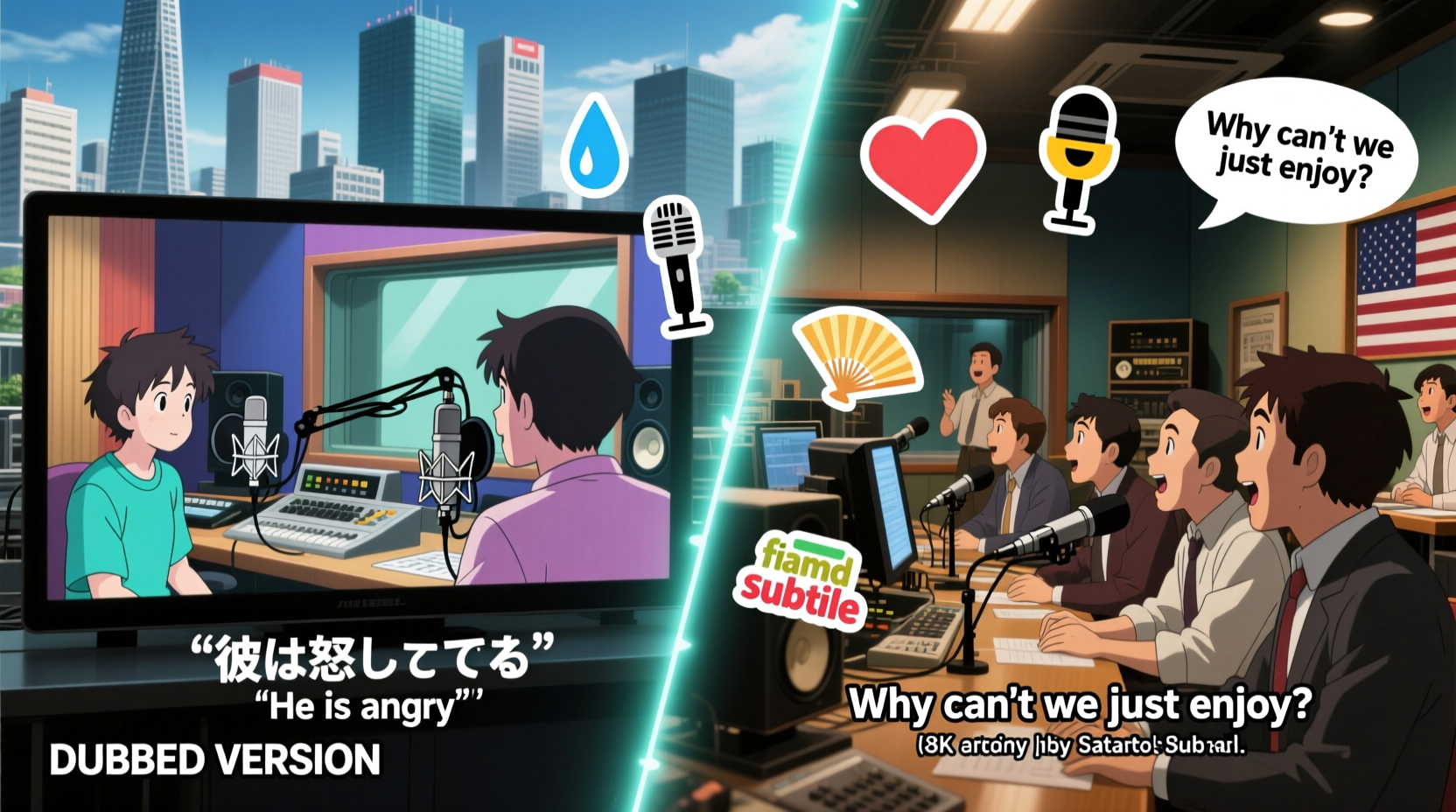
The earliest anime fans outside Japan had limited access to content. When shows like *Dragon Ball Z*, *Sailor Moon*, and *Pokémon* reached Western audiences in the late '90s and early 2000s, they were almost exclusively dubbed—often heavily edited for content and tone. These dubs prioritized marketability over fidelity, altering dialogue, music, and even character names. While they introduced millions to anime, purists criticized them as inauthentic.
As internet access expanded, fans discovered unedited versions with subtitles. Subbed anime offered the original Japanese audio, preserving vocal performances, cultural references, and tonal nuances. This created a cultural shift: being a \"sub watcher\" became synonymous with being a \"true fan,\" while dubs were often dismissed as watered-down products for children.
Over time, official dubs improved dramatically. Studios like Bang Zoom!, Funimation (now Crunchyroll), and NYAV Post began hiring skilled voice actors, retaining original scripts, and even syncing lip movements more accurately. Still, the stigma around dubs lingered, and many fans continued to view subbed content as inherently superior.
Cultural Authenticity vs. Accessibility
At the heart of the debate is a fundamental tension between cultural preservation and viewer convenience.
Subbed anime preserves the original performance—the emotional inflections, the pitch of a scream, the subtle hesitation in a confession. Japanese voice actors (seiyuu) are highly trained professionals whose work is deeply tied to the medium’s artistic expression. For many viewers, replacing that with English voices feels like losing part of the soul of the show.
“Hearing the original Japanese cast brings me closer to the creator’s intent. It’s not just about words—it’s about emotion, timing, and cultural context.” — Akari Tanaka, anime translator and lecturer at Tokyo University of Media
On the other hand, dubbed anime removes the cognitive load of reading while watching. This makes it far more accessible, especially for people with visual processing difficulties, dyslexia, or those who simply prefer passive consumption. Parents also favor dubs for younger viewers who can’t read quickly enough to follow subtitles.
Dubbing also allows anime to reach broader demographics. A well-produced dub can make a complex psychological thriller like *Death Note* or a delicate coming-of-age story like *Your Name* feel natural in English, helping it resonate with audiences who might otherwise dismiss anime as “too foreign.”
Technical and Artistic Trade-offs
Both formats come with inherent compromises. Understanding these helps explain why neither side will fully concede.
Subbed Pros:
- Preserved original voice performances
- Faithful translation of jokes, honorifics, and wordplay
- Greater availability—most series get subbed first
- No risk of poor voice casting or awkward script adaptation
Subbed Cons:
- Reading fatigue during fast-paced dialogue
- Limited accessibility for non-readers or multilingual households
- Translation quality varies—some subs sacrifice clarity for literal accuracy
Dubbed Pros:
- Hands-free viewing experience
- Better integration for background activities (cooking, exercising)
- Improved lip-sync technology in modern dubs
- Opportunity for localized humor that resonates culturally
Dubbed Cons:
- Voice actor mismatch (e.g., a young girl voiced by someone sounding too mature)
- Script alterations to fit mouth movements or cultural norms
- Delays in release—dubs often come months after subs
- Risk of “overacting” or exaggerated delivery common in older dubs
Comparison Table: Subbed vs Dubbed Anime
| Factor | Subbed | Dubbed |
|---|---|---|
| Authenticity | High – original voices and tone preserved | Variable – depends on script and casting |
| Accessibility | Low – requires reading ability and focus | High – ideal for multitasking or younger viewers |
| Release Speed | Fast – often weekly simulcasts | Slower – dubs take months to produce |
| Emotional Impact | Preserves original vocal nuance | Can enhance relatability with native-language delivery |
| Cultural Nuances | Better retention of honorifics and idioms | Often simplified or localized |
The Role of Language and Identity
The sub vs dub debate isn’t just about technical quality—it’s also about identity. For many fans, choosing subbed anime is a declaration of respect for Japanese culture. It signals dedication, patience, and a willingness to engage with something foreign on its own terms.
This mindset mirrors broader trends in media consumption. Similar debates exist in film (original language vs. dubbed cinema) and literature (reading translations vs. learning the source language). In each case, the choice reflects how viewers position themselves—as global citizens embracing difference, or as consumers seeking comfort and familiarity.
Conversely, dismissing dubs outright can come across as elitist. Not everyone has the time, energy, or ability to read subtitles for hours. Some viewers grew up with dubbed anime and have deep emotional connections to those versions. Telling them their experience is “less authentic” can feel invalidating.
A telling example emerged during the release of *Demon Slayer: Mugen Train*. The subbed version broke box office records, praised for its raw emotional intensity. Yet the dubbed version also performed exceptionally well, with fans noting how the English cast captured the urgency and despair of the characters. Both experiences were valid—but online discourse often framed them as mutually exclusive.
Mini Case Study: The Streaming Household
Take the case of the Rivera family in Austin, Texas. Maria, 38, prefers subbed anime and watches late at night after her kids are asleep. She values the authenticity and finds reading subtitles meditative. Her husband, Carlos, tries to watch with her but finds it hard to focus after a long day. He switches to the dubbed version and enjoys it just as much.
Their 10-year-old son, Mateo, only watches dubbed anime. He doesn’t know Japanese, and reading while keeping up with action scenes frustrates him. When Maria insists he “should watch the sub to really get it,” he loses interest entirely.
This scenario plays out in homes worldwide. One format doesn’t fit all. The real issue isn’t which is better—it’s whether fans can accept that others may need or want something different.
Modern Shifts and Industry Evolution
In recent years, the gap between sub and dub has narrowed significantly. Major studios now use the same directors, writers, and actors across both formats. Some dubs are recorded using the original animation timing, improving lip-sync accuracy. Services like Crunchyroll offer dual audio options, allowing viewers to switch seamlessly.
Moreover, globalization has changed audience expectations. Japanese creators increasingly anticipate international releases, sometimes even consulting with localization teams. This collaborative approach reduces the need for heavy edits and makes both sub and dub feel more cohesive.
Still, challenges remain. Budget constraints mean smaller titles often receive minimal dub attention, reinforcing negative perceptions. Meanwhile, machine-generated subtitles—while faster—are prone to errors, fueling arguments about translation quality.
Step-by-Step Guide: How to Decide Which Format Suits You
- Assess your viewing environment: Do you watch while doing other tasks? Dubs may be better for multitasking.
- Test both versions: Watch the first episode of a new series in both sub and dub. Take notes on emotional impact and clarity.
- Consider the genre: Fast-paced action or comedy with wordplay often works better subbed. Slice-of-life or drama may feel more natural dubbed.
- Evaluate accessibility needs: If reading causes strain, dubs are a practical choice.
- Reflect on intent: Are you studying Japanese? Appreciating cultural nuances? Then subbed may align better with your goals.
Frequently Asked Questions
Is one format more “correct” than the other?
Neither is objectively correct. Subbed anime preserves the original performance and intent, while dubbed anime offers accessibility and immersion in the viewer’s native language. The “best” format depends on personal preference, context, and purpose.
Do Japanese creators have a preference?
Many directors and voice actors express pride when their work is well-dubbed, but most agree the original Japanese version is primary. Some, like Makoto Shinkai (*Your Name*), have praised high-quality dubs for expanding their global reach.
Are dubs catching up in quality?
Yes. Over the past decade, dubbing quality has improved significantly. Modern dubs feature professional actors, faithful scripts, and better synchronization. However, inconsistencies remain, especially for less popular titles.
Tips for Navigating the Debate Respectfully
- Recognize that accessibility is a legitimate concern—not laziness.
- Acknowledge that high-quality dubs require immense skill and effort.
- Understand that loving a dubbed version doesn’t diminish one’s appreciation for the original.
- Encourage hybrid approaches: watch subbed for critical analysis, dubbed for rewatching.
Conclusion: Moving Beyond the War
The subbed vs dubbed debate persists because anime means so much to so many. It’s not just entertainment—it’s art, escape, community, and identity. When people feel their way of connecting with that is questioned, defensiveness follows.
But the future of anime lies not in division, but in inclusivity. The goal shouldn’t be to crown a winner, but to expand access and deepen understanding. Whether you press play on subtitles or lean back for a dub, what matters is that the story moves you.
Instead of gatekeeping, let’s celebrate the fact that anime now reaches bus drivers, teachers, parents, and students—all through formats that suit their lives. That’s not a loss of purity. It’s a victory for art.




 浙公网安备
33010002000092号
浙公网安备
33010002000092号 浙B2-20120091-4
Comments
No comments yet. Why don't you start the discussion?