
In an age where convenience and discovery are marketed as luxuries, subscription boxes have exploded in popularity. From curated skincare to gourmet snacks, niche hobbies to wardrobe refreshes, these monthly deliveries promise excitement, personalization, and time saved. But beneath the glossy packaging and surprise factor lies a growing question: Are they truly better than buying what you need—or want—on your own? More importantly, is the thrill of unboxing worth the accumulation of products that may go unused? For many, the answer isn’t simple. It depends on lifestyle, budget, values, and how one defines value.
This article breaks down the real costs and benefits of subscription boxes compared to individual purchasing. We’ll examine financial implications, psychological rewards, environmental impact, and long-term sustainability—not just for your wallet, but for your living space and peace of mind.
The Allure of the Unboxing Experience
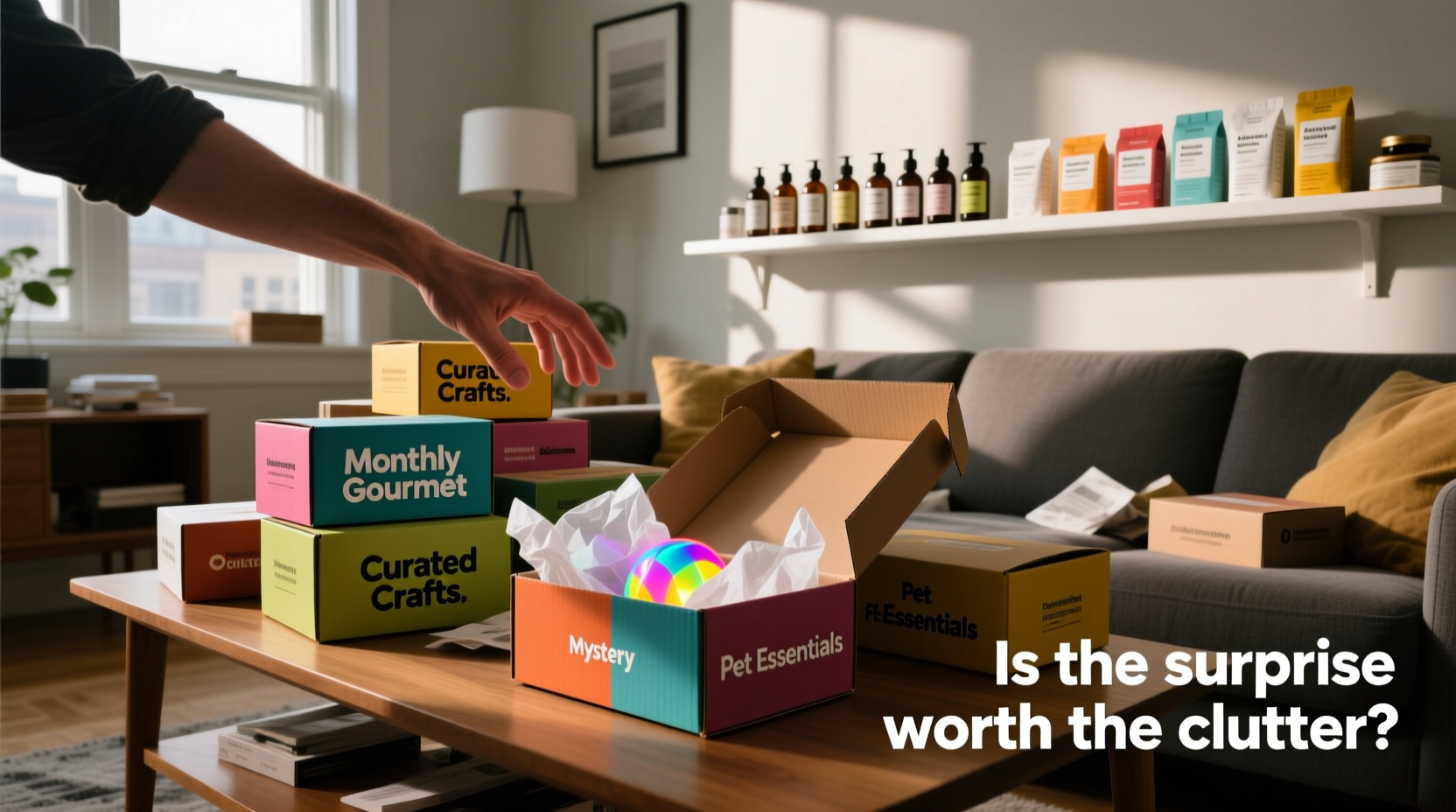
Subscription services thrive on anticipation. The model taps into behavioral psychology: delayed gratification, surprise reinforcement, and the dopamine hit of novelty. Receiving a box filled with unknown items every month mimics a modern-day treasure hunt. Brands like FabFitFun, Birchbox, and SnackCrate have mastered this emotional appeal, turning routine consumption into an event.
For some, the experience itself is the product. The ritual of opening the box, sharing unboxing videos online, or gifting items to friends adds layers of social and emotional value beyond the physical contents. This experiential aspect is difficult to replicate when buying individually, even if the same products could be purchased more cheaply at retail.
“The surprise element in subscription models activates reward centers in the brain similar to gambling—but in a socially acceptable form.” — Dr. Lena Torres, Behavioral Economist at MIT
Yet, while the initial excitement can be powerful, it often fades once the novelty wears off. What remains is not just memories, but tangible items—some useful, others forgotten in drawers or repackaged for resale.
Cost Analysis: Subscription vs Individual Purchase
One of the most common arguments in favor of subscription boxes is “value.” Marketers tout savings by claiming the retail value of included items exceeds the subscription price. But does this hold up under scrutiny?
Consider a beauty box priced at $30 per month, advertised as containing $120 worth of full-sized products. In reality, many items are travel-sized, discontinued lines, or lower-demand brands trying to gain exposure. The inflated retail value is often misleading.
| Factor | Subscription Box | Individual Purchase |
|---|---|---|
| Average Monthly Cost | $25–$50 (plus shipping) | Pay only when needed |
| Product Selection | Predetermined or algorithm-based | Fully customizable |
| Waste Potential | High (unused items) | Low (intentional purchases) |
| Convenience | Automatic delivery | Requires planning |
| Discovery Factor | High (new brands/products) | Low unless actively sought |
The table reveals a trade-off: subscriptions offer convenience and discovery at the cost of control and potential waste. Meanwhile, individual buying requires more effort but ensures relevance and reduces clutter.
The Hidden Cost of Clutter
Clutter isn’t just a messy shelf—it’s a cognitive burden. Research from Princeton University shows that disorganized environments reduce focus and increase stress. Every unused lip balm, mystery snack, or craft kit contributes to mental load, even if tucked away.
Subscription boxes amplify this issue through volume and unpredictability. Unlike targeted shopping, where purchases align with current needs, subscription items arrive regardless of timing or relevance. A skincare enthusiast might receive a night cream they already own. A coffee lover gets a flavor they dislike. Over time, these mismatches accumulate.
Moreover, the “sunk cost fallacy” kicks in: because money was spent, people feel obligated to keep items rather than discard them. This leads to storage challenges, especially in smaller homes. Some subscribers admit rotating boxes between closets or donating unopened ones—undermining both economic and environmental claims of sustainability.
Mini Case Study: Sarah’s Skincare Dilemma
Sarah, a 34-year-old graphic designer, subscribed to a premium beauty box for two years. At $45 per month, she spent $1,080 total. While she discovered two favorite serums, nearly half the products didn’t suit her skin type. She gifted some, donated others, and threw away expired samples. After evaluating her bathroom cabinet overflow, she canceled the service. “I loved the surprise,” she said, “but I realized I was paying $20 a month just for the fun of opening it. The rest was clutter I didn’t need.”
When Subscriptions Make Sense—and When They Don’t
Not all subscription models are equal. The key to determining value lies in alignment with personal habits and goals. Below is a checklist to help assess whether a subscription is right for you.
Subscription Suitability Checklist
- ✅ Do you consistently use most items from previous boxes?
- ✅ Are replacements hard to obtain locally or online?
- ✅ Does the service offer customization or preferences?
- ✅ Is the cost significantly lower than buying items separately?
- ✅ Do you lack time to research or shop regularly?
- ✅ Are you actively seeking new brands or variety?
If three or fewer apply, individual purchasing may serve you better. Subscriptions work best for essentials with predictable usage—like razors, diapers, or pet food—where auto-delivery prevents last-minute runs to the store. They also shine in niche markets where curation adds real expertise, such as rare teas, vinyl records, or craft supplies for dedicated hobbyists.
On the other hand, lifestyle boxes (e.g., seasonal decor, fashion accessories) often deliver low utility relative to cost. These cater to impulse and emotion rather than necessity, making them vulnerable to cancellation once the honeymoon phase ends.
Environmental and Ethical Considerations
Beyond personal clutter, subscription models raise broader concerns about sustainability. Each box generates packaging waste: cardboard, plastic inserts, air pillows, and branded materials. Even companies promoting “eco-friendly” boxes often rely on non-recyclable composites or excessive wrapping.
A 2023 study by the Sustainable Packaging Coalition found that subscription services produce up to 300% more packaging waste per product unit than traditional retail purchases. Additionally, global shipping logistics contribute to carbon emissions, especially when boxes originate from centralized warehouses.
Meanwhile, individual shopping allows for consolidated trips, bulk buying, and package-free options—especially with the rise of refill stations and zero-waste stores. Consumers who prioritize sustainability often find that intentional purchasing reduces both environmental impact and household clutter.
Step-by-Step Guide to Evaluating Your Subscription Habits
Before signing up—or renewing—follow this five-step process to make an informed decision:
- Track Past Usage: Review the last three boxes. List how many items you used, liked, gifted, or discarded.
- Calculate Real Cost: Divide total spent by number of usable items to find cost per kept product.
- Compare Alternatives: Check if the same items are available cheaper individually or in bundles.
- Assess Space Impact: Determine where new items will be stored. Is space already limited?
- Set a Trial End Date: Commit to a three-month review. Cancel if value doesn’t justify cost or clutter.
This method shifts the decision from emotional appeal to objective evaluation. It empowers consumers to separate genuine utility from marketing hype.
FAQ
Can I pause or skip a subscription box if I’m traveling or don’t need it?
Most reputable services allow pausing or skipping months, usually through account settings. However, some require advance notice (e.g., 7–10 days before billing). Always check the policy before subscribing.
Do subscription boxes really save time?
They can—if you’re receiving essential, frequently used items. For discretionary boxes (e.g., books, snacks), time savings are negligible unless you spend hours researching new products. In many cases, the time spent managing unwanted items offsets any initial convenience.
Are there eco-friendly subscription options?
Yes, though they’re still limited. Some companies use recyclable materials, partner with carbon-offset programs, or offer returnable packaging. Look for certifications like FSC (paper), B Corp status, or transparent sustainability reports. Still, the most sustainable option remains buying less and choosing reusables.
Conclusion: Weighing Surprise Against Sustainability
The debate between subscription boxes and individual purchases isn’t about which is universally better—it’s about alignment with your values. For those who cherish discovery, enjoy rituals, and have the space and budget to absorb occasional waste, subscriptions can enhance life in meaningful ways. The surprise is, for them, genuinely worth it.
But for others—those prioritizing minimalism, financial efficiency, or environmental responsibility—the clutter and hidden costs outweigh the fleeting joy of unboxing. Buying individually offers precision, intentionality, and freedom from obligation. It transforms consumption from passive receipt to active choice.
The most empowered consumers don’t reject subscriptions outright, nor do they sign up impulsively. They evaluate each service with clear criteria: usage, cost, space, and long-term satisfaction. They cancel without guilt and subscribe with purpose.
“Mindful consumption isn’t about buying less—it’s about buying right.” — Maya Chen, Author of *The Intentional Home*
If you’re unsure where you stand, start small. Try one box as a trial. Track what you use, how you feel, and what accumulates. Let real data—not marketing slogans—guide your next move.




 浙公网安备
33010002000092号
浙公网安备
33010002000092号 浙B2-20120091-4
Comments
No comments yet. Why don't you start the discussion?