
When it comes to protecting your skin from harmful UV rays, sunscreen is non-negotiable. But with so many formulations available—especially sticks and lotions—choosing the right one for facial use can be confusing. One of the most critical factors in effective sun protection isn’t just SPF strength or ingredients; it’s how evenly the product is applied. Uneven coverage leaves areas vulnerable to sun damage, premature aging, and even skin cancer. So, between a sunscreen stick and a lotion, which delivers more consistent, full-coverage protection on the face?
This question matters not just for beach days but for daily wear. The face receives more cumulative sun exposure than any other part of the body, making reliable, uniform coverage essential. To answer this thoroughly, we’ll examine texture, ease of application, adherence to facial contours, user behavior, and expert-backed findings.
Understanding Facial Sun Exposure and Coverage Needs
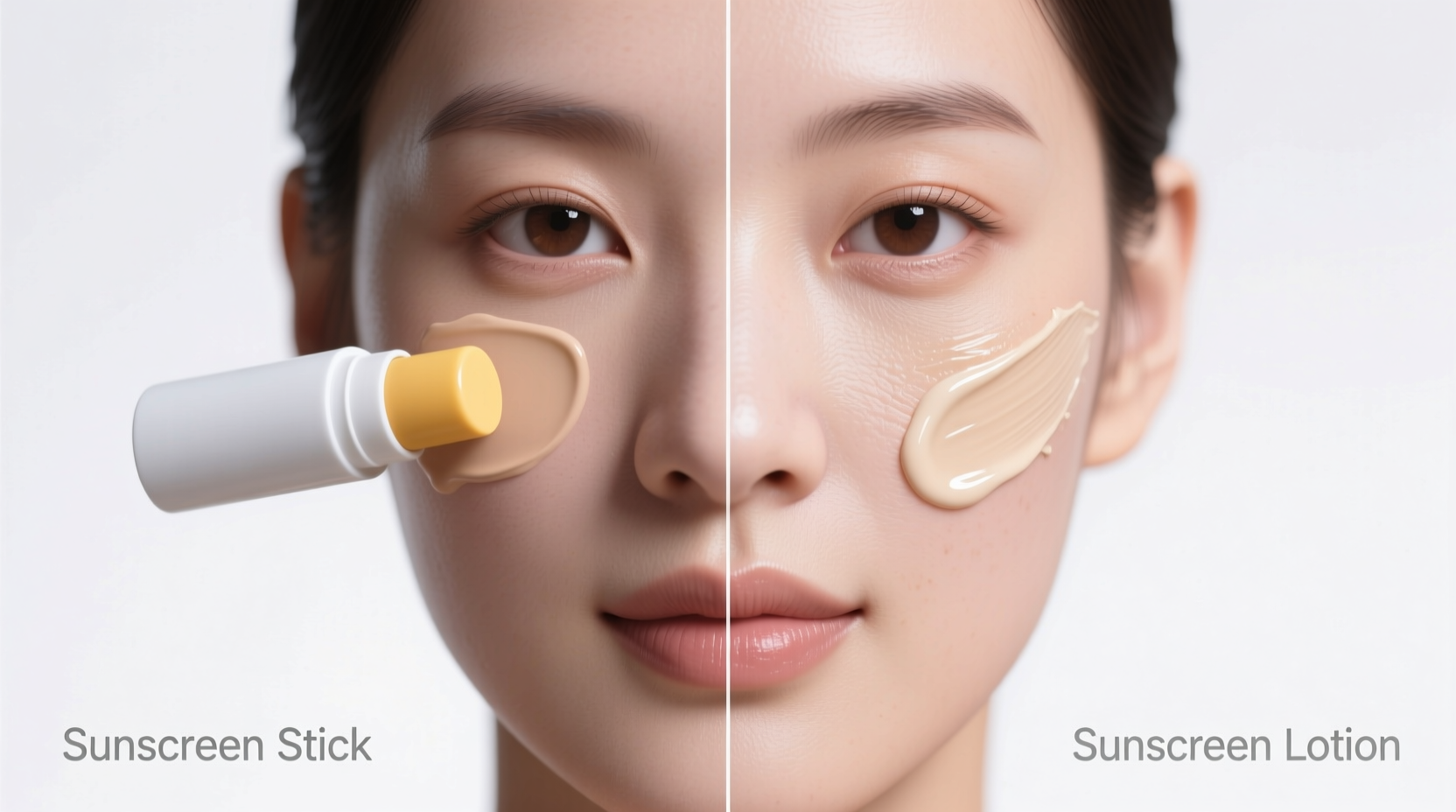
The face is uniquely shaped, with curves, recesses, and protrusions—nose, cheekbones, under-eyes, forehead, jawline—that challenge even the most careful application. Sunscreen must reach all zones, including often-missed spots like the hairline, sides of the nose, ears, and around the lips. Dermatologists consistently find that people apply less than half the recommended amount of sunscreen, especially on the face, leading to patchy protection.
The American Academy of Dermatology (AAD) recommends using about 1/4 teaspoon (approximately 1.25 mL) of sunscreen for the face alone. This amount ensures a uniform layer that meets the labeled SPF protection. However, studies show most users apply only 25–50% of that volume, significantly reducing effectiveness regardless of formulation.
Given these challenges, the choice between a stick and a lotion becomes more than personal preference—it's about which format supports better habits and more complete coverage.
How Sunscreen Sticks Work: Pros and Limitations
Sunscreen sticks are solid formulations, typically wax-based, designed for targeted, portable application. They’re popular for touch-ups, travel, and use around the eyes due to their precision and low mess.
Advantages:
- Precision targeting: Ideal for small areas like under the eyes, nose creases, and brow bones.
- No dripping or running: Less likely to get into eyes during sweating or outdoor activity.
- Travel-friendly: TSA-compliant and leak-proof, making them convenient for reapplication on the go.
- Clean hands: Minimal residue compared to lotions, appealing for makeup wearers.
However, these benefits come at a cost when it comes to even facial coverage. Because sticks deposit product in concentrated lines, they require significant blending—often with fingers—to avoid streaks or gaps. Without thorough rubbing, coverage remains spotty, especially across larger surfaces like cheeks and forehead.
A 2021 study published in the Journal of the American Academy of Dermatology found that participants using sunscreen sticks applied significantly less product overall and missed key areas such as the temples and jawline more frequently than those using lotions. The researchers concluded that while sticks are useful for spot application, they are less reliable for full-face protection unless used with extra care.
Lotion Sunscreens: Why They Lead in Uniform Application
Lotion-based sunscreens, whether cream or fluid, offer a distinct advantage: they spread easily and evenly across the skin. Their liquid-to-creamy consistency allows for smooth distribution, enabling users to cover large surface areas quickly and uniformly.
When applied correctly—using enough product and spreading it in thin, overlapping layers—lotions create a continuous film that conforms to facial topography. This is particularly important for achieving the SPF listed on the label, which is tested under standardized conditions requiring even, sufficient application.
Additionally, lotions encourage tactile awareness. As you spread the product with your fingers, you're more likely to notice missed spots or thin patches. Many facial sunscreens now come in lightweight, non-greasy formulas that absorb quickly, making them ideal under makeup or for daily urban wear.
“Lotions allow for better control over the thickness and spread of sunscreen. When patients tell me they use sticks ‘for convenience,’ I remind them that skipping coverage isn’t worth the trade-off.” — Dr. Lena Patel, Board-Certified Dermatologist
That said, lotions aren’t perfect. They can feel greasy if over-applied, may pill under makeup, and require clean hands or tools for hygienic use. Some users also report difficulty applying lotions on-the-go without access to water or wipes.
Direct Comparison: Stick vs Lotion for Facial Coverage
To clarify the differences, here’s a side-by-side comparison based on coverage performance, usability, and dermatological recommendations:
| Feature | Sunscreen Stick | Lotion Sunscreen |
|---|---|---|
| Evenness of Coverage | Moderate – requires heavy blending; prone to streaks | High – spreads uniformly with proper technique |
| Amount Applied | Often insufficient due to perceived saturation | Easier to estimate and distribute 1/4 tsp |
| Facial Contour Adherence | Poor in recessed areas without manual blending | Excellent – flows into curves naturally |
| Reapplication Ease | High – convenient over makeup | Moderate – may disrupt makeup; needs blotting |
| SPF Accuracy in Real Use | Lower – inconsistent layer thickness | Higher – closer to lab-tested conditions |
| Best For | Touch-ups, sensitive eye area, travel | Daily full-face protection, high-exposure days |
The data suggests that while sunscreen sticks have niche advantages, lotions are superior for delivering the kind of even, comprehensive facial coverage necessary for true UV defense.
Real-World Case: Morning Routine Missteps
Consider Sarah, a 34-year-old marketing professional who commutes daily and spends time outdoors during lunch breaks. She uses a mineral sunscreen stick because it doesn’t disturb her makeup and fits in her purse. She applies it quickly each morning, swiping once across each cheek, forehead, and nose.
After developing hyperpigmentation along her hairline and upper lip—areas she later realized were inconsistently covered—she consulted a dermatologist. A UV photography session revealed significant unprotected zones, particularly where the stick hadn’t been blended. The doctor advised switching to a lotion for morning use and reserving the stick only for midday reapplication over makeup.
Within three months of changing her routine, Sarah noticed fewer new dark spots and improved skin tone evenness. Her experience reflects a common pattern: convenience-driven habits compromising protection.
Step-by-Step Guide to Achieving Even Facial Sunscreen Coverage
Regardless of your preferred format, technique matters more than product type. Follow this proven method to ensure maximum, even protection:
- Wash and dry your face. Apply sunscreen to clean, slightly moisturized skin for optimal adhesion.
- Measure the right amount. Use 1/4 teaspoon (or two finger lengths for lotions) to cover face and neck.
- Dot before spreading. Place small amounts on forehead, cheeks, nose, chin, and neck to prevent missing spots.
- Spread outward in thin layers. Use fingertips in gentle patting and circular motions—don’t rub harshly.
- Don’t forget the edges. Extend coverage to hairline, behind ears, and along the jaw. These are common blind spots.
- Wait before makeup. Allow 2–3 minutes for chemical sunscreens to absorb; mineral ones can be set immediately.
- Reapply every two hours if exposed. Use a stick or powder for touch-ups over makeup without removing foundation.
Expert Recommendations and Common Myths
Many believe that higher SPF compensates for poor application. That’s false. An SPF 50 sunscreen applied too thinly may perform like SPF 10. Similarly, some think tinted sunscreens provide better coverage because they’re visible—but pigment doesn’t guarantee UV filter distribution.
Dr. Naomi Chen, a clinical dermatologist at Stanford Health Care, emphasizes behavioral factors: “The best sunscreen is the one you use correctly and consistently. But if you’re choosing between formats for primary protection, lotions give you a structural advantage in achieving that consistency.”
She also warns against relying solely on makeup with SPF. Most people don’t apply enough foundation to achieve labeled protection, and coverage is rarely even. Makeup should complement, not replace, dedicated sunscreen.
Frequently Asked Questions
Can I use a sunscreen stick as my primary facial sunscreen?
You can, but only if you apply it meticulously—multiple passes per area and thorough fingertip blending. Most users fall short, increasing risk of uneven protection. Dermatologists recommend lotions for first-layer coverage and sticks for reapplication.
Do sunscreen sticks clog pores?
Some can, especially if they contain comedogenic waxes like beeswax or lanolin. Look for “non-comedogenic” labels and avoid heavy formulations if you’re acne-prone. Mineral oil and silicones in moderate amounts are generally safe.
How do I reapply sunscreen over makeup without ruining it?
Use a sunscreen stick or a setting spray with SPF. Gently press (don’t swipe aggressively) the stick over key areas and blend lightly with fingertips or a beauty sponge. Alternatively, use a mineral sunscreen powder for quick top-ups.
Final Verdict: Lotion Wins for Even Facial Coverage
While sunscreen sticks offer undeniable convenience and precision, they fall short in delivering the broad, even coverage required for full facial protection. Their tendency to leave streaks, coupled with user under-application, makes them better suited for targeted use or reapplication rather than primary defense.
Lotion sunscreens, when applied with attention to amount and technique, provide superior uniformity. They conform to facial contours, allow for better volume control, and align more closely with real-world SPF testing standards. For daily, all-over protection—especially during prolonged sun exposure—lotion remains the gold standard.
The smart approach? Combine both. Start your day with a well-applied facial sunscreen lotion to build a solid protective base. Keep a stick in your bag for easy, mess-free reapplication during the day, especially over makeup. This hybrid strategy leverages the strengths of both formats while minimizing their weaknesses.
“The face is too valuable to cut corners on sun protection. If you only remember one thing: cover every inch, not just the obvious parts.” — Dr. Alicia Torres, Skin Cancer Prevention Specialist
Take Action Today for Healthier Skin Tomorrow
Your daily sunscreen choice shapes your skin’s future. Don’t let convenience compromise coverage. Reassess how you apply sunscreen—measure the amount, refine your technique, and prioritize even distribution over speed. Whether you switch to a lotion or optimize your stick use, make sure no area is left behind.




 浙公网安备
33010002000092号
浙公网安备
33010002000092号 浙B2-20120091-4
Comments
No comments yet. Why don't you start the discussion?