
Applying sunscreen under makeup is non-negotiable for skin health, but many people avoid it due to concerns about pilling, greasiness, or makeup breakdown. The truth is, with the right products and techniques, you can wear SPF daily and still achieve a smooth, matte, long-lasting base. Sun damage contributes significantly to premature aging and increases the risk of skin cancer—so skipping protection for the sake of appearance isn’t worth the trade-off. This guide breaks down exactly how to layer sunscreen under makeup seamlessly, avoiding common pitfalls like pilling (when product balls up) and unwanted shine.
Why Sunscreen Under Makeup Matters
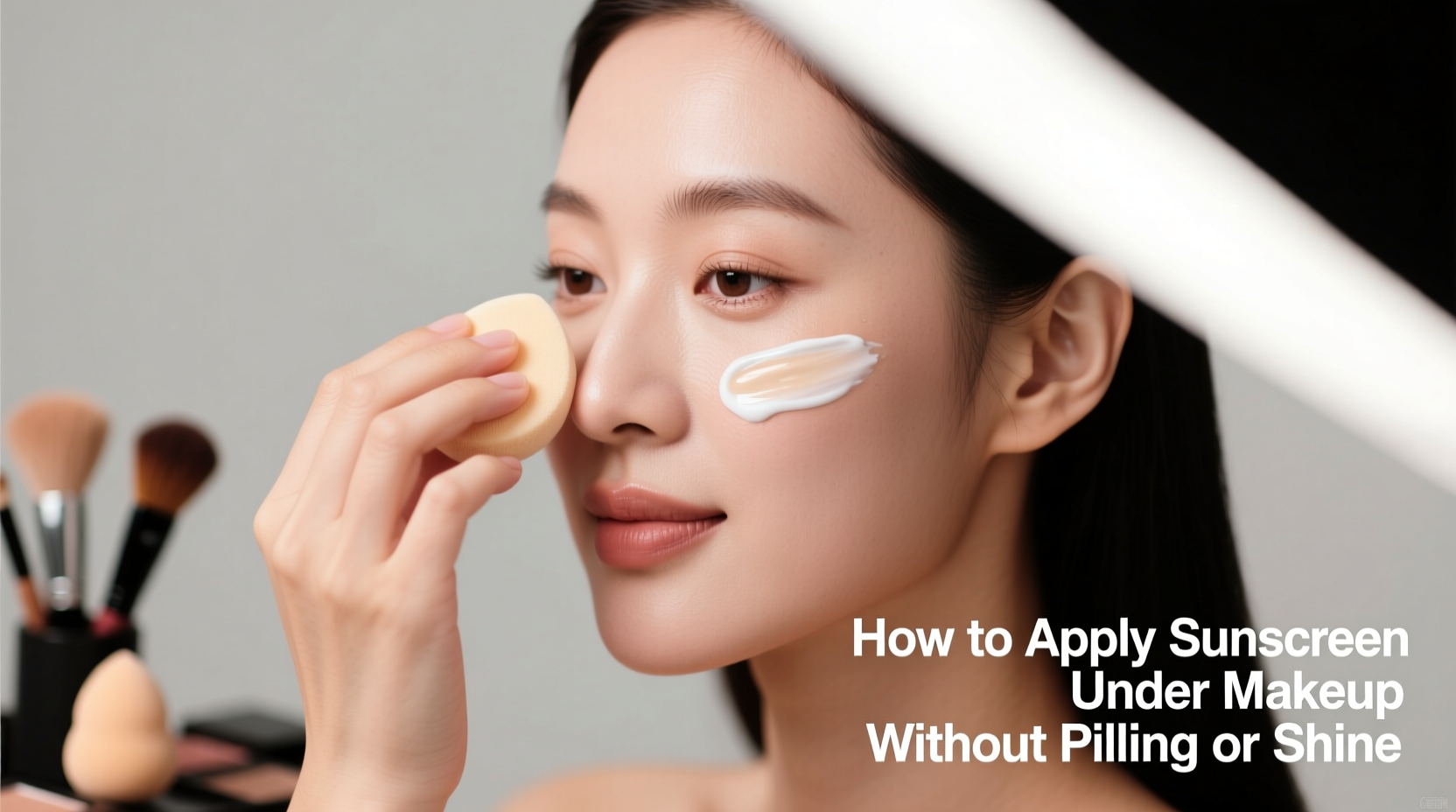
Dermatologists consistently emphasize that daily sun protection is essential—even indoors or on cloudy days. UVA rays penetrate glass and contribute to photoaging, while UVB rays cause sunburns. Both types increase the risk of skin damage and hyperpigmentation. Skipping sunscreen because you’re wearing foundation or tinted moisturizer with SPF is not enough; most people don’t apply enough product to reach the labeled protection level.
According to Dr. Leslie Baumann, a board-certified dermatologist and author of *The Skin Type Solution*, “SPF in makeup rarely provides adequate coverage unless you use six times the normal amount of foundation. That’s simply not practical. A dedicated sunscreen applied correctly is your best defense.”
“Daily sunscreen use reduces signs of aging by 24% over four years compared to those who skip it.” — Australian Study, Annals of Internal Medicine (2013)
The challenge arises when trying to fit sunscreen into an already packed morning routine. If your sunscreen pills, feels sticky, or makes your makeup slide off, it’s easy to abandon the habit. But the solution lies not in skipping SPF, but in refining your application method and selecting compatible products.
Choosing the Right Sunscreen for Under Makeup
Not all sunscreens are created equal when it comes to makeup compatibility. The key is finding a formula that absorbs quickly, leaves no white cast, and doesn’t interfere with your foundation. Here’s what to look for:
- Lightweight texture: Opt for gel-cream, fluid, or serum-based sunscreens instead of thick creams.
- Non-comedogenic: Won’t clog pores, especially important if you have oily or acne-prone skin.
- Matte or dry-touch finish: Reduces shine and creates a better canvas for makeup.
- Chemical or hybrid filters: Often feel lighter than mineral (zinc oxide/titanium dioxide) options, though newer mineral formulas are improving.
- No heavy silicones or oils: Ingredients like dimethicone in excess can cause pilling when layered with silicone-based makeup.
Best Sunscreen Types for Makeup Wearers
| Type | Pros | Cons | Best For |
|---|---|---|---|
| Chemical (e.g., avobenzone, octinoxate) | Invisible finish, lightweight, blends easily | Can sting sensitive skin; needs 20 mins to activate | Oily, combination, normal skin |
| Mineral (zinc oxide, titanium dioxide) | Immediate protection, less irritating | Can leave white cast; thicker texture | Sensitive, reactive, or rosacea-prone skin |
| Hybrid (chemical + mineral) | Balances protection and wearability | May still contain comedogenic ingredients | All skin types, especially if seeking broad-spectrum comfort |
| Tinted Mineral | Evens tone, reduces white cast | Limited shade range; can oxidize | Those skipping moisturizer or color corrector |
For under makeup, prioritize sunscreens labeled “makeup-friendly,” “dry-touch,” or “invisible finish.” Brands like Supergoop! Unseen Sunscreen, La Roche-Posay Anthelios Light Fluid, and ISDIN Fusion Water offer textures designed specifically for layering.
Step-by-Step: How to Apply Sunscreen Without Pilling or Shine
Pilling occurs when active ingredients, emulsifiers, or silicones in different products repel each other. It often happens when too many layers are applied too quickly or incompatible formulations are mixed. Follow this sequence to prevent pilling and control shine:
- Cleanse and tone: Start with a gentle cleanser and hydrating toner to prep the skin. Avoid alcohol-heavy toners that can disrupt absorption.
- Apply treatment serums: Use vitamin C, hyaluronic acid, or niacinamide first. Allow 60 seconds to absorb.
- Moisturize lightly: Even oily skin benefits from hydration. Choose an oil-free, fast-absorbing moisturizer. Skip heavy creams if your sunscreen is moisturizing.
- Apply sunscreen generously: Use at least 1/4 teaspoon for the face. Dot evenly and blend gently—don’t rub aggressively.
- Wait before makeup: Allow 3–5 minutes for the sunscreen to fully absorb. This is critical. Rushing leads to pilling and sliding.
- Prime if needed: Use a mattifying or hydrating primer only if necessary. Avoid silicone-heavy primers if your sunscreen already contains dimethicone.
- Apply foundation: Use a damp sponge or brush for even blending. Avoid double-dipping products with conflicting bases.
Avoiding Common Layering Mistakes
The order of operations matters, but so does ingredient compatibility. Here are frequent errors and how to fix them:
- Mistake: Applying sunscreen immediately after a silicone-heavy serum.
Solution: Let each layer set. Silicones can create a barrier that prevents proper adhesion. - Mistake: Using a water-resistant sunscreen under makeup.
Solution: These formulas often contain film-formers that resist blending. Reserve them for outdoor activities. - Mistake: Mixing brands without testing.
Solution: Do a patch test on your jawline. Observe for 10 minutes after applying foundation.
Real-Life Example: Fixing a Pilling Routine
Consider Maria, a 32-year-old marketing executive with combination skin. She wore a popular vitamin C serum followed by a rich moisturizer, then a mineral sunscreen, and finally a silicone-based liquid foundation. By mid-morning, her T-zone was shiny, and tiny white balls formed around her nose and chin—classic pilling.
After consulting a dermatologist, she revised her routine:
- Switched to a lightweight gel moisturizer
- Changed to a chemical sunscreen with a velvet finish
- Allowed 4 full minutes between sunscreen and makeup
- Used a cream-to-powder foundation instead of liquid
Result? No more pilling, reduced shine, and makeup that lasted until evening. Her skin also showed fewer breakouts and improved texture over time thanks to consistent SPF use.
“Pilling is rarely about one bad product—it’s about layer incompatibility. Adjust timing and formulation, and the issue usually resolves.” — Dr. Ranella Hirsch, Board-Certified Dermatologist
Checklist: Flawless Sunscreen & Makeup Application
Use this checklist every morning to ensure optimal results:
- ✅ Cleanse with a pH-balanced face wash
- ✅ Apply treatment serums and wait 60 seconds
- ✅ Use a light, non-greasy moisturizer (optional for oily skin)
- ✅ Apply sunscreen with at least SPF 30 using proper amount (1/4 tsp)
- ✅ Wait 3–5 minutes until fully absorbed (no stickiness)
- ✅ Optional: Apply a compatible primer (matte or hydrating)
- ✅ Apply makeup using gentle patting motions
- ✅ Blot excess shine with tissue paper, not powder (to avoid buildup)
Frequently Asked Questions
Can I mix sunscreen with my foundation to save time?
No. Mixing drastically reduces SPF effectiveness because you won’t apply enough product to achieve the labeled protection. It also alters the stability of both formulas, potentially causing separation or irritation. Always apply sunscreen separately and underneath.
What if my sunscreen says ‘wait 15 minutes’ before sun exposure—does that mean I can’t wear makeup?
No. Chemical sunscreens need about 15–20 minutes to bind with the skin to become effective, but you can apply makeup after the sunscreen has dried (about 3–5 minutes). Just ensure you apply it before going outside. For immediate protection, choose a mineral or hybrid sunscreen.
How do I touch up SPF during the day without ruining my makeup?
Use a setting spray with SPF (like Colorescience Total Protection Face Shield) or a mineral powder sunscreen (such as EltaMD UV Clear Powder). Gently press—not swipe—to avoid disturbing makeup. Avoid reapplying liquid sunscreen over makeup; it will likely pill.
Final Tips for Long-Term Success
Building a sustainable skincare-makeup routine means balancing efficacy with ease. Sunscreen shouldn’t be the step you dread. Instead, treat it as the foundation of healthy, resilient skin. Over time, consistent UV protection leads to fewer dark spots, reduced fine lines, and a more even complexion.
If you struggle with shine, consider blotting papers and translucent powders as midday fixes—not substitutes for proper morning prep. And remember: no makeup looks good on damaged skin. Prioritizing protection enhances your overall appearance far more than any concealer or highlighter ever could.
Experiment with two or three sunscreen options to find your perfect match. Keep notes on texture, finish, and how it interacts with your current makeup. Once you land on the right one, stick with it—your skin will thank you for decades to come.




 浙公网安备
33010002000092号
浙公网安备
33010002000092号 浙B2-20120091-4
Comments
No comments yet. Why don't you start the discussion?