
The Super Why Alphabet Parade is more than just a catchy song—it's a powerful educational tool that blends music, storytelling, and phonics to support early childhood literacy. Designed as part of the acclaimed PBS Kids series *Super Why!*, this sing-along segment captivates young learners with vibrant characters, rhythmic repetition, and interactive letter recognition. For parents, caregivers, and educators seeking engaging ways to teach the alphabet, the Alphabet Parade offers a research-backed method that turns foundational skills into joyful experiences.
Children learn best when they’re having fun. The moment letters become characters in a musical adventure, abstract symbols transform into familiar friends. This article explores how the Super Why Alphabet Parade works, why it’s effective, and how you can maximize its benefits in daily learning routines.
How the Alphabet Parade Supports Early Literacy
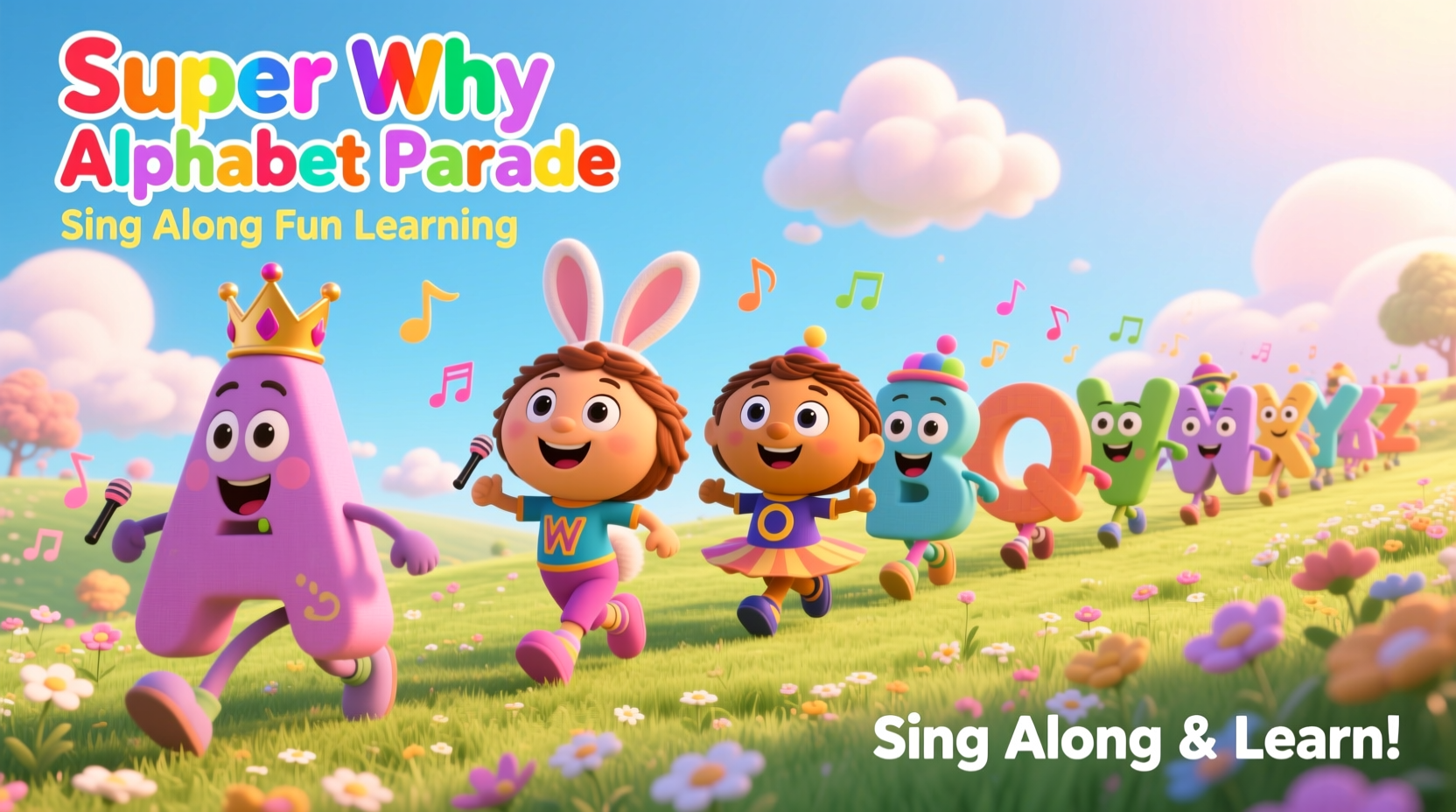
The Alphabet Parade sequence features Whyatt, Red Riding Hood, Princess Pea, and Woofster marching through a colorful town, each introducing a letter of the alphabet in order. Set to an upbeat tune, the parade uses alliteration, visual cues, and character voices to reinforce letter names and sounds. Unlike passive viewing, the format encourages call-and-response participation—children are prompted to sing, shout, and move along with the characters.
Research consistently shows that multisensory learning—engaging sight, sound, and movement—enhances memory retention in young children. The Alphabet Parade leverages this principle by combining:
- Auditory processing: Clear pronunciation and melodic rhythm help children distinguish phonemes.
- Visual association: Each letter appears in bold, animated form alongside related imagery (e.g., “A” with an apple).
- Kinesthetic engagement: Dance moves and gestures mimic letter shapes or actions linked to vocabulary.
This layered approach aligns with the principles of emergent literacy, which emphasize exposure to print concepts, phonological awareness, and oral language development long before formal reading begins.
Maximizing Learning Through Active Participation
Passive screen time has limited educational value. The real power of the Alphabet Parade emerges when adults turn it into an interactive experience. Simply watching isn’t enough—children benefit most when guided to respond, predict, and apply what they’ve learned.
Here’s how to make the sing-along truly impactful:
- Sing together: Your voice models correct pronunciation and builds confidence. Don’t worry about pitch—enthusiasm matters more.
- Add motions: Create simple gestures for each letter (e.g., arms forming a “V” for “Victor”) to strengthen motor-memory links.
- Pause and play: Stop the video frequently to quiz: “What sound does ‘B’ make?” or “Can you think of another word that starts with ‘M’?”
- Extend beyond the screen: After the song, draw the letters together or go on a “letter hunt” around the house.
Active involvement not only reinforces learning but also strengthens caregiver-child bonds through shared play and attention.
Key Benefits of Music-Based Alphabet Instruction
Musical formats like the Alphabet Parade outperform rote memorization because they tap into natural cognitive rhythms. Songs provide structure, repetition, and emotional resonance—all critical for memory encoding in young brains.
| Benefit | Description | Real-World Impact |
|---|---|---|
| Phonemic Awareness | Children identify individual sounds in words, a predictor of future reading success. | A child hears “C says /k/” and recognizes that “cat” and “cookie” start with the same sound. |
| Sequencing Skills | Learning letters in order supports pattern recognition and memory organization. | Child recalls that “D” comes after “C” even without seeing the full alphabet. |
| Vocabulary Expansion | Each letter introduces new words (e.g., “J is for jump”), building expressive language. | Child begins using words like “magnificent” or “zipper” in conversation. |
| Confidence & Engagement | Success in singing and recalling boosts self-esteem and motivation to learn. | Child requests to watch the parade repeatedly, showing intrinsic interest in literacy. |
“Music activates multiple areas of the brain simultaneously, making it one of the most effective tools for early learning.” — Dr. Elena Torres, Cognitive Development Researcher, University of Michigan
Mini Case Study: Turning Reluctant Learners into Enthusiastic Readers
Four-year-old Maya showed little interest in books or letters. Her parents tried flashcards and workbooks, but she would quickly lose focus. Then, her preschool teacher introduced the Super Why Alphabet Parade during circle time. At first, Maya watched quietly, but within days, she began humming the tune and shouting out letters when they appeared.
Her parents started playing the video during morning routines. They added a game: every time a letter came up, Maya had to jump if it was a vowel or clap if it was a consonant. Within three weeks, she could recite the entire alphabet in order and identify more than 15 letters by sight. More importantly, she asked to “read” Super Why books at bedtime, pretending to sound out words using the strategies from the show.
This transformation wasn’t due to passive exposure alone—it was the combination of consistent repetition, playful interaction, and emotional connection that made the difference.
Step-by-Step Guide: Creating a Sing-Along Learning Routine
To get the most out of the Super Why Alphabet Parade, follow this five-day plan designed for home or classroom use:
- Day 1 – First Exposure: Play the video once straight through. Let children observe without interruption. Ask afterward: “Which character did you like best?”
- Day 2 – Focus on Sounds: Replay and pause at each letter. Emphasize the phonetic sound (“S says /s/ like snake!”). Have kids repeat the sound three times.
- Day 3 – Add Movement: Assign a gesture to 5–10 letters (e.g., zig-zag arm motion for “Z”). Practice along with the video.
- Day 4 – Prediction Game: Mute the audio briefly before a letter appears. Ask: “Who comes next?” Encourage guesses based on alphabetical order.
- Day 5 – Off-Screen Application: Draw giant letters on paper. Sing the song while pointing to each one. Hide letters around the room for a scavenger hunt.
Repeat the cycle weekly, gradually increasing independence. By week three, many children can sing large portions from memory.
Frequently Asked Questions
How often should my child watch the Alphabet Parade?
For optimal results, limit viewing to 1–2 times per day. Short, repeated exposures are more effective than long sessions. Pair each viewing with a hands-on activity to deepen understanding.
My child knows the alphabet already. Is the parade still useful?
Absolutely. Even advanced learners benefit from reinforcing letter-sound correspondence and fluency. Use the parade to introduce blending practice: “B says /b/. What word do we get if we add /at/?”
Are there printable resources to go with the song?
Yes. PBS Kids offers free downloadable activities, including coloring pages of each Super Reader holding their letter, matching games, and cut-out parades. These extend learning offline and support fine motor development.
Conclusion: Make Learning Irresistible
The Super Why Alphabet Parade proves that foundational literacy doesn’t have to be dull or drill-based. When learning feels like play, children don’t just memorize—they internalize, explore, and own their knowledge. By integrating music, story, and interaction, this sing-along becomes a gateway to reading confidence.
Every child deserves to experience the joy of discovery. Whether you're a parent looking for morning routine ideas or an educator planning a literacy unit, the Alphabet Parade offers a proven, accessible, and delightful starting point. Bring the characters to life, dance with the letters, and watch as your young learner steps confidently into the world of reading.




 浙公网安备
33010002000092号
浙公网安备
33010002000092号 浙B2-20120091-4
Comments
No comments yet. Why don't you start the discussion?