
The Nintendo Switch has redefined portable gaming since its 2017 debut, offering a seamless blend of home console performance and handheld flexibility. With rumors swirling about a next-generation model—commonly referred to as the \"Switch 2\"—and the current Switch OLED still on shelves, many gamers face a critical decision: upgrade now or hold out for what’s next? This isn’t just about hardware; it’s about timing, budget, and how you play.
Nintendo hasn’t officially confirmed the Switch 2, but leaks, industry reports, and supply chain data suggest a 2025 launch window. Meanwhile, the Switch OLED remains Nintendo’s flagship hybrid system. So where does that leave consumers today? Whether you're a parent buying a first console, a returning player, or a dedicated fan, understanding the trade-offs between waiting and buying now is essential.
Understanding the Current Options: Switch OLED vs Rumored Switch 2 Specs
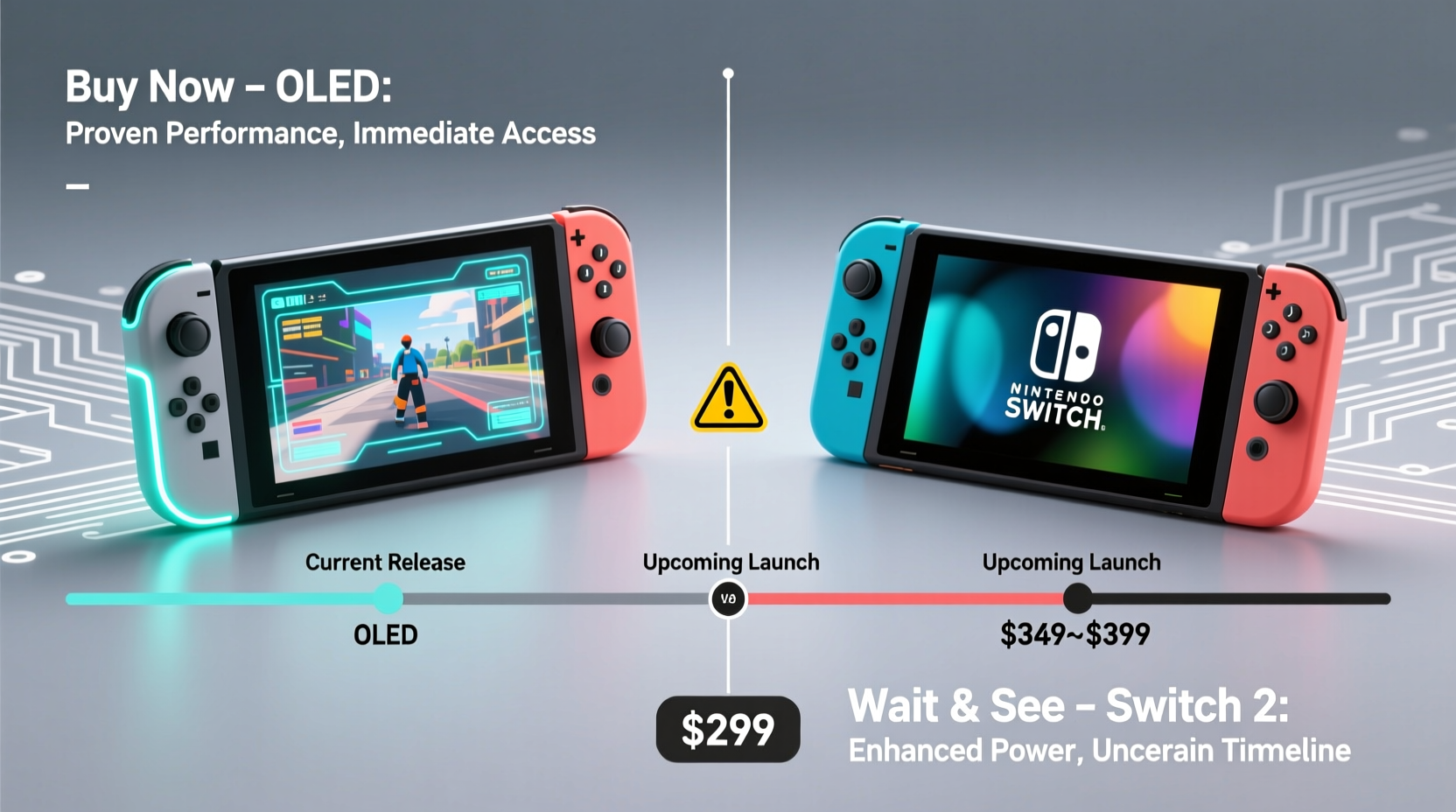
The Switch OLED, released in 2021, improved upon the original model with a brighter 7-inch OLED screen, enhanced audio, increased internal storage (64GB), and a redesigned dock with a wired LAN port. It plays all existing Switch games and supports tabletop mode, TV output, and local multiplayer. Performance-wise, however, it’s identical to the original Switch—same NVIDIA Tegra X1 chip, same 720p handheld resolution, same 30–60fps frame rates depending on the title.
In contrast, the rumored Switch 2—expected under codenames like “Aula” or “NX”—is believed to represent a full generational leap. Based on credible reports from Bloomberg, The Information, and analysts like Daniel Ahmad, here’s what we might expect:
| Feature | Switch OLED (Current) | Switch 2 (Rumored) |
|---|---|---|
| Release Year | 2021 | 2025 (expected) |
| Display | 7\" OLED, 720p | 7.9\" or 8\" OLED, up to 1080p |
| Processor | NVIDIA Tegra X1 (2015 architecture) | Custom NVIDIA Ampere or Ada Lovelace GPU, 2024–2025 chipset |
| Resolution (Handheld) | 720p max | Up to 1080p |
| Resolution (Docked) | 1080p | Up to 4K HDR support |
| Storage | 64GB (expandable via microSD) | 128GB+ expected |
| Backward Compatibility | Full | Expected, but not guaranteed |
| Launch Titles | Zelda: Tears of the Kingdom, Mario Kart 8 Deluxe | New IPs, potential sequels to Breath of the Wild, Splatoon, etc. |
The most significant upgrades appear to be graphical fidelity, processing power, and display quality. If true, the Switch 2 could support more complex open worlds, higher frame rates, ray tracing, and richer textures—features increasingly standard in modern gaming.
When Waiting Makes Sense: Scenarios Where You Should Hold Off
Waiting for the Switch 2 isn’t just about better graphics—it’s about future-proofing your investment. For certain players, delaying a purchase is the smarter long-term move.
Consider holding off if:
- You don’t currently own a Switch. If you’re entering the ecosystem fresh, spending $349 on an aging platform may feel short-sighted when a new model is likely within 12 months.
- You prioritize visual quality. Games like The Legend of Zelda: Tears of the Kingdom push the current hardware to its limits. A more powerful successor could deliver smoother performance and fewer pop-in issues.
- You plan to keep the console for 5+ years. The Switch 2 would likely receive software support into the early 2030s. Buying an OLED now means retiring it sooner.
- You want access to next-gen exclusives. Major franchises like Metroid, Pikmin, and Animal Crossing are expected to get sequels designed specifically for the new hardware.
“Consumers investing in a new console should think beyond launch titles. The real value lies in the library that grows over five years.” — Sarah Thompson, Industry Analyst at GameData Insights
When Buying Now Is the Right Move
Despite the excitement around the Switch 2, there are compelling reasons to buy the Switch OLED today.
The current system has a massive game library—over 1,000 titles—including critically acclaimed exclusives like Super Mario Odyssey, Hollow Knight: Silksong (anticipated), Fire Emblem: Engage, and Bayonetta 3. Third-party support remains strong, with ports of Star Wars Jedi: Survivor, Baldur’s Gate 3, and Cyberpunk 2077 proving the platform’s versatility.
Additionally, the OLED model is in stock and widely available. In contrast, a Switch 2 launch will likely bring shortages, scalping, and inflated resale prices—just as seen with PlayStation and Xbox releases.
Buying now makes sense if:
- You need a console immediately—for travel, kids, or casual play.
- You value affordability. The OLED is $349, while the Switch 2 is expected to cost $399–$449.
- You’re drawn to specific current-gen games. If you’ve been waiting to dive into Tears of the Kingdom or Luigi’s Mansion 3, why delay?
- You prefer physical copies or used market deals. The existing Switch has a mature secondhand market, with consoles and games often discounted by 30–50%.
Mini Case Study: Jamie’s Dilemma
Jamie, a college student, wanted a portable console for dorm life and weekend trips. She considered waiting for the Switch 2 but realized she’d miss out on playing Octopath Traveler II and co-op games with friends who already owned Switches. After researching rumors and pricing trends, she bought a Switch OLED on sale for $299. Within three months, she’d completed two major RPGs and joined a local Smash Bros. tournament group. “I didn’t want to wait six more months just for slightly better graphics,” she said. “The fun started right away.”
What About Backward Compatibility?
One of the biggest concerns among fans is whether the Switch 2 will play existing games. Nintendo has historically supported backward compatibility, but hybrid architecture changes could complicate this.
Rumors suggest the Switch 2 will use a custom NVIDIA GPU based on newer architectures, which may require emulation layers or official remasters to run older titles. However, Daniel Ahmad of Niko Partners notes: “Nintendo understands its audience. They’ll likely offer a compatibility solution—either through cloud streaming, a legacy mode, or a digital transfer program.”
Still, uncertainty remains. If you’ve invested heavily in digital games, DLC, or subscriptions like Nintendo Switch Online + Expansion Pack, a lack of compatibility could mean repurchasing titles or losing access.
Step-by-Step: How to Decide What’s Right for You
Follow this timeline to make a confident decision:
- Assess your urgency. Do you need a console now, or can you wait until late 2025?
- Review your gaming habits. Are you a casual player, a completionist, or a competitive online gamer? Your usage affects the value of upgraded hardware.
- Check your budget. Can you afford a $450 console plus new games, or is $300–$350 your limit?
- Research upcoming titles. Look at rumored Switch 2 launch windows and exclusive games. Sites like VGC and Nintendo Life track reliable leaks.
- Monitor official announcements. Nintendo typically reveals new hardware via direct presentations. Set Google Alerts for “Nintendo Switch 2 announcement.”
- Decide by Q3 2025. If no Switch 2 is announced by September 2025, consider buying the OLED—launch delays could push the new model into 2026.
Checklist: Your Switch Purchase Decision Guide
Use this checklist to clarify your choice:
- ☐ I know my budget (max amount I’m willing to spend).
- ☐ I’ve listed the games I want to play in the next 6 months.
- ☐ I understand the rumored specs and release window for the Switch 2.
- ☐ I’ve checked if my favorite games will benefit from upgraded hardware.
- ☐ I’m comfortable with potential backward compatibility risks.
- ☐ I’ve set up price alerts for both OLED and potential Switch 2 models.
- ☐ I’ve decided on a deadline to make my purchase.
Frequently Asked Questions
Will the Switch 2 definitely launch in 2025?
While unconfirmed, multiple credible sources—including Bloomberg and Japanese financial reports—point to a 2025 release. Production reportedly begins in early 2025, suggesting a mid-to-late year launch. However, delays are possible due to component shortages or development hurdles.
Can I transfer my digital games to the Switch 2?
If the Switch 2 supports account-based transfers—like previous Nintendo systems—you should be able to redownload purchases linked to your Nintendo Account. However, this depends on Nintendo’s migration policy, which won’t be clear until closer to launch.
Is the Switch OLED worth it over the original model?
Yes, if you prioritize screen quality and audio. The OLED’s display is significantly better in sunlight, and the built-in kickstand is more durable. But if you mostly play docked, the differences are negligible.
Final Verdict: To Wait or Not to Wait?
The answer depends on your personal needs. If you’re eager to play now, value affordability, and love the current game library, the Switch OLED is a fantastic choice. It’s reliable, portable, and fully supported for years to come.
But if you’re a tech enthusiast, plan to keep your console long-term, or want to experience Nintendo’s next wave of innovation, waiting for the Switch 2 is the wiser path. You’ll avoid obsolescence and gain access to more immersive games built for modern hardware.
There’s no single “right” answer—only the one that aligns with how you play, what you value, and when you want to start enjoying your next console.




 浙公网安备
33010002000092号
浙公网安备
33010002000092号 浙B2-20120091-4
Comments
No comments yet. Why don't you start the discussion?