
For fans of classic gaming, choosing the right handheld can be a deeply personal decision. The Nintendo Switch Lite and the Nintendo 3DS represent two distinct generations of portable play, each with its own strengths and limitations when it comes to experiencing retro games. While both devices offer access to beloved franchises from the past, their approaches differ significantly in terms of software availability, hardware design, and long-term usability. Understanding these differences is essential for retro enthusiasts who want the best possible experience without compromising on authenticity or convenience.
The Legacy Library: What Games Can You Actually Play?
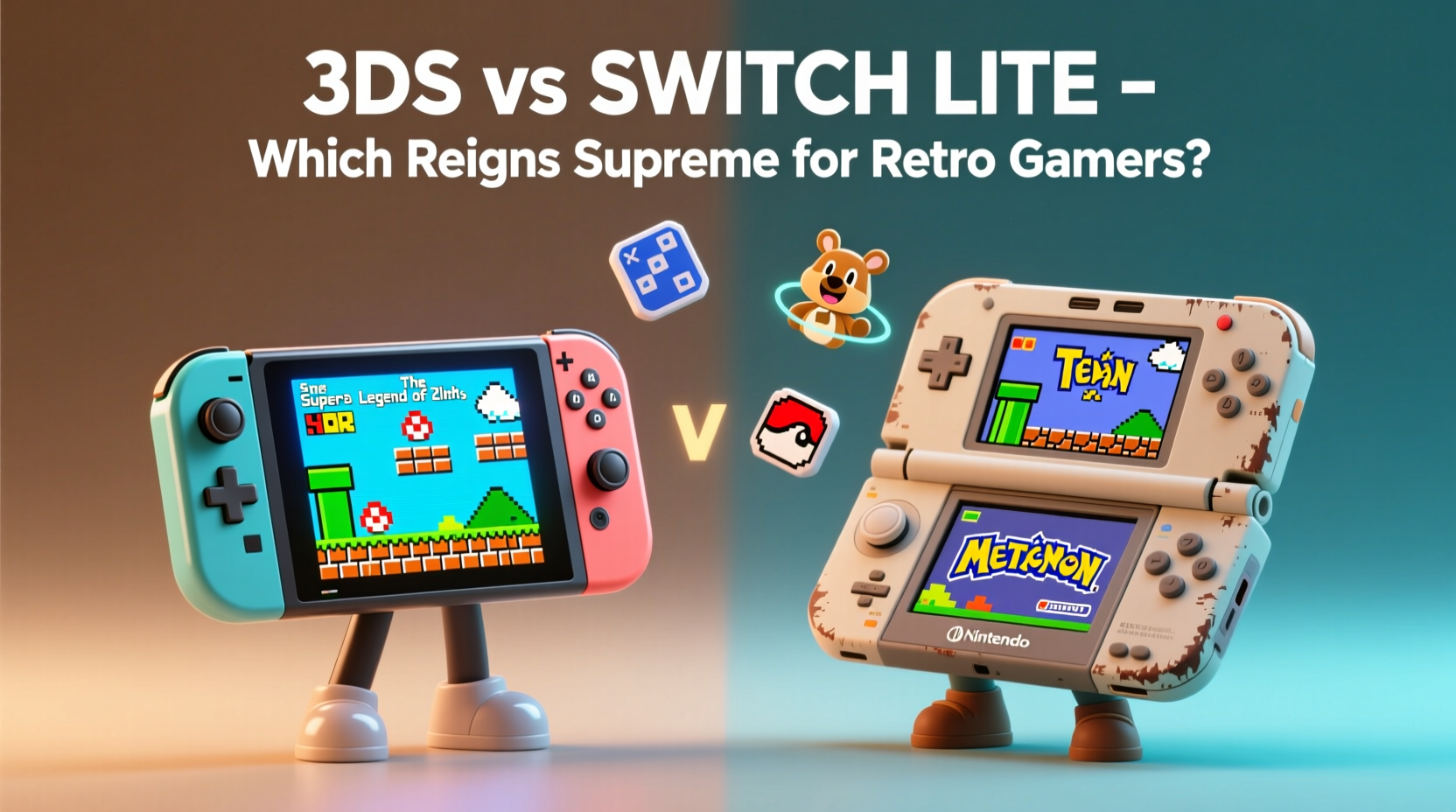
The core appeal of retro gaming lies in revisiting classics from earlier eras—games that defined childhoods or introduced groundbreaking mechanics. When comparing the Switch Lite and the 3DS, the available game libraries are fundamentally different in scope and origin.
The 3DS has direct access to titles originally developed for older systems through its built-in Virtual Console. This includes authentic ports of Game Boy, Game Boy Color, and select NES and Sega Genesis games. More importantly, the 3DS itself hosted a wealth of first-party Nintendo titles that now qualify as modern retro, such as Mario & Luigi: Dream Team, Kirby: Triple Deluxe, and The Legend of Zelda: A Link Between Worlds. These aren't just nostalgic—they're part of a generation of games designed specifically for portable play.
In contrast, the Switch Lite doesn’t natively support backward compatibility with cartridges from previous systems. Instead, Nintendo offers retro content via the **Nintendo Switch Online + Expansion Pack**, which includes emulated versions of SNES, N64, and Sega Genesis games. Titles like Super Metroid, EarthBound, Ocarina of Time, and Sonic the Hedgehog are available here, often enhanced with save states and online multiplayer options.
However, this service requires a subscription, and the library, while growing, is curated rather than comprehensive. Meanwhile, the 3DS eShop closed in 2023, meaning new purchases of digital retro titles are no longer possible unless already owned. This creates a paradox: the 3DS once had broader retro access, but the Switch Lite now offers ongoing support and improved emulation quality.
Hardware Design: Portability Meets Practicality
From a physical standpoint, both devices prioritize mobility, but they serve different user needs. The Switch Lite is lighter at approximately 275 grams and features integrated controls, making it ideal for on-the-go play. Its 5.5-inch capacitive touchscreen delivers vibrant colors and sharp resolution, especially noticeable when playing remastered retro titles like Hollow Knight: Silksong Edition or Shovel Knight: Treasure Trove.
The 3DS, particularly the XL variant, is bulkier and heavier (around 336 grams for the original model), with a dual-screen layout that includes a stereoscopic 3D top screen. While innovative at launch, the 3D effect has limited utility for retro gaming and can cause eye strain over time. Additionally, the lower resolution of the screens—especially compared to the Switch Lite’s HD display—makes pixel art less crisp, though purists may argue this preserves the “authentic” look.
Battery life favors the 3DS in many cases. Older models last between 3–5 hours depending on brightness and usage, while the Switch Lite ranges from 3–7 hours, heavily dependent on game intensity. For example, playing Tetris 99 drains the battery faster than running an SNES emulator through Nintendo Switch Online.
One critical limitation of the Switch Lite is its lack of detachable Joy-Cons. This means multiplayer experiences requiring separate controllers (like local co-op in Super Mario 3D All-Stars) demand additional hardware. The 3DS, by comparison, supports local wireless play out of the box for many of its retro-style titles.
Control Layout: Authenticity vs. Ergonomics
Retro gameplay often relies on precise inputs—think rapid tapping in Punch-Out!! or tight platforming in Donkey Kong Country Returns. How a device feels in hand directly impacts performance and enjoyment.
The 3DS uses a traditional D-pad, face buttons, shoulder buttons, and dual analog nubs (on later models). The D-pad is responsive and well-suited for 2D games originally designed around directional pads. However, the small size of the Circle Pad can make diagonal movement inconsistent, particularly in games requiring nuanced control.
The Switch Lite improves upon this with a full-sized D-pad, larger analog stick, and more ergonomic button placement. It also benefits from modern haptic feedback in supported titles, adding tactile dimension even to retro-inspired games. Third-party accessories further enhance customization, allowing players to swap thumbsticks or add grip extensions.
| Feature | Switch Lite | 3DS |
|---|---|---|
| Screen Size | 5.5 inches (HD) | 3.53\" top / 3.02\" bottom (lower res) |
| Battery Life | 3–7 hours | 3–5 hours |
| D-Pad Quality | Excellent (clicky, precise) | Good (smaller, less tactile) |
| Analog Stick | Full-size, centered | Mini nub (off-center) |
| Backward Compatibility | No cartridge support; cloud/emulation only | Yes (GB, GBC, NES via VC) |
| Online Service Required for Retro? | Yes (NSO subscription) | No (pre-purchased titles remain playable) |
“While emulation brings convenience, there's still a tactile satisfaction in inserting a physical Game Boy Advance cartridge into a 3DS. That ritual matters to collectors.” — Daniel Reyes, Vintage Gaming Curator at Pixel Archive Museum
Emulation and Modding: Beyond Official Support
For many retro gamers, official offerings don’t tell the whole story. Unofficial enhancements—such as fan translations, ROM hacks, and high-resolution texture packs—are often what breathe new life into old favorites. Here, the Switch Lite holds surprising potential despite Nintendo’s strict anti-modding stance.
Thanks to ongoing homebrew development, certain Switch models (though not officially the Lite) have been jailbroken using vulnerabilities in older firmware. Once modded, users can run emulators for systems ranging from PS1 to Nintendo DS, far surpassing the capabilities of either device’s native software. However, modding voids warranties, risks bans from online services, and is technically complex—making it unsuitable for casual users.
The 3DS, on the other hand, enjoyed a mature homebrew scene before the eShop shutdown. Thousands of fans successfully installed custom firmware, enabling SD card-based ROM loading, Game Boy Advance enhancements, and even DSiWare extraction. Because production ceased years ago, modifying a used 3DS carries fewer consequences today, especially if used offline.
That said, finding a modded 3DS on the secondhand market requires caution. Many units are locked to outdated firmware, preventing easy customization. In contrast, newer Switch Lites may eventually benefit from future exploits, though current tools remain limited.
Real-World Example: Sarah’s Retro Upgrade Journey
Sarah, a lifelong Nintendo fan from Portland, grew up playing her brother’s original DS. By 2018, she upgraded to a New 3DS XL primarily for Fire Emblem Fates and the ability to play Game Boy Advance titles like Metroid Fusion digitally. She appreciated the clamshell design and the ease of swapping cartridges.
When the Switch Lite launched in 2019, she hesitated. Her 3DS still worked perfectly, and she disliked the idea of relying on a subscription for retro games. But after borrowing a friend’s Switch and trying Super Mario All-Stars via NSO, she was impressed by the smoother frame rates and restored audio fidelity.
In 2023, following the eShop closure, Sarah reluctantly sold her 3DS and bought a Switch Lite. Though she missed physical media, she found value in cross-device sync—playing Zelda: A Link to the Past on her TV-connected docked Switch one night and continuing on the go the next day via cloud saves. For her, the transition wasn’t about nostalgia alone—it was about sustainability.
Step-by-Step Guide: Choosing Your Ideal Retro Handheld
- Assess Your Game Priorities: Do you want original-era Game Boy games (favor 3DS) or enhanced SNES/N64 classics (favor Switch Lite)?
- Check Ownership Status: Have you already purchased digital retro titles on 3DS? If so, preserve that system.
- Evaluate Physical Condition: Test any secondhand 3DS for screen scratches, hinge wear, and microphone issues.
- Consider Subscription Costs: Calculate whether paying $50/year for NSO makes sense versus buying used cartridges.
- Think Long-Term Usability: Battery degradation affects both systems, but replacement parts for 3DS are becoming scarce.
- Explore Modding Options: Only proceed if comfortable with technical risk and ethical considerations around piracy.
- Test Before Committing: Visit a friend or local shop to hold both devices and compare comfort during extended play.
Frequently Asked Questions
Can I play Game Boy Advance games on the Switch Lite?
No, not officially. The Nintendo Switch Online service does not include GBA titles. Some third-party emulators exist in homebrew form, but they require modding the system, which violates Nintendo’s terms of service.
Is the 3DS still worth buying in 2024?
Only under specific conditions: if you already own digital games, collect physical cartridges, or plan to use it for homebrew purposes. As a mainstream device, its lifespan is effectively over due to discontinued online services and dwindling repair support.
Does the Switch Lite run older Nintendo games better than the 3DS?
In terms of performance and visual clarity, yes. Emulated SNES and N64 games on the Switch benefit from higher resolutions, stable framerates, and optional rewind features. However, the 3DS provides a more authentic experience for Game Boy and early DS titles due to native hardware compatibility.
Final Verdict: Which Device Serves Retro Lovers Best?
The answer depends on how you define “retro.” If your heart belongs to the Game Boy era and you value tangible ownership of cartridges, the 3DS remains a compelling artifact—a bridge between physical media and digital distribution. Its library of DSiWare and Virtual Console titles offered unprecedented access during its prime, and for collectors, it’s increasingly a piece of gaming history.
But for most players today, the Switch Lite is the superior choice. It receives ongoing software updates, integrates seamlessly with modern ecosystems, and delivers retro games with greater accessibility and polish. The requirement of a subscription is a valid concern, but when weighed against the declining availability of functional 3DS units and replacement batteries, the investment makes sense.
Moreover, the Switch platform continues to attract indie developers creating retro-style games (Eastward, Tunic, Sea of Stars) that feel spiritually aligned with classic design principles. This blend of old inspiration and new technology positions the Switch Lite not just as a retro machine, but as a living archive of gaming evolution.
“The best retro device isn’t always the oldest one. It’s the one that lets you connect with the past without sacrificing present-day comfort.” — Lena Torres, Editor-in-Chief, *RetroPlay Magazine*
Ready to Revisit the Classics?
Whether you choose the nostalgic charm of the 3DS or the streamlined versatility of the Switch Lite, your journey into retro gaming is about more than hardware—it’s about rediscovery. Take inventory of your favorite memories, test both systems if possible, and build a library that honors where gaming began while embracing where it’s going. Share your picks, your stories, and your must-play retro list with others. The golden age of gaming never really ended—it just moved to a new screen.




 浙公网安备
33010002000092号
浙公网安备
33010002000092号 浙B2-20120091-4
Comments
No comments yet. Why don't you start the discussion?