
The Nintendo Switch has redefined portable gaming since its 2017 launch, blending console performance with handheld flexibility. In 2023, Nintendo released the Switch OLED model, offering improved screen quality and audio. But persistent rumors suggest a full successor—often called the \"Switch 2\"—may arrive as early as 2025. This leaves many gamers in a dilemma: Is it smarter to invest in the current OLED model now, or hold off for a next-gen system that could redefine Nintendo’s hardware legacy?
This article examines the knowns and unknowns of both systems, analyzes credible leaks and industry trends, and offers practical guidance for buyers weighing immediate enjoyment against future-proofing.
Understanding the Current Option: Switch OLED
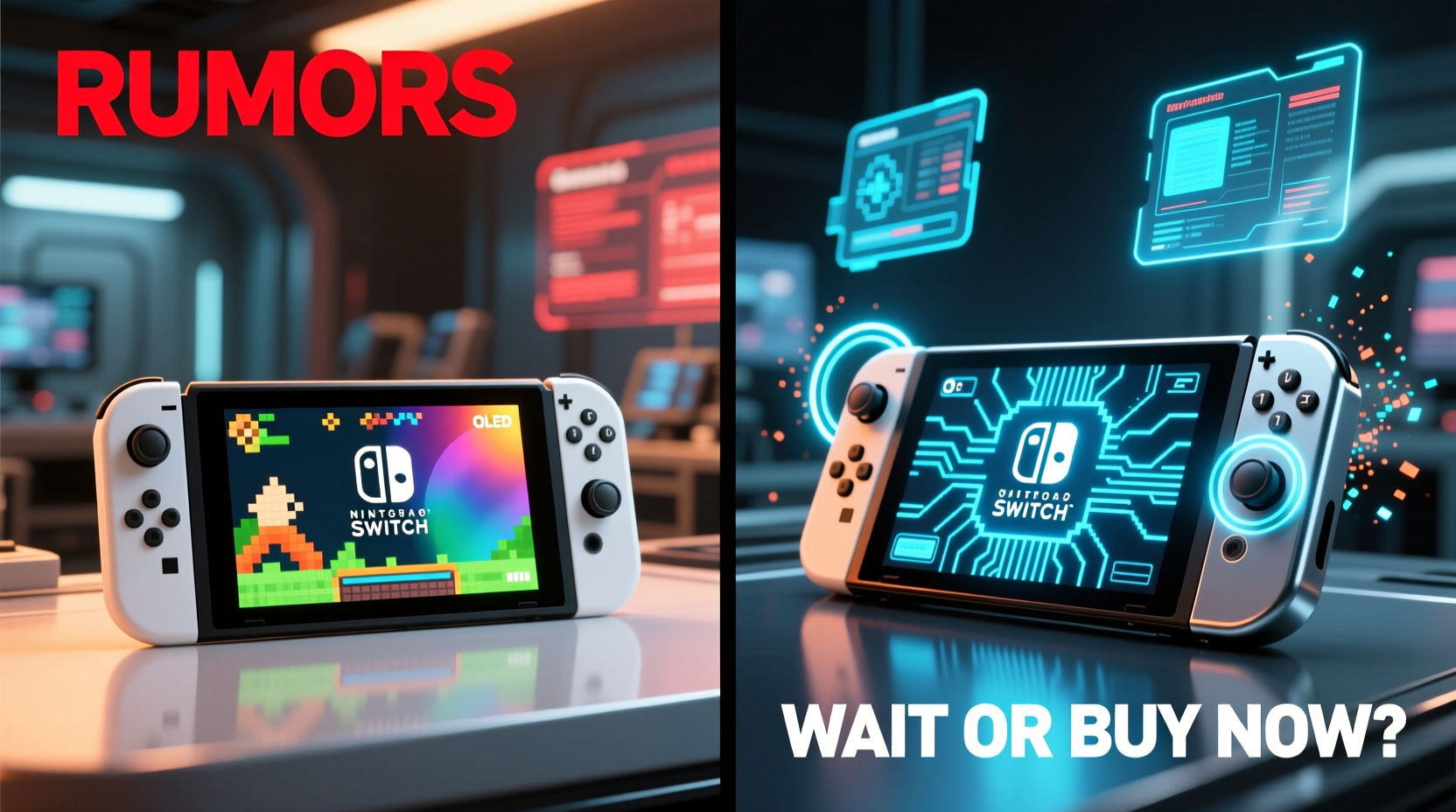
The Switch OLED, released in October 2021, is an enhanced version of the original hybrid console. It retains the same internal hardware—the NVIDIA Tegra X1 chip—but upgrades key components for better user experience.
Key improvements include:
- A vibrant 7-inch OLED screen with deeper blacks and richer colors
- An adjustable kickstand for more stable tabletop play
- 64GB of internal storage (doubled from the original)
- Improved audio speakers
- A slightly redesigned dock with a wired LAN port
Despite these upgrades, the core performance remains unchanged. Games like The Legend of Zelda: Tears of the Kingdom run on the same processor as the 2017 model, meaning battery life and graphical fidelity are limited by aging architecture. However, the OLED model delivers a noticeably better visual and ergonomic experience, especially for handheld players.
Rumors and Leaks: What We Know About the Switch 2
While Nintendo has not officially confirmed a successor, multiple reputable sources—including Bloomberg’s Jason Schreier, Digital Foundry, and Japanese outlet Nikkei—have reported on development progress toward a new console.
As of mid-2024, the most consistent rumors suggest:
- A 2025 release window, possibly around holiday season
- Custom NVIDIA GPU based on the Ampere or Ada Lovelace architecture
- Support for 4K resolution in docked mode
- Backward compatibility with existing Switch games
- A potential shift away from hybrid design—possibly separating handheld and console functions
Nintendo’s patent filings show interest in modular designs and detachable controllers with advanced haptics. Some analysts speculate the new system may abandon the tablet format entirely, instead launching a dedicated handheld device paired with a home console—similar to how PlayStation handled the Vita and PS4.
“Nintendo is at a crossroads. They can iterate one last time with minor upgrades, or they can leap into true next-gen territory. The latter requires boldness, but also risks alienating their core hybrid audience.” — Sarah Thompson, Industry Analyst at GameTech Insights
Comparative Breakdown: Switch OLED vs Expected Switch 2 Specs
To make an informed decision, it helps to contrast what we have with what we expect. The table below summarizes known features of the Switch OLED against widely reported predictions for the Switch 2.
| Feature | Switch OLED (Current) | Switch 2 (Rumored) |
|---|---|---|
| Release Year | 2021 | 2025 (expected) |
| Processor | NVIDIA Tegra X1 (2015 architecture) | Custom NVIDIA Ampere/Ada-based SoC |
| Screen | 7\" OLED, 720p | Potential 8–9\" OLED, up to 1080p |
| Docked Resolution | Up to 1080p | Targeting 4K output |
| Backward Compatibility | N/A (current platform) | Expected with digital titles |
| Storage | 64GB (expandable via microSD) | 128GB+ expected, NVMe support possible |
| Battery Life | 4.5–9 hours (varies by game) | Unknown; likely improved efficiency |
| Online Features | Limited friends list, no voice chat | Potential overhaul of Nintendo Switch Online |
| Price (Launch) | $349.99 | $399–$449 estimated |
The technological gap between the two systems, if rumors hold, would be significant. A modern GPU could enable more detailed textures, faster load times, ray tracing, and smoother performance in demanding titles. For fans of franchises like Zelda, Metroid, or third-party ports, this could mean a generational leap in immersion.
Real-World Dilemma: A Gamer’s Choice
Consider Alex, a college student who loves indie games and Mario Kart. He travels frequently and uses his Switch during commutes and weekend trips. His old Switch Lite’s screen cracked last month, and he needs a replacement fast. He’s torn: buy the OLED now for immediate use, or save up and wait 12–18 months for the rumored Switch 2?
He checks Reddit threads, watches YouTube deep dives, and reads analyst reports. He learns that even if the Switch 2 launches in late 2025, it may take months for supply to stabilize and for major games to be released. Meanwhile, Tears of the Kingdom is already out, Super Mario Bros. Wonder is highly rated, and indie titles like Hades and Stardew Valley shine on the OLED screen.
In the end, Alex buys the OLED model. His reasoning: he wants to enjoy games now, not wait years. He accepts that the hardware is aging but finds the screen and build quality worth the investment. He plans to keep it for 3–4 years, knowing that by 2027, whatever follows will likely be well-established.
His story reflects a common reality: for many, gaming isn’t just about specs—it’s about access, convenience, and joy in the moment.
Action Plan: To Buy or Wait? A Step-by-Step Decision Guide
Deciding whether to buy the Switch OLED or wait for the Switch 2 depends on your personal circumstances. Follow this timeline-based guide to clarify your choice.
- Assess Your Current Setup (Week 1)
- Is your current Switch broken, lost, or underperforming?
- Are you a non-owner considering entry into the ecosystem?
- If yes to either, immediate purchase becomes more justified.
- Review Your Gaming Habits (Week 2)
- Do you play mostly in handheld mode? → OLED screen is a major upgrade.
- Do you care deeply about graphics, 4K, or future AAA ports? → Waiting may pay off.
- Are you satisfied with Nintendo’s first-party lineup? → You don’t need cutting-edge tech.
- Set a Financial Timeline (Week 3)
- Can you afford $350 now, or would waiting allow better savings?
- Factor in game costs—new consoles often lack strong launch titles.
- Remember: used OLED models may drop in price after Switch 2 launches.
- Monitor Official Announcements (Ongoing)
- Subscribe to Nintendo Direct updates.
- Follow trusted journalists like Jason Schreier or Tom Henderson for leak analysis.
- If a 2025 release is confirmed by Q3 2024, waiting becomes safer.
- Make Your Decision by Q4 2024
- No official news by December 2024? → Likely delay; consider buying OLED.
- Firm 2025 release date announced? → Save money, prepare for launch.
Checklist: Should You Buy the Switch OLED Now?
Answer the following questions honestly. The more “yes” answers, the stronger the case for buying now.
- ☑ I want to play Switch-exclusive games like Zelda, Mario, or Animal Crossing
- ☑ I value portability and handheld gaming
- ☑ I don’t need 4K or high-end graphics
- ☑ I’m tired of using a damaged or outdated device
- ☑ I can’t wait 12+ months for a new system
- ☑ I’m okay with buying a system nearing end-of-life
- ☑ I plan to resell or trade in later without loss concerns
If five or more apply, purchasing the OLED is a reasonable, low-risk move.
Frequently Asked Questions
Will the Switch 2 be backward compatible?
Most credible reports indicate yes—Nintendo is expected to maintain backward compatibility, especially for digital purchases tied to user accounts. However, physical cartridges may face limitations depending on hardware changes. If compatibility is critical, assume it will work but await official confirmation.
Can I still enjoy new games on the Switch OLED in 2025 and beyond?
Absolutely. Nintendo has committed to supporting the current platform through at least 2025. Major titles like Tears of the Kingdom were released four years after the original Switch launch. Even after the Switch 2 arrives, developers will likely continue supporting the large installed base for several years.
Is the OLED model worth it over the original Switch?
Yes, especially for handheld play. The screen, sound, and build quality improvements are tangible. If you’re choosing between original and OLED, always go for OLED. The $50 premium is justified by daily usability gains.
Final Verdict: Enjoy Now or Invest Later?
The heart of this decision lies in your relationship with gaming. If you view your console as a tool for immediate joy, social connection, and escape, the Switch OLED delivers that today. It’s a refined, mature platform with a stellar library and excellent ergonomics. There’s no shame in buying it now and enjoying hundreds of hours of content.
But if you’re a tech-forward player who values longevity, graphical performance, and future-proofing, waiting for the Switch 2 makes strategic sense—provided you can delay gratification. Just remember: no console launch is perfect. Early adopters may face shortages, software bugs, and a thin game library. And if the Switch 2 abandons hybrid design, some fans may feel alienated.
Nintendo’s next move will shape its identity for the next decade. Whether they evolve the hybrid model or split into two devices, the goal remains the same: accessible, innovative gameplay. The hardware is just the vessel.




 浙公网安备
33010002000092号
浙公网安备
33010002000092号 浙B2-20120091-4
Comments
No comments yet. Why don't you start the discussion?