
For gamers who prioritize portability, the Nintendo Switch lineup presents a clear dilemma: choose between the compact, affordable Switch Lite or invest in the premium Switch OLED model. While both are designed for handheld play, their differences go beyond screen size. The central question for many buyers is whether the Switch OLED’s 7-inch OLED display offers enough tangible benefits over the Switch Lite’s 5.5-inch LCD screen to justify its higher price—especially if you never plan to dock your console.
The answer isn’t just about pixels and dimensions. It’s about how screen quality, audio, storage, durability, and long-term usability shape your gaming experience. For those committed to handheld-only play, understanding these nuances can mean the difference between buyer’s remorse and a purchase that enhances every session.
Screen Quality and Visual Experience
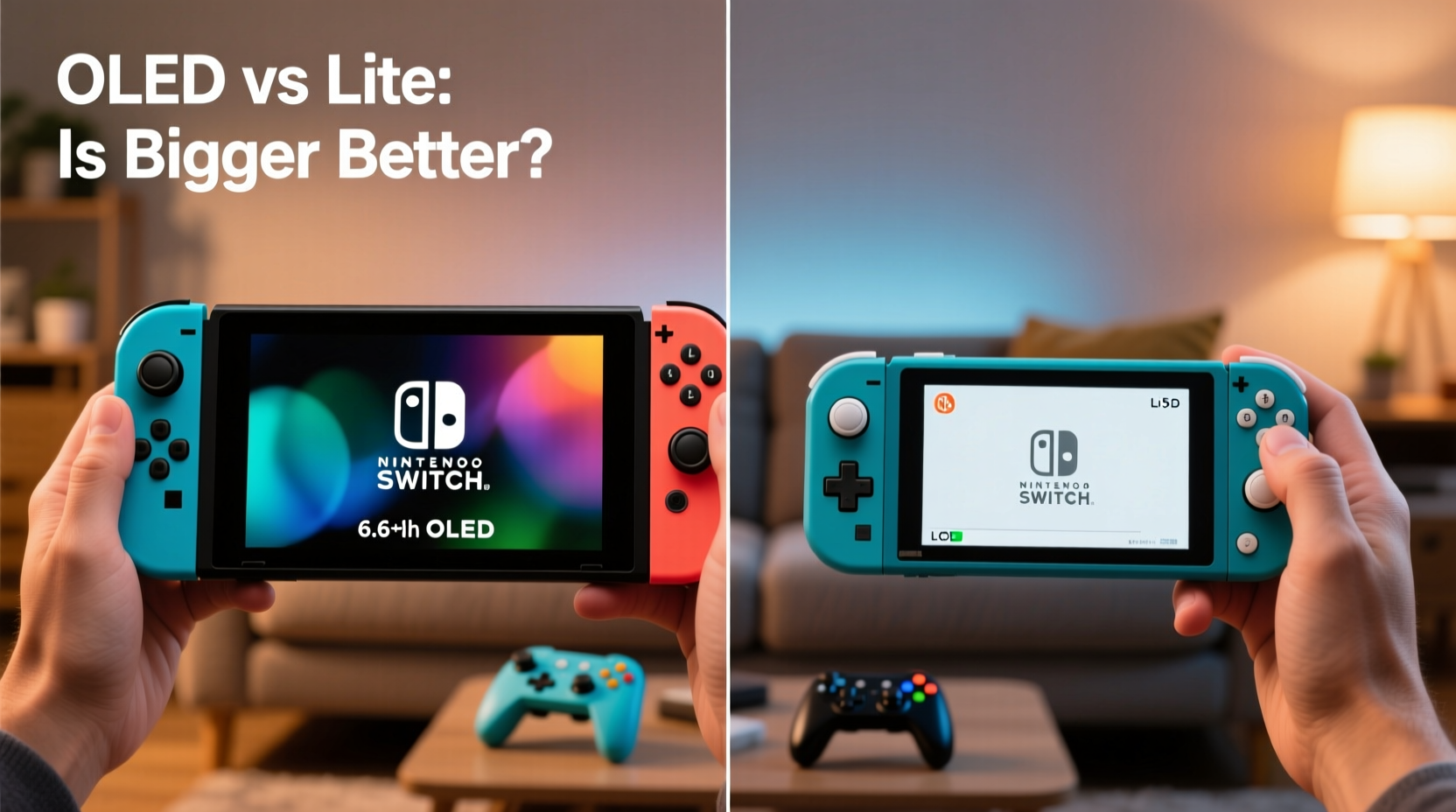
The most obvious distinction between the Switch OLED and Switch Lite is the display. The OLED model features a 7-inch OLED panel with vibrant colors, deeper blacks, and superior contrast compared to the Switch Lite’s 5.5-inch standard LCD. OLED technology allows individual pixels to turn off completely, producing true black levels and reducing eye strain during prolonged use.
In practical terms, games like The Legend of Zelda: Breath of the Wild or Metroid Dread benefit significantly from the OLED’s enhanced color depth and brightness. Outdoor environments appear more dynamic, shadows feel more natural, and text readability improves—especially in dim lighting. For visual-heavy titles or indie games with rich art direction, the difference is immediately noticeable.
However, the smaller screen on the Switch Lite has advantages too. Its compact size makes it easier to hold with one hand, ideal for quick gaming sessions on public transit or while lounging in tight spaces. Some users report less fatigue during extended play due to the lighter weight and balanced form factor.
Resolution and Pixel Density: What You’re Actually Seeing
Despite the larger screen, the Switch OLED maintains the same 720p resolution as the Switch Lite. This means pixel density decreases—from roughly 166 PPI on the Lite to about 147 PPI on the OLED. In theory, this could result in a slightly softer image, but in practice, most users don’t perceive a loss in sharpness due to improved color accuracy and contrast.
Moreover, the OLED screen’s ability to render deep blacks and accurate colors often compensates for the lower pixel density. Text remains crisp, and UI elements are clearly defined. For casual and mid-core players, the trade-off is favorable. Only the most discerning eyes might notice subtle blurring at close range.
Ergonomics, Build, and Portability
The physical design of each device plays a major role in comfort during handheld use. The Switch Lite is built entirely as a handheld unit, with fixed controls and a rounded, lightweight chassis (275g). It fits easily into small bags and pockets, making it ideal for travel or impromptu gaming breaks.
In contrast, the Switch OLED weighs 320g in handheld mode—45g more than the Lite. While not drastically heavier, the additional bulk becomes noticeable after an hour or two of continuous play, especially when holding the device with one hand. However, the OLED model includes an adjustable kickstand and a more rigid build, which some users appreciate for stability during couch or tabletop sessions—even if docking isn’t part of their routine.
| Feature | Switch OLED | Switch Lite |
|---|---|---|
| Screen Size | 7.0 inches (OLED) | 5.5 inches (LCD) |
| Weight | 320g | 275g |
| Battery Life | 4.5–9 hours | 3–7 hours |
| Internal Storage | 64GB | 32GB |
| Kickstand | Yes (adjustable) | No |
| Docking Support | Yes | No |
| Audio Quality | Louder, richer speakers | Average volume and clarity |
Durability and Long-Term Use
The Switch OLED features a more robust build, with a metal back plate instead of plastic, contributing to better heat dissipation and structural integrity. Users who carry their console daily report fewer concerns about accidental drops or wear. The hinge mechanism, though not used in handheld mode, is reinforced and designed for repeated docking—a minor perk even for non-dockers.
Conversely, the Switch Lite’s all-plastic body feels less premium and may show scratches more easily. While durable enough for careful handling, it lacks the heft and resilience of the OLED model. Replacement parts and repairs are also more limited due to its integrated design.
“Even for handheld-only users, build quality impacts longevity. A sturdier device withstands daily use better, reducing replacement costs over time.” — Jordan Lee, Console Repair Technician
Performance and Battery Life
Both devices share the same NVIDIA Tegra X1+ processor and deliver identical in-game performance. Frame rates, load times, and graphical fidelity are indistinguishable when playing the same title. However, battery life varies based on screen usage and brightness settings.
The Switch OLED typically offers 4.5 to 9 hours of gameplay, depending on the title. The Switch Lite ranges from 3 to 7 hours. For example, playing Animal Crossing: New Horizons yields around 5–6 hours on the OLED versus 4–5 on the Lite. The difference stems from the OLED’s more efficient display and slightly larger battery capacity.
This gap matters most for travelers or those without regular access to charging. If you rely on battery power throughout the day, the OLED’s longer endurance provides meaningful peace of mind.
Audio, Storage, and Hidden Upgrades
Beyond the screen, the Switch OLED introduces several under-the-radar improvements that enhance handheld experiences:
- Superior speakers: Louder output and clearer mid-range frequencies make dialogue and ambient sound more immersive without headphones.
- Double the internal storage: 64GB vs. 32GB gives more room for digital purchases, crucial given the lack of frequent cloud saves in some games.
- Improved Wi-Fi and LAN port: Faster downloads and stable connections when updating large games like Super Smash Bros. Ultimate or Bayonetta 3.
- Enhanced analog sticks: Slightly more responsive and durable than previous models, including the Lite.
These upgrades may seem minor individually, but collectively they create a more polished and convenient experience. For instance, downloading a 15GB game takes nearly half the time on the OLED when connected via Ethernet, thanks to its Gigabit LAN support—an unexpected benefit even for handheld users who occasionally connect at home.
Real-World Example: Commuter Gaming
Consider Sarah, a daily subway commuter who plays 45 minutes each way. She started with a Switch Lite but upgraded to the OLED after six months. Her reasons were practical: the screen was easier to see through glare from train windows, the speakers allowed her to enjoy music in rhythm games without earbuds, and the extra storage meant she could keep five full games installed without rotating them constantly.
She noted that the added weight wasn’t an issue since she mostly held the device with both hands. The adjustable stand also let her prop it against her bag for passive viewing during crowded rides. While the Lite served her well initially, the OLED’s refinements made her daily ritual more enjoyable and sustainable.
Cost-Benefit Analysis for Handheld-Only Players
The Switch Lite retails at $199.99, while the OLED model is priced at $349.99—a $150 difference. For budget-conscious buyers, this gap is significant. But value isn’t solely determined by upfront cost.
Consider total ownership cost over three years:
- Replacement frequency: Due to better build quality, the OLED may last longer before needing repair or replacement.
- Digital game investment: With double the storage, you’ll rely less on microSD cards, saving $20–$40 over time.
- Accessories: The OLED works with existing Joy-Cons and Pro Controllers, offering future flexibility if your needs change.
- Resale value: OLED models retain higher resale prices, often fetching 20–30% more than Lites after one year of use.
If you plan to play regularly for years, the OLED’s longevity and versatility can offset its higher initial price. However, if you’re buying a secondary device for occasional use or gifting to a younger player, the Lite remains a smart, economical choice.
Frequently Asked Questions
Can I use the Switch OLED exclusively in handheld mode?
Absolutely. While it supports docking, nothing requires you to use TV mode. Many owners treat it as a premium handheld with no plans to connect to a TV.
Does the OLED screen drain the battery faster?
Not necessarily. Despite being larger, OLED panels are more energy-efficient when displaying dark scenes. Combined with a larger battery, the OLED often lasts longer than the Lite despite its size.
Is the Switch Lite obsolete now?
No. It still serves a valuable niche for younger players, casual gamers, or those seeking maximum portability at a lower price. Nintendo continues to sell and support it alongside the OLED model.
Final Verdict: Is the Bigger Screen Necessary?
The 7-inch OLED screen isn’t strictly “necessary” for handheld gaming, but it elevates the experience in ways that matter over time. For players who spend hours immersed in story-driven adventures, visually rich platformers, or competitive multiplayer titles, the combination of superior display quality, better audio, increased storage, and improved durability makes the Switch OLED a worthwhile upgrade—even without docking capabilities.
The Switch Lite excels in portability and affordability, making it ideal for specific use cases. But if you value immersion, comfort during long sessions, and a device built to last, the OLED’s larger screen is more than a luxury—it’s a functional enhancement that pays dividends in enjoyment and convenience.




 浙公网安备
33010002000092号
浙公网安备
33010002000092号 浙B2-20120091-4
Comments
No comments yet. Why don't you start the discussion?