
The Nintendo Switch lineup has evolved to cater to different playstyles, with the Switch OLED and Switch Lite representing two distinct philosophies in portable gaming. While both are designed primarily for handheld use, their hardware differences—especially the display—raise a critical question: Is the OLED screen upgrade truly vital for handheld players? For those who prioritize immersion, visual clarity, and long-term comfort, the answer may be more nuanced than a simple yes or no.
The Switch Lite, released in 2019, was Nintendo’s first dedicated handheld iteration of the Switch platform. It eliminated TV output capabilities in favor of a compact, lightweight form factor. In contrast, the Switch OLED, launched in 2021, retains full hybrid functionality but enhances the handheld experience with a superior 7-inch OLED screen, improved audio, and better internal storage. At first glance, the OLED model appears to be the obvious upgrade—but value depends on how you play.
Design and Portability: Size vs Substance
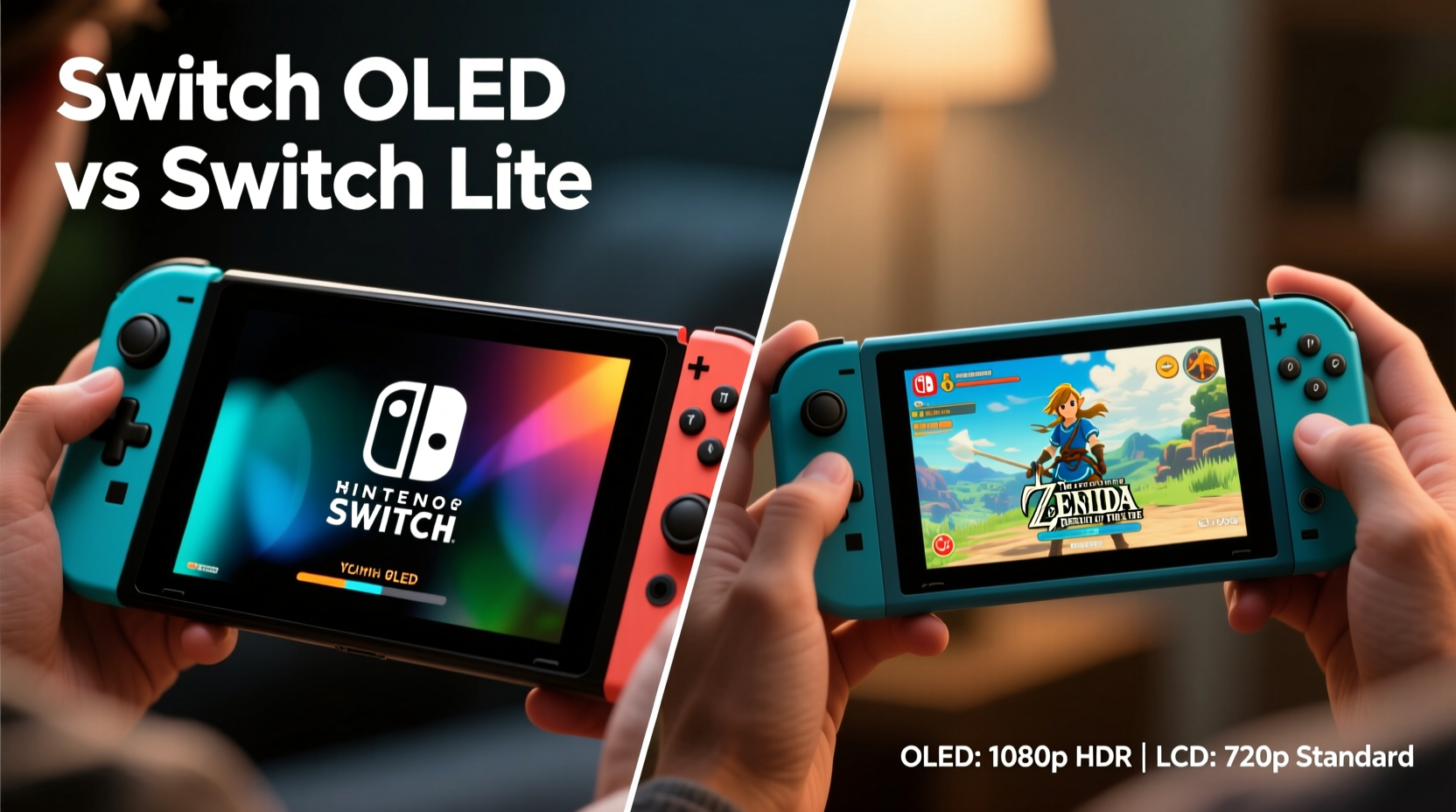
Portability is often the deciding factor for handheld gamers. The Switch Lite weighs just 275 grams and measures 208 x 91 x 13.9 mm, making it the most pocketable option in the Switch family. Its integrated controls and smaller footprint make it ideal for travel, commutes, or younger players with smaller hands.
The Switch OLED, while still handheld-friendly, is slightly bulkier at 320 grams and 243 x 102 x 13.5 mm. The larger 7-inch screen contributes to its size, but also provides significantly more screen real estate. Despite being heavier, the OLED model features a vastly improved kickstand—sturdy, adjustable, and wide enough to support off-table gameplay, a feature absent on the Lite.
For users who frequently game on the move, the Lite’s compactness offers undeniable convenience. However, the OLED’s sturdier build quality, matte finish that resists smudges, and superior ergonomics during extended sessions suggest a more refined handheld experience—even if it sacrifices some portability.
Display Quality: OLED vs LCD – What Changes in Practice?
The core difference between these models lies in the screen technology. The Switch Lite uses a 5.5-inch LCD panel with a resolution of 1280x720. Colors are serviceable, blacks appear grayish in low light, and viewing angles are limited. In bright environments, glare can reduce visibility, requiring higher brightness settings that drain the battery faster.
The Switch OLED replaces this with a 7-inch organic light-emitting diode (OLED) display. Each pixel emits its own light, enabling true blacks, infinite contrast ratios, and richer color saturation. The result is a visibly deeper, more cinematic image—particularly noticeable in games with dark scenes, such as Hollow Knight: Silksong or The Legend of Zelda: Breath of the Wild.
In direct side-by-side comparisons, OLED’s advantages are immediately apparent. Shadows have depth, reds pop without oversaturation, and UI elements appear crisper due to the higher effective contrast. Even at lower brightness levels, the OLED screen remains readable in dim rooms, reducing eye strain over time.
However, the benefits depend on the game genre. Fast-paced platformers like Super Mario Bros. Wonder benefit less from deep blacks than atmospheric adventures or narrative-driven titles. For players who primarily enjoy colorful, stylized games, the visual leap may feel subtle rather than transformative.
“OLED doesn’t just improve picture quality—it changes how you perceive mood and environment in games. That depth matters during long play sessions.” — David Lin, Display Technologist at GameScreen Labs
Battery Life and Performance: Are You Paying for Pixels?
Despite its superior screen, the Switch OLED delivers comparable or slightly better battery life than the original Switch models—ranging from 4.5 to 9 hours depending on the title. The OLED screen is more power-efficient when displaying darker content, balancing out its larger size. In contrast, the Switch Lite averages 3 to 7 hours, with graphically intense games like Monster Hunter Rise draining the battery faster due to its smaller capacity and less efficient thermal management.
Both devices use the same NVIDIA Tegra X1+ processor and offer identical in-game performance—meaning no framerate or loading time advantages on either model. The real difference emerges in sustained performance under heat. The OLED’s larger chassis allows for marginally better airflow, reducing throttling during prolonged gameplay. This may only matter during multi-hour sessions, but it contributes to overall system longevity.
Storage is another consideration. The Switch OLED comes with 64GB of internal storage, double that of the Lite’s 32GB. With modern indie titles averaging 10–15GB and AAA ports like Bayonetta 3 exceeding 20GB, onboard space fills quickly. While both support microSD cards, starting with more usable storage reduces early friction.
User Experience Comparison: Who Benefits Most?
To determine whether the screen upgrade is vital, consider your typical usage patterns. The following table summarizes key decision factors:
| Feature | Switch OLED | Switch Lite |
|---|---|---|
| Screen Type | 7\" OLED | 5.5\" LCD |
| Resolution | 1280x720 | 1280x720 |
| True Black / Contrast | Yes (infinite contrast) | No (grayish blacks) |
| Battery Life | 4.5–9 hours | 3–7 hours |
| Detachable Joy-Cons | Yes (hybrid mode) | No (integrated only) |
| Kickstand | Adjustable, wide | None |
| Internal Storage | 64GB | 32GB |
| TV Output | Yes (via dock) | No |
| Price (MSRP) | $349.99 | $199.99 |
The data shows a clear trade-off: the OLED model costs nearly twice as much but delivers significant upgrades in display quality, versatility, and durability. Meanwhile, the Lite remains an excellent budget option for casual players or younger audiences who don’t need docking capability.
Mini Case Study: Two Gamers, Two Choices
Consider Sarah, a college student who plays during breaks between classes. She values portability above all and mostly enjoys puzzle games and retro ports. Her backpack is small, and she rarely docks her console. For her, the Switch Lite fits perfectly—lightweight, affordable, and sufficient for her needs.
Now meet James, a working professional who plays RPGs and adventure games during evening commutes and weekend trips. He plays for 2–3 hours at a stretch and notices eye fatigue on his old LCD screen. After upgrading to the OLED model, he reports “less strain, better immersion,” especially in games with moody lighting. The adjustable stand lets him prop it on tray tables, and the extra storage means fewer deletions.
Their experiences highlight a truth: the importance of the OLED screen correlates directly with play duration, game type, and sensitivity to visual comfort.
Actionable Advice: Choosing Based on Your Lifestyle
Before investing in either model, assess your actual usage. Ask yourself the following questions:
- Do I play for more than an hour at a time?
- Do I notice eye strain after extended sessions?
- Do I care about playing on my TV occasionally?
- Am I willing to pay extra for a premium visual experience?
- Is portability my top priority?
If you answered “yes” to the first four, the OLED is likely worth the investment. If the last question dominates your decision, the Lite remains a smart pick.
Checklist: Which Switch Is Right for You?
Use this checklist to guide your decision:
- I want to play on my TV sometimes → Choose Switch OLED
- I play mostly story-driven or atmospheric games → OLED enhances immersion
- I’m sensitive to screen glare or eye fatigue → OLED’s contrast helps reduce strain
- I travel frequently with limited bag space → Lite’s compact size wins
- I’m on a tight budget → Lite offers 90% of core functionality at half the price
- I want future-proof accessories compatibility → OLED supports all current and upcoming Joy-Con features
Frequently Asked Questions
Can I use OLED features like the enhanced screen when docked?
No. When connected to a TV, both the OLED and Lite models output the same image quality as the original Switch. The OLED screen advantage applies only in handheld mode.
Does the OLED model run games at a higher resolution in handheld mode?
No. Both models render at 720p in handheld mode. The visual improvement comes from contrast, color accuracy, and pixel response—not resolution.
Is the Switch Lite obsolete now that the OLED exists?
Not at all. The Lite serves a specific niche: affordable, purely portable gaming. It remains popular among younger players, collectors, and those seeking a secondary device. Nintendo continues to sell and support it actively.
Final Verdict: Is the Screen Upgrade Vital?
For many handheld players, the OLED screen is not merely an upgrade—it’s a meaningful enhancement to the gaming experience. True blacks, vibrant colors, reduced eye strain, and a more durable build collectively justify the price difference for serious gamers. If you spend hours immersed in expansive worlds, the OLED model transforms handheld play into something closer to a personal theater.
Yet, “vital” implies necessity, and necessity varies by user. For casual players, children, or those who prioritize cost and size, the Switch Lite remains a capable and sensible choice. The screen upgrade isn’t vital for everyone—but for those who value visual fidelity and long-term comfort, it’s one of the most impactful improvements Nintendo has made to the Switch line.
The real takeaway isn’t which console is better overall, but which aligns with your habits. Technology should serve the user, not the other way around. Whether you choose the minimalist charm of the Lite or the refined brilliance of the OLED, what matters most is that you’re playing—and enjoying—your favorite games wherever life takes you.




 浙公网安备
33010002000092号
浙公网安备
33010002000092号 浙B2-20120091-4
Comments
No comments yet. Why don't you start the discussion?