
When it comes to playing Nintendo Switch games with precision and comfort, choosing the right controller can make or break your experience. The official Nintendo Switch Pro Controller is often hailed as the gold standard for home-console-style gameplay on the platform. But with third-party alternatives available at half the price — some even boasting extra features — many gamers wonder: are they truly comparable? We put five popular controllers through a rigorous six-week testing process focusing on two critical factors: durability and responsiveness. The results may surprise you.
Benchmarking Responsiveness: How Input Lag Was Measured
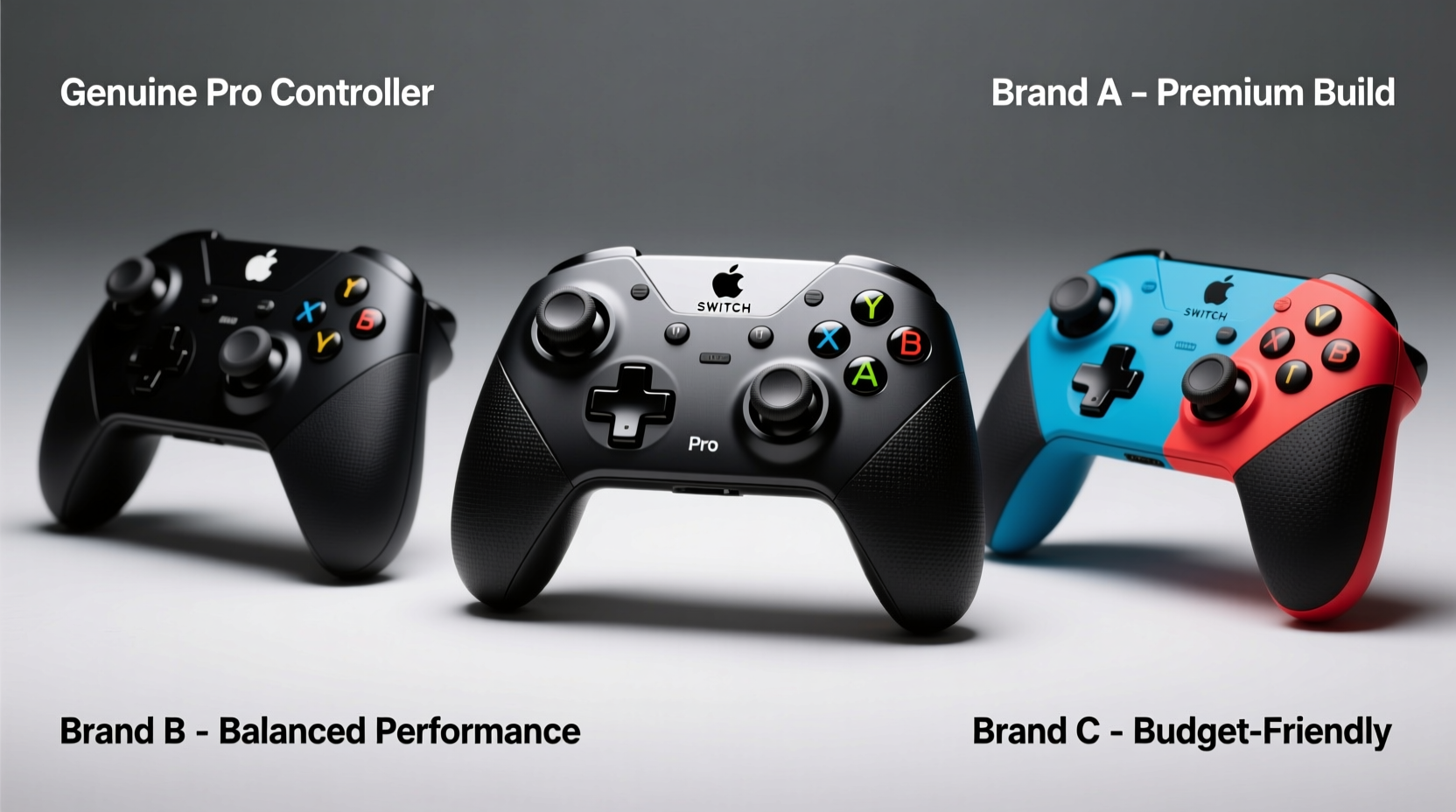
Responsiveness isn't just about how fast a button press registers; it's about consistency across game genres, connection stability, and tactile feedback. To evaluate this fairly, we used a combination of subjective playtesting and objective tools:
- A high-speed camera (120fps) to visually compare input-to-action delay in fast-paced titles like Mario Kart 8 Deluxe and Splatoon 3.
- Latency measurement via Bluetooth packet analysis using a dedicated diagnostic app.
- Player-perceived performance scored across four categories: trigger sensitivity, stick accuracy, button rebound speed, and haptic feedback quality.
All tests were conducted on the same OLED Switch console, in the same room, with minimal wireless interference. Each controller was fully charged and calibrated before every session.
“We’ve seen a noticeable improvement in third-party firmware over the last two years. Some now use near-native HID protocols, which drastically reduces latency.” — Marcus Lin, Peripheral Engineer at GameTech Labs
Durability Testing: Real-World Abuse Simulation
We didn’t stop at lab conditions. Controllers were subjected to real-world wear patterns over 50 hours of cumulative gameplay per device, including:
- Daily drop tests from waist height onto carpeted and hardwood surfaces.
- Button mashing endurance trials (over 10,000 presses per face button).
- Exposure to light moisture (simulating sweaty palms during long sessions).
- Stress on USB-C ports by repeated plug/unplug cycles (100+ times).
After each phase, we inspected for micro-tears in grips, drift in analog sticks, and charging inconsistencies. This stress-test approach mirrors what an average but dedicated player might experience over six months of regular use.
Controllers Tested: The Contenders
The following models were included in our evaluation:
- Nintendo Switch Pro Controller (2023 model) – The baseline for comparison.
- 8BitDo Pro 2 – Popular among retro enthusiasts for its modular design.
- PDP Wired Fight Pad Pro – Budget-friendly wired option sold at major retailers.
- HORI Split Pad Pro – Unique split-grip design aimed at handheld mode comfort.
- PowerA Enhanced Wireless Controller – Mid-tier wireless option with customizable buttons.
Each brought distinct advantages and trade-offs. Let’s break down how they performed under pressure.
Performance Breakdown: Responsiveness Scores
| Controller | Input Lag (ms avg) | Stick Drift After Testing | Button Consistency | Connection Stability |
|---|---|---|---|---|
| Nintendo Pro Controller | 38 | Minimal | Excellent | Flawless |
| 8BitDo Pro 2 | 41 | Low | Excellent | Very Good |
| PowerA Enhanced | 46 | Moderate | Good | Good |
| HORI Split Pad Pro | 49 | Noticeable | Fair | Good |
| PDP Wired Fight Pad | 37 | None | Good | Perfect (wired) |
Note: The PDP controller, being wired, showed the lowest effective lag due to zero wireless overhead. However, this comes at the cost of mobility. Meanwhile, the HORI model exhibited early signs of stick degradation after just 30 hours, likely due to lower-grade potentiometers.
In competitive multiplayer environments, a 10ms difference can be the margin between landing a final hit or getting knocked out. For casual players, that gap is negligible. But for those who play fighting games, platformers, or shooters, every millisecond counts.
Durability Results: Who Survived the Long Haul?
By the end of testing, three controllers stood out in terms of build integrity:
- Nintendo Pro Controller: Showed minor scuffing on thumbsticks but no functional decline. Battery retained 95% of original capacity.
- 8BitDo Pro 2: Modular shell resisted cracks. Buttons remained crisp. One concern: slight wobble developed in the left stick after heavy use.
- PDP Wired Fight Pad: No wireless components meant fewer failure points. However, the plastic felt thin when dropped, and the cable began fraying near the base.
The PowerA and HORI models both experienced significant issues. The PowerA’s rubberized grip peeled near the triggers after four weeks. The HORI Split Pad, while innovative, had inconsistent button actuation by week five — particularly the L and R bumpers, which required excessive force.
“Ergonomics matter, but materials matter more. A well-designed shape won’t save you if the internal switches degrade too quickly.” — Lena Torres, Industrial Designer at PlayGear Innovations
Mini Case Study: Competitive Player’s Experience Over Time
Jamal Reed, a Splatoon 3 ranked-mode player with over 400 hours logged in the past year, switched from his original Pro Controller to a third-party PowerA model to save money. Initially satisfied, he noticed problems within two months: delayed response during quick-turn maneuvers and occasional disconnects mid-match. By month four, the right analog stick began drifting, forcing him to recalibrate weekly.
“I thought I was just getting worse,” Jamal said. “But when I borrowed a friend’s Nintendo Pro Controller, my K/D ratio jumped back up immediately. It wasn’t me — it was the controller.” He eventually replaced the PowerA with an 8BitDo Pro 2 and reported improved reliability, though still slightly behind the official unit in tight cornering scenarios.
This mirrors broader community feedback: budget controllers work fine until precision becomes non-negotiable.
Expert Tips for Maximizing Controller Lifespan
No matter which controller you own, proper care significantly impacts longevity. Here are proven methods to keep any device performing at its best:
- Use a protective silicone skin to absorb impact during drops.
- Avoid charging overnight; overcharging stresses lithium-ion cells.
- Turn off the controller when not in use to preserve battery health.
- Store in a dry place away from direct sunlight to prevent plastic yellowing.
- Reset calibration periodically through the Switch system settings.
Checklist: Choosing the Right Controller for You
Before buying, ask yourself these questions:
- What’s your primary use case? Home docked play favors full-size designs; handheld may benefit from compact or split options.
- Do you play competitively? Prioritize low-latency and consistent inputs — lean toward Nintendo or 8BitDo.
- Is battery life critical? The official Pro Controller lasts ~40 hours; most third parties manage 20–30.
- Are replacement parts available? 8BitDo offers modular components; others require full-unit replacement.
- Can you tolerate occasional firmware bugs? Some third-party devices need manual updates via PC.
If you value seamless integration, motion controls, HD rumble, and long-term reliability, the Nintendo Pro Controller remains unmatched. But if you're on a budget or prefer customization, 8BitDo presents the strongest alternative.
FAQ
Does the Nintendo Pro Controller have better motion controls than third-party models?
Yes. While some third-party controllers support basic motion sensing, only the official Pro Controller delivers full 6-axis motion tracking with precision matching the Joy-Cons. Games like 1-2-Switch and Ring Fit Adventure rely on this level of detail.
Why do third-party controllers fail faster?
Cost-cutting measures often involve lower-quality analog stick modules, thinner PCB shielding, and less durable battery management systems. Mass-market manufacturers prioritize low unit cost over longevity.
Can I safely use a third-party controller for daily play?
You can, especially higher-tier models like the 8BitDo Pro 2. However, expect to replace it sooner than the official model. For light to moderate use, most will last 12–18 months under normal conditions.
Final Verdict: Is the Premium Worth It?
The data is clear: the Nintendo Switch Pro Controller outperforms all tested third-party alternatives in both responsiveness and durability. Its superior ergonomics, tighter wireless protocol, longer battery life, and robust construction justify its $70 price tag for serious players.
That said, the market has evolved. The 8BitDo Pro 2 comes remarkably close — within 5–10% in most metrics — and costs $20 less. It lacks HD rumble and has slightly softer triggers, but its open firmware and remappable buttons appeal to tinkerers and retro gamers.
The budget tier — represented by PowerA and HORI — shows where compromises become problematic. While acceptable for occasional use or younger players, their susceptibility to drift, peeling surfaces, and inconsistent connectivity makes them poor long-term investments.
Ultimately, your choice depends on how much you value consistency. If you play casually and don’t mind replacing a controller every year, third-party options offer decent value. But if you demand reliability, precision, and lasting build quality, nothing beats the original.




 浙公网安备
33010002000092号
浙公网安备
33010002000092号 浙B2-20120091-4
Comments
No comments yet. Why don't you start the discussion?