
The rise of handheld gaming has reached a new peak, with two dominant players—Nintendo Switch and Steam Deck—offering vastly different experiences for indie game enthusiasts. While both devices have carved out loyal followings, their approach to indie titles couldn't be more distinct. The Switch thrives on polished, curated releases from studios like Devolver Digital and Annapurna Interactive, while the Steam Deck opens the door to the entire Steam ecosystem, including thousands of niche, experimental, and early-access indie projects.
For gamers who live for narrative-driven adventures, pixel-art platformers, roguelikes, or quirky experimental titles, choosing between these two consoles isn’t just about hardware—it’s about philosophy, accessibility, and long-term value. This deep dive compares both systems across critical dimensions to determine which truly reigns supreme for indie gaming in 2024.
Game Library & Indie Accessibility
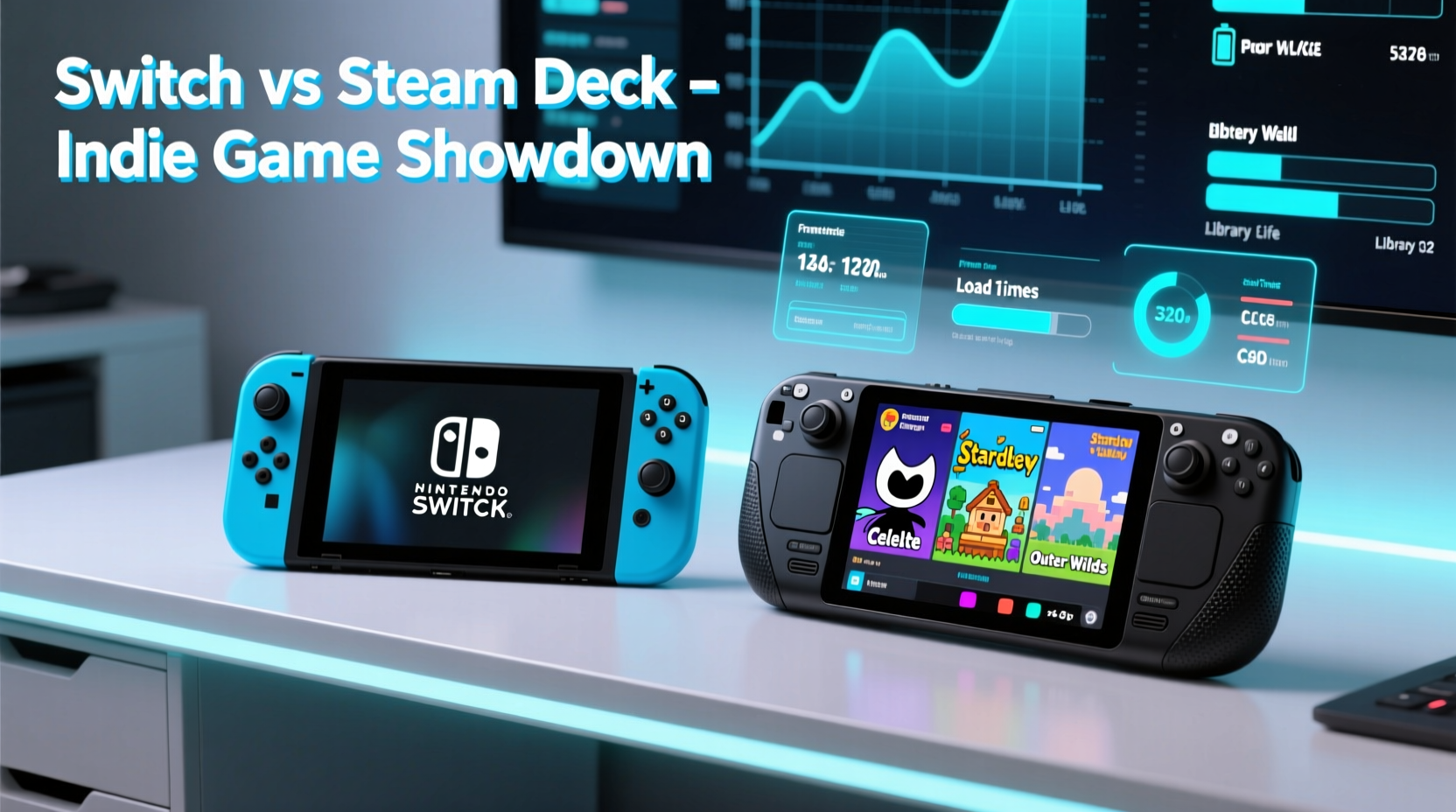
The most crucial factor for any indie gamer is access to games. Here, the fundamental difference lies in curation versus openness.
Nintendo Switch offers one of the most robust curated libraries of indie games available on any platform. Thanks to Nintendo’s developer-friendly eShop policies and strong relationships with indie publishers, titles like Hades, Dead Cells, Celeste, Untitled Goose Game, and Oxenfree II launch simultaneously on Switch or arrive within months of PC release. These ports are often optimized specifically for the system, ensuring smooth performance and intuitive controls.
However, the Switch’s library is still limited by Nintendo’s approval process. Some adult-themed, mod-heavy, or technically complex indie games never make it to the platform. Additionally, many smaller developers skip Switch due to certification costs and technical hurdles.
In contrast, the Steam Deck grants immediate access to over 8,000 verified indie titles—and tens of thousands more through Proton compatibility. Because it runs full SteamOS (Linux-based), users can play nearly any indie game available on PC, including those in early access, crowdfunded prototypes, or community-modded versions. Games like Outer Wilds, Eastshade, Chained Echoes, and Tomb Raider VR mods run seamlessly, even if not officially listed as “Deck Verified.”
Curated Quality vs Open Access
The Switch delivers consistency: when an indie title appears on the eShop, you can expect reliable performance, touch controls where applicable, and frequent updates. It's ideal for players who want plug-and-play simplicity without tinkering.
The Steam Deck, however, rewards exploration. Gamers comfortable adjusting settings, managing storage, or troubleshooting compatibility issues gain unparalleled freedom. You’re not just buying a console—you're gaining a portable PC that plays everything from itch.io downloads to obscure visual novels only available via direct purchase.
“Indie games thrive on experimentation, and the Steam Deck is the only handheld that lets you experience them exactly as developers intended—no gatekeeping, no delays.” — Marcus Tran, Indie Developer & Co-founder of Pixel Rift Studios
Performance & Technical Flexibility
On paper, the Steam Deck dominates in raw power. Its AMD APU (4 compute units, 1.6 GHz boost) and 16 GB RAM far exceed the Switch’s NVIDIA Tegra X1 chip and 4 GB RAM. This gap becomes evident when running graphically rich or poorly optimized indie titles.
Many modern indie games use Unity or Unreal Engine with dynamic lighting, particle effects, and high-res textures. On Switch, these often require downgraded assets or reduced frame rates. For example, Gris runs at 30 FPS on Switch but hits a stable 60 on Steam Deck. Similarly, Void Stranger, a demanding roguelike, stutters on Switch OLED during intense sequences but performs flawlessly on Deck at medium settings.
| Feature | Nintendo Switch | Steam Deck |
|---|---|---|
| Processor | NVIDIA Tegra X1 (2015 architecture) | AMD Zen 2 + RDNA 2 (2022 APU) |
| RAM | 4 GB LPDDR4 | 16 GB LPDDR5 |
| Storage (Base) | 32 GB (expandable via microSD) | 64 GB eMMC / 256 GB NVMe SSD |
| Resolution (Handheld) | 720p | 800p (1280×800) |
| FPS Target | 30–60 (varies widely) | Consistent 60 with settings adjustment |
| OS | Proprietary (closed) | SteamOS 3.0 (Linux-based, open) |
Beyond specs, the Steam Deck allows granular control: adjust resolution scaling, frame rate caps, CPU limits, and controller remapping per game. This level of customization ensures even borderline-compatible indies can be coaxed into playable condition.
The Switch, while less powerful, benefits from first-party optimization. Developers often tailor engine builds specifically for its hardware, resulting in surprisingly good performance given its age. But there’s no way to tweak internal settings—what you get is what you get.
Portability & Battery Life
When it comes to pure portability, the Switch remains unmatched. Weighing just 275 grams (OLED model), it slips easily into a jacket pocket or small bag. The Steam Deck, at 669 grams, feels substantial—more like a small laptop than a traditional handheld.
Battery life further tilts the balance toward Nintendo. The Switch averages 4.5 to 9 hours depending on usage, making it perfect for commutes, flights, or couch gaming. The Steam Deck manages 2 to 4 hours under typical indie gaming loads—even less with higher brightness or background apps. Power users often carry external batteries, adding bulk.
That said, the Steam Deck’s larger 7-inch screen (vs. Switch’s 7.0” OLED or 6.2” LCD) provides a richer visual experience for story-heavy indies like Disco Elysium or Stray. Text is clearer, UI elements are easier to navigate, and immersion increases significantly.
User Experience & Controls
Both systems offer excellent build quality and responsive controls, but their philosophies differ.
The Switch’s button layout follows classic Nintendo ergonomics—slightly curved Joy-Cons or Pro Controller feel natural for platformers, action RPGs, and fast-paced indies. The touchscreen is useful for menu navigation in games like Opus Magnum or Pentiment.
The Steam Deck introduces a more complex input scheme: dual trackpads, gyro aiming, rear paddles, and full analog triggers. While overkill for simple 2D indies, these features shine in hybrid genres. For instance, in Loop Hero, you can remap drag actions to the right trackpad; in Unpacking, precise cursor control improves item placement.
Additionally, the Steam Deck supports full desktop mode, allowing you to install tools like Discord, OBS, or even web browsers mid-game. Want to look up a puzzle solution in The Witness? Just switch modes—no phone needed.
Real Example: Playing Slay the Spire Across Platforms
Consider Slay the Spire, a genre-defining indie roguelike. On Switch, it launches instantly, integrates with cloud saves, and plays perfectly with standard controls. However, mod support is absent—no custom characters or daily challenges.
On Steam Deck, the same game boots into a modded version with 15 community expansions active. You’ve customized card backs, added quality-of-life tweaks, and synced progress via Steam Cloud. The trade-off? Longer load times and occasional audio glitches—but full access to the vibrant modding scene.
This illustrates the core divide: Switch prioritizes polish and convenience; Steam Deck empowers personalization and depth.
Cost & Long-Term Value
Upfront pricing reveals another key difference.
- Nintendo Switch (OLED): $210–$250 (refurbished/new)
- Steam Deck (64GB): $399
- Steam Deck (256GB/512GB): $449–$549
The Switch is clearly cheaper, especially for casual players. However, its digital storefront tends to discount games less aggressively than Steam. Indie titles rarely drop below $15, whereas Steam sales regularly slash prices by 50–90%.
Moreover, Steam Deck owners benefit from existing Steam libraries. If you already own hundreds of indie games on PC, they transfer directly—often saving hundreds in repurchase costs. The Switch requires separate eShop purchases, even if you own the PC version.
“I bought the Steam Deck primarily for Kenshi and RimWorld mods. Within six months, I’d played backlogged indies worth over $400—all already in my library.” — Lena Cho, PC-to-Handheld Transitioner
Checklist: Choosing Your Ideal Indie Handheld
Use this checklist to decide which system fits your lifestyle:
- ✅ Do you prefer plug-and-play gaming with minimal setup? → Switch
- ✅ Are you drawn to unique, experimental, or moddable indie games? → Steam Deck
- ✅ Is portability your top priority? → Switch
- ✅ Do you already own many Steam indie games? → Steam Deck
- ✅ Do you need all-day battery life? → Switch
- ✅ Do you enjoy tweaking settings or using keyboard/mouse-style controls? → Steam Deck
- ✅ Is budget under $300? → Switch
FAQ
Can the Steam Deck run all indie games smoothly?
No—not all indie games are optimized for handheld Linux. While most 2D titles run well, some Unity or Electron-based games may require manual configuration. Always check the “Deck Verified” tag before purchasing.
Are indie games cheaper on Switch or Steam?
Steam generally offers better deals, especially during seasonal sales. Switch eShop prices remain relatively static, though Nintendo Points promotions occasionally help offset costs.
Is emulation important for indie gaming?
Yes, especially for retro-inspired indies. The Steam Deck excels here, supporting emulators for PS1, GBA, Dreamcast, and more via Lakka or EmuDeck. The Switch lacks official emulation support beyond Nintendo’s own legacy consoles.
Final Verdict: Which Wins for Indie Games?
If you value convenience, portability, and a tightly curated selection of critically acclaimed indie hits, the **Nintendo Switch** is the superior choice. It’s ideal for commuters, families, or anyone who wants to enjoy award-winning indies without technical hassle.
But if you crave depth, variety, and the freedom to explore every corner of the indie landscape—including unreleased demos, mods, and niche global titles—the **Steam Deck** is unmatched. It transforms handheld gaming from passive consumption into active discovery.
Ultimately, the Steam Deck wins for sheer scope and flexibility in the indie space. While the Switch hosts many must-play indie gems, the Deck offers an entire universe of them. For serious indie fans, that breadth is transformative.




 浙公网安备
33010002000092号
浙公网安备
33010002000092号 浙B2-20120091-4
Comments
No comments yet. Why don't you start the discussion?